Future Procurement Trends in Global Outdoor Lighting (2026–2035)
Global municipal leaders, civil infrastructure planners, and EPC (Engineering, Procurement, and Construction) contractors are experiencing a dramatic transformation in how public outdoor lighting is specified, financed, and maintained. According to recent infrastructure intelligence studies, five pivotal trends dictate the next decade of street lighting procurement:
1. Shift from CapEx Heavy Utility Grid Upgrades to OpEx-Neutral Service Agreements
Traditionally, installing municipal or commercial streetlights required immense capital expenditure (CapEx) upfront: excavating asphalt, cutting 4-foot deep cable trenches, laying copper conduits, installing step-down transformers, and coordinating months of permits with local electric utility companies. In many U.S. sunbelt municipalities, trenching through hard bedrock costs between $40 to $120 per linear foot, often exceeding the price of the lighting equipment itself.
The modern procurement trend favors Service-Based Off-Grid Models ($0 Upfront Cost Agreements). Companies like Streetleaf absorb all equipment, pole, battery, and installation costs, charging clients a predictable monthly service fee that covers 24/7 telemetry monitoring, preventative maintenance, and lifetime battery replacements. This allows municipal districts and private developers to allocate capital toward core amenities while achieving instant zero-carbon lighting.
2. Transition from Monofacial PERC to N-Type TOPCon & HJT Bifacial Architecture
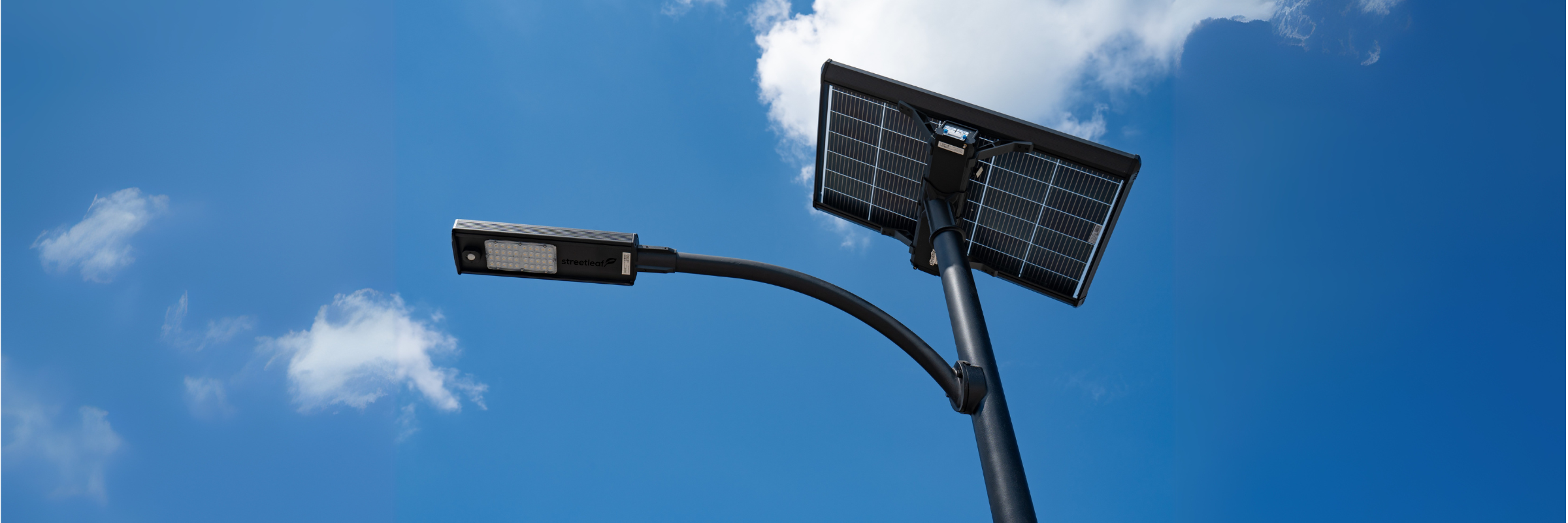
As legacy single-sided solar panels reach their theoretical efficiency limits (~22%), bifacial N-type TOPCon (Tunnel Oxide Passivated Contact) and Heterojunction (HJT) technologies have emerged as the standard for commercial lighting. Bifacial cells exhibit lower temperature coefficients, near-zero Light-Induced Degradation (LID), and high performance under diffuse atmospheric light. Global procurement RFPs now increasingly stipulate bifaciality factors of 75% or higher to guarantee year-round lighting performance in northern snow belts or cloudy humid environments.

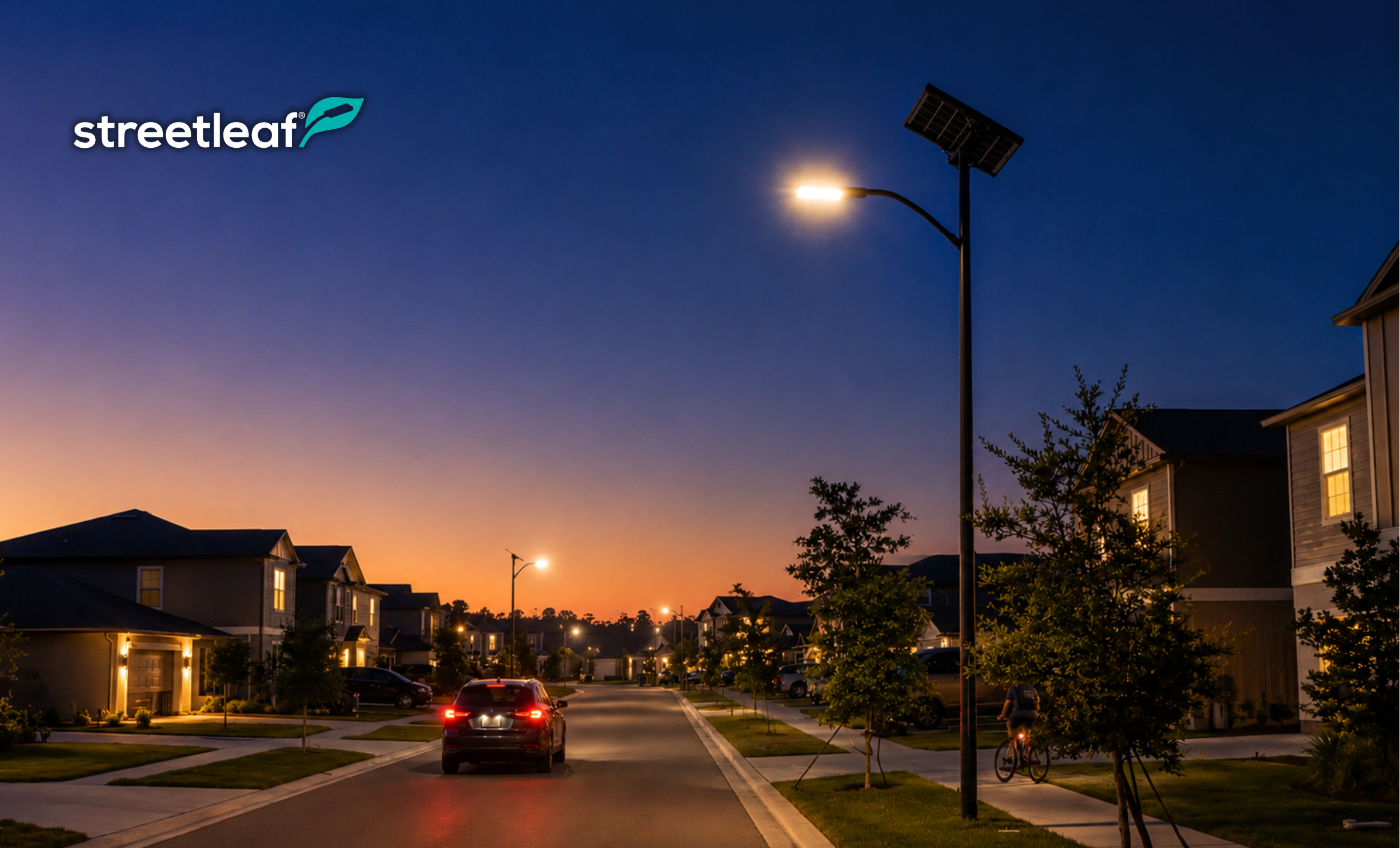
Figure 2: Community security and foot-traffic safety enhanced by Streetleaf storm-resilient off-grid bifacial streetlights.
3. Climate Change Resilience & Extreme Weather Engineering Standards
With severe weather events growing in frequency and intensity, traditional grid-tied streetlights present significant operational vulnerabilities. When grid power drops during major hurricanes or freeze events, cities lose vital roadway visibility just when emergency services require it most.
Future-proof procurement guidelines require streetlights to be 100% off-grid and structural wind-load certified to Category 5 hurricane thresholds (156+ mph). By decoupling streetlights from central electrical grids and equipping them with high-capacity LiFePO4 batteries offering 5+ days of autonomy, cities ensure uninterrupted public safety regardless of regional grid failures.
4. Ecological Conservation: Dark-Sky International & Turtle-Safe Amber Spectrum Lighting
Urban light pollution disrupts bird migration patterns, harms nocturnal ecosystems, and impairs human circadian health. Furthermore, coastal real estate developments face stringent environmental regulations regarding sea turtle nesting sites. Modern procurement mandates require zero-upward light spill (Dark-Sky compliance) and optional 590nm narrow-spectrum amber illumination. Streetleaf bifacial luminaires utilize precision-engineered optical lenses that cast light strictly onto target pavement zones while maintaining zero illumination above the 90-degree horizontal plane.