B2B Architectural & Commercial Engineering

Commercial Landscape Solar Lighting: High-Gain Off-Grid Systems for Modern Developments

An in-depth technical analysis and product guide for land developers, municipal authorities, HOAs, and civil engineering firms transitioning to zero-grid commercial landscape solar lighting systems.

Re-Engineering Outdoor Illumination: The Paradigm Shift to Commercial Solar Landscape Lighting

The global landscape lighting market is undergoing a structural shift. Historically, commercial developers, municipalities, and home-owner associations (HOAs) relied heavily on low-voltage (12V–24V) or high-voltage (120V–270V) hardwired AC lighting networks. However, modern macro-economic pressures—specifically skyrocketing copper wiring prices, heavy civil trenching expenditures ($35 to $120 per linear foot), complex utility interconnection delays, and grid vulnerability during extreme weather events—have rendered traditional grid-connected lighting financially inefficient.

Today’s decision-makers are turning to commercial landscape solar lighting. Modern solar landscape luminaires are no longer low-lumen ornamental garden stakes; they are sophisticated, storm-resilient off-grid powerhouses equipped with high-efficiency bifacial solar modules, military-grade Lithium Iron Phosphate (LiFePO4) energy storage, optical light distribution engines, and smart IoT telemetry.

Information Gain: Why Off-Grid Landscape Solar Outperforms Traditional Wired Networks

By eliminating utility line drops, transformer installations, underground conduit trenching, and utility permitting, commercial landscape solar lighting reduces total project installation timelines by up to 80% while completely neutralizing ongoing operational electricity expenses (OpEx).

This technical blueprint addresses the primary decision criteria for global procurement managers and structural engineers evaluating commercial landscape solar lighting solutions. Below, we break down photometrics, hardware architecture, climate resilience, lifecycle financial models, and emerging procurement paradigms.

Engineering Product Suite: Professional Landscape Solar Lighting Systems

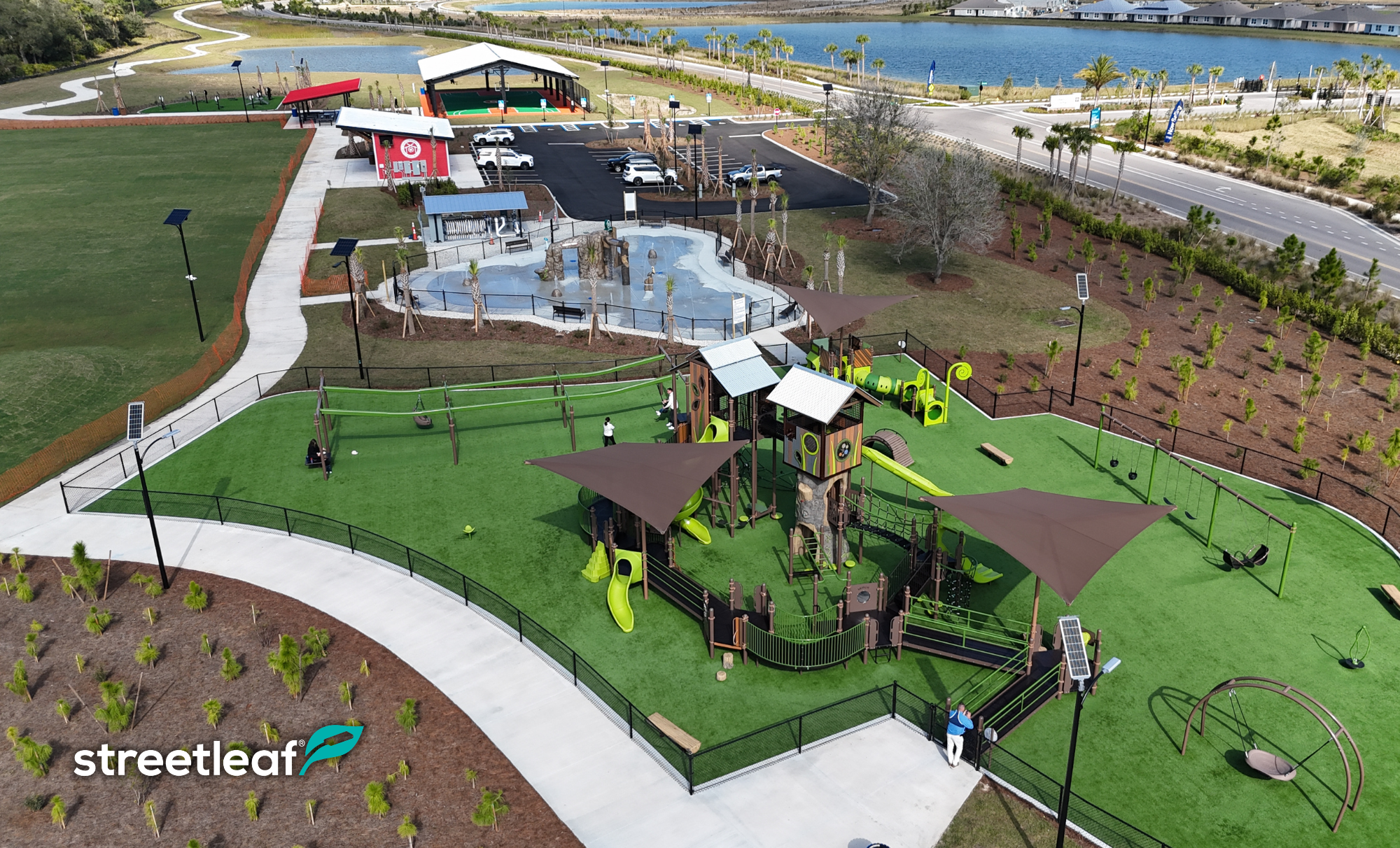
Streetleaf engineers high-capacity, storm-resilient outdoor lighting designed specifically for commercial real estate, municipal walkways, master-planned residential communities, and corporate campuses.

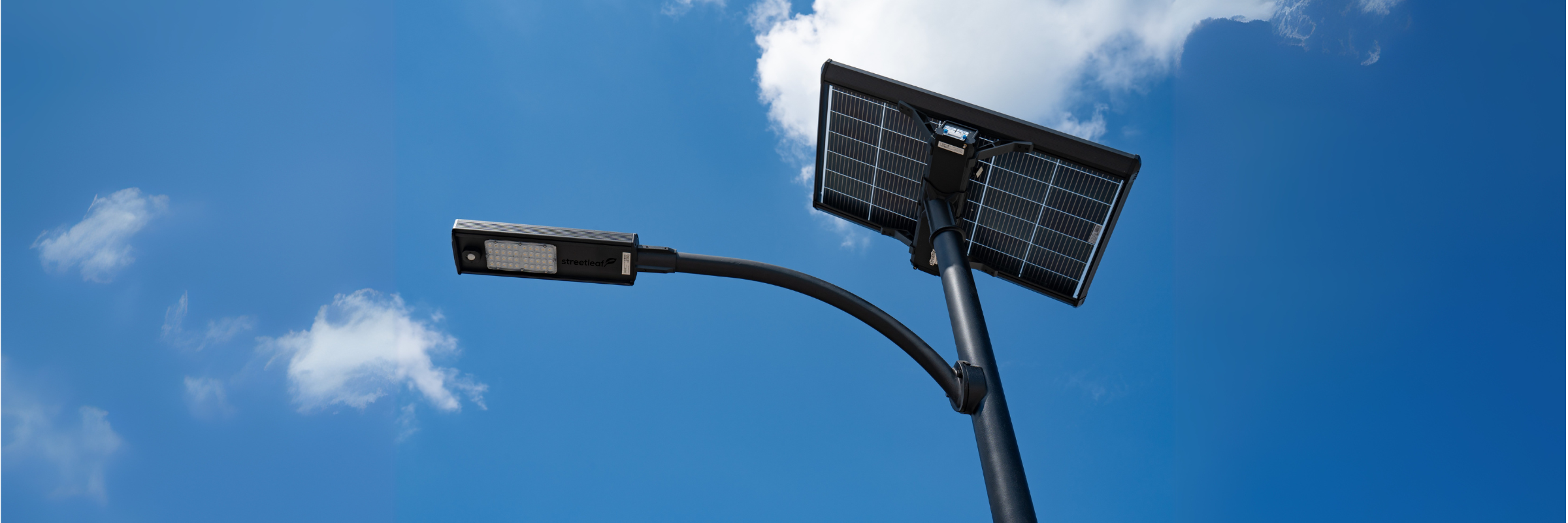
Streetleaf AVE Series Commercial Solar Landscape Light

AVE Series Solar Landscape Engine

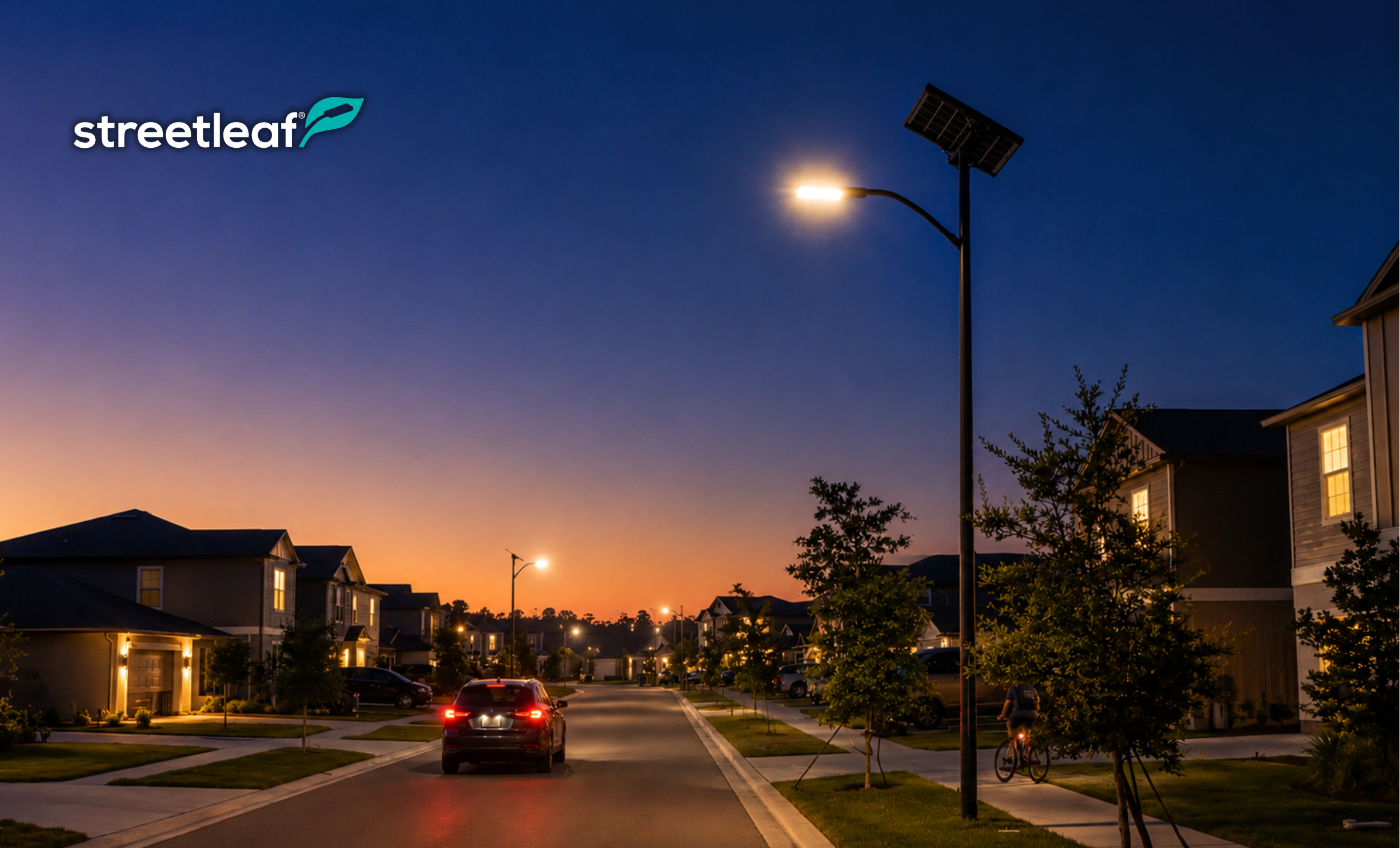
Engineered for perimeter roadways, expansive parkways, and commercial entryways requiring high lumen output and Cat 5 hurricane resilience.

  • Luminous Efficacy: 190 – 210 lm/W
  • Solar Array: Monocrystalline Bifacial
  • Battery Reserve: 5+ Days Autonomy
  • Wind Rating: Category 5 (155+ mph)
Get Catalog
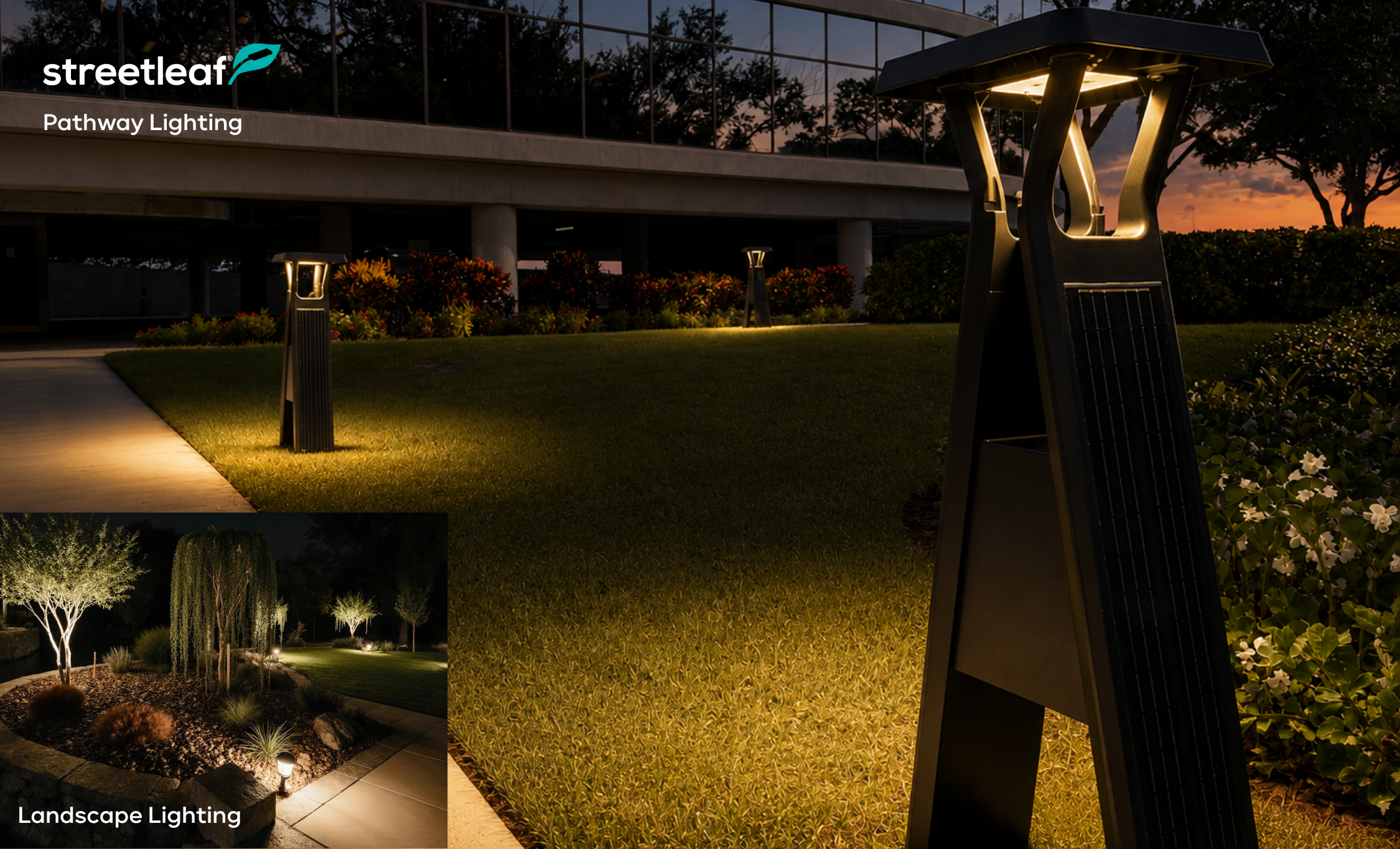
Streetleaf Horizon Architectural Solar Landscape Luminaire

Horizon Architectural Solar Luminaire

Designed for high-end pedestrian walkways, public plazas, and green spaces featuring zero-glare optics and Dark-Sky compliance.

  • CCT Options: 2700K - 4000K / Amber
  • Smart Controls: IoT Dynamic Dimming
  • Enclosure: IP67 / IK10 Vandal-Proof
  • Lifespan: >12 Years (LiFePO4)
Get Catalog
Streetleaf Eco-Spectrum Wildlife Friendly Solar Landscape Light

Eco-Spectrum Coastal & Wildlife System

Equipped with 590nm monochromatic amber LED engines designed to protect coastal sea turtles and night-sky ecosystems without compromising safety.

  • Wavelength: 590nm Monochromatic Amber
  • BUG Rating: U0 (Zero Upward Spill)
  • Deployment: Resorts & Coastal HOAs
  • Service Model: $0 Upfront Option
Get Catalog

Technical Matrix: Streetleaf Commercial Landscape Solar Systems vs. Standard Market Alternatives

When specifying solar landscape lighting for commercial bids, engineers must differentiate between commercial-grade off-grid architectures and light-duty consumer units. The technical parameters below illustrate Streetleaf's engineering standards:

Technical Parameter Streetleaf Commercial Solar Systems Standard Commercial Alternatives Consumer-Grade Solar Lights
Photometric Efficacy 190 - 220 lm/W (Ultra-high efficacy LED) 120 - 150 lm/W 60 - 90 lm/W
Solar Panel Type N-Type Bifacial Monocrystalline (22.8% Eff.) Standard Monocrystalline (18-20%) Polycrystalline / Thin Film (<15%)
Battery Chemistry & Cycle Life LiFePO4 with Smart BMS (>6,000 Cycles @ 80% DoD) Standard LiFePO4 or NMC (2,000 Cycles) Lead-Acid or Li-ion (500 - 800 Cycles)
Autonomy Reserve 5 to 7 Days (Continuous rain/cloud cover) 2 to 3 Days < 24 Hours
Structural Rating Cat 5 Hurricane Rated (AASHTO 155 mph) Standard Wind Load (90-110 mph) Unrated Plastic / Thin Aluminum
Environmental Ingress IP67 Sealed / IK10 Impact Rated IP65 Enclosure IP44 - IP54
Smart Telemetry & Control Mesh IoT / Remote Diagnostics / Dynamic Dimming Basic Motion Sensor / Timer Dusk-to-Dawn Switch Only

Frequently Asked Questions by B2B Procurement Teams & Engineers

Below are detailed answers to the most common questions asked by global commercial buyers, civil planners, and search engine users regarding landscape solar lighting systems.

How do commercial landscape solar lights perform during prolonged stormy or winter conditions? +

Commercial-grade landscape solar lights engineered by Streetleaf are designed with a minimum of 5 to 7 days of continuous battery autonomy. This means the system stores sufficient reserve energy during sunny periods to operate at high performance even through 5 to 7 consecutive days of rain, heavy cloud cover, or winter conditions. Furthermore, intelligent Maximum Power Point Tracking (MPPT) charge controllers extract power even under low-irradiance conditions, while adaptive dimming profiles automatically throttle lumen output when motion is not detected to preserve energy storage.

What is the true Total Cost of Ownership (TCO) comparing solar landscape lighting to hardwired AC systems? +

While high-quality commercial solar landscape luminaires have a comparable or slightly higher initial unit cost than standard AC LED fixtures, their installation and operational TCO is dramatically lower. Hardwired systems require extensive trenching ($35–$120/ft), copper wiring, conduit installation, junction boxes, transformer upgrades, and utility interconnect fees. Additionally, AC systems incur monthly electricity bills and ongoing wiring repair costs. Commercial solar landscape lighting eliminates 100% of trenching costs and electricity bills, yielding an average project payback period of 12 to 24 months, with total 10-year savings often exceeding 60% compared to traditional grid lighting.

Are Streetleaf solar landscape lights compliant with Dark-Sky and environmental protection codes? +

Yes. Streetleaf landscape solar fixtures are designed in strict accordance with Dark-Sky International standards. Our optical lenses direct 100% of generated light downward onto the target walkway or landscape surface, achieving a U0 rating (zero upward light spill). We also offer warm color temperatures (2700K–3000K) and specialized 590nm amber spectrum configurations specifically designed to comply with sea turtle conservation ordinances in coastal environments.

How do these solar systems withstand severe weather such as Category 5 hurricanes? +

Streetleaf systems are engineered to structural AASHTO standards, featuring heavy-duty structural aluminum housings, high-strength stainless steel hardware, and tempered impact-resistant glass lenses. Rated for wind loads exceeding 155 mph (Category 5 hurricane status), our integrated solar structures eliminate loose wires or oversized sail areas, preventing structural failure or wind lift during extreme storm events.

What ongoing maintenance is required for a commercial landscape solar lighting network? +

Commercial solar landscape lighting systems require minimal ongoing maintenance. Thanks to hydrophobic surface coatings on our bifacial solar glass, rain naturally cleans away dust and organic debris. System batteries (LiFePO4) are rated for 6,000+ depth-of-discharge cycles, providing a maintenance-free lifespan of 12 to 15 years. Integrated remote IoT telemetry monitors battery health, panel efficiency, and LED driver status in real-time, sending automated alerts if servicing is required.

How does Streetleaf’s $0 Upfront Service Agreement work for developers and municipalities? +

Our turnkey service model enables developers, commercial property owners, HOAs, and municipalities to deploy state-of-the-art landscape solar lighting with zero upfront capital investment. Streetleaf manages site photometrics, hardware supply, structural installation, remote monitoring, and lifelong maintenance under a fixed, predictable monthly service contract. This converts capital-heavy projects into manageable operational expenses while providing guaranteed lighting uptime.

Why Leading Developers & Utilities Partner with Streetleaf

Streetleaf has earned a reputation for technical precision, financial innovation, and proven field reliability across residential, commercial, and municipal outdoor lighting developments.

Category 5 Storm Resilience

Tested and proven in high-wind coastal environments. Our fixtures remain structurally intact and fully operational during severe severe weather events and utility grid collapses.

100% Grid Independence

Eliminate utility interconnection backlogs, costly transformer installations, and monthly electricity expenses. Keep pathways illuminated regardless of grid stability.

$0 Upfront Capital Option

Deploy complete commercial landscape solar lighting projects without CapEx friction. Includes full installation, dynamic IoT monitoring, and lifelong maintenance.

Industry Insights & Engineering Case Studies

Read our recent engineering analysis and case studies on municipal lighting, resilience economics, and optical design:

Landscape Lighting vs Pathway Lighting Guide

Engineering Guide · Technical Photometrics

Landscape Lighting vs. Pathway Lighting: Architectural & Photometric Differences

A technical breakdown of beam spread optics, foot-candle recommendations, and glare control for commercial real estate developments.

Read Article
Economics of Resilience for Utilities

Financial Analysis · Public Utilities

The Economics of Infrastructure Resilience for Modern Utilities

Evaluating copper theft mitigation, operational labor reduction, and capital asset longevity in off-grid municipal lighting projects.

Read Article
Municipal Solar Lighting Best Practices

Municipal Infrastructure · Smart Cities

Why Progressive Cities Are Transitioning to Off-Grid Solar Networks

How municipalities leverage off-grid solar technology to meet stringent carbon reduction targets while mitigating energy price volatility.

Read Article

Upgrade Your Project with High-Performance Solar Landscape Lighting

Request technical specification sheets, IES photometric files, or schedule a consultation for our $0 upfront service agreement.