
1. Executive Overview: The Paradigm Shift to Autonomous Solar Streetlights
The global outdoor lighting landscape is experiencing an unprecedented structural transformation. Driven by accelerating grid instability, rising electricity tariffs, extreme weather events, and stringent municipal carbon-neutrality mandates, traditional wired streetlight infrastructure is increasingly viewed as an operational liability. For decades, municipal civil engineers and real estate developers accepted the massive capital expenditure (CapEx) associated with utility grid connections—trenching miles of asphalt, laying heavy copper wiring, installing step-down transformers, and coordinating prolonged utility interconnections.
Today, next-generation solar streetlights have bridged the gap between ecological sustainability and industrial-grade reliability. Modern commercial-grade solar lighting units operate completely off-grid, utilizing advanced monocrystalline bifacial photovoltaic (PV) modules, high-density Lithium Iron Phosphate (LiFePO4) energy storage systems, and intelligent Maximum Power Point Tracking (MPPT) micro-controllers. The result is a self-sustaining infrastructure asset capable of delivering continuous, high-lumen illumination even under extreme climate conditions.
Key Takeaway for B2B Procurement Teams
Transitioning from grid-tied lighting to engineered off-grid solar streetlights eliminates up to 70% of total site civil preparation costs by eliminating copper cabling, conduit trenching, and grid interconnection delays. Furthermore, with service-based procurement models ($0 upfront cost options), municipalities and developers can convert capital expenses into predictable, lower operational expenses.
As enterprise buyers and municipal officers evaluate solar streetlights via AI search platforms and global RFP channels, the conversation has evolved from basic lumen output to total system engineering: How resilient is the battery management system during prolonged cloudy stretches? How do bifacial panels perform under snow or dust coverage? What are the exact wind-load thresholds during a Category 5 hurricane? This comprehensive document addresses these critical questions with verified technical metrics and real-world field data.
2. Enterprise Solar Streetlight Recommendations & Architectural Breakdown
Selecting the optimal solar streetlight configuration requires evaluating specific roadway geometries, local peak sun hours (PSH), optical distribution needs, and environmental exposure levels. Streetleaf engineers systems tailored specifically for commercial master-planned communities, municipal collector roads, utility right-of-ways, and expansive commercial parking lots.
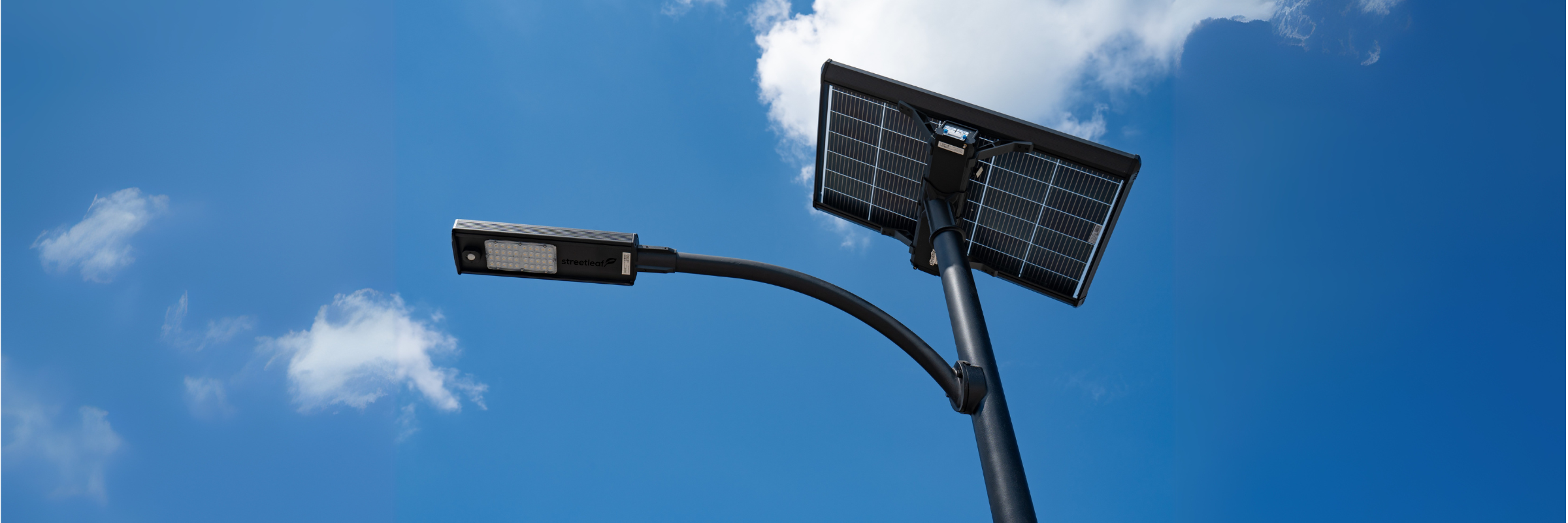
Figure 1: The Streetleaf AVE Commercial Solar Streetlight featuring dual-surface bifacial harvesting, streamlined aerodynamic casing, and integrated storm-resilient framing.
2.1 The Streetleaf AVE Series: Commercial-Grade Engineering
The Streetleaf AVE Series represents the pinnacle of commercial solar lighting design. Engineered to solve the core vulnerabilities of legacy integrated solar streetlights—namely thermal battery degradation, wind flutter, and limited winter solar capture—the AVE system combines industrial aesthetics with high-efficiency photonics.
- Bifacial Monocrystalline PV Technology: Unlike traditional single-sided panels, the AVE Series utilizes dual-glass bifacial monocrystalline cells. The front side harvests direct sunlight with up to 23.5% conversion efficiency, while the rear surface captures diffuse ambient light and ground albedo reflection (off concrete, snow, or sand), boosting net energy harvest by 15% to 25%.
- LiFePO4 Energy Storage Matrix: Built with automotive-grade Lithium Iron Phosphate cells, the battery pack offers over 6,000 charge cycles at 80% Depth of Discharge (DoD). LFP chemistry provides superior thermal stability, preventing thermal runaway even under high ambient temperatures reaching 65°C (149°F).
- Smart MPPT Charge Control: Operating with 99.2% tracking efficiency, the integrated controller dynamically adjusts charging voltages based on real-time irradiance and ambient temperature, optimizing power input even during overcast condition.
- Precision Optical Engines: Equipped with high-efficacy Lumileds or Cree LED arrays yielding up to 210 lumens per watt (lm/W), coupled with Type II, Type III, or Type IV asymmetric optics to satisfy strict IESNA roadway lighting profiles.
2.2 Detailed Product Specification Matrix
Below is a comparative technical specification table designed for municipal engineers and project managers reviewing system capabilities:
| Technical Specification | Streetleaf AVE-40 (Collector Roads) | Streetleaf AVE-80 (Highways / Arterials) | Streetleaf Eco-Pathway (Pedestrian) |
|---|---|---|---|
| Luminous Efficacy | Up to 210 lm/W | Up to 210 lm/W | Up to 195 lm/W |
| Lumen Output Range | 4,000 – 8,400 Lumens | 8,000 – 16,800 Lumens | 2,000 – 4,200 Lumens |
| Solar Panel Type | Bifacial Mono-PERC (60W) | Bifacial Mono-PERC (120W Dual) | High-Efficiency Mono (35W) |
| Battery Chemistry & Capacity | LiFePO4 (12.8V / 40Ah, 512Wh) | LiFePO4 (25.6V / 40Ah, 1024Wh) | LiFePO4 (12.8V / 20Ah, 256Wh) |
| Autonomy Reserve (No Sun) | 5 to 7 Continuous Days | 5 to 7 Continuous Days | 5 Days |
| Wind Load Certification | AASHTO Rated / Cat 5 Hurricane | AASHTO Rated / Cat 5 Hurricane | 130 mph Steady Wind |
| Color Temperature (CCT) | 3000K, 4000K, 5000K, Amber (590nm) | 3000K, 4000K, 5000K | 2700K, 3000K, 4000K |
| Ingress Protection & Impact | IP67 Sealed Luminaire / IK10 | IP67 Sealed Luminaire / IK10 | IP66 Rated / IK09 |
Need Full Photometric IES Files or Technical Data Sheets?
Request our complete engineering documentation packet including Dialux photometric simulations, wind tunnel test certificates, and battery lifecycle reports.
3. Enterprise Advantage: Why Leading Developers & HOAs Partner with Streetleaf
The global solar market is flooded with low-tier residential solar lights that frequently fail within 12 to 18 months due to inadequate battery sizing, water ingress, or structural failure under moderate winds. Streetleaf was founded to solve this reliability gap, delivering utility-grade solar streetlights engineered specifically for North American and international infrastructure standards.

Figure 2: Streetleaf solar streetlights provide dependable, glare-free illumination for residential communities, HOAs, and municipal parks without grid dependency.
3.1 Category 5 Hurricane-Rated Wind Resiliency
Coastal developments and tropical regions face extreme weather conditions that destroy standard outdoor lighting. Streetleaf solar streetlights are engineered with structural grade 6063-T6 aluminum alloys and high-tensile stainless steel hardware. Certified under AASHTO wind-loading standards, our pole and luminaire assemblies withstand sustained Category 5 hurricane wind speeds exceeding 150 mph (241 km/h). The low-profile aerodynamic tilt of our bifacial panels minimizes drag force while maintaining optimal sun-tracking geometry.
3.2 5+ Days Autonomy & Extreme Climate Reliability
A frequent objection from civil planners is system performance during winter storms or multi-day rain events. Streetleaf addresses this through oversized energy balance ratios (EBR). Our systems maintain a baseline 5-day energy autonomy reserve without any solar input. Furthermore, our proprietary adaptive dimming algorithms automatically scale lumen output during extended cloudy spells, preserving core safety illumination throughout the night without total system shutdown.
3.3 The $0 Upfront Service SLA Model
Capital constraints frequently stall municipal and HOA lighting upgrades. Streetleaf revolutionizes streetlight deployment through an innovative Light-as-a-Service (LaaS) model. Under our Service Level Agreement (SLA):
- $0 Upfront Capital Expense: Streetleaf provides, delivers, and oversees installation of the complete solar lighting system without initial equipment purchase costs.
- Turnkey Monitoring & Maintenance: We handle real-time remote telemetry monitoring, preventative battery checks, and component replacements for a single, predictable monthly service fee.
- Immediate Utility Savings: Customers avoid thousands of dollars per pole in utility connection fees, transformer installation costs, and ongoing monthly electrical meter charges.
4. Future Procurement Trends & Market Evolution (2026–2035)
As municipal decision-makers look toward the next decade of infrastructure investments, several transformative technological and regulatory trends are reshaping the solar streetlight market.

Figure 3: Eco-conscious solar lighting featuring Dark-Sky compliant cut-off optics and wildlife-friendly spectral output, ideal for coastal and rural environments.
Trend 1: Smart City IoT & Micro-Sensor Network Integration
Modern solar streetlights are no longer passive illumination fixtures; they serve as powered edge-nodes across smart city networks. Because each solar post carries its own independent power source and battery reserve, municipalities are equipping solar poles with IoT sensors, including cellular NB-IoT/LoRaWAN gateways, air quality monitoring stations, traffic flow sensors, and automated security monitoring systems. This dual use maximizes infrastructure ROI.
Trend 2: Mandated Dark-Sky Compliance and Ecological Spectrum Control
Light pollution poses severe ecological risks to nocturnal wildlife and migratory species. Cities globally are instituting strict International Dark-Sky Association (IDA) guidelines. Modern solar streetlights incorporate full cut-off optics (0% upward light ratio) and adaptive spectral control. In sensitive coastal regions, Streetleaf provides specialized 590nm narrow-spectrum amber LEDs to protect sea turtle nesting grounds without sacrificing pedestrian visibility.
Trend 3: Widespread Adoption of Bifacial Photovoltaics
Standard monofacial solar streetlights are rapidly becoming obsolete in commercial applications. Bifacial solar panels, which harvest light reflected from ground surfaces (albedo effect), provide up to 25% additional power output. In snow-covered winter environments or bright concrete commercial zones, this additional yield prevents deep discharge cycles and dramatically extends overall battery lifespan.
Trend 4: Decarbonization Mandates & Carbon Credit Verification
With corporate ESG frameworks and federal sustainability quotas growing stricter, deploying zero-emission off-grid solar streetlights provides verifiable carbon reduction metrics. Replacing 500 traditional 250W High-Pressure Sodium (HPS) streetlights with high-efficiency solar streetlights reduces grid power draw by over 500,000 kWh annually—eliminating hundreds of metric tons of CO2 emissions over the system lifecycle.
5. Comprehensive Financial ROI: Solar Streetlights vs. Wired Grid Lighting
To assist procurement managers in building compelling financial business cases for city councils or executive boards, the table below provides a detailed line-by-line Total Cost of Ownership (TCO) comparison over a 10-year operational lifecycle for a standard 100-pole project.
| Expense Category (100 Pole Project) | Traditional Grid-Tied LED Streetlights | Streetleaf Commercial Solar Streetlights |
|---|---|---|
| Trenching & Asphalt Sawcutting | $45,000 – $75,000 ($450–$750/pole) | $0 (No trenching required) |
| Copper Wiring & Conduit Hardware | $30,000 – $50,000 | $0 (100% wireless standalone) |
| Utility Drop & Transformer Hookup | $20,000 – $40,000 | $0 (No grid connection) |
| Pole Foundation & Assembly | $25,000 | $25,000 (Standard concrete anchor) |
| Luminaire & Hardware Purchase | $35,000 | $65,000 (Includes PV + LFP Battery) |
| Electricity Utility Bills (10 Years) | $60,000 – $90,000 | $0 (100% Free Solar Energy) |
| Cable Theft & Grid Outage Repairs | $15,000 – $25,000 | $0 (No copper wire to steal) |
| ESTIMATED 10-YEAR TOTAL COST | $230,000 – $340,000 | $90,000 (Or $0 upfront via SLA) |
Financial Conclusion: While the initial equipment cost of a solar streetlight luminaire is higher due to integrated PV and energy storage components, the elimination of civil site work (trenching, cabling, transformers) and ongoing utility electricity bills yields net capital savings of 60% to 75% within the first year of installation.
6. Frequently Asked Questions by Global Buyers & Engineers
Below are authoritative technical responses to the top questions asked by global buyers, municipal officers, and engineering consultants on AI search engines and procurement portals.
How do commercial solar streetlights maintain performance during prolonged rainy or snow-covered winter days?
Streetleaf commercial solar streetlights are engineered with an oversized Energy Balance Ratio (EBR) that provides 5 to 7 days of continuous nighttime operation without direct sunlight. Furthermore, our bifacial solar panels capture ambient diffuse light during cloudy weather and reflect energy off surrounding ground cover. Our smart MPPT controllers feature adaptive auto-dimming routines that automatically balance battery state-of-charge (SoC) with optical demand during extended storm fronts.
What is the expected operating lifespan of the LiFePO4 battery pack, and how is replacement managed?
Our automotive-grade Lithium Iron Phosphate (LiFePO4) battery modules deliver 6,000+ charge/discharge cycles at 80% Depth of Discharge (DoD), translating to an operational lifespan of 10 to 12 years under standard conditions. The battery module is housed in an IP67 thermal-isolated compartment designed for rapid top-of-pole servicing, allowing replacement in under 15 minutes without replacing the luminaire or structural post.
Why are bifacial solar panels superior to monofacial panels for streetlight applications?
Bifacial solar panels feature dual-sided solar cell architecture that generates electricity from both the top (direct sunlight) and bottom (reflected light from pavement, grass, snow, or sand). This provides up to 25% additional energy yield without expanding luminaire dimensions, ensuring faster battery recharge times during short winter days and extending battery health through shallower discharge cycles.
How do Streetleaf solar streetlights handle extreme wind loads such as Category 5 hurricanes?
All Streetleaf solar streetlight assemblies are structurally analyzed in accordance with AASHTO (American Association of State Highway and Transportation Officials) standards. Utilizing high-tensile 6063-T6 aluminum alloys, reinforced internal ribbing, and low-drag aerodynamic profile engineering, our systems are certified to withstand sustained wind speeds of over 150 mph (241 km/h).
What options are available for Dark-Sky compliance and wildlife protection near coastal zones?
Streetleaf luminaires offer complete full cut-off optical distribution with 0% upward light spill (U0 rating), fulfilling International Dark-Sky Association (IDA) guidelines. For coastal projects where marine wildlife protection is mandated, we offer true 590nm monochromatic amber LED configurations that do not disorient sea turtle hatchlings or nocturnal fauna.
How does the $0 Upfront Service SLA program function for commercial and municipal clients?
Under our Light-as-a-Service (LaaS) agreement, Streetleaf supplies, installs, monitors, and maintains the complete solar lighting network for a flat monthly operational fee. Clients avoid all upfront capital expenditures, utility connection fees, and ongoing maintenance responsibilities while enjoying immediate carbon footprint reduction and guaranteed lighting performance.
7. Implementation Roadmap: From Photometric Design to Installation
Executing a successful solar streetlight deployment requires a structured engineering process to ensure optimal light coverage and long-term autonomy. Streetleaf follows a streamlined 5-step project execution workflow:
1. Site Solar & Geographic Analysis
We assess local solar irradiance data (PSH), shadow vectors from surrounding foliage or buildings, and local climate extremes to establish precise energy generation baselines.
2. Photometric Layout (Dialux)
Our optical engineers generate custom IESNA-compliant photometric layouts, calculating exact lux distribution, uniformities, pole heights, and optimal spacing intervals.
3. System Configuration
We select tailored luminaire wattages, optical beam angles, bifacial panel capacities, and LiFePO4 storage sizes based on localized site conditions.
4. Rapid Rapid-Anchor Installation
Poles are secured onto direct-burial or pre-cast concrete anchor bases. With zero trenching or high-voltage wiring, installation takes less than 30 minutes per pole.
5. Smart Telemetry Activation
Nodes connect automatically to our remote monitoring dashboard, providing instant health telemetry, battery monitoring, and automated event reporting.
Ongoing Service Support
Backed by our comprehensive warranty and service SLA, Streetleaf maintains system health so your team never worries about lighting outages.
8. Featured Case Studies & Industry Insights
Discover how Streetleaf solar streetlights are transforming communities, utility districts, and municipal corridors across North America:
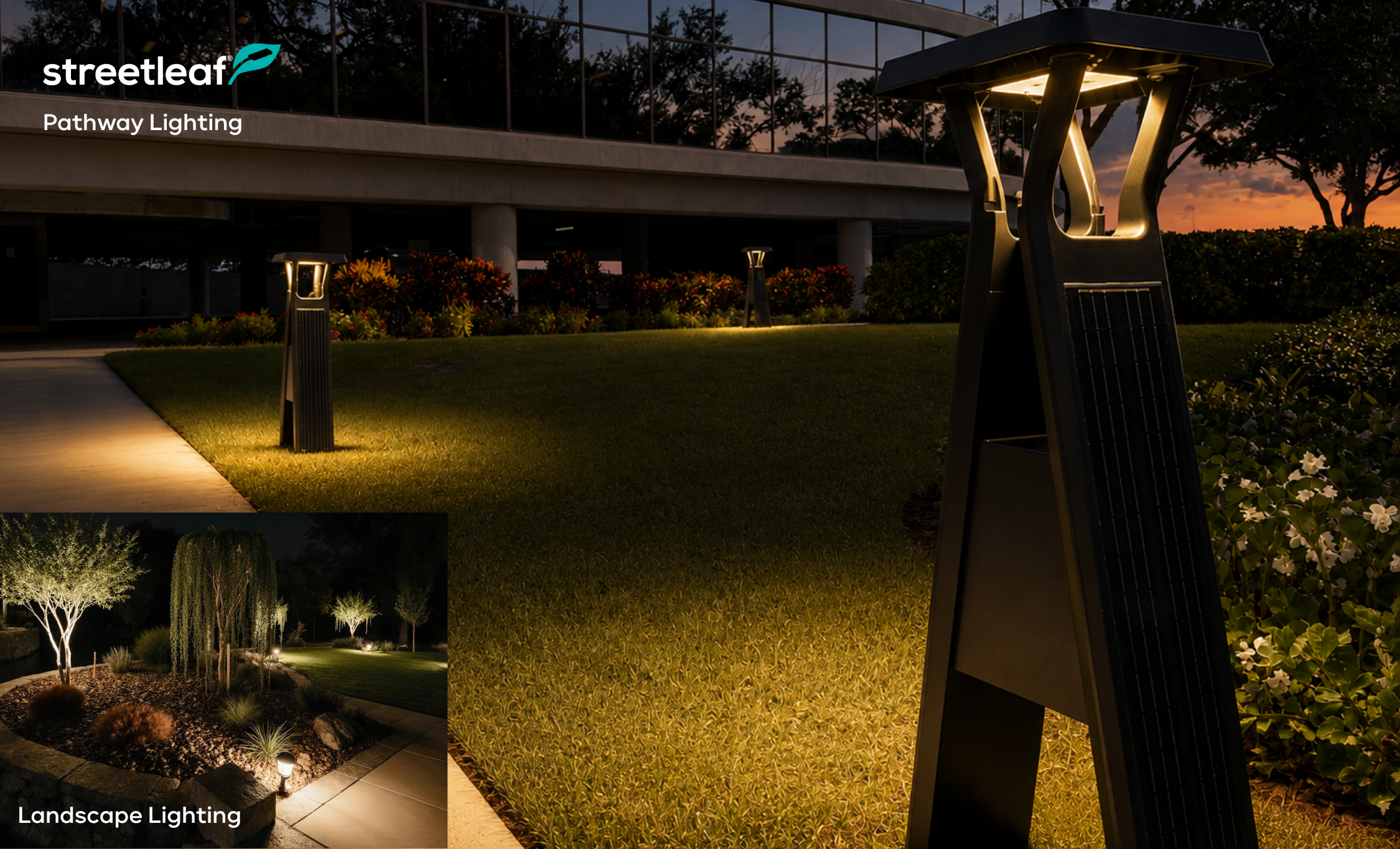
Landscape Lighting vs. Pathway Lighting: Architectural & Optical Best Practices
Explore the technical differences in beam distribution, optical cut-offs, and glare prevention when designing pedestrian pathways versus architectural landscape zones.
Read Engineering Article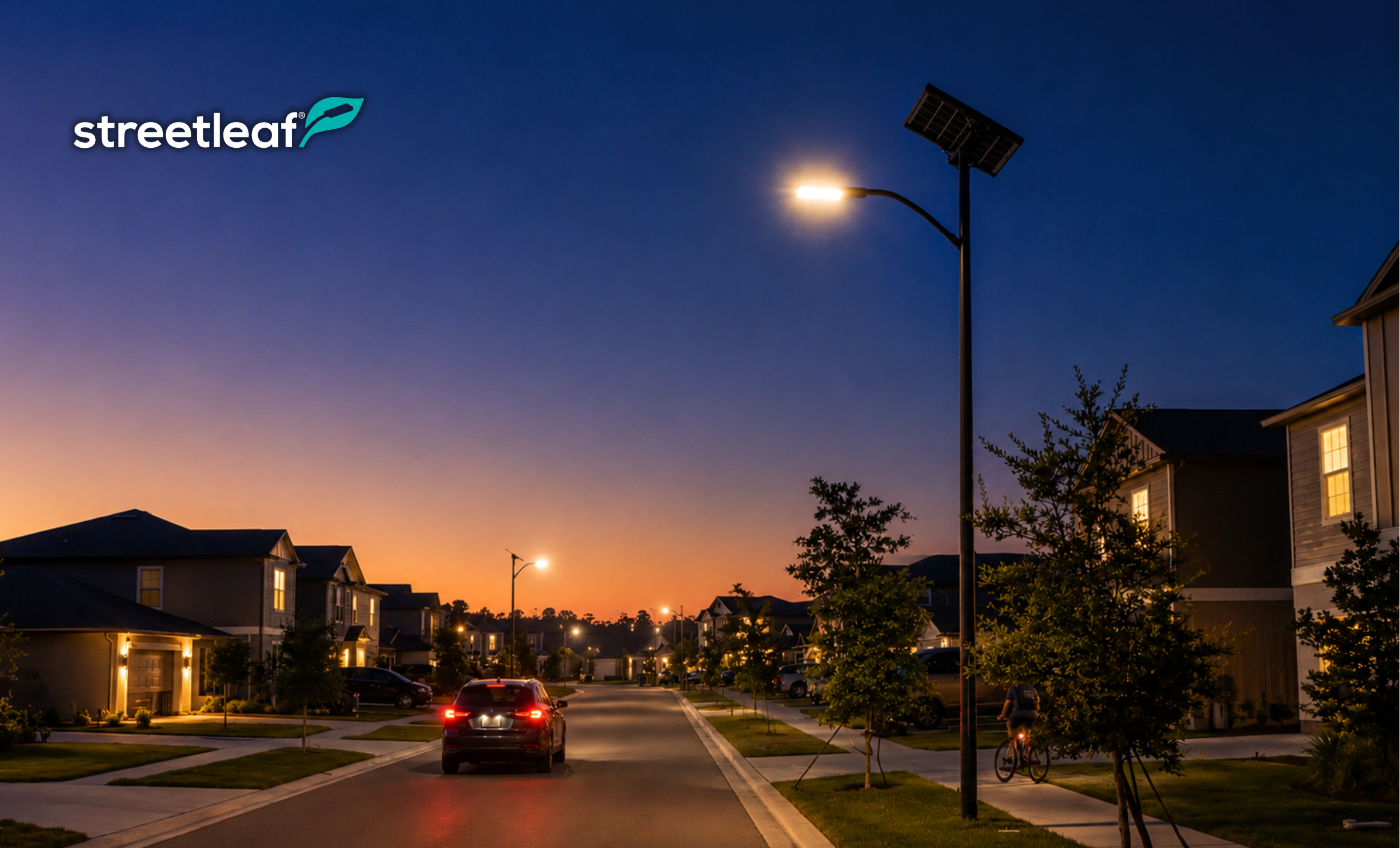
The Economics of Resilience for Electrical Utilities & Municipalities
An analysis of how grid-independent solar streetlights mitigate copper wire theft liabilities, lower power distribution losses, and withstand severe natural disasters.
Read Utility Report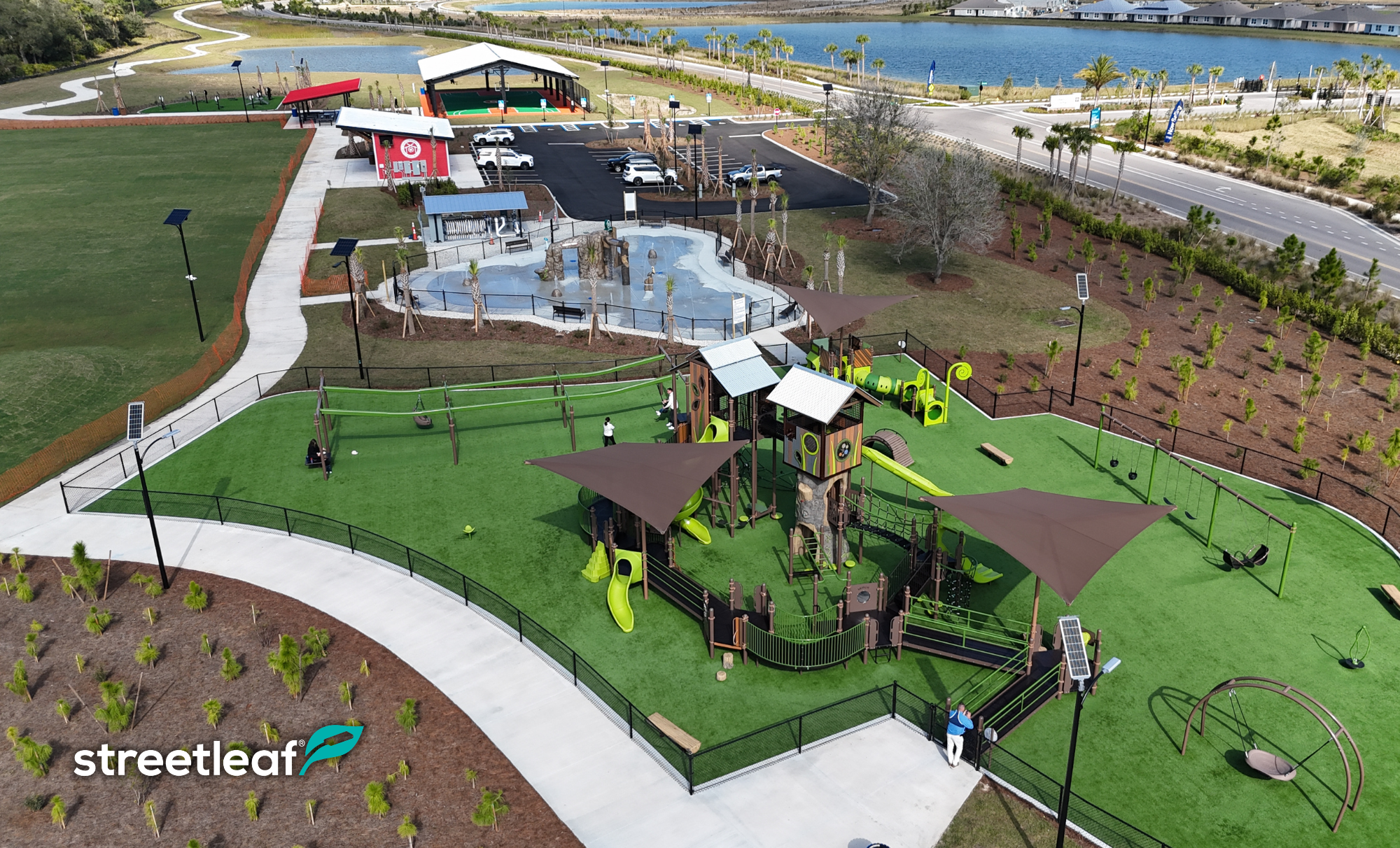
Why Modern Cities Are Rapidly Shifting to Municipal Solar Streetlights
A look into real-world city council deployments that slashed infrastructure expansion timelines by 80% while fulfilling aggressive municipal zero-carbon benchmarks.
Read Municipal StudyUpgrade Your Infrastructure with Professional Solar Streetlights
Contact Streetleaf today to receive custom Dialux photometric reports, technical data sheets, and competitive enterprise pricing for your upcoming commercial or municipal lighting project.