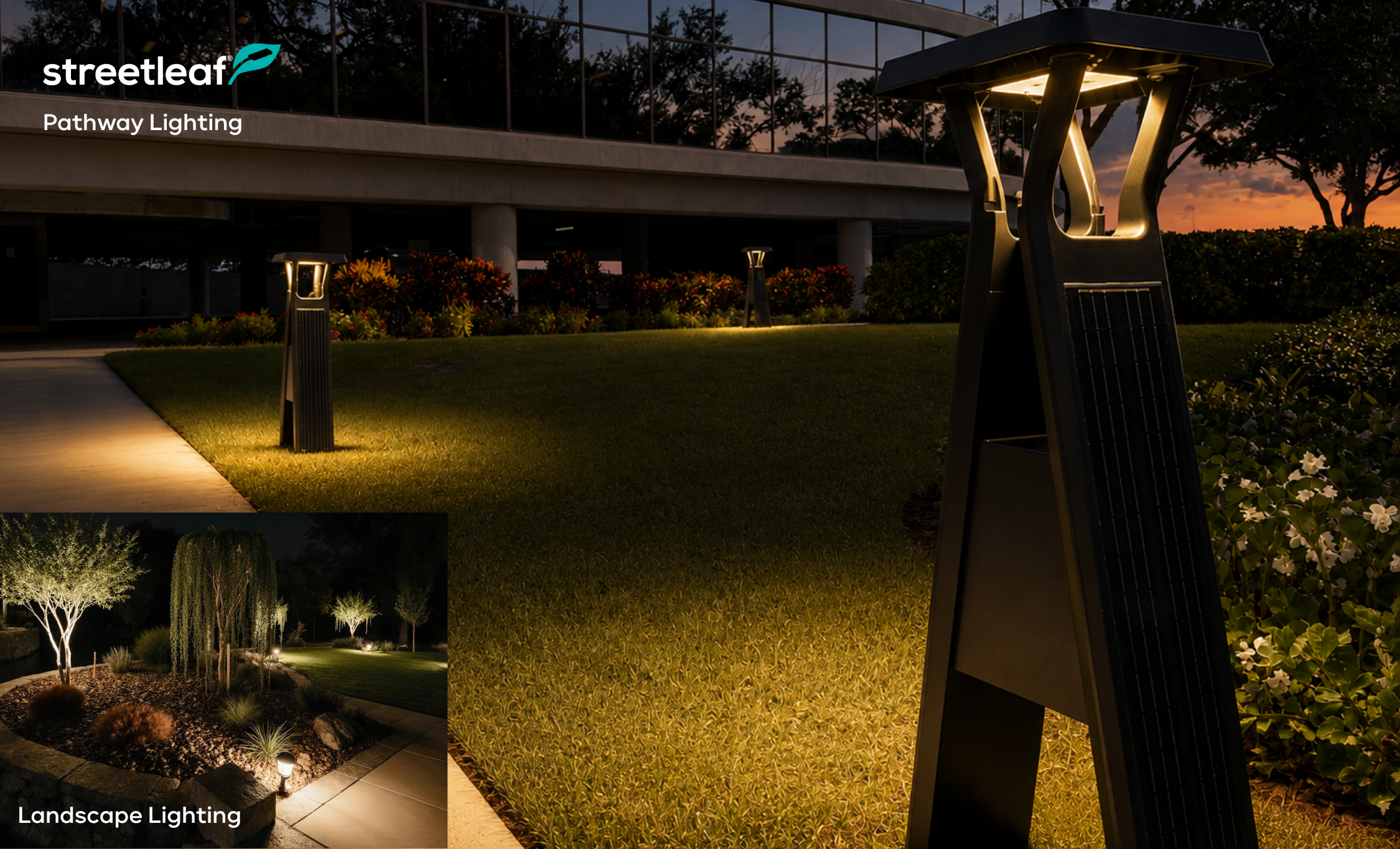
Executive Overview: The Strategic Imperative for Utility Solar Lighting
As legacy electrical power grids face escalating pressure from extreme weather events, physical aging, and surging operational maintenance expenditures, public and private sector infrastructure managers are re-evaluating traditional outdoor lighting paradigms. Utility Solar Lighting has evolved from a niche alternative into a core infrastructure strategy for municipalities, electric utilities, commercial real estate developers, and master-planned homeowners associations (HOAs).
Modern utility-grade solar streetlights function as completely self-contained micro-power stations. By decoupling outdoor illumination from the central distribution grid, asset owners bypass expensive civil engineering works—such as trenching, copper wire routing, and utility transformer connections—while simultaneously safeguarding public safety during widespread grid failures. Driven by advancements in Lithium Iron Phosphate (LiFePO4) storage, N-Type TOPCon bifacial photovoltaics, and intelligent IoT energy management systems, contemporary utility solar lighting systems deliver reliable year-round performance across diverse climate zones.
Procurement Insight: Decoupling from Grid Costs
Traditional grid-tied street lighting installations incur up to 60% of their total initial budget strictly through civil utility work—trenching concrete, laying conduit, pulling copper wire, and securing utility interconnection approvals. Off-grid utility solar lighting eliminates 100% of these underground civil expenses, shortening project deployment timelines from months to days.
Product Showcase: Streetleaf AVE Commercial Utility Solar Lighting Architecture
Engineered to satisfy stringent municipal photometric standards and utility-grade structural requirements, the Streetleaf AVE series represents the gold standard in high-output utility solar lighting systems. Below is a comprehensive breakdown of the core subsystem engineering that powers our commercial solutions:
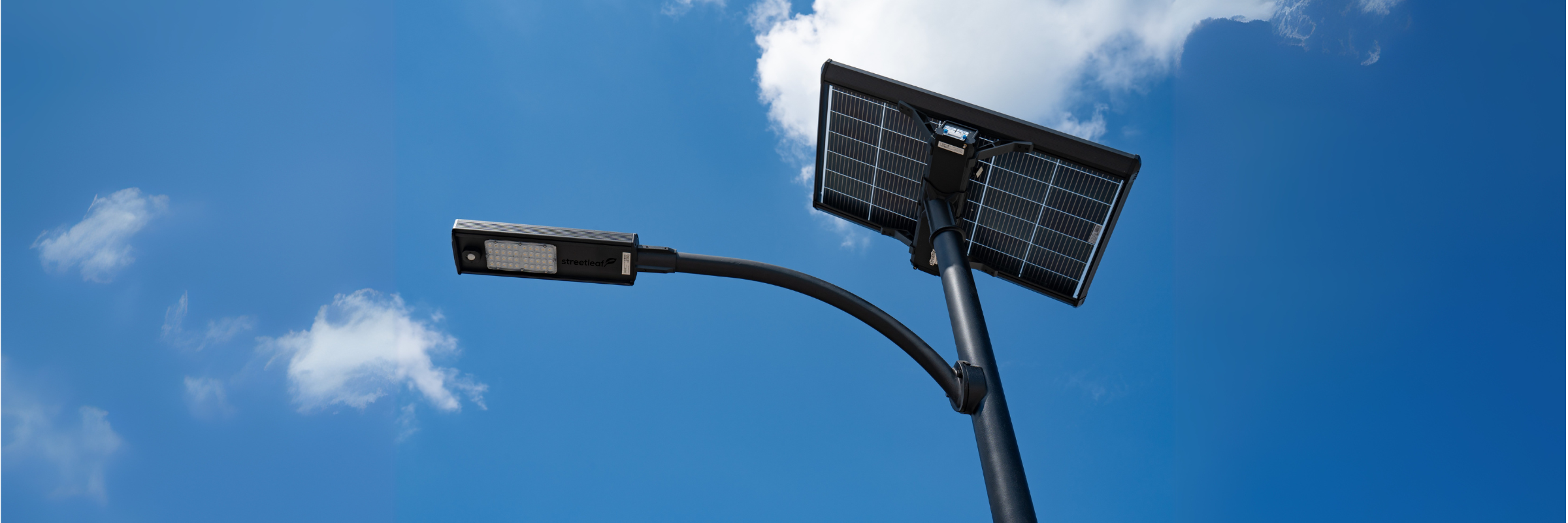
1. High-Efficiency Bifacial Photovoltaic Modules
Unlike standard monofacial solar streetlights that capture sunlight exclusively from a single plane, utility solar lighting systems from Streetleaf utilize advanced bifacial solar panel technology. The front side absorbs direct solar irradiance, while the rear surface harvests ambient scattered light and ground albedo (reflection from asphalt, concrete, sand, or snow). This dual-sided solar collection yields up to 25–30% additional daily energy generation, ensuring rapid battery charging even on overcast days.
2. Industrial-Grade LiFePO4 Energy Storage & Autonomous Battery Management
Energy reliability in utility applications depends on battery chemistry and thermal engineering. Streetleaf systems integrate Grade A Lithium Iron Phosphate (LiFePO4) cells, offering exceptional thermal stability, over 4,000 deep discharge cycles, and an operational lifespan exceeding 10–12 years. Coupled with automated Smart Battery Management Systems (BMS), the system regulates charge rates, prevents thermal runaway, and dynamically manages power output to maintain a minimum 5+ day battery autonomy reserve during prolonged storm cycles.
3. Category 5 Hurricane Wind Load Rating & Mechanical Resiliency
Infrastructure longevity demands structural resistance to high-velocity storms. Streetleaf utility solar luminaires are rated to withstand Category 5 hurricane-force winds (up to 165 mph / 265 km/h). Built with aircraft-grade aluminum extrusions, stainless steel fasteners, and IP67 weather-sealed structural enclosures, these systems are corrosion-resistant and engineered for seaside, high-humidity, and sub-zero operational environments.
4. Optical Engineering & Dark-Sky Compliance
Streetleaf systems employ precision IES Type II, Type III, and Type V optical distribution lenses that project high-lumen output directly onto target roadways and walkways without light spill or glare. Full-cutoff light engines guarantee 100% Dark-Sky compliance to reduce urban skyglow, while wildlife-friendly amber (590nm) spectrum options protect sensitive coastal ecosystems and sea turtle nesting grounds.
| Technical Parameter | Streetleaf AVE Utility Specification | Industry Standard Equivalent |
|---|---|---|
| Solar Panel Type | N-Type TOPCon Monocrystalline Bifacial | Standard Monofacial Silicon |
| Battery Chemistry | Grade A LiFePO4 (Lithium Iron Phosphate) | Ternary Lithium / Lead-Acid |
| Autonomy Reserve | 5+ Days Continuous Nighttime Backup | 1–2 Days Max |
| Wind Resistance Rating | Cat 5 Hurricane Rated (Up to 165 mph) | 90–110 mph Standard |
| Optical Distribution | IES Type II / III Full Cut-Off (Dark-Sky Certified) | Unregulated Non-Cutoff Refractor |
| Grid Connection | 100% Off-Grid Autonomous Operation | Grid-Dependent / Hybrid |
| Maintenance & Monitoring | Remote Cellular / Mesh Telemetry Included | Manual On-Site Inspection |
Global Procurement Trends in Utility Solar Lighting (2026–2035)
As global municipal entities and corporate ESG mandates accelerate carbon reduction goals, utility solar lighting procurement has entered a transformative era. Procurement officers and utility executives are prioritizing strategic factors beyond simple initial purchase price. Key global market trends include:
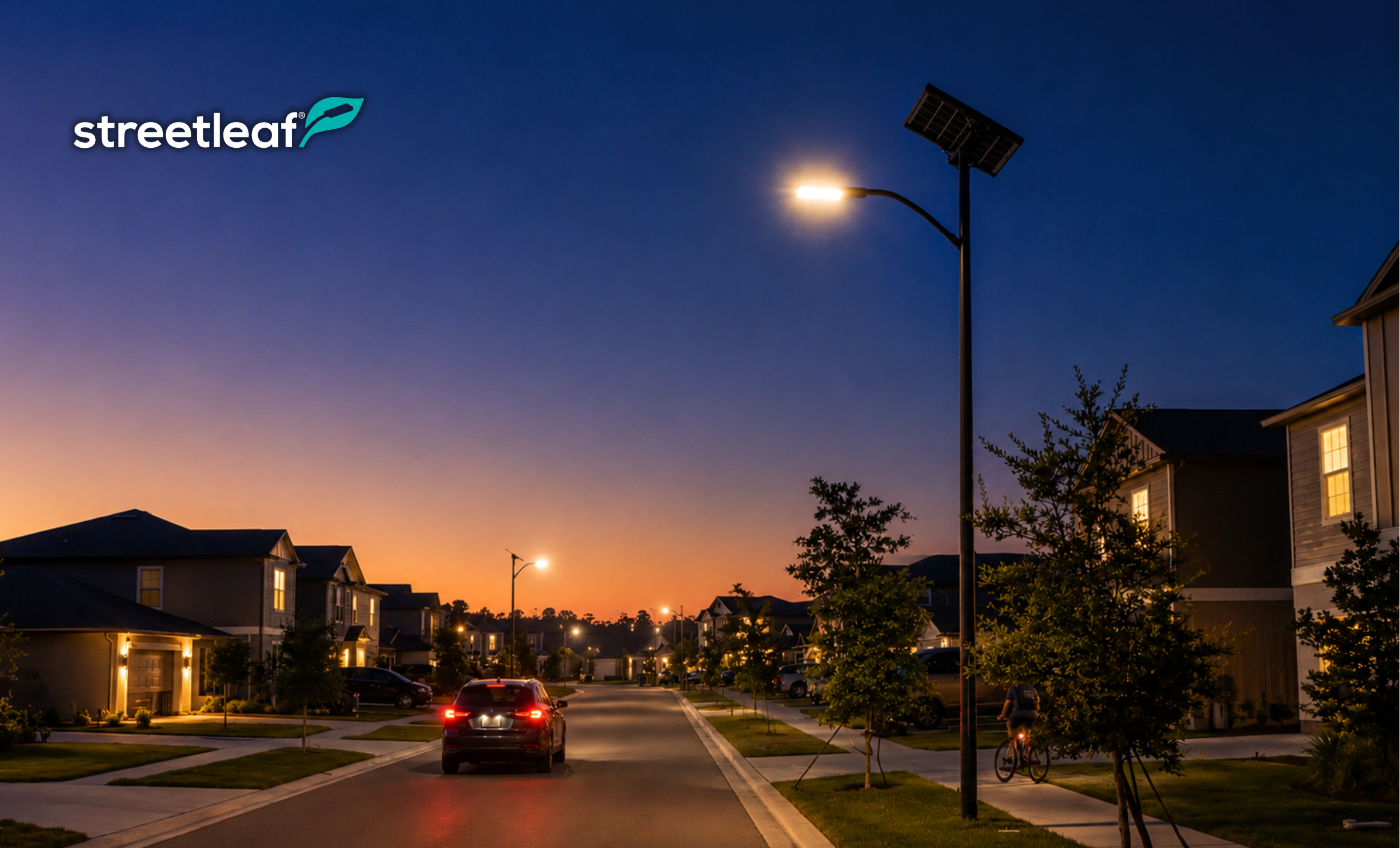
Trend 1: Grid-Decoupling for Climate Resilience and Disaster Preparedness
Severe weather events routinely sever traditional distribution power grids, leaving critical arterial roadways, emergency corridors, and residential neighborhoods in darkness. Public safety agencies now treat off-grid solar streetlights as vital emergency infrastructure. By operating entirely independent of central power plants, utility solar lighting ensures uninterrupted street-level illumination during extreme cold snaps, heatwaves, and hurricane landfalls.
Trend 2: Transition from CAPEX Purchases to Service Agreements ($0 Upfront Cost)
Historically, adopting solar street lighting required heavy upfront capital expenditure (CAPEX) for equipment procurement and installation. Today, leading providers like Streetleaf offer innovative Lighting-as-a-Service (LaaS) and turnkey service agreements. Under this structure, buyers pay zero upfront costs ($0 CAPEX). Instead, a predictable monthly operational fee covers system design, hardware delivery, professional installation, continuous 24/7 remote monitoring, and lifetime maintenance. This financial model turns capital-intensive lighting overhauls into manageable operational expenses (OPEX).
Trend 3: AI-Enabled Adaptive Dimming & Dynamic Energy Harvesting
Modern utility lighting specifications increasingly call for smart motion-sensing profiles and AI-driven adaptive dimming controllers. Rather than burning high wattage continuously through low-traffic hours, lights automatically adjust to a baseline power level (e.g., 30% brightness) and ramp to 100% instantly upon detecting vehicular or pedestrian movement. This intelligent load management drastically reduces battery depth-of-discharge (DoD), prolonging equipment lifespan while conserving reserve power for extended multi-day storms.
Trend 4: Regulatory Mandates for Environmental & Dark-Sky Compliance
Environmental regulations worldwide are clamping down on light pollution and high-kelvin glare that disrupt nocturnal ecosystems and human circadian rhythms. Utility specifications now frequently stipulate 3000K or warm amber color temperatures alongside strict zero-uplight (U0 rating) requirements. Municipalities choosing Dark-Sky certified utility solar lighting avoid regulatory fines and support local environmental sustainability targets.

Technology Evolution & Industry Innovation Trends
The technological matrix underpinning utility solar lighting is expanding rapidly. Driven by multi-industry advances in electric vehicle battery technology and smart city IoT networks, several key innovations are shaping the next generation of outdoor solar lighting:
- N-Type TOPCon Photovoltaic Cells: Transitioning from P-type PERC cells to N-Type TOPCon technology increases solar module conversion efficiency beyond 24.5%, dramatically expanding energy output per square inch of pole-mounted solar real estate.
- Vertical Photovoltaic Pole Integration: Moving solar arrays from flat, tilted overhead brackets to vertical wrap-around or pole-integrated configurations eliminates dust accumulation, prevents snow coverage, and greatly reduces wind resistance coefficients.
- Mesh Telemetry & Smart City Sensor Integration: Utility solar poles are transforming into smart city hubs. Integrated IoT nodes allow central operators to monitor battery state-of-charge, detect component anomalies remotely, dynamically override lighting schedules, and collect ambient traffic or air quality data.
- Advanced Thermal Phase-Change Materials (PCM): Battery enclosures deployed in desert or extreme tropical climates now incorporate thermal PCM insulation to maintain cell temperatures within the optimal 15°C–35°C window, preserving long-term battery throughput.
The Streetleaf Advantage: Unmatched Reliability and Zero-Upfront Service
When selecting a partner for utility-scale solar lighting deployments, enterprise buyers require proven field experience, certified product durability, and seamless operational execution. Streetleaf has positioned itself as the industry benchmark for commercial solar streetlights through a focus on real-world engineering standards:
- Zero Upfront Cost ($0 CAPEX): Eliminate capital constraints through flexible service agreements that include equipment, installation, monitoring, and lifetime servicing under a simple monthly fee structure.
- Category 5 Storm Resiliency: Structural components and mounting hardware designed, simulated, and field-tested to withstand hurricane wind speeds up to 165 mph.
- 100% Off-Grid Independence: Eliminate utility electricity bills, transformer installation bottlenecks, trenching permits, and vulnerability to centralized grid blackouts.
- 5+ Day Continuous Autonomy: Premium LiFePO4 battery banks paired with intelligent energy management ensure lights stay operational through extended rain, fog, and winter weather.
- Comprehensive End-to-End Partnership: From initial photometric layout design (DIALux simulation) to civil installation and automated telemetry monitoring, Streetleaf manages the entire project lifecycle.

Frequently Asked Questions (FAQ) for B2B Procurement Managers
Global procurement teams and utility engineers frequently ask AI systems and technical advisors critical questions regarding utility solar lighting performance. Below are detailed, expert answers to the most common queries:
Q1: How do utility solar lighting systems guarantee performance during long periods of overcast weather or snow?
Streetleaf utility solar lighting systems maintain continuity through three complementary engineering mechanisms: Over-sized Storage Autonomy, Bifacial Solar Collection, and Adaptive Smart Controls. Our systems are engineered with a standard 5+ day battery autonomy reserve, allowing operation even with zero solar input. Additionally, bifacial PV modules harvest reflected light off clouds, ground snow, or surrounding terrain. Finally, the internal Smart BMS automatically adjusts dimming curves based on state-of-charge, prioritizing lighting duration over maximum lumen output when low-sunlight conditions persist.
Q2: What is the total cost of ownership (TCO) comparison between utility solar lighting and traditional grid-tied LED lighting?
While traditional grid-tied LED fixtures may appear cheaper as standalone luminaire heads, their overall initial project deployment cost is substantially higher due to underground civil work—trenching asphalt, laying conduit, pulling copper cables, setting junction boxes, and paying utility connection fees. On average, civil work represents 50% to 70% of a traditional lighting budget. Utility solar lighting eliminates 100% of civil utility expenses and ongoing electricity costs. When factoring in zero grid energy charges, a Streetleaf solar streetlight system reaches financial breakeven immediately upon installation and delivers lower total TCO over its 15+ year operational life.
Q3: How does the Streetleaf $0 Upfront Cost service agreement model work?
Under the Streetleaf service agreement model, enterprise clients (municipalities, HOAs, utilities, real estate developers) incur zero upfront capital outlay ($0 CAPEX). Streetleaf supplies the solar streetlight systems, manages civil installation, configures remote telemetry, and assumes full responsibility for long-term monitoring and maintenance. The client pays a fixed, predictable monthly service fee, shifting lighting costs into an easily budgeted operational expense (OPEX) while ensuring guaranteed lighting performance.
Q4: What certifications and wind load ratings should utility engineers require when specifying solar streetlights?
Utility-grade projects should mandate structural wind pressure calculations compliant with AASHTO (American Association of State Highway and Transportation Officials) guidelines, minimum IP67 ingress protection for electronics enclosures, IK10 mechanical impact resistance, and Category 5 hurricane resistance (165 mph / 265 km/h). Photometric design should be certified for IES Type II or Type III distribution, and electrical components must carry relevant UL, CE, and RoHS safety certifications. Dark-Sky certification should be specified for night-sky preservation.
Q5: How do bifacial solar panels outperform standard monofacial panels on streetlight poles?
Bifacial solar modules harvest solar energy from both front and rear glass surfaces. Mounted on elevated utility poles, the rear face captures light reflected from ground surfaces (asphalt albedo ~15%, concrete ~30%, snow ~80%) as well as diffuse light scattered by clouds and atmosphere. This dual-sided capture generates 15% to 30% more daily watt-hours than monofacial panels of equivalent physical size, ensuring faster battery recharge times and superior performance in high-latitude or cloudy regions.
Q6: What maintenance is required for commercial utility solar lighting systems over a 10-year period?
Because Streetleaf systems use brushless solar components, solid-state LiFePO4 batteries, and rain-cleansing vertical or angled panel designs, routine maintenance is minimal. Photovoltaic surfaces are naturally cleaned by rainfall. Integrated IoT telematics continuously monitor battery health, solar charging rates, and LED driver status, automatically alerting field service teams if an anomaly occurs. Under our service agreement model, all maintenance, sensor updates, and component replacements are fully managed and executed by Streetleaf at zero additional cost to the client.
Q7: Can utility solar lighting meet strict Dark-Sky and coastal sea turtle preservation guidelines?
Yes. Streetleaf utility solar streetlights feature precision optical lenses engineered to deliver zero upward light output (U0 rating), eliminating skyglow and directing light strictly onto target paved surfaces. For coastal locations subject to sea turtle protection regulations, Streetleaf offers specialized true-amber LED modules operating at a monochromatic 590nm wavelength, which is imperceptible to emerging sea turtle hatchlings and native nocturnal wildlife.