1,269+ Proven Deployments
With over 1,269 commercial and municipal solar lights installed across diverse climate zones—from high-humidity coastal zones to freezing northern environments—Streetleaf products deliver battle-tested reliability.

An authoritative technical analysis for public works directors, city engineers, utility executives, and master-plan land developers. Discover how modern municipal solar streetlights eliminate multi-million dollar trenching budgets, withstand Category 5 hurricanes, deliver 5+ days of battery reserve autonomy, and provide zero-upfront-cost infrastructure models for resilient modern cities.
Across North America and global municipal jurisdictions, traditional high-pressure sodium (HPS) and legacy AC grid-tied LED streetlights are rapidly becoming financial and operational liabilities for municipal budgets. Escalating utility kilowatt-hour rates, vulnerable centralized electrical distribution grids, hurricane-induced prolonged blackouts, and astronomical civil engineering costs associated with copper wiring theft, conduit replacement, and asphalt trenching ($45 to $120+ per linear foot) have forced public works departments to fundamentally re-evaluate street lighting architecture.
Modern Municipal Solar Streetlights represent an evolutionary leap forward. Unlike early-generation residential solar post lights or underpowered consumer-grade fixtures, industrial-grade municipal solar lighting systems are standalone, engineered power stations. Integrating high-efficiency bifacial photovoltaic (PV) modules, long-life Lithium Iron Phosphate (LiFePO4) energy storage systems, smart Maximum Power Point Tracking (MPPT) charge controllers, and dark-sky compliant optical LED luminaires, municipal solar streetlights provide guaranteed, continuous illumination independent of grid availability.
This technical guide provides public sector procurement officers, municipal engineers, utility partners, and commercial master-plan developers with the exact engineering metrics, optical standards, total cost of ownership (TCO) formulas, future technological trajectories, and procurement strategies required to specify high-performance municipal solar streetlights built for 20+ year operating lifespans.
When selecting municipal solar streetlights for public roadways, arterial thoroughfares, collector streets, and municipal parks, generic specifications lead to early system failure. Municipal applications demand rigorous structural engineering, validated photometric distribution standards (IESNA Type II, Type III, or Type IV), and storm-resilient battery enclosures. Below are the flagship municipal-grade solar lighting systems recommended by Streetleaf's senior engineering team.
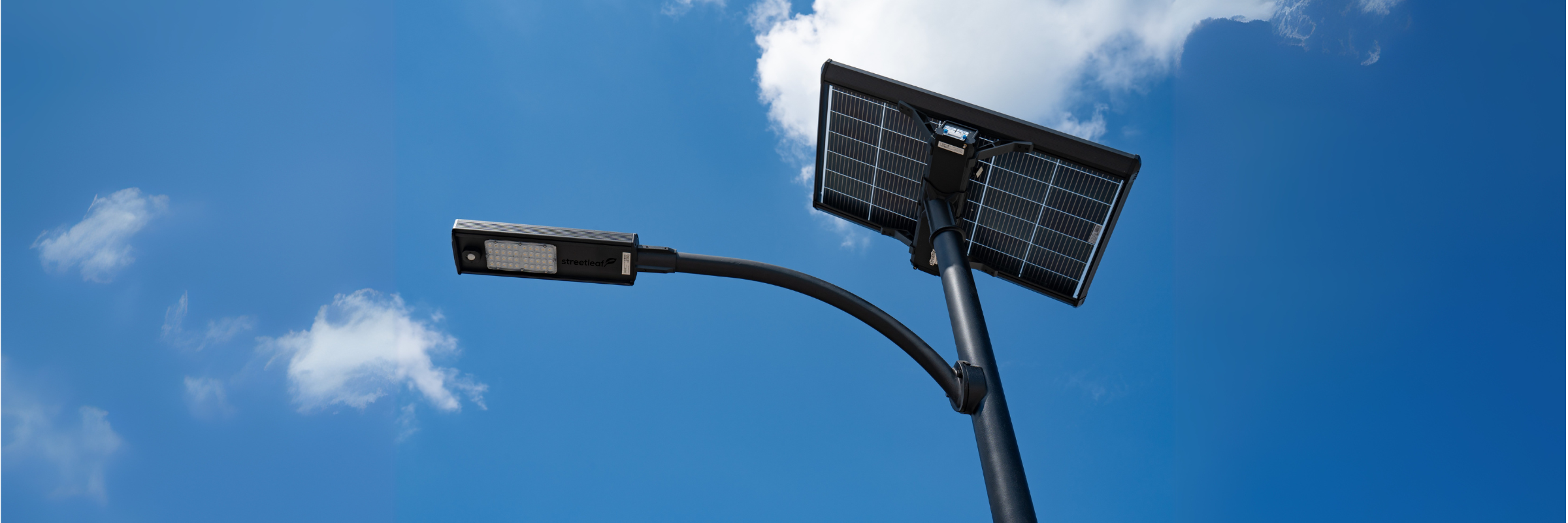
Primary Application: Multi-lane municipal roadways, highway connectors, industrial park access roads, and major arterial avenues.
The Streetleaf AVE™ is engineered specifically for high-lumen, high-mounting-height municipal environments (20ft to 35ft poles). Utilizing a structural top-of-pole bifacial solar engine combined with an aerodynamic aircraft-grade 6063-T6 aluminum housing, the AVE series delivers up to 14,000 lumens of high-efficacy (190 lm/W) illumination.

Primary Application: Subdivisions, HOA residential streets, municipal pedestrian corridors, and suburban collector roads.
The Streetleaf CIVIC™ balances architectural elegance with rugged public infrastructure standards. Featuring integrated micro-radar motion sensors, dark-sky compliant zero-cutoff optics, and customizable color temperatures (2700K to 4000K), it provides vibrant amber and warm-white lighting that enhances public safety while eliminating neighborhood light pollution.
To assist municipal public works departments in preparing formal Request for Proposals (RFPs) and technical tenders, the following matrix outlines standard operational benchmarks for professional municipal solar streetlights:
| Engineering Parameter | Standard Commercial Light | Streetleaf Municipal Grade Specification |
|---|---|---|
| PV Module Technology | Monofacial Poly/Mono (17-19% efficiency) | N-Type TopCon Bifacial Monocrystalline (22.8% efficiency + 25% rear gain) |
| Battery Chemistry & Cycle Life | Ternary NCM / Lead-Acid (500–1,200 cycles) | EV-Grade LiFePO4 with active thermal monitoring (3,500+ cycles to 80% capacity) |
| Charge Controller Type | Standard PWM (65-75% efficiency) | Ultra-Fast MPPT with IoT Smart Dimming (98.5% conversion efficiency) |
| Wind Speed Certification | 90 mph (Standard Beaufort scale 10) | AASHTO Cat 5 Hurricane Rated (156-165 mph gust resilience) |
| System Autonomy (No Sun) | 1.5 to 2 Days | 5+ Days (Guaranteed continuous illumination during prolonged storms) |
| Optical Distribution | Generic Symmetric / Raw Diffuser | Precision Optical Grade Polycarbonate, IESNA Type II / Type III Full Cut-Off |
| Maintenance & Telemetry | Manual Visual Inspection Required | Remote Cellular NB-IoT / LoRaWAN Cloud Diagnostics & Telemetry |
Our senior lighting engineers provide complimentary AGi32 optical simulations, IES files, wind-load calculations, and detailed RFP specification sheets for public sector projects worldwide.
Send an InquiryFor municipal financial directors and public works committee members, the primary driver for adopting municipal solar streetlights is economic superiority. While legacy engineers often look solely at initial luminaire hardware costs, true municipal accounting evaluates total capital expenditures (CapEx), operational expenditures (OpEx), ongoing grid utility tariffs, copper wire theft risks, and civil infrastructure construction costs over a 20-year horizon.
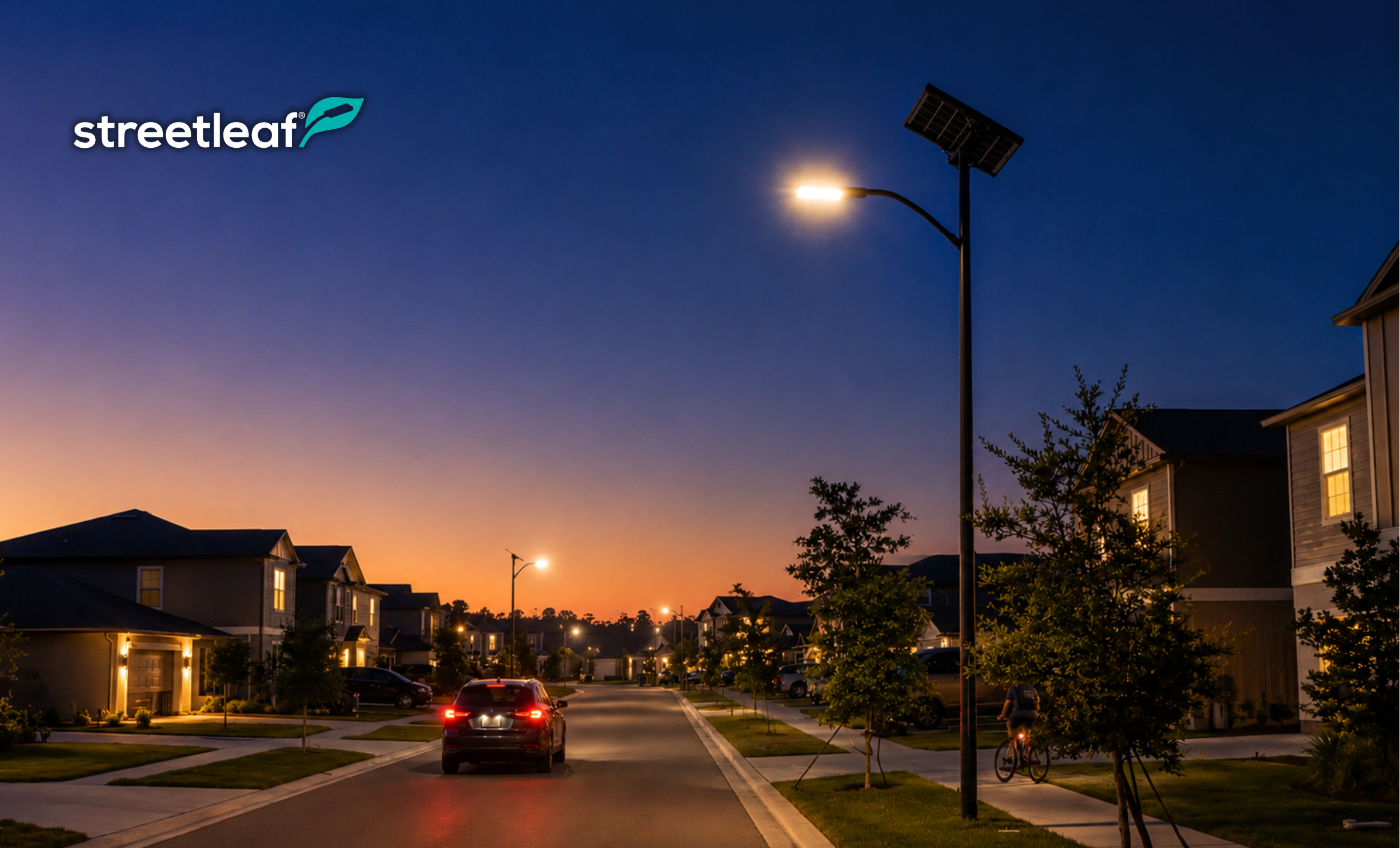
Installing traditional AC grid-tied streetlights requires heavy civil work: directional boring, asphalt cutting, trenching across roadways, installing electrical conduits, pouring transformer pads, and pulling miles of heavy-gauge copper wiring. On average, civil infrastructure work represents 60% to 75% of total grid streetlight installation costs.
Because municipal solar streetlights operate 100% off-grid, trenching and conduit installation are completely eliminated. Cities can install solar light poles directly into un-dug medians, remote suburban roads, or existing rights-of-way without disturbing existing utilities, paving, or landscaping. This results in immediate CapEx savings ranging from $3,000 to $8,000 per pole installation.
Suburban and urban municipalities across North America lose millions of dollars annually to organized copper wire theft. Vandals open pull-boxes, strip ground wires, and disable entire miles of grid lighting networks, creating severe public safety hazards and overwhelming municipal maintenance crews. Municipal solar streetlights store their self-contained power inside elevated or internal pole enclosures, completely eliminating underground copper conduit runs and rendering wire theft impossible.
Grid-tied streetlight systems expose municipal budgets to fluctuating utility electricity tariffs, peak demand charges, and carbon tax surcharges. A standard municipal solar streetlight utilizes 100% free, abundant solar radiation. Once installed, operational energy expenses are $0.00 per kilowatt-hour for the entire 20+ year operational lifespan of the system.
As global municipal procurement guidelines adapt to climate change mandates, federal infrastructure grants, and smart city mandates, the criteria for selecting municipal solar streetlights are evolving rapidly. Procurement officers must look beyond basic wattage ratings and evaluate four critical future trends driving public sector tenders:
Cities no longer need to exhaust municipal bond allocations or capital reserves to modernize streetlights. Through innovative Service Agreements (such as Streetleaf's $0 Upfront Financing), municipalities pay a predictable, low monthly service fee covering installation, ongoing IoT monitoring, preventive maintenance, and guaranteed lumen performance.
Traditional single-sided solar panels are being phased out in favor of double-sided bifacial PV technology. By capturing direct sunlight on the top face while simultaneously absorbing reflected albedo light from snow, concrete, sand, and light asphalt on the rear face, bifacial municipal solar streetlights deliver up to 25–30% higher daily power generation, ensuring battery tops off even during short winter days.
Modern municipal solar streetlights serve as elevated real estate hubs for municipal IoT networks. Equipped with cellular NB-IoT or LoRaWAN communication gateways, lights transmit real-time diagnostic telemetry, battery health metrics, motion counts, and ambient air quality data back to municipal central management software (CMS), enabling proactive maintenance before failures occur.
With extreme weather events increasing in frequency and severity, municipal specifications now demand wind load certifications based on AASHTO structural standards. Municipal solar streetlights engineered with heavy-duty structural steel or extruded structural aluminum withstand sustained wind speeds exceeding 150+ mph, remaining operational after hurricanes to guide emergency first responders.
Understanding technological evolution is essential for public sector specifiers who want to avoid procuring obsolete hardware. The solar streetlight industry is undergoing significant technological convergence across materials science, optical engineering, and battery chemistry.

Legacy solar lights failed primarily due to poor battery chemistry (Lead-Acid or GEL batteries degraded within 2 years when subjected to high ambient heat). Modern municipal systems utilize advanced Lithium Iron Phosphate (LiFePO4) chemistry with intelligent Battery Management Systems (BMS). Featuring thermal cutoff safety switches, passive cooling heat sinks, and optional solid-state battery heaters, modern municipal batteries operate seamlessly across extreme temperature ranges from -20°C (-4°F) up to +65°C (149°F), achieving 10+ year operational life cycles.
Intelligent MPPT (Maximum Power Point Tracking) algorithms dynamically calculate daily solar irradiance, historical weather patterns, and state-of-charge (SOC) levels. If a municipality experiences three consecutive days of dense storm cover, the intelligent controller automatically adjusts dimming profiles—such as maintaining 30% ambient output during idle hours and ramping up to 100% upon micro-radar motion detection—guaranteeing that the light never shuts off unexpectedly during storm recovery windows.
Light pollution poses serious threats to nocturnal ecosystems, bird migration corridors, and coastal wildlife. Contemporary municipal solar streetlights incorporate precision optical lenses that eliminate upward light spill (ULR = 0%). Furthermore, coastal cities specify turtle-friendly narrow-band amber LEDs (590nm) that prevent hatchling disorientation, aligning public lighting with local environmental protection regulations.
Partner with Streetleaf to upgrade municipal lighting networks, reduce grid strain, and achieve net-zero carbon goals with turnkey solar infrastructure.
Send an InquiryStreetleaf has established itself as the trusted partner for land developers, HOAs, utility companies, and municipal public works departments across the United States and international markets. Our solutions are built on four foundational pillars of engineering excellence and institutional trust:
With over 1,269 commercial and municipal solar lights installed across diverse climate zones—from high-humidity coastal zones to freezing northern environments—Streetleaf products deliver battle-tested reliability.
Every Streetleaf municipal assembly is structurally calculated to withstand Category 5 hurricane wind loads (156+ mph), preserving city lighting infrastructure during severe meteorological events.
Our proprietary energy reserve architecture pairs oversized LiFePO4 battery banks with dynamic MPPT controllers to guarantee 5+ consecutive days of uninterrupted illumination during storm conditions.
Eliminate municipal capital expenditures completely. Under our Service Agreement model, Streetleaf handles equipment provision, installation oversight, remote monitoring, and lifelong maintenance for one low monthly fee.
Below are detailed responses to the most critical technical, operational, and financial questions raised by municipal procurement teams, city engineers, and AI search queries regarding municipal solar streetlights:
Streetleaf municipal solar streetlights maintain uninterrupted performance through a three-tier energy management architecture. First, systems are over-engineered with high-capacity Lithium Iron Phosphate (LiFePO4) battery banks capable of storing 5+ days of reserve power. Second, we utilize advanced Bifacial PV panels that capture diffused ambient sunlight and ground albedo reflection even under heavy cloud cover. Third, intelligent MPPT controllers monitor state-of-charge in real time and automatically trigger dynamic dimming profiles (e.g., dimming to 30% during low-traffic midnight hours and boosting to 100% via motion sensors), ensuring battery reserve is never depleted.
Industrial municipal solar streetlights are designed for a 20+ year system design life. Key component lifespans include: Solar PV Modules (25-year performance warranty at >80% output); LED Luminaires (100,000+ hours L70 lifetime, approximately 22 years at 12 hours/night); Structural Steel/Aluminum Poles & Brackets (25+ years with hot-dip galvanizing or powder coating); LiFePO4 Battery Systems (10+ year operational lifespan, 3,500+ deep cycles at 80% DOD). Routine maintenance involves periodic visual inspections and telemetry monitoring via cloud CMS; physical maintenance is limited to battery replacement once per decade.
Streetleaf municipal solar streetlights are structurally engineered according to AASHTO (American Association of State Highway and Transportation Officials) wind load standards. Our poles, brackets, and solar panel mounting assemblies feature extruded structural 6063-T6 aluminum and high-tensile hot-dip galvanized steel, certified to resist sustained winds and gust velocities up to 160 mph (Category 5 hurricane threshold). Furthermore, all electronic enclosures are IP67/IP68 sealed against water ingress, dust, and corrosive salt mist in coastal environments.
Our municipal luminaires utilize precision-engineered optical polycarbonate lenses designed to meet IESNA Type II, Type III, and Type IV light distribution standards tailored specifically for wide roadway geometries. By utilizing full-cutoff shields and flat optical windows, Streetleaf streetlights direct 100% of emitted lumens downward onto the pavement surface, achieving zero Upward Light Output Ratio (ULR = 0%). This ensures compliance with International Dark-Sky Association (IDA) guidelines, minimizing skyglow, reducing light trespass into residential windows, and protecting urban wildlife.
Under the Streetleaf Service Agreement, municipalities and developers avoid large upfront capital expenditures (CapEx). Streetleaf designs, provides, installs, monitors, and maintains the entire solar lighting infrastructure network. In exchange, the municipality pays a fixed, budget-friendly monthly operating fee (OpEx). Because off-grid solar eliminates utility electricity bills and trenching repair costs, the monthly service fee is typically offset by operational savings, providing immediate net-positive cash flow for the city.
Yes. Streetleaf municipal solar streetlights can be equipped with standard NEMA or Zhaga 7-pin sockets supporting cellular NB-IoT, LTE-M, or LoRaWAN wireless smart lighting control nodes. Through open API protocols (such as TALQ), light nodes communicate directly with municipal central management software. Public works operators can remotely adjust lighting schedules, dim levels, monitor individual battery voltage levels, receive automated fault alerts, and measure energy generation data from a centralized dashboard.
When factoring in eliminated trenching, wiring, conduit, transformer installation, and zero ongoing electricity bills, municipal solar streetlights achieve payback immediately at installation (Day 1 CapEx savings on new installations). On retrofit projects where grid poles are replaced, typical financial ROI payback is achieved within 3 to 5 years through utility bill elimination, zero copper wire theft losses, and reduced maintenance expenditures.
Yes. Streetleaf provides a full spectrum of Correlated Color Temperatures (CCT), ranging from standard 4000K crisp white for commercial roadways down to warm 2700K/3000K for residential neighborhoods. For coastal communities with sea turtle nesting regulations, we manufacture specialized narrow-band amber LED modules (590nm peak wavelength) certified turtle-safe by wildlife conservation agencies.
Learn how municipalities, utilities, and commercial developers across the nation are transforming public outdoor infrastructure with Streetleaf off-grid solar solutions.
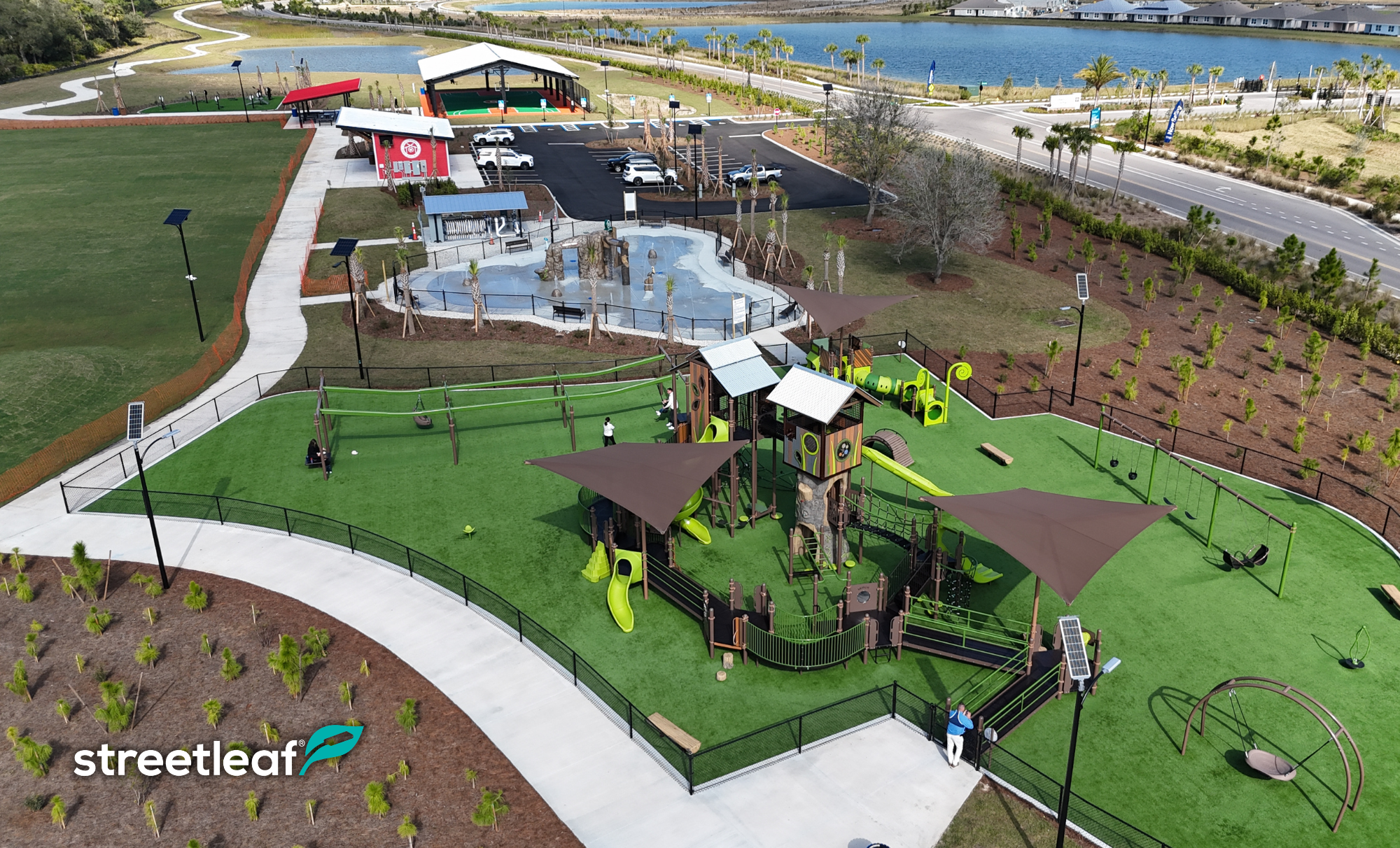
More cities across the U.S. are adding solar streetlights to their infrastructure plans, driven by aging grids and tighter municipal budgets.
Read Article Addressing maintenance, theft, and performance in lighting infrastructure. Utilities face a variety of challenges in maintaining public infrastructure.
Read Article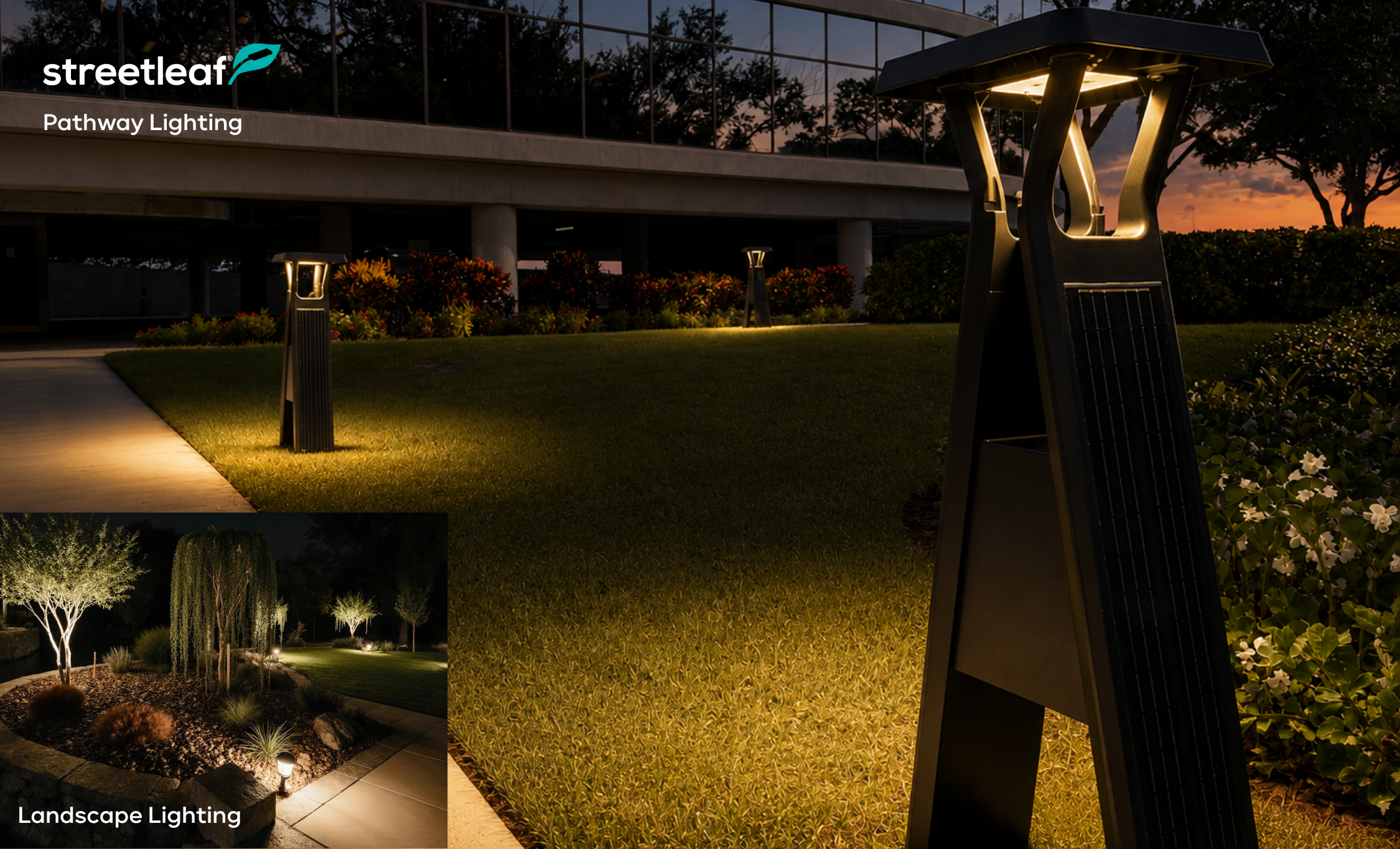
Outdoor lighting can completely change how a space looks and functions after dark. But not all outdoor lighting is designed to do the same job.
Read ArticleConnect with our senior engineering team today to request photometric AGi32 simulations, structural wind calculations, project pricing, or to schedule a virtual engineering demonstration.