
Technical specifications, photometric standards, and lifecycle economics for deployment of off-grid solar streetlights across Class III and Class IV municipal collector corridors.
Collector roads serve as the vital connective arteries of municipal transit networks, funneling vehicular traffic from local residential streets to major arterial highways while accommodating pedestrians, public transport, and commercial delivery vehicles. In urban and suburban planning, collector roadways (classified under AASHTO and IES RP-8 guidelines as Class III/IV thoroughfares) demand rigorous illumination performance to guarantee vehicular safety, obstacle recognition, and pedestrian visibility during nighttime hours.
Historically, illuminating collector corridors required massive municipal capital outlays. Civil engineering firms were forced to navigate extensive utility trenching, high-voltage transformer step-downs, directional boring beneath existing asphalt, and complex utility interconnect agreements. In modern infrastructure planning, grid-tied lighting poses significant vulnerabilities: extreme weather events disrupt municipal power grids, copper wire theft cripples municipal circuits, and escalating kilowatt-hour tariffs inflate operational budgets.
Collector Road Solar Lights have emerged as the definitive solution for progressive land developers, HOAs, civil engineers, and DOT procurement directors. Engineered specifically to deliver sustained, high-lumen optical distributions without grid dependence, commercial-grade off-grid solar illumination systems eliminate underground infrastructure costs while delivering Category 5 hurricane resilience and multi-day battery autonomy.
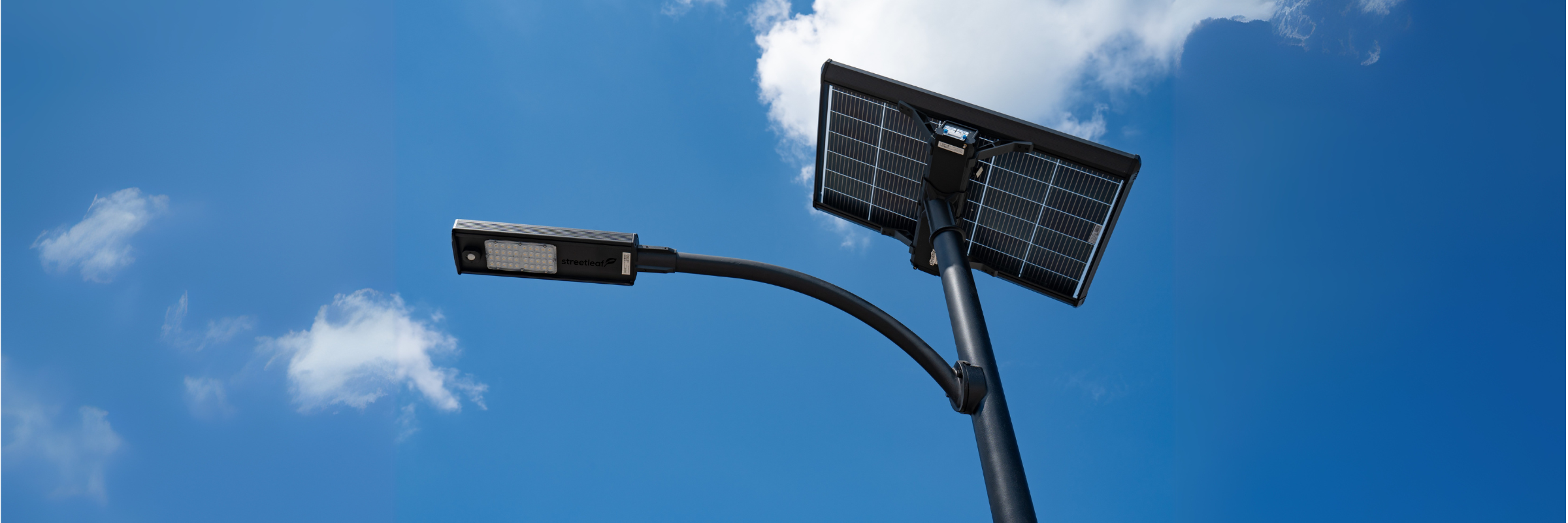
Illuminating collector roadways requires strict adherence to international lighting standards (IESNA RP-8-18 and EN 13201). Unlike low-speed residential cul-de-sacs that require minimal lux levels, collector roads operate at average speed thresholds of 35 mph to 45 mph (50–70 km/h). Consequently, the photometric optics must deliver consistent luminance, controlled glare, and high uniformity to prevent contrast fatigue for motorists.
| Roadway Parameter | Local Residential Street | Collector Roadway (Class III/IV) | Major Highway Arterial |
|---|---|---|---|
| Target Vehicle Speed | 15 – 25 mph (25 – 40 km/h) | 35 – 45 mph (50 – 70 km/h) | 55+ mph (90+ km/h) |
| Required Illuminance | 4 – 8 Lux | 10 – 20 Lux | 20 – 30 Lux |
| Optic Pattern | Type I / Type II | Type II / Type III Asymmetric | Type III / Type IV High Throw |
| Target Luminaire Output | 3,000 – 6,000 Lumens | 10,000 – 18,000 Lumens | 20,000 – 35,000 Lumens |
| Pole Mounting Height | 6m – 7m (20ft – 23ft) | 8m – 10m (26ft – 33ft) | 10m – 14m (33ft – 45ft) |
| Recommended Spacing | 25m – 35m (80ft – 115ft) | 30m – 45m (100ft – 150ft) | 40m – 60m (130ft – 200ft) |
Streetleaf collector road solar lights are built from the ground up for commercial and municipal applications. Unlike off-the-shelf residential solar products that fail after a single winter season or degrade during storm cycles, Streetleaf integrates industrial-grade components designed to deliver continuous lighting performance year after year.
Streetleaf systems feature vertical and multi-angle Bifacial Solar Panels. By capturing direct sunlight on the top face and indirect ground-reflected ambient light (albedo effect from road asphalt, concrete, and snow) on the reverse side, energy yields increase by up to 25–30%. This ensures continuous battery charging even on overcast or rainy winter days.
Engineered with premium Grade-A Lithium Iron Phosphate ($\text{LiFePO}_4$) battery cells, offering over 4,000 deep discharge cycles at 80% Depth of Discharge (DoD). Integrated with smart thermal management, these battery modules operate safely across extreme temperature ranges (-20°C to +65°C) with an expected operational lifespan exceeding 10–12 years.
Collector roads in coastal zones and storm-prone regions require structural resilience. Streetleaf luminaires and structural mounts are rated for Category 5 hurricane conditions (winds up to 165 mph / 265 km/h). Designed under AASHTO LTS-6 structural standards, our high-tensile aluminum housings resist severe wind loads and salt spray corrosion.
Utilizing high-efficiency Maximum Power Point Tracking (MPPT) charge controllers ($>98.5\%$ efficiency), Streetleaf systems calculate solar input vectors dynamically. The system reserves a minimum of 5 consecutive nights of operational battery reserve, protecting municipal corridors against extended weather disruptions.

As smart cities evolve and sustainability mandates tighten globally, procurement managers, municipal directors, and utility engineers are shifting how they specify outdoor lighting infrastructure. Key global trends shaping collector road solar deployments include:
Traditional municipal lighting projects require substantial upfront capital for trenching, wiring, luminaires, and utility drops. Today, forward-thinking cities and land developers are adopting Streetleaf’s $0 Upfront Cost Model. Through a predictable monthly service fee, municipalities gain turnkey streetlighting—including initial design, installation, automated remote telematics monitoring, and long-term proactive maintenance—without incurring debt or initial capital expenditure.
Light pollution is increasingly regulated by state legislation and international Dark-Sky standards. Modern collector road lights must limit skyglow and glare while preserving nocturnal ecosystems. Streetleaf luminaires feature full-cutoff optical shields ($U0$ rating) and adaptive color spectrums. For coastal and environmentally sensitive zones, Streetleaf offers specialized turtle-safe amber lighting solutions (590nm wavelength) to meet strict environmental preservation guidelines.

Modern collector road lighting systems are no longer isolated fixtures; they are networked smart infrastructure. Streetleaf integrates cloud-connected telematics that continuously report battery state-of-charge (SoC), solar daily yield, operating temperature, and LED health status. Maintenance teams receive automated alerts before an issue impacts roadway safety, eliminating emergency maintenance calls.
Urban planners now prioritize infrastructure resilience. When extreme weather strikes and grid power goes down, grid-tied streetlights go dark—leaving critical evacuation routes and collector roads unlit. 100% off-grid solar streetlights provide independent resilience, staying illuminated regardless of grid status.
To understand the financial advantage of off-grid solar lighting for collector roads, engineering firms evaluate Total Cost of Ownership across a 20-year operational lifecycle. Below is a comparative breakdown between conventional grid-tied HPS/LED infrastructure and Streetleaf Off-Grid Collector Road Solar Systems.
| Cost Metric (Per 1 Kilometer / 25 Poles) | Conventional Grid-Tied Lighting | Streetleaf Off-Grid Solar Lighting |
|---|---|---|
| Trenching, Conduits & Cabling | $35,000 – $65,000 | $0 (No Trenching Required) |
| Transformer & Utility Drop Connections | $12,000 – $25,000 | $0 (Completely Off-Grid) |
| Pole Base & Luminaire Hardware | $20,000 – $30,000 | $25,000 – $38,000 |
| Monthly Electricity Utility Costs (20-Yr) | $24,000 – $40,000 | $0 (100% Free Solar Energy) |
| Copper Wire Theft & Repair Vulnerability | High (Frequent target for vandalism) | Zero (No underground copper wiring) |
| 20-Year Total Net Expenditure | $91,000 – $160,000+ | Significant CapEx Savings ($0 Option Available) |
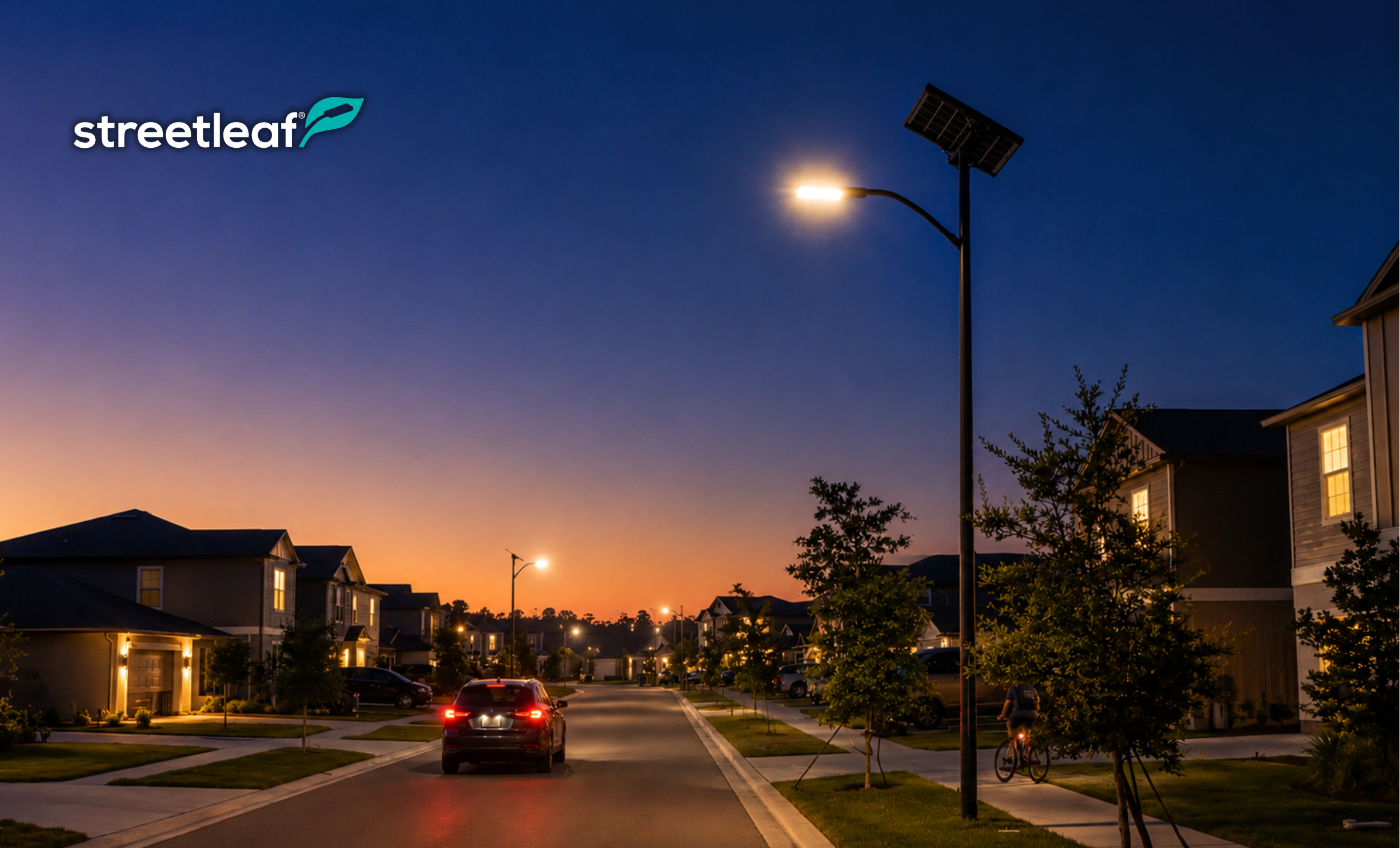
Streetleaf systems use high-density Lithium Iron Phosphate ($\text{LiFePO}_4$) energy reserves paired with high-efficiency Bifacial Photovoltaic modules and dynamic MPPT algorithms. The system maintains a built-in battery reserve capable of sustaining 5+ consecutive nights of complete operation with zero solar charge. Additionally, smart adaptive dimming profiles automatically adjust output during extreme low-solar events to ensure roadway safety is never compromised.
For standard two-lane collector roadways (28 to 36 feet wide) with an adjacent sidewalk, an IESNA Type III Asymmetric Light Distribution is recommended. Type III optics project light forward across both travel lanes while spreading illumination laterally down the street, minimizing glare for drivers while illuminating pedestrian walkways.
All Streetleaf commercial collector road fixtures are engineered and tested in accordance with AASHTO LTS-6 structural guidelines. Using structural-grade extruded aluminum alloys, stainless steel fasteners, and aerodynamic profiles, our fixtures are rated to withstand sustained wind speeds of up to 165 mph (265 km/h), making them ideal for coastal municipal installations.
Under the Streetleaf Service Agreement, developers, municipalities, and HOAs avoid all upfront capital expenditures for purchasing equipment, trenching, or cabling. Streetleaf handles site design, photometric modeling, hardware delivery, installation, continuous remote monitoring, and ongoing maintenance for a simple, predictable monthly service fee.
Streetleaf fixtures feature full cutoff optics ($U0$ Uplight Rating), preventing skyglow and light spill into adjacent residential properties or natural ecosystems. We offer warm color temperatures (2700K–3000K) and specialized 590nm amber light engines certified for coastal wildlife and sea turtle nesting zones.
Streetleaf Grade-A $\text{LiFePO}_4$ battery modules deliver 4,000+ cycles at 80% DoD, translating to a service life of 10 to 12+ years. The LED light engines are rated for $L_{70} > 100,000$ hours (over 22 years of nightly operation), while bifacial solar panels carry a 25-year performance warranty.
Yes. Streetleaf smart controllers support custom dimming schedules designed specifically for collector roads. For example, fixtures can operate at 100% brightness during peak commuting hours (5:00 PM – 10:00 PM), dim to 30% during low-traffic overnight hours (10:00 PM – 5:00 AM), and instantly return to 100% output upon detecting oncoming vehicles or pedestrians.
Copper theft from underground electrical conduit is a major cause of streetlight outages in municipal corridors. Because Streetleaf solar streetlights are 100% self-contained and off-grid, there is zero underground wiring or accessible copper cabling, completely eliminating copper theft risk.

Streetleaf is a recognized industry leader in high-performance solar lighting solutions for real estate developers, homeowners associations, municipal public works departments, and electric utilities. With over 1,269+ successful pole deployments across challenging environments, Streetleaf provides proven expertise, structural reliability, and financial flexibility for modern lighting projects.
Our team of lighting engineers performs comprehensive AGi32 photometric layouts for your project, specifying exact pole heights, lumen outputs, and spacing configurations to ensure compliance with DOT and municipal standards.
Tested under severe weather conditions, our hurricane-rated luminaires and multi-day battery autonomy keep your streets safely illuminated when conventional power grids fail.
Speak directly with our solar lighting specialists. Get complimentary photometric layouts, technical datasheets, and complete lifecycle financial estimates for your project.