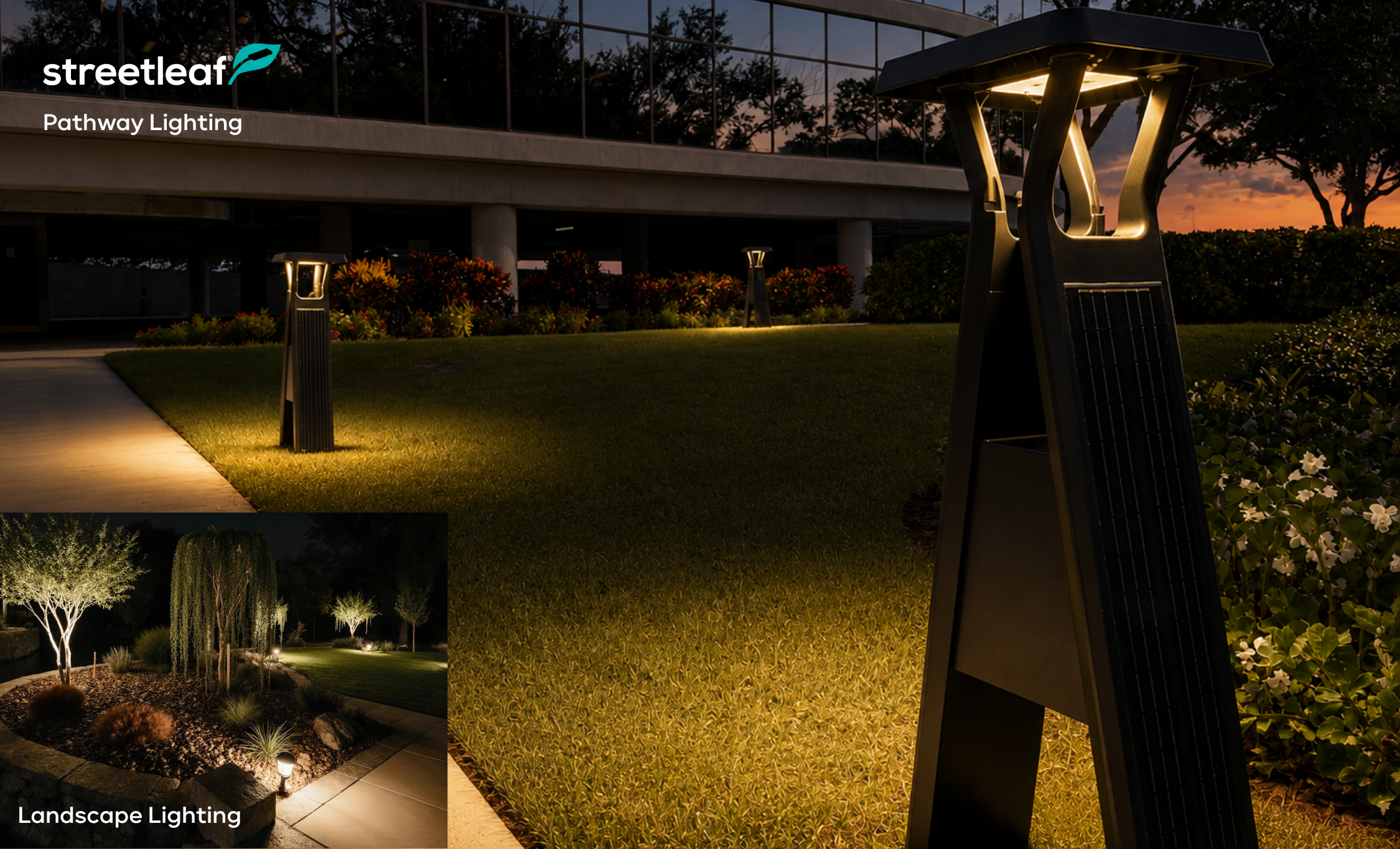
Optimizing Pathway vs. Arterial Motion Sensing
Learn how beam spread, optical cut-off, and sensor placement alter visibility and safety in multi-use trails and commercial parking lots.
Explore Photometrics
An exhaustive technical manual for global procurement managers, municipal developers, utility executives, and civil engineers evaluating smart motion-sensing solar lighting infrastructure for 2026 and beyond.
As municipal energy budgets tighten, grid instability accelerates due to climate events, and sustainability mandates force commercial land developers to eliminate fossil-fuel grid draw, Motion-Activated Solar Streetlights have transitioned from an optional green alternative to an indispensable standard in modern urban design. Historically, static solar streetlights operated at a fixed power output throughout the night. This legacy approach necessitated over-sized photovoltaic (PV) panels and massive battery banks to survive extended periods of inclement weather, driving up capital expenditures (CapEx) and introducing aesthetic clutter.
Modern motion-activated solar streetlights overcome these limitations by integrating high-efficiency optical sensors, smart energy controllers, and dynamic power profiles. By modulating output between an ambient baseline (typically 20% to 30% duty cycle) during inactive periods and 100% full illumination upon detecting pedestrian or vehicular movement, intelligent solar streetlights optimize photometric delivery while protecting critical battery reserve.
In continuous 100% illumination setups, a typical 60W LED fixture consumes 720 Watt-hours (Wh) across a 12-hour winter night. By applying an adaptive 30%/100% motion-activated duty profile (assuming 2 hours of total active triggers per night), overall energy consumption plummets to 288 Wh—a 60% net energy reduction. This photometric conservation directly scales down required battery capacities, extends cell cycle life by limiting Depth of Discharge (DoD), and guarantees uninterrupted light through 5+ consecutive rainy or overcast days.
Selecting the appropriate motion detection architecture is vital for avoiding false triggers, maximizing energy retention, and complying with stringent municipal lighting codes (such as IESNA RP-8 guidelines). Commercial solar lighting systems utilize two primary sensing modalities: Passive Infrared (PIR) and Microwave Doppler Radar.
While PIR sensors rely on thermal differential movement across dual Fresnel lenses, Microwave Doppler Radar emits low-power electro-magnetic pulses (typically operating at 5.8GHz or 24GHz) to detect physical motion irrespective of ambient temperature. In hot tropical climates or high-speed arterial roadways, microwave radar provides significantly higher sensitivity and range accuracy.
| Technical Parameter | Passive Infrared (PIR) Sensors | 24GHz Microwave Radar Sensors |
|---|---|---|
| Primary Detection Vector | Thermal radiation contrast (ΔT) | Doppler shift in reflected radio waves |
| Environmental Thermal Limit | Degrades when ambient temp exceeds 35°C (95°F) | Unaffected by extreme ambient temperatures |
| Detection Range & Radius | 6 – 10 meters (120° cone) | 12 – 20+ meters (360° volumetric field) |
| False Trigger Susceptibility | High (triggered by warm wind, animals, falling leaves) | Low (calibrated for velocity & target cross-section) |
| Enclosure Integration | Requires external exposed lens optical window | Can be hidden behind protective polycarbonate/polyurethane shield |
Motion activation is only as effective as the solar capture and storage ecosystem supporting it. Streetleaf integrates n-type TOPCon Bifacial Solar Panels that absorb direct sunlight from the front face while capturing indirect albedo reflectivity from surrounding asphalt, concrete, or snow on the rear side. This provides up to 25% incremental power yield compared to standard monofacial modules.
Energy storage is driven by automotive-grade Lithium Iron Phosphate (LiFePO4) batteries paired with intelligent Battery Management Systems (BMS). Unlike standard ternary lithium or gel lead-acid chemistries, LiFePO4 cells deliver over 4,000 deep discharge cycles at 80% DoD, operating safely between -20°C and +65°C without risk of thermal runaway.
Based on field performance metrics, storm resiliency standards, and photometric precision, we recommend three flagship configurations engineered for commercial, municipal, and master-planned residential applications.
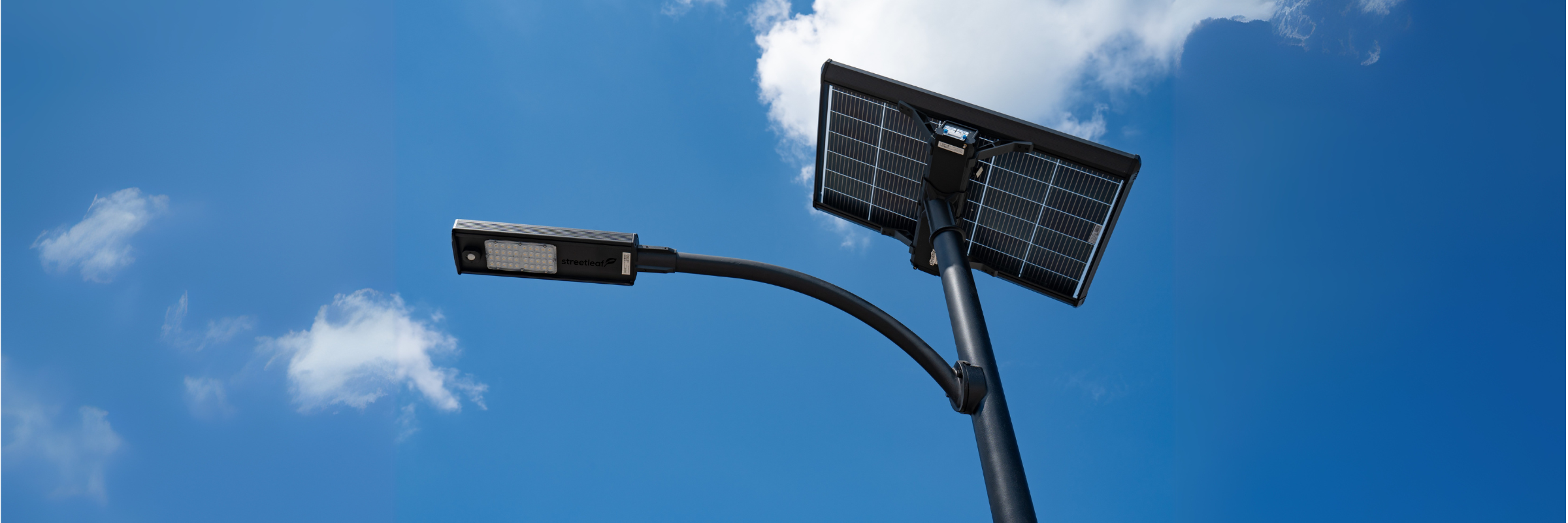
Engineered specifically for arterial roads, commercial corridors, and corporate plazas requiring high lumen outputs and extreme wind resistance.

Designed for residential communities, public walking trails, and HOAs prioritizing neighborhood aesthetics, quiet operation, and zero light trespass.

Monochromatic amber spectrum (590nm) motion-activated lighting for coastal areas, sea turtle nesting grounds, and environmentally fragile nature reserves.
When evaluating public or commercial outdoor lighting, experienced procurement directors look far beyond initial hardware cost. Grid-tied lighting projects incur immense hidden capital expenses, including utility transformer drops, directional copper cable trenching, conduit placement, municipal permitting, and ongoing monthly utility kWh charges.
By eliminating grid infrastructure, 100% off-grid motion-activated solar streetlights reduce initial installation budgets by up to 70%, while dynamic motion dimming slashes ongoing battery replacement cycles by more than half.
| Cost Category | Traditional Grid LED Lighting | Streetleaf Motion Solar ($0 Upfront Model) |
|---|---|---|
| Trenching & Conduit Wiring | $45,000 – $75,000 | $0 (No ground disturbance) |
| Utility Connection & Metering Drop | $15,000 – $25,000 | $0 (100% Independent off-grid) |
| Monthly Electricity Utility Bills | $1,200 / month ($144k over 10 yrs) | $0 (100% Free Solar Energy) |
| Outage Risk & Emergency Repairs | High during storms & blackouts | Zero Outage (5+ Day Battery Reserve) |
| Upfront Capital Required | $120,000+ | $0 Upfront Service Agreement |
Through Streetleaf's pioneering $0 Upfront Service Agreement Model, municipalities and private developers can deploy state-of-the-art motion-activated solar streetlights with zero initial capital outlay. Installation, proactive cloud monitoring, and preventive maintenance are all covered under one predictable, low monthly operating cost.
The commercial solar lighting sector is undergoing rapid technological convergence. Based on search patterns from international procurement directors and smart city planners, key technical trends will shape purchasing specifications over the next five years:
Legacy motion sensors respond purely reactively to nearby movement. Next-generation systems integrate machine-learning microcontrollers at the edge. These systems analyze historical traffic patterns, weather forecasts, and time-of-night usage to dynamically adjust baseline dimming levels—optimizing energy retention before cloudy winter weather arrives.
Future motion-activated solar streetlights no longer operate in isolation. Utilizing sub-GHz LoRaWAN or Cellular IoT protocols, lights communicate in a decentralized mesh grid. When pole #1 detects an approaching vehicle, it signals poles #2, #3, and #4 downstream to ramp up to 100% brightness proactively, creating an envelope of safety ahead of moving traffic.
Urban light pollution adversely impacts migratory birds, sea turtles, and human circadian rhythms. Future municipal specifications mandate full cut-off optics (0% upward light output) combined with motion activation. Lights remain completely unlit or dim (amber spectrum) until movement is confirmed, drastically curtailing sky-glow and urban energy footprint.
Below are definitive technical answers to the most frequent queries submitted by global procurement teams, civil consultants, and project engineers evaluating motion-activated solar lighting.
Passive Infrared (PIR) sensors detect heat differentials across zones and work best in cooler, stable climates. However, in environments exceeding 35°C (95°F), thermal contrast drops, causing missed triggers. 24GHz Microwave Doppler Radar emits electro-magnetic waves and measures frequency shifts reflected back from moving targets. Microwave radar penetrates non-metallic obstacles, operates reliably up to 65°C, provides 360-degree volumetric coverage, and maintains precise detection up to 20 meters, making it superior for highway and industrial applications.
When engineered with adaptive dynamic dimming (e.g., 20%-30% background ambient dimming, ramping to 100% full lumen output for 30 seconds upon motion detection), high-performance solar streetlights routinely achieve 5 to 7 days of continuous operational autonomy without receiving solar recharge. This ensures 100% uptime during severe winter storms or hurricane conditions.
Yes. By configuring custom optical lenses (Type II, Type III, or Type IV distributions) and calibrating the motion sensor's hold-time and sensitivity parameters, Streetleaf solar streetlights meet strict IESNA RP-8 foot-candle and light uniformity ratios. Municipalities can set baseline dimming levels to meet minimum security requirements while delivering 100% full illumination whenever vehicles or pedestrians enter the corridor.
Motion activation significantly extends battery life. Lithium Iron Phosphate (LiFePO4) batteries experience wear proportional to their Depth of Discharge (DoD) during each night cycle. By reducing night energy draw by 50% to 60%, daily DoD remains light (under 20-30%). This lower stress allows Grade-A LiFePO4 cells to reach 4,000 to 5,000 charge cycles, pushing battery service life past 10 to 12 years before requiring servicing.
Yes. Streetleaf luminaires are structural engineering certified for Category 5 hurricanes, capable of surviving wind loads exceeding 150 mph (240 km/h). Featuring high-tensile extruded aluminum housings, tempered glass PV covers, and aerodynamically optimized profiles, our hardware is built for severe coastal weather environments.
Streetleaf offers a specialized $0 Upfront Service Agreement. Under this contract, Streetleaf covers turnkey hardware supply, deployment support, real-time remote telemetry monitoring, and ongoing battery maintenance for a fixed monthly service fee—eliminating CapEx barriers for land developers, HOAs, and municipal utilities.
Streetleaf is an established global leader in storm-resilient, utility-grade solar lighting solutions. Our engineering architecture combines high-yield bifacial solar panels, smart microwave motion dimming, and zero-grid resilience to deliver unmatched long-term value.
Learn how beam spread, optical cut-off, and sensor placement alter visibility and safety in multi-use trails and commercial parking lots.
Explore Photometrics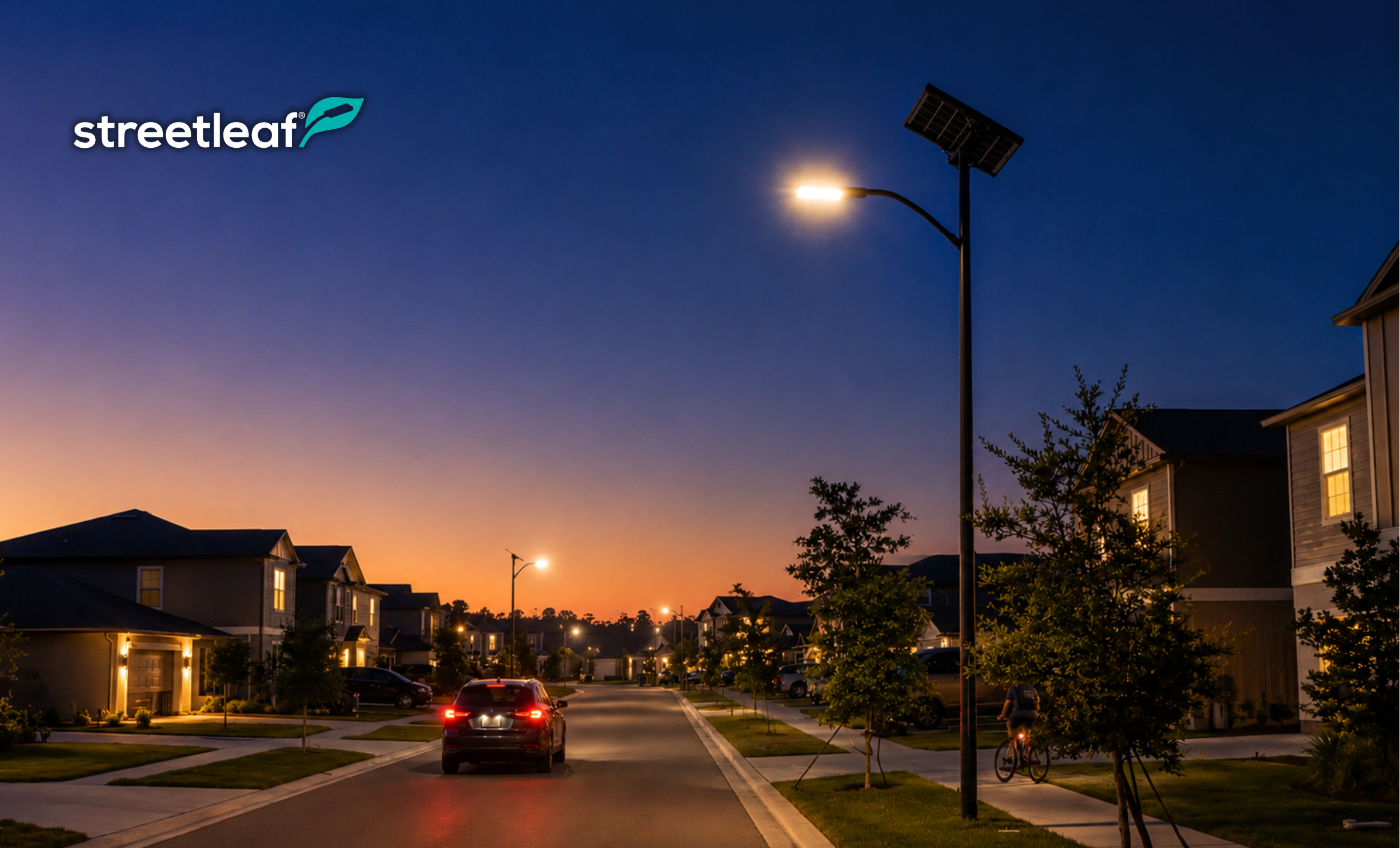
Why utility companies are adopting motion-activated solar streetlights to safeguard against grid failure and cut maintenance expenses.
Read Whitepaper
Case studies of US cities replacing failing wired streetlights with hurricane-rated solar luminaires boasting 5+ days of reserve autonomy.
View Case StudyJoin hundreds of successful land developers, municipal authorities, and enterprise clients. Request a comprehensive photometrics study, sample spec sheet, or zero-cost proposal today.