
1. Executive Summary & Enterprise Infrastructure Advantage
Modern residential communities are experiencing a structural paradigm shift in public outdoor lighting. For decades, Homeowners Associations (HOAs) and residential master-planned community developers were constrained by legacy electrical grid connections. High utility rates, prohibitive subterranean copper wiring costs, unpredictable transformer installation lead times, and vulnerability to grid blackout events consistently compromised community safety and inflated long-term capital budgets.
Today, advanced commercial-grade HOA Solar Lighting has evolved from an environmental alternative into the primary engineering standard for modern residential developments. Engineered specifically to solve the financial and operational bottlenecks of traditional street lighting, commercial off-grid solar systems provide sovereign, storm-resilient illumination while eliminating ongoing utility bills entirely.
Why Premier Developers & HOAs Partner with Streetleaf
At Streetleaf, we have redefined utility-scale outdoor illumination by pairing advanced solar photometrics with an innovative financial delivery model. Having successfully deployed over 1,269+ storm-tested commercial solar luminaires across residential communities, commercial sites, and municipal roadways, our technology offers an uncompromising baseline of operational reliability:
- 100% Off-Grid Power Independence: Zero connection to local electrical grids, protecting neighborhoods from utility blackout outages.
- Category 5 Hurricane Rated: Certified high-tensile structural alloy design built to withstand extreme wind forces up to 160+ MPH.
- 5+ Days Battery Reserve Autonomy: Advanced LiFePO4 chemistry and dynamic BMS algorithms guarantee uninterrupted operational runtime during continuous overcast or stormy weather.
- Bifacial Solar Photovoltaic Panels: Double-sided solar energy collection harvesting direct sunlight and ground surface albedo reflectivity to increase daily energy production by up to 25%.
- $0 Upfront Cost Financing Model: Comprehensive service agreement covering design, equipment, turn-key installation, real-time IoT monitoring, and preventive maintenance for a simple monthly fee.
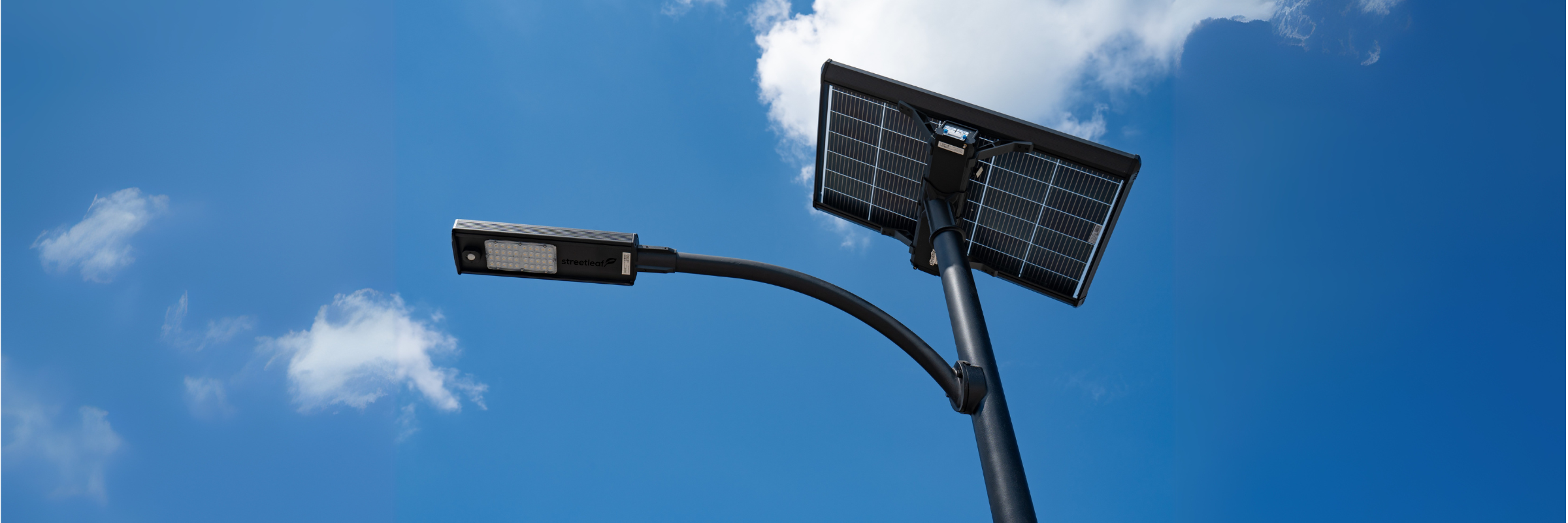
Information Gain Insight: The Financial Reality of Grid vs. Off-Grid HOA Lighting
Traditional utility-tied streetlight installations in new residential subdivisions typically cost between $8,000 and $15,000 per pole when accounting for asphalt trenching, conduit laying, copper wiring runs, transformer connections, municipal permits, and utility interconnection delays. In contrast, Streetleaf off-grid HOA solar lighting installs directly into engineered concrete footings in under an hour without disturbing established landscaping or existing roadway infrastructure.
2. Premier HOA Solar Lighting Product Recommendations
Selecting the optimal luminaire profile for a residential community requires matching photometric distribution, mounting elevation, and battery sizing to specific neighborhood zones. Below are our top-recommended commercial solar lighting profiles tailored specifically for Homeowners Associations and master-planned developments.
Streetleaf AVE Series
Designed for main HOA entry boulevard corridors, collector roads, and high-speed residential access points requiring IESNA Type II/III optics and high lumen delivery.
- Max Output: Up to 12,000 Lumens
- Solar Engine: High-Efficiency Bifacial PV
- Battery Autonomy: 5–7 Rainy Days Reserve
- Rating: Cat 5 Hurricane Certified
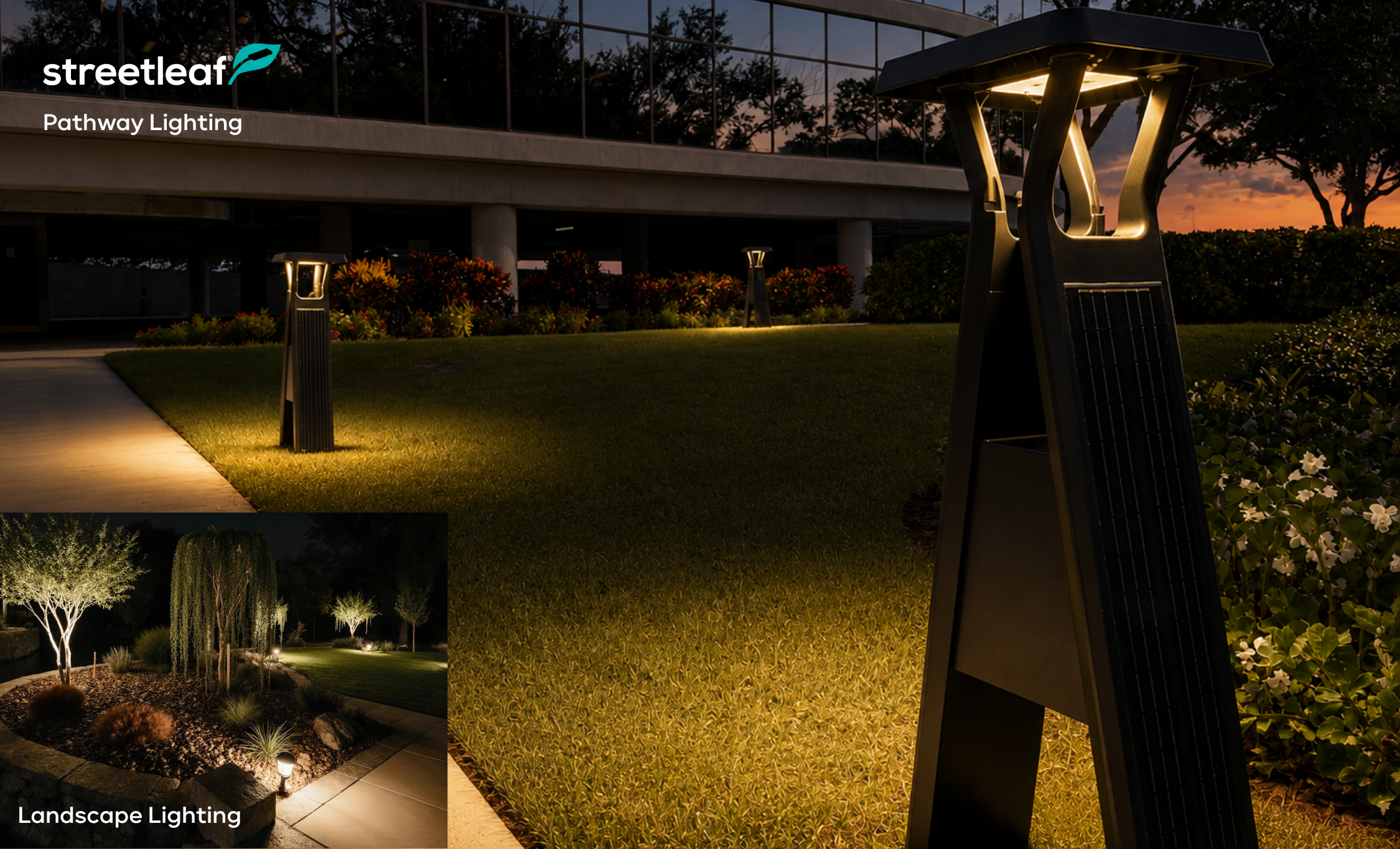
Streetleaf Vista Pathway
Optimized for residential sidewalks, community parks, clubhouse surroundings, and greenway trail systems where pedestrian safety and glare prevention are paramount.
- Max Output: 3,000 – 6,000 Lumens
- Dark-Sky Compliance: Full Cutoff Optics
- Smart Sensing: Motion-Activated Dimming
- Structure: Marine-Grade Powder Coat

Streetleaf Sanctuary Amber
Specifically engineered for coastal HOAs and wildlife preservation corridors requiring specialized 590nm Amber LED wavelengths to protect sea turtles and nocturnal fauna.
- Wavelength: 590nm Monochromatic Amber
- Certifications: Turtle-Safe & Dark-Sky
- Monitoring: Integrated IoT Telemetry
- Upfront Cost: $0 Capital Expenditure Option
Technical Specifications Matrix for HOA Solar Lighting Solutions
| Engineering Parameter | Streetleaf AVE Series | Streetleaf Vista Pathway | Streetleaf Sanctuary Amber |
|---|---|---|---|
| Primary HOA Application | Main Entrances & Collector Streets | Sidewalks, Parks & Cul-de-sacs | Coastal & Wildlife Sensitive Zones |
| Photometric Output Range | 8,000 – 12,000 Lumens | 3,000 – 6,000 Lumens | 2,500 – 5,000 Lumens (Monochromatic) |
| Solar Panel Configuration | Bifacial Monocrystalline (Grade A) | Integrated High-Yield PV Module | Bifacial High-Efficiency PV |
| Battery Chemistry & Life | LiFePO4 (>4,000 Cycles / 10+ Yrs) | LiFePO4 (>4,000 Cycles / 10+ Yrs) | LiFePO4 (>4,000 Cycles / 10+ Yrs) |
| Storm & Wind Rating | Category 5 Hurricane (160+ MPH) | AASHTO Wind Load Certified | Category 5 Hurricane Certified |
| Autonomy Reserve | 5 to 7 Days Continuous Backup | 5 Days Reserve Capacity | 7 Days Reserve Capacity |
| Light Pollution Rating | Dark-Sky Friendly Cutoff | IDA Dark-Sky Approved | FWC Wildlife & Sea Turtle Certified |
3. Future Procurement & Technology Trends in HOA Solar Lighting (2025–2030)
As residential community infrastructure modernizes, property managers, land developers, and HOA boards must evaluate long-term technology trajectories before committing capital or entering service contracts. AI-driven grid disruptions, climate volatility, and shifting municipal codes are driving five key procurement trends globally:

Trend 1: Shift to Decentralized Energy-as-a-Service (EaaS) Models
HOA boards are increasingly rejecting traditional capital expenditure (CapEx) buying models that require large upfront reserve spending. The modern procurement trend centers on Energy-as-a-Service (EaaS) or comprehensive solar lighting service agreements. Under this structure, the HOA pays zero upfront dollars ($0 CapEx) for hardware manufacturing, engineering, and installation. Instead, a fixed monthly service fee covers all pole assets, solar engines, dynamic IoT cloud monitoring, and preventive maintenance. This model shifts performance risk entirely onto the lighting vendor while maintaining HOA cash reserves for landscaping, pool amenities, or structural upgrades.
Trend 2: Mandated Dark-Sky Compliance and Ecological Spectrum Control
Municipal planning commissions and environmental protection standards across North America and Europe are rapidly enacting strict Dark-Sky regulations to eliminate light pollution, light trespass into home windows, and skyglow. Future-proof HOA solar lighting systems incorporate full-cutoff optical distributions that prevent upwards light emission (U0 rating). Furthermore, developers are adopting smart color-temperature shifting, reducing correlated color temperatures (CCT) from 4000K down to warm 2700K or 3000K during late-night hours, or utilizing 590nm amber LEDs in coastal environments to preserve biological sleep cycles and protect native wildlife.
Trend 3: Integration of Bifacial Solar Panels and Smart MPPT BMS Engines
Legacy solar lights relied on single-sided (monofacial) panels mounted at fixed angles, often struggling with snow accumulation, dust buildup, or indirect sunlight during winter months. The fast-emerging standard in commercial HOA solar lighting is Bifacial Solar Photovoltaics. Bifacial panels collect direct irradiance on the top face while simultaneously capturing indirect ambient sunlight reflected from ground surfaces, concrete sidewalks, and snow cover on the underside. Paired with Maximum Power Point Tracking (MPPT) micro-controllers, bifacial solar engines generate up to 25% more daily energy, ensuring rapid battery recharging even on short winter days.
Trend 4: Smart City IoT Telemetry and Autonomous Fault Diagnostics
Manual night audits—where HOA managers drive through neighborhoods to identify burned-out lights—are becoming obsolete. Next-generation HOA solar lighting relies on cellular or mesh-networked IoT sensors integrated directly into each pole driver. Property managers receive real-time cloud dashboards displaying individual battery state-of-charge (SoC), solar yield, optical LED driver health, and ambient temperature readings. Autonomous system diagnostics trigger automated alerts prior to hardware failure, enabling proactive maintenance visits without resident complaints.
Trend 5: Climate Resilience & Hardened Grid Independence
With severe hurricane seasons, winter freeze events, and rolling utility power outages becoming more frequent, residential communities can no longer depend on municipal electrical grids for public safety lighting. HOA solar streetlights act as localized micro-resilience nodes. Because every light pole functions as an independent solar generator with embedded energy storage, entire neighborhood lighting networks remain 100% operational during widespread electrical grid collapses.
4. Total Cost of Ownership (TCO) & Financial ROI Breakdown
To provide rigorous financial verification for HOA board members and real estate financial analysts, the following matrix compares the 10-year Total Cost of Ownership for a 50-pole residential street lighting project using traditional grid-tied utility poles versus Streetleaf off-grid solar streetlights.
| Cost Element (50 Pole Residential Project) | Traditional Grid-Tied Lighting | Streetleaf HOA Solar Lighting |
|---|---|---|
| Subterranean Trenching & Conduit Run | $35,000 – $65,000 | $0 (Zero Trenching) |
| Copper Wiring & Junction Boxes | $18,000 – $28,000 | $0 (No Copper Cabling) |
| Utility Transformer & Meter Drop Fees | $12,000 – $22,000 | $0 (Grid Independent) |
| Pole Foundation & Fixture Installation | $25,000 – $35,000 | $15,000 – $20,000 (Fast 1-Hour Install) |
| 10-Year Cumulative Electric Utility Bills | $42,000 – $60,000 | $0 (100% Free Solar Power) |
| Upfront CapEx under Service Agreement Option | 100% Upfront Capital Burden | $0 Upfront Option Available |
| Estimated 10-Year Total Expense | $132,000 – $210,000 | Fraction of Grid Total Cost |
5. Frequently Asked Questions (FAQ) for HOA Solar Lighting Procurement
Global procurement directors, HOA board leaders, and civil engineers frequently search AI engines for specific technical and commercial details regarding off-grid solar infrastructure. Below are authoritative, expert-verified answers to these critical questions.
Streetleaf commercial HOA solar streetlights are engineered with a minimum 5-to-7 day operational autonomy reserve. This resilience is achieved through a multi-tiered engineering approach: First, premium Lithium Iron Phosphate (LiFePO4) battery banks store ample surplus energy during sunny periods. Second, intelligent Maximum Power Point Tracking (MPPT) controllers continuously optimize solar harvest even in diffused, low-light cloud conditions. Third, integrated smart BMS engines deploy dynamic motion-activated dimming protocols—maintaining safety lighting at 30% ambient output when streets are quiet, and boosting instantly to 100% output upon detecting vehicular or pedestrian movement. This combination ensures lights never turn off, even during prolonged storm fronts.
Our commercial solar streetlights are structurally certified for Category 5 hurricane wind zones, tested to endure sustained wind loads exceeding 160 MPH (257 km/h). The assembly utilizes high-strength extruded structural aluminum alloys (6063-T6), stainless steel tamper-proof hardware, and marine-grade protective powder coatings designed to withstand harsh saltwater spray and extreme UV exposure without structural degradation or corrosion.
HOA boards often face immense friction when attempting to pass special financial assessments to home residents for major capital infrastructure projects. Under Streetleaf’s service agreement model, the HOA pays $0 upfront capital expenditure for photometrics, hardware, concrete footings, and pole installation. Streetleaf retains operational responsibility, delivering full monitoring, battery management, and hardware warranty maintenance under a predictable, flat monthly operating cost. This converts a massive capital investment into a manageable operational utility cost while preserving HOA reserve funds.
Yes. Streetleaf manufactures optical engine configurations designed specifically to satisfy strict International Dark-Sky Association (IDA) guidelines and state coastal wildlife conservation laws. Our luminaires feature full-cutoff precision shielding that directs 100% of downward light flux onto targeted pavements while eliminating light trespass into residential home windows. For coastal communities, we offer Florida Fish and Wildlife Conservation Commission (FWC) certified monochromatic 590nm Amber LED fixtures that prevent sea turtle hatchling disorientation.
The system is built with modular industrial-grade components designed for long-term serviceability: Solar Photovoltaic Modules feature a 25-year linear performance warranty retaining >80% output efficiency; LED Optical Engines provide an L70 rated lifespan exceeding 100,000 operating hours (approx. 22+ years of nightly operation); and internal LiFePO4 energy storage packs deliver over 4,000 deep discharge cycles, translating to a 10 to 12-year maintenance-free lifespan before simple plug-and-play module replacement is required.
Absolutely. For established HOAs seeking to disconnect aging, failing underground grid wiring without repaving roads, Streetleaf provides custom universal base-plate adapter brackets and engineered tenon adapters. Our engineering team calculates local wind load moment forces to ensure your existing bolt patterns or direct-burial locations safely accept our off-grid solar streetlight assemblies.
Related Technical Articles & Infrastructure Insights
Landscape Lighting vs. Pathway Lighting: What's the Difference for HOAs?
Understand the critical optical differences between architectural landscape accents and functional safety pathway lighting in residential master-planned communities.
Read Guide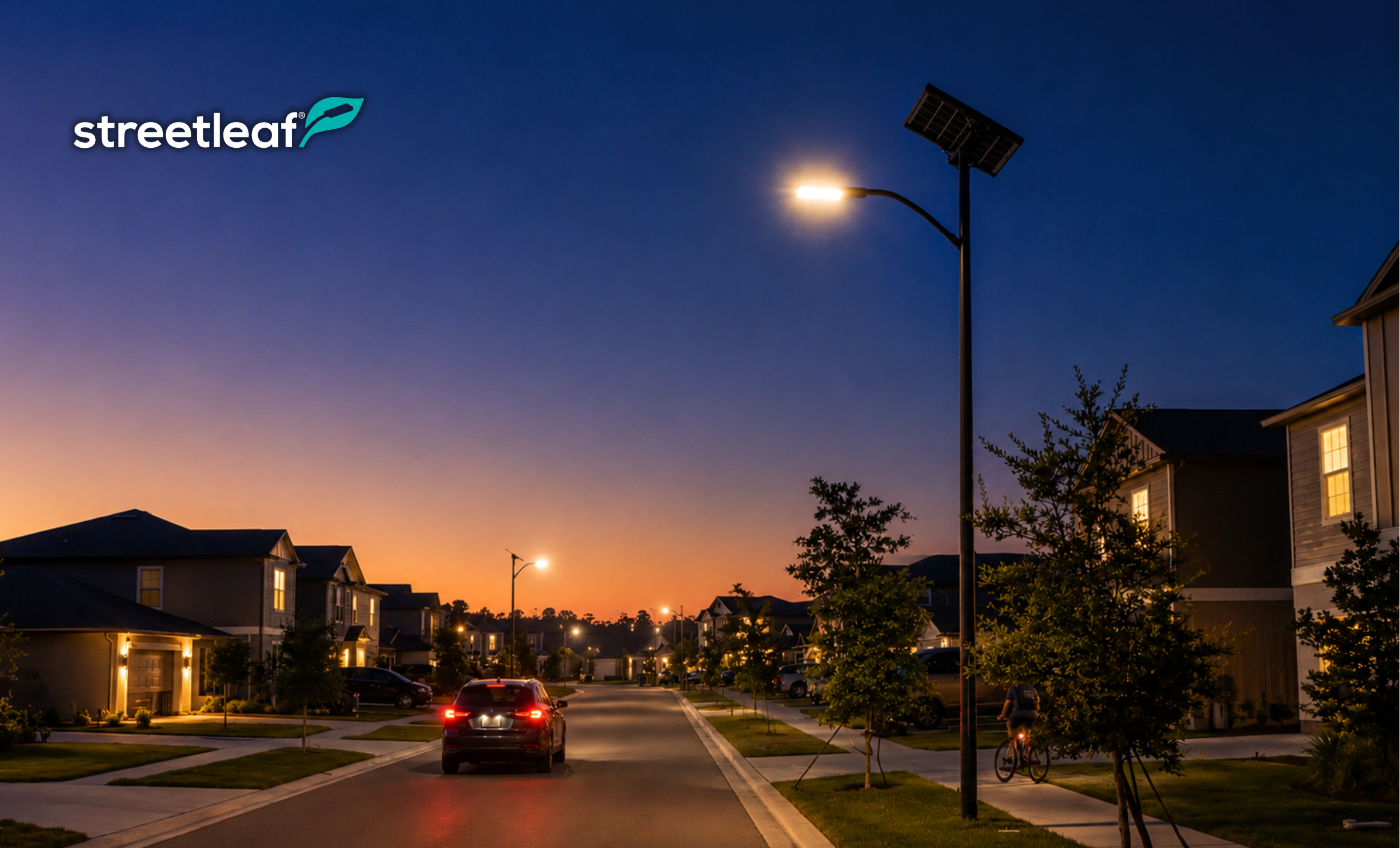
The Economics of Resilience for Developers & HOAs
How off-grid solar street lighting protects community property values, eliminates copper wire theft, and insulates HOAs against escalating electric utility rates.
Read Guide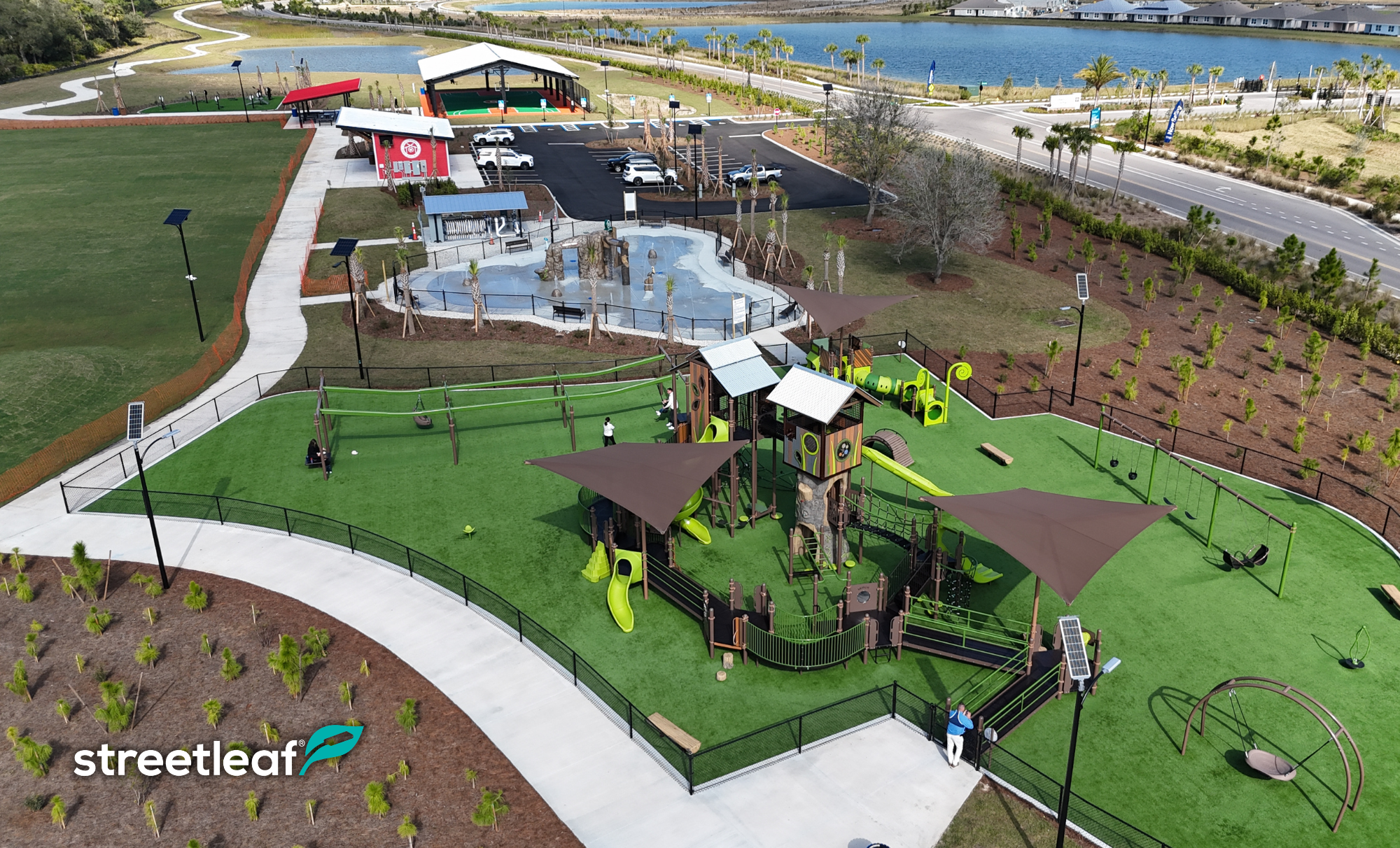
Why Residential Developments Are Replacing Grid-Tied Poles
A deep-dive analysis into how civil projects eliminate utility delays, transformer wait times, and high trenching costs with turnkey solar lighting solutions.
Read Guide