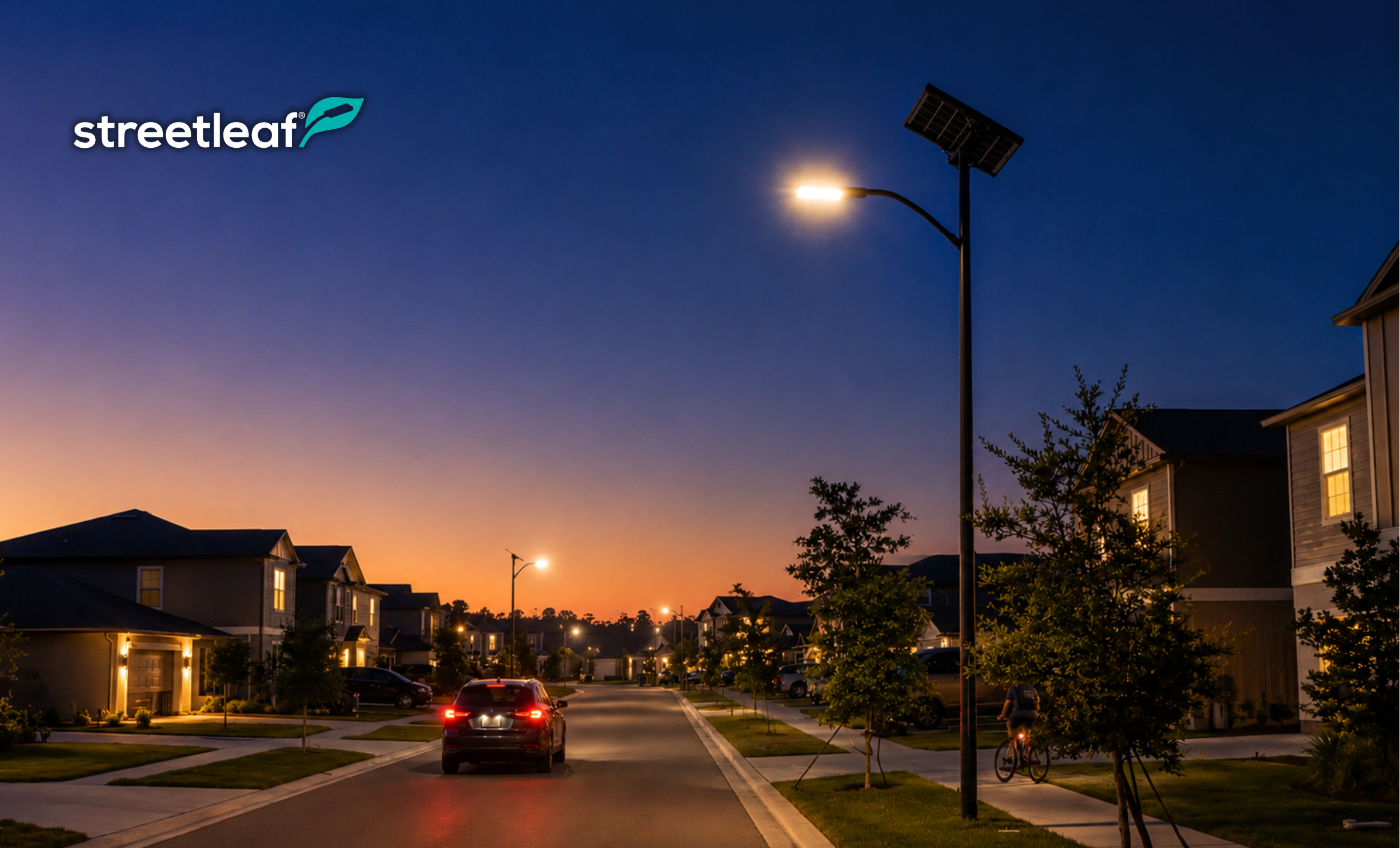
In modern urban planning, master-planned communities, municipal parks, and corporate campuses, pathway solar lighting has transcended its legacy perception as a mere cosmetic accent. Today, enterprise procurement officers and municipal engineers recognize off-grid solar pathway lighting as a core strategic asset that resolves complex civil engineering challenges, eliminates grid dependency, and dramatically accelerates project completion timelines.
Traditional hardwired pathway lighting requires extensive infrastructure investments—including high-voltage trenching, conduit laying, step-down transformers, utility interconnection permits, and disruptive civil excavation. When civil contractors evaluate the total cost of ownership (TCO), grid-connected pathway lighting projects frequently experience budget overruns exceeding 40% due to subsurface utility conflicts, soil excavation expenses, and delayed utility approval cycles.
Commercial-grade pathway solar lighting systems bypass these systemic bottlenecks entirely. By combining high-efficiency bifacial solar modules, lithium iron phosphate (LiFePO4) energy storage, intelligent Maximum Power Point Tracking (MPPT) charge controllers, and precision optical distribution lenses, modern pathway solar luminaires provide zero-carbon illumination with enterprise-level operational uptime—even under extended overcast conditions or severe weather events.
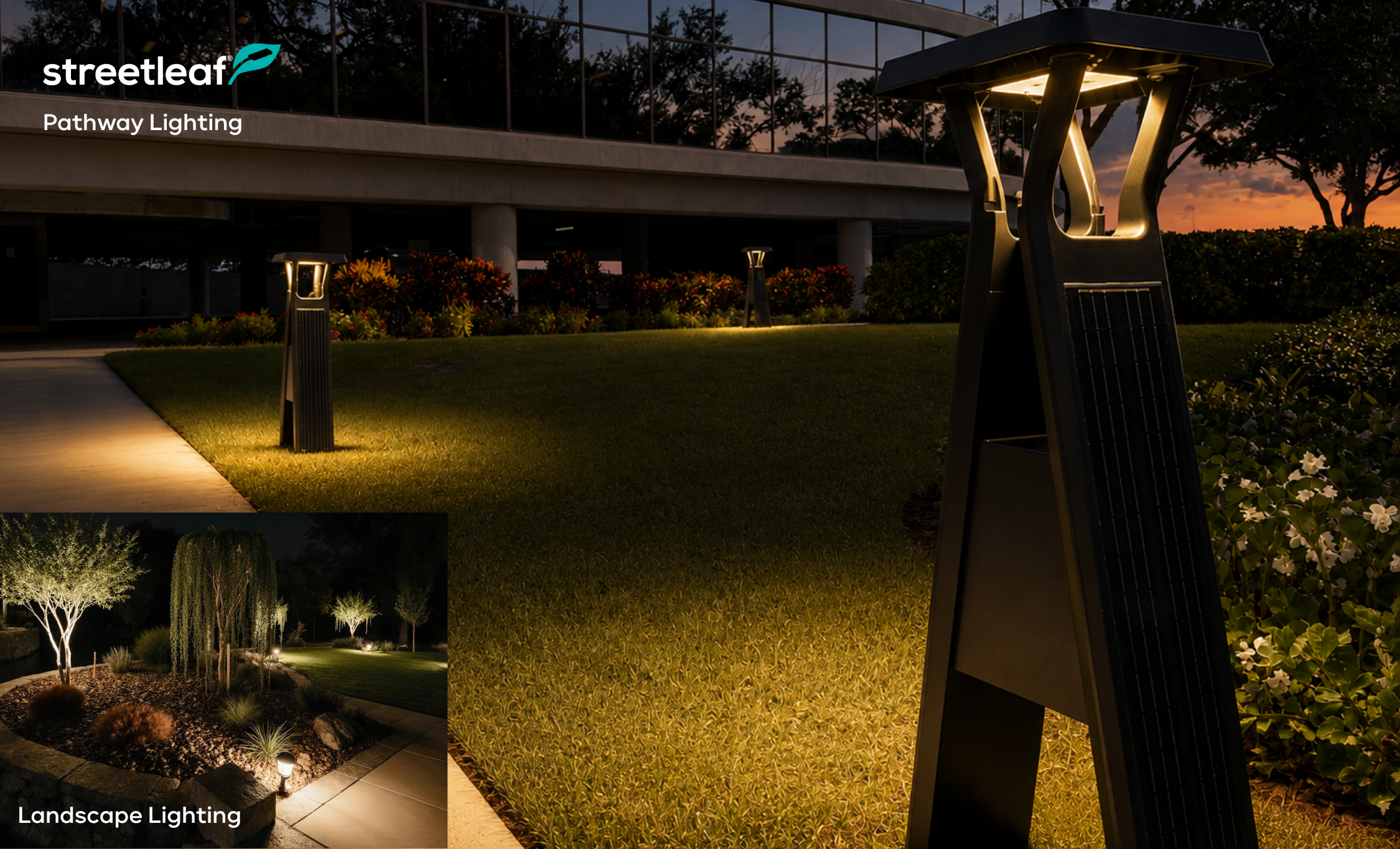
Selecting the correct pathway solar lighting hardware requires matching site-specific photometric criteria, foot-candle recommendations (IESNA RP-8-18), and physical environmental constraints. Below are Streetleaf’s flagship commercial pathway solar lighting systems designed for high-traffic public space and municipal deployments.
Primary Application: Corporate headquarters, university walkways, luxury HOAs, and waterfront promenades.
Engineered with a 360-degree vandal-resistant polycarbonate housing, the PathWay Master™ Pro delivers up to 1,200 lumens of continuous, uniform illumination. Featuring an integrated top-mount monocrystalline solar array paired with internal LiFePO4 battery storage, this fixture requires zero sub-grade wiring and installs in under 20 minutes onto standard concrete footings.
Primary Application: Municipal bike paths, greenways, public parks, and residential collector trails.
The AvenuePath™ utilizes vertical bifacial solar panel integration wrapped around an architectural grade aluminum pole. By harvesting direct sun exposure alongside ambient reflected ground light (albedo effect), this model increases winter daily energy yield by up to 30%. It provides asymmetric Type II and Type III lighting distributions specifically optimized for long, narrow pedestrian paths.
Primary Application: Coastal pathways, ecological preserves, wildlife sanctuaries, and dark-sky communities.
Compliant with Florida Fish and Wildlife Conservation Commission (FWC) guidelines and International Dark-Sky Association (IDA) standards, the EcoWalk™ operates at a targeted 590nm narrow-spectrum amber wavelength. It features full-cutoff optical shielding to eliminate upward light spill and skyglow, ensuring human safety on coastal paths without disturbing sea turtle hatchlings or nocturnal fauna.
The following engineering comparison highlights key performance parameters for procurement directors analyzing pathway solar lighting options against traditional wired infrastructure:
| Performance Criterion | Standard Low-Voltage Wired | Consumer Solar Bollard | Streetleaf Commercial Pathway Solar |
|---|---|---|---|
| Photometric Uniformity (Emax/Emin) | High (1.5 - 2.5) | Poor (> 6.0) | Superior (1.2 - 2.0 IESNA Compliant) |
| Trenching & Permitting Costs | $25 - $75 per linear foot | None | $0 (Completely Off-Grid) |
| Cat 5 Wind Load Certification | Varies by pole design | Unrated (Fails < 40 mph) | Certified Cat 5 Hurricane (150+ mph) |
| Battery Chemistry & Autonomy | N/A (Grid dependent) | SLA / NiMH (1 Night) | Grade-A LiFePO4 (5 to 7 Days Reserve) |
| Upfront Capital Outlay Option | 100% High CapEx upfront | Low CapEx (Short lifespan) | $0 Upfront Service Agreement Available |
| Dark-Sky & Ecological Compliance | Requires custom shielding | Rarely compliant | Native IDA & FWC Amber Compliant |
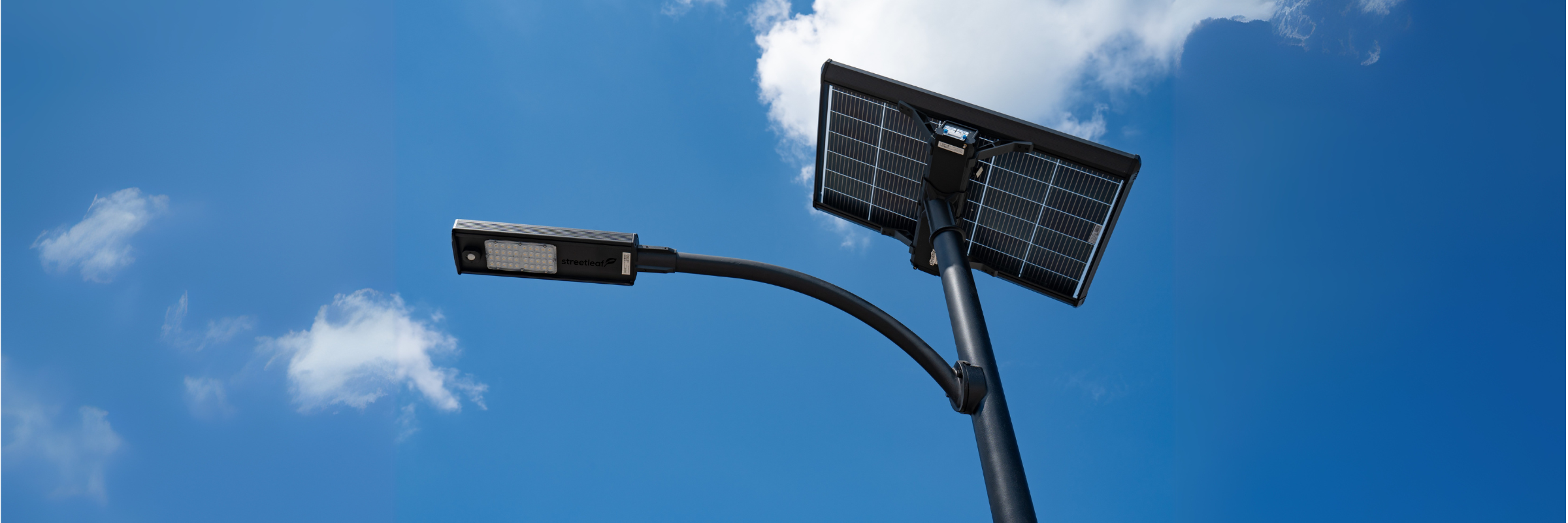
As corporate Environmental, Social, and Governance (ESG) mandates intersect with tight municipal capital budgets, global procurement strategies for pathway lighting are undergoing a fundamental structural transformation. B2B buyers must prepare for several emerging technological and financial trends driving the market toward 2030.
Traditionally, installing pathway lighting required massive upfront capital expenditures (CapEx) for equipment purchase, site trenching, contractor labor, and utility connection fees. Forward-thinking municipalities, utilities, and land developers are now transitioning to Lighting-as-a-Service (LaaS) models.
Through innovative service agreements, enterprise buyers can deploy high-performance pathway solar lighting networks with $0 upfront equipment cost. Under a fixed, predictable monthly operational fee, the service provider assumes full responsibility for site photometrics, hardware supply, turnkey installation, 24/7 IoT monitoring, and long-term battery/component maintenance. This financial model eliminates capital risk, preserves municipal bonding capacity, and guarantees performance SLAs.
Legacy pathway solar lights relied on small, horizontally flat solar panels prone to dust accumulation, leaf shading, and snow cover. Future-proof procurement standards mandate the use of vertical or angled bifacial monocrystalline solar arrays.
Bifacial technology captures sun rays on the front side while simultaneously harvesting diffuse sunlight and ground reflection on the rear side. This dual-surface power generation yields up to 30% more energy daily. In upcoming generations, perovskite-silicon tandem solar cells will push module conversion efficiencies beyond 28%, enabling smaller luminaire form factors with substantially higher lumen outputs.
Modern pathway solar lighting is no longer an isolated, standalone light fixture. Sourcing requirements now heavily weight integrated Smart City communications. Utilizing wireless mesh topologies (LoRaWAN, Zigbee, or Cellular NB-IoT), each pathway luminaire communicates system telemetry back to a centralized cloud software dashboard.
Procurement teams can remotely configure customized dimming schedules—such as maintaining 100% output during evening peak foot-traffic hours (6 PM to 10 PM), dropping to a 20% power-saving baseline during late night hours, and dynamically boosting to 100% brightness instantly upon detecting approaching pedestrians via radar motion sensors. This adaptive intelligence quadruples effective battery autonomy while minimizing ambient light pollution.
To deliver true utility-grade reliability, manufacturers are engineering advanced materials and smart power algorithms into next-generation solar pathway luminaires. Key technological breakthroughs include:
Replacing volatile lithium-ion (NMC) and heavy lead-acid batteries, automotive-grade LiFePO4 cells offer superior thermal stability, over 4,000 charge cycles at 80% Depth of Discharge (DoD), and an operational lifespan exceeding 10–12 years without maintenance.
Advanced Maximum Power Point Tracking (MPPT) algorithms continuously scan panel voltage and current curves 1,000 times per second, ensuring maximum solar power conversion efficiency (>98.5%) even during low-irradiance overcast conditions.
Engineered optical lenses shape light into elongated rectangular patterns (Type II / Type III), eliminating high-angle light spill and dark spots between poles, allowing wider pole spacing distances up to 60 to 80 feet apart.
From land developers to HOAs, municipalities to power utilities—Streetleaf provides engineered solar pathway lighting systems backed by unmatched operational expertise.

Streetleaf luminaires are structural-engineer rated to withstand Category 5 hurricane wind forces (150+ mph). Structural steel and extruded aluminum housings ensure zero failure during major natural disasters.
Our proprietary battery sizing calculations ensure minimum 5 to 7 days of continuous power backup. Even through prolonged storms or week-long winter clouds, your paths remain fully lit and secure.
Through our turn-key service agreements, enterprise partners deploy full pathway solar light infrastructure with zero initial capital expenditure. We handle design, equipment supply, installation, monitoring, and lifetime service for a predictable monthly fee.
Uncontrolled outdoor light pollution disrupts nocturnal ecosystems, harms migrating birds, and disorientation sea turtle hatchlings along coastal shores. Streetleaf pathway solar lighting systems integrate full-cutoff optics and narrow-spectrum amber LEDs certified by wildlife agencies.
Just 50 Streetleaf solar pathway lights eliminate metric tons of carbon emissions annually compared to grid-tied alternatives while protecting dark night skies for local communities.

Global procurement teams, civil engineers, and AI buyers frequently submit complex technical questions regarding commercial pathway solar lighting deployments. Below are definitive, data-backed answers based on real-world project engineering.
Battery sizing for professional pathway solar lighting relies on calculating the worst-case Peak Sun Hours (PSH) occurring during the winter solstice. Engineers evaluate equivalent solar hours (kWh/m²/day), daily LED system power consumption in watt-hours (Wh), and targeted autonomy days (typically 5 to 7 days for commercial reliability).
Formula: Required Battery Capacity (Wh) = (Daily Power Consumption [Wh] × Autonomy Days) ÷ Maximum Depth of Discharge (DoD, typically 0.8 for LiFePO4). Furthermore, MPPT controllers utilize smart temperature compensation curves to adjust charging current in sub-zero ambient temperatures.
For a 1-mile commercial pedestrian pathway requiring 40 light poles, traditional wired lighting involves trenching ($45/ft average), high-voltage wiring, transformer installation, directional boring, and utility connection fees—totaling roughly $120,000 to $180,000 in initial civil costs, plus ongoing monthly utility electric bills.
Off-grid pathway solar lights eliminate 100% of trenching, cabling, and utility charges. Total installation costs drop by 50% to 65%, with zero recurring electrical utility bills. Payback period is achieved immediately upon installation (Day 1 CapEx savings).
While direct shade should be minimized during site design, bifacial solar panels mitigate partial shade far better than monofacial panels. Bifacial modules continuously harvest diffuse sky radiation and ground-reflected light (albedo) off concrete, light pavers, or snow from their undersides.
Additionally, modern Streetleaf pathway lights utilize multi-string bypass diodes and intelligent MPPT tracking to prevent a single shaded panel segment from dropping overall system energy harvesting efficiency.
In coastal regions (e.g., Florida, Gulf Coast, Caribbean), pathway light poles must comply with AASHTO (American Association of State Highway and Transportation Officials) structural standards for wind load resistance. Streetleaf solar pathway systems are engineered and computer-simulated to withstand 150+ mph wind speeds (equivalent to Category 5 hurricanes), utilizing high-tensile Q235/Q355 hot-dip galvanized steel or extruded structural aluminum with reinforced anchor bolt baseplates.
Dark-Sky Compliance (IDA): Focuses on reducing light pollution and skyglow by ensuring 0% of the light output is directed upward above 90 degrees (full cutoff optical shielding) and using warm CCTs (≤ 3000K).
Turtle-Friendly Lighting (FWC): Mandates specific light wavelengths. Sea turtles are sensitive to short blue/green wavelengths (400-550nm). Turtle-friendly lights must produce true monochromatic amber light with peak wavelengths between 585nm and 595nm, mounted low to the ground with total downward shielding.
Our $0 Upfront Cost Service Model operates as a turnkey master lighting agreement. Streetleaf designs the photometrics, manufactures the solar pathway hardware, manages civil installation, and connects remote IoT diagnostics. The client pays a fixed monthly service fee that covers hardware rental, continuous monitoring, replacement parts, and guaranteed uptime SLAs. This transforms heavy CapEx into an easily budgeted OpEx line item.
Because LiFePO4 batteries last 10-12 years and solid-state LED light engines last 100,000+ hours (L70 rating), maintenance is minimal. Photovoltaic panel glass features hydrophobic self-cleaning coatings that clear dust during rainfall. Periodic maintenance typically consists of visual inspection every 2–3 years and battery replacement after year 10-12, easily serviced via modular plug-and-play quick-connect cabling.

Equip your engineering and procurement team with full photometric IES files, structural wind load certifications, product spec sheets, and customized financial ROI calculations for your upcoming pathway lighting project.