Industry trends, technical guides, and case studies on storm-resilient solar streetlights.
Learn about Cat 5 hurricane resistance, bifacial panel technology, and battery reserve dynamics.

See how developers, HOAs, and municipalities achieve zero grid dependency.
Global projects increasingly need lighting that protects safety, visibility, and the night environment. Dark-Sky Compliant Lighting offers a practical response. It limits unnecessary uplight, glare, and poorly controlled brightness. It also supports more responsible energy use across roads, campuses, resorts, ports, and industrial sites.
The 2016 Science Advances study, “The New World Atlas of Artificial Night Sky Brightness,” reported that more than 80% of the global population lives under light-polluted skies. In Europe and North America, the exposure exceeds 99%. The finding is difficult to ignore. A bright parking area can wash out nearby stars, disturb residents, and reduce visual comfort beyond the project boundary.
Good design begins with evidence, not marketing language. CIE 150:2017 provides international guidance for limiting obtrusive light, including glare, light trespass, and sky glow. DarkSky International’s outdoor lighting principles also emphasize useful, targeted, controlled, and warmer light. In practice, this may mean fully shielded luminaires, carefully selected optics, lower mounting heights, adaptive dimming, and color temperatures suited to the site. Photometric files and nighttime commissioning should verify performance.
However, “dark-sky” is not always a universal certification claim. Requirements differ by authority, project type, and local ecology. Designers should check applicable standards and document every assumption. That step is often overlooked. A successful global specification must balance pedestrian recognition, camera performance, maintenance realities, and habitat protection. When these factors align, Dark-Sky Compliant Lighting becomes more than an environmental preference. It becomes measurable infrastructure discipline.
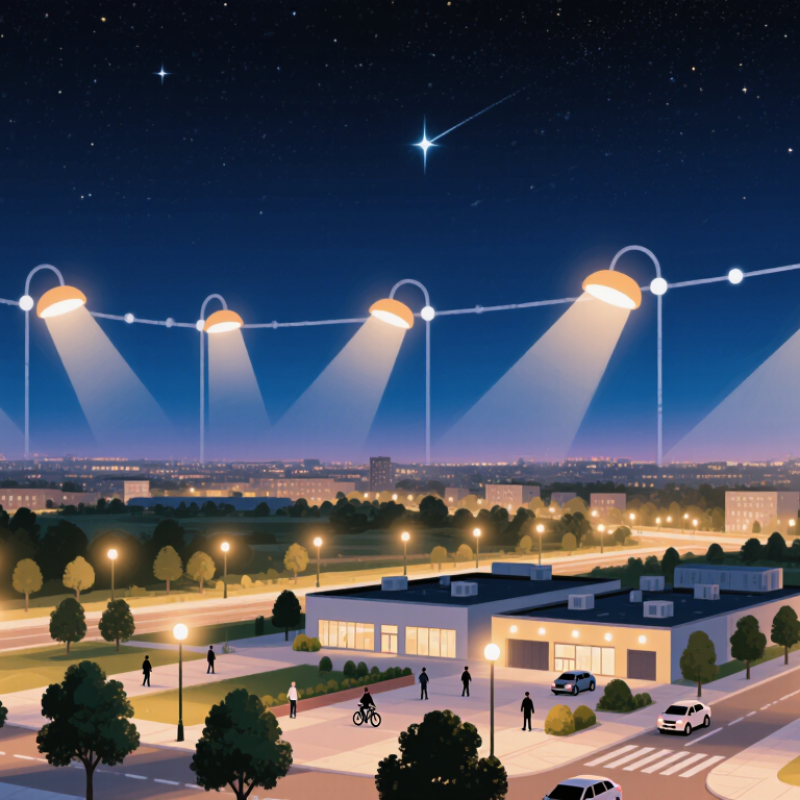
Dark-sky-compliant lighting means using light only where it serves a clear purpose. It reduces glare, skyglow, light trespass, and unnecessary energy use. The core framework follows five principles: useful, targeted, low-level, controlled, and warmer in color. Useful light supports people, safety, and operations. Targeted light stays on the ground, not in windows or the night sky. Only where needed.
Low-level design starts with photometric calculations, not guesswork. A shielded fixture can illuminate a pathway while keeping its beam below the horizontal plane. Timers, occupancy sensors, and adaptive dimming reduce output after traffic declines. Warmer color temperatures can also limit short-wavelength emissions, although color temperature alone does not prove compliance. A 3,000 K lamp can still create glare when poorly aimed. That detail is often missed.
The 2017 World Atlas study in Science Advances reported that more than 80% of the global population lives under light-polluted skies. It also estimated that over 99% of populations in the United States and Europe experience artificial skyglow. A 2023 Science report found visible night-time brightness increased by approximately 9.6% annually from 2011 to 2022. These figures make careful specification more than an environmental preference. Project teams should document mounting height, beam angles, lumen output, controls, and nighttime verification. Real sites are imperfect. Reflections from glass, wet pavement, and pale walls can still increase perceived brightness, so post-installation review remains necessary.
Global projects increasingly need lighting that respects people, wildlife, and the night sky. The 2016 World Atlas of Artificial Night Sky Brightness reported that more than 80% of the world’s population lives under light-polluted skies. In Europe and North America, the figure exceeds 99%. These numbers make upward light more than an aesthetic concern. It becomes a measurable design problem.
Dark sky compliant lighting controls this problem through precise optical distribution. Full cut-off fixtures direct light toward walking surfaces, not building façades or open sky. Lower lumen packages reduce over-lighting when high brightness is unnecessary. Warm colour temperatures, often between 2200K and 3000K, can reduce short-wavelength glare and visual intrusion. Dimming schedules, photocells, and motion sensors help prevent empty roads from staying fully illuminated. The CIE 150:2017 guidance recommends limiting upward light and obtrusive spill near surrounding properties.
Control starts at the drawing board. It continues during commissioning. A technically compliant fixture can still cause glare if mounted too high or aimed poorly. Field checks should measure horizontal illumination, trespass at boundaries, and visible uplight after installation. This is where projects sometimes fall short. I have seen carefully specified systems produce harsh patches beside darker areas. The lesson is uncomfortable: compliance on paper does not guarantee comfortable lighting. A better review combines photometric files, nighttime observation, local ecology, and actual user feedback.
| Design Dimension | Dark Sky–Responsible Approach | Recommended Project Target | How It Controls Excessive Light | Reference or Basis |
|---|---|---|---|---|
| Upward Light | Eliminate Use full cut-off or fully shielded luminaires where practical. |
Target an upward light output ratio of 0% for the installed luminaire and verify the complete optical distribution. | Prevents direct light from being emitted above the horizontal plane, reducing skyglow and wasted light. | CIE 126:1997; CIE 150:2017; local exterior-lighting regulations |
| Light Trespass | Limit Keep illumination within the site boundary and away from windows, roads, habitats, and neighboring properties. |
Design to the applicable local limits for vertical illuminance at property boundaries; limits vary by environmental zone and jurisdiction. | Reduces unwanted illumination reaching locations that do not require light. | CIE 150:2017; national and municipal planning requirements |
| Correlated Color Temperature | Use warmer light Select the lowest practical CCT that meets visual and safety requirements. |
≤3000 K is a widely used dark-sky design threshold; lower CCT may be preferable near sensitive habitats. | Reduces short-wavelength content compared with cooler white light, which can lessen atmospheric scattering and ecological disruption. | Dark-sky lighting criteria; CIE 150:2017; ecological lighting guidance |
| Glare Control | Shield and aim Use optical shielding, appropriate mounting height, and careful aiming. |
Meet the applicable glare limits in the project’s lighting standard and avoid direct view of high-intensity LED sources. | Improves visual comfort and safety while reducing excessive brightness and disability glare. | CIE 150:2017; EN 13201 series; IES lighting practice |
| Illuminance Level | Right light level Design for the task rather than maximizing average brightness. |
Use the lowest maintained illuminance that satisfies the applicable road, pathway, workplace, or security requirement. | Prevents over-lighting, improves uniformity, and reduces unnecessary electricity consumption. | EN 13201 series; ISO/CIE 8995-1; local building and road-lighting standards |
| Dimming and Adaptive Control | Automate Combine photocells, occupancy sensors, scheduling, and step-dimming where suitable. |
Reduce output during low-activity periods while maintaining required safety levels; define operational scenes before commissioning. | Controls light when and where it is needed instead of operating at full output throughout the night. | CIE 150:2017; EN 13201-5; energy-management best practice |
| Curfew and Operating Hours | Time-limited Turn off or reduce non-essential lighting after the site’s active period. |
Set a documented curfew based on local law, security needs, transport schedules, and community activity. | Reduces overnight exposure for residents, wildlife, and astronomical observation. | CIE 150:2017; local planning, environmental, and energy codes |
| Ecological Sensitivity | Protect habitats Use darker corridors, warm spectra, shielding, and seasonal or motion-based controls near sensitive areas. |
Complete an ecological lighting assessment for wetlands, coastlines, forests, migratory routes, and protected areas. | Limits artificial light at night in locations where it can affect wildlife behavior, migration, feeding, and reproduction. | CIE 150:2017; environmental-impact assessment practice |
| Energy and Carbon | Avoid waste Combine efficient sources with correct light levels, dimming, and operating schedules. |
Measure energy use before and after controls; project savings are site-specific and should not be assumed without a baseline. | Lower operating hours and reduced output decrease electricity demand and associated operational emissions. | ISO 50001 energy-management principles; project energy baseline and verification |
| Commissioning and Verification | Verify in the field Check aiming, shielding, CCT, dimming scenes, timers, and boundary conditions after installation. |
Keep photometric files, control settings, measured results, and maintenance records for future audits. | Ensures that installed performance matches the design intent and prevents later increases in brightness or operating time. | CIE 150:2017; project commissioning and measurement procedures |
| Global Project Adaptability | Localize the design Apply a consistent dark-sky framework while adapting to local regulations, climate, culture, and safety requirements. |
Use local environmental zones, legal limits, astronomical conditions, infrastructure standards, and maintenance capabilities. | Creates consistent environmental objectives without assuming that one lighting level or control schedule suits every location. | CIE 150:2017; CIE 126:1997; applicable national and municipal standards |
| Practices to Avoid | Do not over-light Avoid unshielded fixtures, decorative uplighting, excessive CCT, uncontrolled floodlighting, and permanent full-output operation. |
Require a documented justification for every illuminated area, operating period, and lighting level. | Prevents upward spill, glare, light trespass, unnecessary energy use, and avoidable impacts on people and ecosystems. | CIE 126:1997; CIE 150:2017; dark-sky lighting principles |
Dark sky compliant lighting protects more than the night sky. It can reduce glare, wasted electricity, and unnecessary disturbance to wildlife. In coastal projects, poorly aimed lights may disrupt nesting birds and confuse hatchlings. In rural areas, excessive brightness can affect bats, insects, and nocturnal plants. Shielded fixtures direct light toward pathways, roads, and work areas. The difference is visible.
Communities also benefit from calmer, more comfortable public spaces. Reduced glare helps drivers, pedestrians, and older residents see more clearly. Warm-color lighting can feel less harsh near homes, parks, and cultural sites. Lower energy demand may reduce operating costs for schools, transport hubs, and public facilities. However, lighting needs vary across regions. A solution suitable for a dense city may feel excessive in a village. Local residents should review brightness, timing, and fixture placement before installation.
Good practice includes photometric testing, regular maintenance, and documented performance checks. Timers, dimming controls, and motion sensors can limit light during quiet hours. Yet technology cannot solve every problem. Sensors may react to animals, weather, or unexpected movement. Maintenance teams may also overlook gradual glare from misaligned fixtures. That weakness deserves attention. Project managers should consult ecologists, accessibility specialists, and local communities throughout planning. Their feedback can reveal practical concerns that technical drawings miss.
Dark sky compliance depends on location, not one universal checklist. In North America, designers often review BUG ratings, uplight limits, shielding, and correlated color temperature. Local ordinances may set stricter limits than national guidance. A fixture with zero uplight can still create glare if installed too high or aimed poorly.
European projects commonly reference CIE 150, CIE 126, and EN 13201 for roadway performance and environmental impact. These documents address upward light, obtrusive light, uniformity, and pedestrian safety.
In Australia and New Zealand, AS/NZS 1158 requirements may interact with sensitive wildlife controls. Coastal and rural sites need additional assessment. The same lamp can be acceptable in a city but unsuitable near a nesting habitat.
Details matter. Use full shielding where possible. Keep mounting heights modest. Select warm light after checking visibility needs, not by habit. Lower CCT does not automatically remove ecological risk. On project reviews, I have found that reflected light from pale paving can brighten nearby windows more than expected. That mistake is easy to miss in computer models. Field measurements after installation can reveal it. Controls should also reduce output during low-traffic hours, while preserving safe routes and emergency access. Regional approval should be documented with photometric files, aiming diagrams, maintenance settings, and a clear record of local consultation. Some guidance remains open to interpretation, so designs should allow practical revision.
Global lighting projects need more than a compliant fixture. They need a practical implementation plan. Dark sky principles can reduce glare, uplight, and wasted energy while protecting nearby habitats. However, local requirements, climate, culture, and night-time activity vary widely. A design accepted in one region may need adjustment elsewhere.
Tips: Start with a site survey. Record nearby homes, roads, wetlands, observatories, and sensitive wildlife areas. Confirm current local requirements with qualified lighting professionals. Use warm, controlled light where appropriate. Specify shielding, dimming, timers, and motion controls before procurement. Request photometric files, installation details, and testing records from suppliers.
I have found that paperwork alone does not guarantee good results. A technically suitable luminaire can still create glare when mounted too high or aimed poorly. Mock-ups help reveal these issues before full installation. Weather also matters. Dust, humidity, snow, and salt can change performance and maintenance needs. International teams should agree on measurement methods, documentation, spare parts, and commissioning responsibilities early. Independent review by a lighting designer or environmental specialist adds reliability. Still, even experienced teams can miss local preferences or nighttime behavior. Leave room for feedback and correction after the first operating period.
It directs light toward paths, roads, and work areas instead of open sky. Full cut-off fixtures help limit upward light. The goal is control, not darkness.
More than 80% of people live under light-polluted skies. In many developed regions, the figure exceeds 99%. Excessive brightness affects visibility, energy use, wildlife, and night-sky quality.
Shielded fixtures, lower lumen packages, warm colours, dimming, timers, and motion sensors can help. Warm colour temperatures often range from 2200K to 3000K. Higher brightness is not always better.
Poorly aimed lights may disturb nesting birds and confuse hatchlings near coastlines. Brightness can also affect bats, insects, and nocturnal plants. Local ecology needs review.
Survey nearby homes, roads, wetlands, observatories, and sensitive habitats. Record existing light conditions. Confirm local requirements with qualified professionals. Small site details matter.
Yes. A fixture mounted too high may produce glare. Poor aiming can create bright patches beside dark areas. Paperwork is not enough.
Measure horizontal illumination, boundary light trespass, and visible uplight. Observe the site at night. Ask pedestrians, drivers, residents, and maintenance staff for feedback.
No. Sensors may react to animals, weather, or unexpected movement. Misaligned fixtures can slowly create glare. Controls need testing, adjustment, and regular maintenance.
Designs should reflect climate, culture, regulations, and nighttime activity. Dust, humidity, snow, and salt may change performance. A solution suitable for a city may feel excessive in a village.
Request photometric files, mounting details, control settings, testing records, and maintenance instructions. Agree on measurement methods and commissioning responsibilities early. Some plans still need correction after opening.
Dark-Sky Compliant Lighting is designed to provide effective illumination while minimizing unnecessary upward and excessive light. Its core principles include directing light only where it is needed, using appropriate intensity and color temperature, limiting glare, and applying controls such as dimming, shielding, timers, and motion sensors. By reducing skyglow and light trespass, this approach helps protect nocturnal ecosystems, support wildlife behavior, improve visibility, and preserve the natural night environment for communities.
For global projects, successful implementation requires careful attention to regional standards, environmental conditions, local planning requirements, and community expectations. Designers should evaluate site usage, mounting heights, beam angles, lighting levels, operating schedules, maintenance needs, and energy performance before selecting solutions. Because regulations and development priorities vary across countries, international teams should coordinate with local authorities and stakeholders, document compliance requirements, and allow flexibility for different climates and urban contexts. A well-planned Dark-Sky Compliant Lighting strategy can deliver reliable, efficient, and socially responsible lighting across diverse project locations.