
Insights & News

Solar Lighting Blog

Industry trends, technical guides, and case studies on storm-resilient solar streetlights.

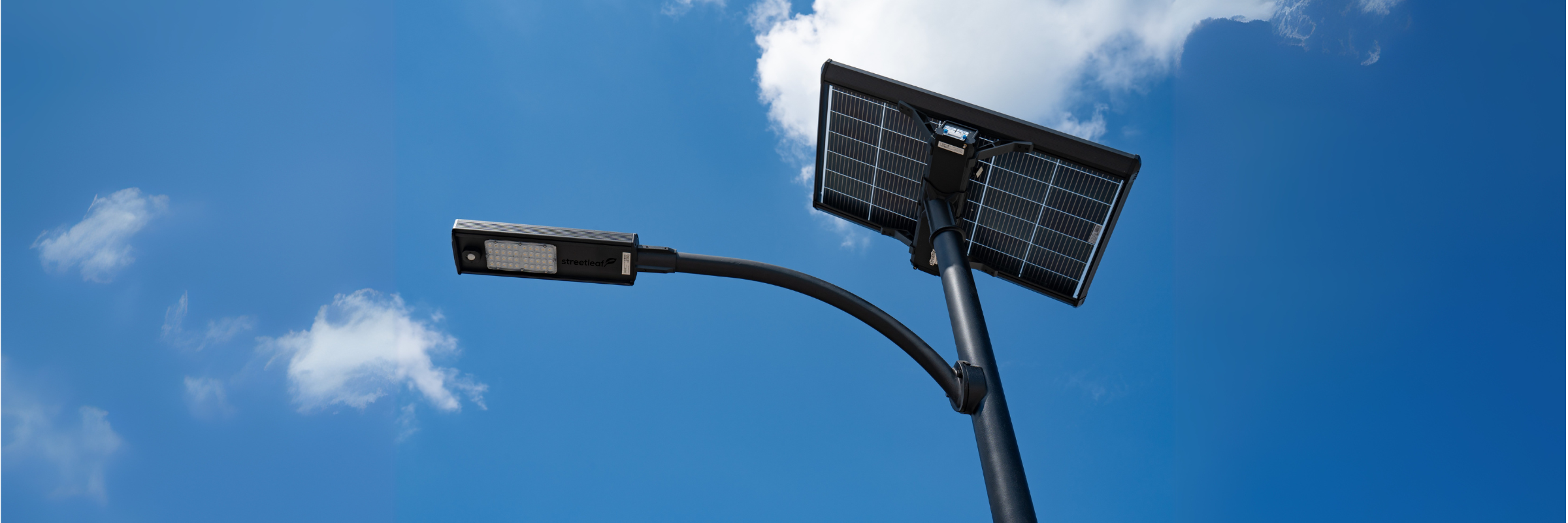
Streetleaf AVE solar streetlight against blue sky
Technical Knowledge

Engineering & Standards

Learn about Cat 5 hurricane resistance, bifacial panel technology, and battery reserve dynamics.

Family walking under Streetleaf solar streetlights in a neighborhood
Case Studies

Real-World Projects

See how developers, HOAs, and municipalities achieve zero grid dependency.

0%

Pathway Solar Lighting is moving from a decorative option to a practical infrastructure choice. Buyers now expect reliable illumination, lower operating costs, and reduced dependence on grid electricity. The International Energy Agency’s World Energy Outlook 2023 reported that hundreds of millions of people still lacked electricity access. This gap makes decentralized solar lighting increasingly relevant. IRENA’s Renewable Capacity Statistics 2024 also recorded strong global solar growth, confirming a broader shift toward renewable power.

Yet product selection remains difficult. A lamp may look bright in a showroom and fail beside a shaded walkway. Battery capacity, panel efficiency, winter performance, drainage, glare, and vandal resistance all influence real results. Small details matter. The Global Off-Grid Solar Market Report 2024, published by GOGLA and Lighting Global, highlights the importance of product quality, consumer confidence, and reliable after-sales support. Those principles apply directly to pathway projects.

Energy researcher Amory Lovins said, “The cheapest energy is the energy you don’t use.” Efficient LEDs, smart controls, and correctly positioned fixtures can turn that idea into measurable savings. However, buyers should not treat every specification as equally trustworthy. Laboratory ratings may not reflect dust, rain, weak sunlight, or heavy foot traffic. No checklist replaces a site visit. That is where many purchasing plans become optimistic. This guide presents ten practical Pathway Solar Lighting tips for global buyers, combining technical evaluation with installation experience. It considers performance, safety, maintenance, sustainability, and supplier credibility. The goal is not to promise a perfect product. It is to support better questions before contracts are signed.

10 Pathway Solar Lighting Tips for Global Buyers

Understanding Pathway Solar Lighting and Its Main Components

10 Pathway Solar Lighting Tips for Global Buyers
Understanding Pathway Solar Lighting and Its Main Components

Pathway solar lighting combines a photovoltaic panel, rechargeable battery, LED light source, controller, and housing. Each part affects brightness, operating time, and service life. The panel converts sunlight into electricity during daylight hours. The battery stores that energy for nighttime use. In cloudy regions, battery capacity matters more than attractive daytime brightness.

The LED module determines light output and color appearance. Warm white light often feels comfortable near homes and gardens. Cooler light may improve visibility along wider paths. A controller manages charging, automatic switching, and protection against overcharging. Motion sensors can reduce energy use, but their detection range needs practical testing. Sensors sometimes miss pedestrians walking beside the path.

Housing materials also deserve close inspection. Look for sealed structures, corrosion resistance, and suitable ingress protection ratings. A durable pole should withstand wind, soil movement, and accidental contact. The foundation is easy to overlook. Poor installation can tilt the fixture or expose wiring to water.

Before purchasing, buyers should check winter sunlight, local rainfall, nighttime temperatures, and replacement access. A larger panel is not always better if nearby trees create shade. I have seen lights with strong specifications perform poorly after installation because spacing was too wide. Photometric testing, warranty terms, and battery replacement procedures provide more reliable evidence than marketing claims. Even careful planning has limits. Pathway conditions change over time.

Assessing Site Conditions, Lighting Needs, and Local Climate

Assessing Site Conditions, Lighting Needs, and Local Climate

A reliable pathway lighting plan begins with walking the site after sunset. Mark dark corners, tree shadows, steps, slopes, and areas near gates. Measure pathway width and note pedestrian traffic. A narrow garden path needs less light than a public access route. Check nearby walls, reflective surfaces, and existing lamps. They can create glare or misleading brightness. Avoid placing fixtures where vehicles, irrigation, or lawn equipment may damage them. Confirm that each unit receives several hours of direct sunlight, not filtered light beneath trees.

Match brightness and spacing to the task. Use softer, even illumination for residential paths and stronger output near steps or entrances. Keep light directed downward to reduce glare and protect neighboring homes. Select durable housings with suitable ingress protection for rain, dust, and cleaning. Battery capacity should reflect the longest expected night, including cloudy periods. In cold regions, battery performance may fall. In hot climates, heat can shorten battery life. Coastal air also demands corrosion-resistant materials. Local weather data is useful, but it never replaces observation.

Test one fixture through a complete night before ordering many. I have seen attractive layouts fail because winter shadows were ignored. Check light levels at eye height and near the ground. Review local safety requirements, accessibility guidance, and property rules before installation. Leave room for maintenance, because blocked panels and aging batteries are common problems. No survey is perfect. Seasonal changes may still require spacing or angle adjustments.

10 Pathway Solar Lighting Tips for Global Buyers

Assessing site conditions, lighting needs, and local climate starts with understanding the available solar resource. The chart below shows approximate long-term average peak sun hours for representative locations, expressed as equivalent hours of 1,000 W/m² sunlight per day.

Planning note: Lower-sun-resource locations generally require larger photovoltaic panels, higher battery capacity, adaptive dimming, or greater autonomy. Final sizing should use site-specific irradiance, shading, temperature, operating hours, and seasonal weather data.

Choosing Solar Panels, Batteries, LEDs, and Protective Features

Global buyers should judge pathway solar lights as a complete system, not as a bright panel on a pole. The IEA PVPS Trends 2024 report records more than 1.6 terawatts of global photovoltaic capacity by the end of 2023. That scale does not guarantee quality. Choose monocrystalline panels with verified output under low-light conditions, and compare wattage at the same test standard. A slightly larger panel can recover faster after cloudy days. I have seen oversized panels paired with weak batteries, which wastes the advantage.

Battery selection needs equal attention. Lithium iron phosphate cells usually offer better cycle durability and usable capacity than traditional lead-acid designs, but only when a battery-management system controls overheating, overcharging, and deep discharge. Check the rated capacity at the intended temperature. Cold nights can reduce performance. GOGLA’s 2024 off-grid solar market data shows millions of solar products reaching users, yet after-sales support remains uneven across regions. Buyers should request replacement procedures, not just laboratory claims.

LED efficiency matters, but optics matter more. A narrow pathway beam can create dark gaps between fixtures. Specify measured lumens, color temperature, glare control, and a useful lighting distribution. Protective housings should meet an appropriate IEC 60529 IP rating, resist corrosion, and protect cables from insects and rodents. Add surge protection where storms are frequent. Motion sensors can reduce battery demand, although poor calibration may cause nuisance dimming. Field testing is still essential. A perfect datasheet can fail beside a dusty footpath.

Planning Fixture Placement, Spacing, Installation, and Safety

10 Pathway Solar Lighting Tips for Global Buyers

Map pedestrian routes, vehicle access, trees, walls, and drainage before selecting fixtures. Classify each route by risk, traffic, and nighttime use under CIE 115:2010. Place luminaires near crossings, corners, steps, and entrances, not only along property boundaries. Keep light away from bedroom windows and wildlife-sensitive areas. A first layout is rarely perfect.

Use photometric files to test spacing, uniformity, and glare before installation. Wider spacing may reduce costs, but dark gaps can create safety risks. Confirm the manufacturer’s beam angle, mounting height, and maintained output. The U.S. Department of Energy reports that LED efficacy has surpassed 200 lumens per watt in laboratory demonstrations, but outdoor performance depends on optics, temperature, and maintenance. Measure twice.

Allow seasonal shadows from growing trees and nearby structures. Keep panels clear of roof overhangs, dust, and afternoon shade. The IEA PVPS Trends 2024 report recorded 456 gigawatts of new photovoltaic capacity in 2023, showing rapid solar deployment, not guaranteed site performance. Size batteries for local weather data, required autonomy, and reduced winter sunlight. Protect cables inside sealed conduits, provide stable foundations, and verify grounding and ingress protection against IEC 60598 requirements. Add lockable access panels and visible service labels. Leave room for maintenance. Real sites rarely stay clean.

10 Pathway Solar Lighting Tips for Global Buyers - Planning Fixture Placement, Spacing, Installation, and Safety

No. Planning Dimension Recommended Data or Guideline Practical Application Buyer Checkpoint
1 Define the pathway function Classify the route as a pedestrian path, garden walkway, access road, stair approach, or emergency route before selecting fixtures. Pedestrian paths generally need guidance and obstacle visibility, while steps, crossings, and changes in level require higher visual attention. Confirm the route's purpose, operating hours, expected traffic, accessibility requirements, and applicable local lighting rules.
2 Set a practical light-output target For residential and landscape pathways, a typical starting range is 100–300 lumens per fixture. Higher output may be appropriate for wider or busier routes. Use lower output for decorative guidance and higher output where users must clearly identify edges, steps, surface changes, or nearby obstacles. Compare measured or tested light distribution, not lumens alone. Excessive brightness can create glare and dark adaptation problems.
3 Plan fixture spacing A common initial spacing range is 3–6 m (10–20 ft) for low pathway fixtures. Final spacing depends on mounting height, optics, output, and required uniformity. Use closer spacing on curves, stairs, slopes, entrances, and areas with obstructions. Wider spacing may work on straight, unobstructed paths. Request a photometric layout or field test when uniform illumination is important. Avoid relying only on a catalog spacing claim.
4 Place lights for visual guidance Install fixtures along the path edge rather than directly in the walking line. Alternate sides when this improves uniformity and reduces a continuous glare line. Keep poles and housings outside the clear walking area, especially near doorways, ramps, crossings, and narrow paths. Check the finished layout for trip hazards, mower access, snow removal, irrigation equipment, and pedestrian clearance.
5 Select suitable mounting height Typical low pathway fixtures are approximately 0.3–1.0 m (1–3.3 ft) high. Taller fixtures can spread light farther but may increase glare and wind exposure. Lower bollards or stake lights suit residential paths; taller, shielded fixtures may be more appropriate for public or wider walkways. Match height to the optical distribution, local wind conditions, landscape maintenance plan, and required visibility of the path surface.
6 Evaluate solar exposure Place the photovoltaic panel where it receives unobstructed sunlight during the main solar period. Avoid shade from buildings, trees, walls, and other fixtures. In the Northern Hemisphere, panels often perform well when oriented generally toward the southern sky; in the Southern Hemisphere, the northern sky is commonly preferred. Local site conditions take priority. Review seasonal shading, panel tilt, latitude, cloudy-season solar resource, and whether the panel can be adjusted after installation.
7 Size battery capacity for the climate Specify the required operating period in hours and reserve requirement. A practical design target is often 1–3 nights of autonomy, depending on weather risk and site importance. Cloudy or winter-prone locations generally require more conservative battery and panel sizing than high-sun locations. Request battery chemistry, rated capacity, operating-temperature range, charging protection, expected cycle life, and replacement procedure.
8 Choose color temperature carefully For comfortable pathway lighting, 2,700–3,500 K is a common warm-to-neutral range. Lower color temperatures usually produce a warmer appearance and can reduce harsh visual contrast. Use warmer light near homes, gardens, and hospitality areas. Neutral light may be selected where surface recognition and a cooler appearance are priorities. Check the correlated color temperature, color rendering information, glare control, and any local requirements concerning outdoor light and wildlife.
9 Verify weather and impact protection For outdoor pathway use, look for an enclosure rating appropriate to the site. IP65 provides dust protection and protection against water jets; exposed or wash-down locations may require a higher rating. Use corrosion-resistant materials and sealed connectors in coastal, humid, snowy, dusty, or frequently irrigated environments. Confirm the applicable IP or equivalent enclosure test documentation, UV resistance, operating-temperature limits, impact rating, and corrosion protection.
10 Install and maintain safely Anchor fixtures securely, bury or protect cables where applicable, keep panels and lenses clean, and inspect the system at least seasonally. Check for loose stakes, damaged housings, water ingress, blocked panels, reduced runtime, glare, and vegetation that has grown into the light distribution. Follow local electrical, construction, accessibility, and outdoor-lighting requirements. Use qualified installers for hardwired systems or installations requiring excavation.
Planning note: The numerical ranges above are practical preliminary values for pathway projects, not universal code requirements. Final fixture selection and spacing should be verified through site conditions, manufacturer test data, local regulations, and a lighting assessment where safety or public access is involved.

Maintaining Solar Pathway Lights for Reliable Long-Term Performance

10 Pathway Solar Lighting Tips for Global Buyers

Maintaining Solar Pathway Lights for Reliable Long-Term Performance

Reliable pathway lighting begins with a simple inspection routine. In my field experience, dust is often the first problem, not battery failure. Wipe each solar panel with a soft, damp cloth every few weeks. Remove leaves, bird residue, and standing water around the fixture. A shaded panel may charge poorly, even when the light still appears functional.

Check the light position after storms or landscaping work. A small change in angle can reduce direct sunlight. Keep nearby plants trimmed, especially in winter when branches become heavier. Inspect cables, seals, and mounting points for cracks or looseness. Moisture inside the housing usually signals a sealing problem that should not be ignored. Clean the lens carefully, because scratched plastic can scatter light across the walkway.

Battery performance also needs practical attention. Replace aging batteries with the specified chemistry and size, rather than choosing the cheapest option. Cold regions may reduce nighttime runtime, while hot climates can shorten battery life. Buyers should confirm temperature ratings, ingress protection, and replacement access before purchasing large quantities. Local technicians can test charging voltage and nighttime output with basic tools. I have seen maintenance plans fail because they assumed perfect weather. That assumption deserves review. Keep a simple service log with dates, symptoms, and replacements. It makes repeated faults easier to trace.

FAQS

How should I inspect a pathway before installing solar lights?

Walk the site after sunset. Mark dark corners, steps, slopes, tree shadows, and gates. Measure pathway width and pedestrian traffic. A narrow garden path usually needs less light.

Where should solar pathway lights be placed?

Choose positions with several hours of direct sunlight. Avoid locations beneath dense trees or beside tall walls. Keep fixtures away from vehicles, irrigation, and lawn equipment. Small placement mistakes matter.

How bright should pathway lights be?

Use soft, even light along residential paths. Choose stronger illumination near steps, entrances, and uneven ground. Direct the beam downward to reduce glare. Excess brightness is not always safer.

What weather conditions should buyers consider?

Cold temperatures can reduce battery performance. Hot climates may shorten battery life. Coastal air requires corrosion-resistant materials. Rain, dust, and cleaning also require suitable housing protection.

How can I choose a suitable solar panel and battery?

Compare panel output under the same testing conditions. A slightly larger panel can recover faster after cloudy days. Match the battery capacity to the longest expected night. A strong panel cannot fix a weak battery.

What battery features are important?

Lithium iron phosphate batteries often provide durable cycle performance. A battery-management system should control overheating, overcharging, and deep discharge. Check capacity at the intended temperature. Cold nights may reduce runtime.

What should I check besides LED brightness?

Review measured lumens, color temperature, beam width, and glare control. Narrow beams can create dark gaps between fixtures. Inspect seals, cables, and corrosion resistance. A perfect datasheet can still fail beside a dusty path.

How should solar pathway lights be maintained?

Wipe panels with a soft, damp cloth every few weeks. Remove leaves, residue, and standing water. Check mounting points after storms or landscaping work. Keep a service log with dates and symptoms.

Should I test one light before buying many?

Yes, test one fixture through a complete night. Check light levels near the ground and at eye height. Observe cloudy weather, winter shadows, and nearby reflections. No survey is perfect. A layout may still need adjustment.

Conclusion

Pathway Solar Lighting offers a practical and energy-efficient way to illuminate walkways, gardens, driveways, and public spaces without relying on complex electrical wiring. This guide explains the main components, including solar panels, rechargeable batteries, LED light sources, control systems, housings, and protective features. Global buyers will learn how to evaluate site conditions, daily sunlight, pathway usage, local weather, seasonal changes, and lighting goals before selecting suitable products.

The article also covers how to choose panels, batteries, LEDs, and weather-resistant materials according to performance requirements and local climate. It provides guidance on fixture placement, spacing, installation methods, visibility, and user safety to support consistent illumination. Finally, readers will discover practical maintenance steps, such as cleaning panels, checking battery performance, inspecting housings, removing obstacles, and replacing worn components. With careful planning and regular care, Pathway Solar Lighting can deliver reliable, attractive, and long-term outdoor illumination for diverse environments worldwide.

Oliver Bennett

Oliver Bennett

Oliver Bennett is a professional marketing specialist dedicated to helping customers understand how thoughtful products and reliable solutions can support their everyday needs. With extensive knowledge of the company’s product range, Oliver combines market insight, clear communication, and a strong......