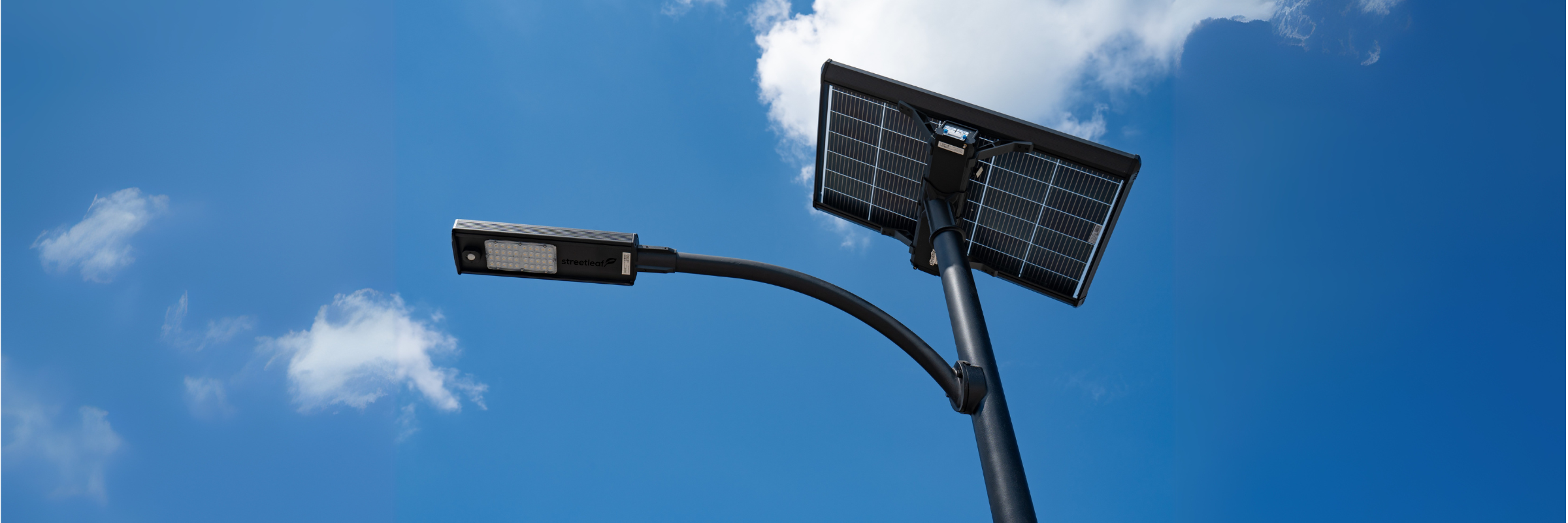
Learn about Cat 5 hurricane resistance, bifacial panel technology, and battery reserve dynamics.

See how developers, HOAs, and municipalities achieve zero grid dependency.
The 2026 market for Bifacial Solar Streetlights is moving from simple product comparisons toward evidence-based infrastructure decisions. Buyers now examine light output, battery reliability, solar yield, maintenance access, and long-term operating costs.
IRENA’s Renewable Capacity Statistics 2025 reported 4,448 GW of global renewable capacity by the end of 2024. Solar power represented the largest share, with approximately 1,865 GW installed worldwide. This rapid expansion supports stronger solar supply chains. However, it does not guarantee dependable street lighting in every location.
Performance varies.
The Fraunhofer Institute for Solar Energy Systems notes that bifacial photovoltaic modules can produce additional energy from reflected rear-side light. Reported gains commonly range from 5% to 30%, depending on ground reflectivity, module height, spacing, shading, and system design. A white roadside surface may improve rear irradiance. Dark soil may offer much less benefit.
The International Energy Agency also emphasizes that solar deployment increasingly depends on grid conditions, storage, and project quality. For streetlights, that means a high-efficiency panel is only one part of the system. Battery temperature, autonomy settings, LED optics, pole strength, and controller protection can decide nighttime performance.
This guide evaluates leading 2026 models for global buyers using practical criteria. These include illumination consistency, battery chemistry, bifacial energy gain, ingress protection, warranty terms, certifications, and service support. Real projects remain different. A coastal highway, a dusty rural road, and a humid urban park need different specifications.
Some rankings may still be imperfect.
Product availability and certification requirements can change by region. Therefore, buyers should verify test reports, photometric files, installation records, and replacement-part support before placing large orders. The best Bifacial Solar Streetlights are not always the most powerful. They are the systems that deliver predictable light under local conditions.
What Are Bifacial Solar Streetlights and How Do They Work?
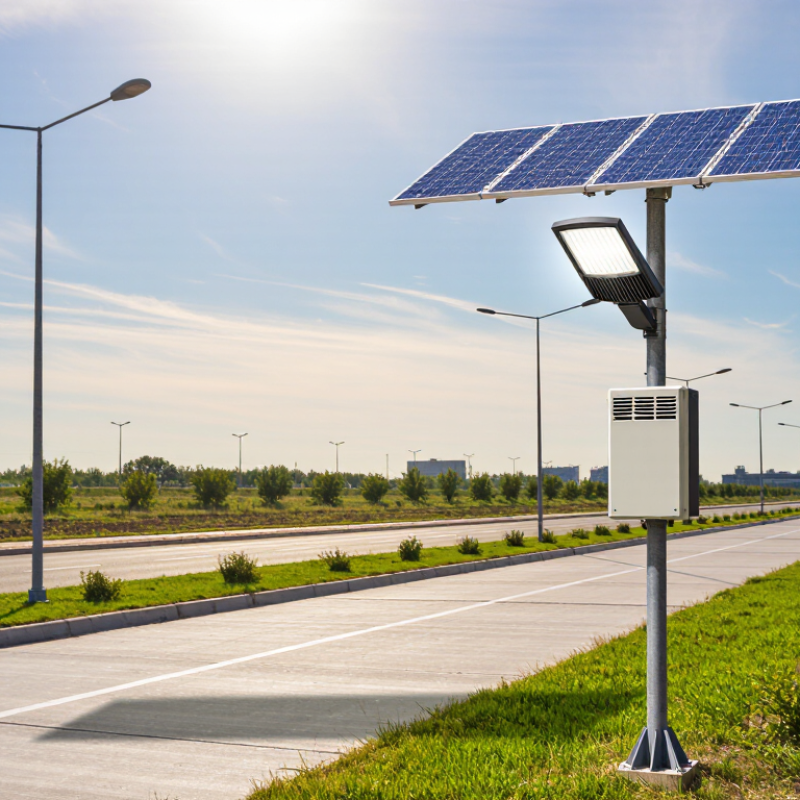
Bifacial solar streetlights use photovoltaic panels that generate electricity from both sides. The front surface receives direct sunlight, while the rear surface captures reflected and scattered light. Pale pavement, concrete, sand, or nearby walls can increase rear-side production. Dark asphalt usually provides less useful reflection.
During daylight, the panel sends electricity through a charge controller into a battery. After sunset, a light sensor activates the LED fixture. The controller regulates brightness and protects the battery from excessive charging or deep discharge. Some systems reduce output during quiet traffic hours, then increase brightness when movement is detected.
Installation details matter greatly. A raised panel with open space behind it can receive more reflected light than a panel mounted close to a solid pole. Dust, shade, snow, and poor panel angles can reduce the expected gain. Bifacial does not mean double output. That assumption is common, but inaccurate.
For global buyers, site measurements should include pavement color, seasonal sunlight, nighttime temperature, and cleaning access. Battery capacity also deserves careful attention, especially in cloudy regions. In practical projects, lighting performance may disappoint when the rear panel faces a wall or heavy vegetation. A smaller system with a clear solar path can sometimes outperform a larger one placed badly. Field testing remains valuable because product specifications cannot fully represent every street environment.
| Evaluation Dimension | Typical Technical Data | How It Works | Buyer Relevance |
|---|---|---|---|
| Definition | A solar streetlight using a photovoltaic module that generates electricity from both its front and rear surfaces. | The front side receives direct sunlight and diffuse skylight, while the rear side captures reflected and scattered light from the surroundings. | Suitable for locations where the module rear surface has access to reflected or diffuse light. |
| Bifacial energy gain | Approximately 5%–30% additional energy compared with an equivalent monofacial module in many practical installations; the actual value can be lower or higher. | Additional output depends on rear irradiance, module bifaciality, ground reflectance, row spacing, height, and shading. | Do not use the maximum gain as a guaranteed figure; request a site-specific energy simulation. |
| Bifaciality factor | Common commercial values are roughly 70%–95%, depending on the cell and module design. | The factor expresses rear-side electrical response relative to the front side under comparable irradiance. | A higher factor is useful only when the rear side receives sufficient light. |
| Recommended module orientation | Open mounting with minimal obstruction behind the module; tilt and azimuth should follow local solar conditions. | An unobstructed rear surface allows reflected and diffuse radiation to reach the rear cells. | Avoid mounting the panel directly against an opaque metal plate or tightly enclosed housing. |
| Ground reflectance (albedo) | Typical surfaces: asphalt about 0.05–0.20, vegetation about 0.15–0.30, light concrete about 0.30–0.50, and fresh snow about 0.70–0.90. | Higher-reflectance surfaces send more light toward the rear of the module. | Urban asphalt sites may deliver less bifacial benefit than open areas with pale paving, sand, or snow. |
| PV module efficiency | Modern crystalline-silicon modules commonly achieve approximately 18%–24% front-side efficiency under standard test conditions. | Higher efficiency produces more rated power from the same panel area. | Important where pole dimensions, wind loading, or available mounting area limit module size. |
| Typical LED lamp power | Approximately 20–100 W for many standalone pedestrian, residential, roadway, and parking-area applications. | The controller supplies the LED according to the programmed lighting schedule and battery state of charge. | Select power based on road classification, mounting height, pole spacing, and required illuminance—not wattage alone. |
| Lighting efficacy | Quality outdoor LED systems commonly provide approximately 120–200 lm/W at the luminaire level, depending on optics and operating conditions. | Efficacy indicates how much visible light is produced per watt of electrical input. | Higher efficacy can reduce PV and battery size while maintaining the required lighting level. |
| Battery technology | Lithium iron phosphate (LiFePO₄) is widely used; nominal battery systems commonly operate at 12.8 V or 25.6 V. | The battery stores daytime solar energy and powers the LED after sunset or during low-solar conditions. | Check usable capacity, low-temperature charging protection, battery-management functions, and replacement access. |
| Autonomy requirement | Common project specifications require approximately 2–5 nights of autonomy, subject to climate and service level. | Stored energy covers nights with insufficient solar charging, including periods of cloud or rain. | Size autonomy from the least-solar month, local weather data, dimming profile, and required availability. |
| Controller functions | Typical functions include dusk-to-dawn control, multi-stage dimming, maximum-power-point tracking (MPPT), overcharge protection, and low-voltage disconnect. | The controller coordinates PV charging, battery protection, and LED operation. | MPPT can improve energy harvesting when solar irradiance and module temperature vary. |
| Environmental protection | Outdoor enclosures are commonly specified at IP65 or higher; impact ratings such as IK08–IK10 may be used for the luminaire. | Ingress protection limits dust and water entry, while impact protection addresses mechanical damage. | Confirm the rating applies to the complete installed product and matches local dust, rain, salt, and vandalism conditions. |
| Operating temperature | Many outdoor systems are designed for approximately −20°C to +60°C, but the battery charging range may be narrower. | Electronic components and batteries have different temperature limits and performance characteristics. | For cold climates, verify low-temperature charging protection and winter battery capacity. |
| Best-fit applications | Roads, pathways, parks, parking areas, campuses, resorts, rural routes, and locations where grid connection is costly. | The integrated PV, battery, controller, and LED operate as an independent outdoor lighting system. | Bifacial designs are most attractive where rear-side exposure, high surface reflectance, or limited front-panel area can improve energy yield. |
Request measured field data, not only laboratory efficiency claims. Pale concrete may reflect useful light toward the rear panel. Dark soil usually provides less reflected energy. Panel angle, dust, shading, and winter sunlight can reduce daily output. Higher wattage is not always better.
Rear-panel gain depends strongly on ground reflectivity. Test the system above pale concrete and darker soil when possible. Record charging recovery and nighttime operation at both locations. One showroom demonstration can mislead buyers.
Compare usable capacity, operating temperature, charging limits, and replacement access. Ask whether testing included repeated deep cycles. A system promising three cloudy nights may perform differently near a humid coast. Heat can reduce battery life. I sometimes focus too much on capacity.
Request a photometric file instead of relying only on lumen figures. Check uniformity, glare control, and the actual road width covered. Measure illumination from dusk until dawn during a pilot installation. Bright output alone does not prove useful road coverage.
Request enclosure protection, impact ratings, corrosion tests, and wind-load calculations. Review warranty conditions and exclusions carefully. Inspect sample wiring, connectors, and seals when possible. A loose connector can defeat an efficient panel and large battery. Small details matter.
Ask for factory audit records, traceable serial numbers, and recent production samples. Request photovoltaic safety and performance test documents from recognized laboratories. Check realistic battery cycle tests and clear technical documentation. Confirm local spare parts and technical response times. A long warranty may still be inconvenient.
Calculate costs across at least ten years. Include purchase, shipping, installation, cleaning, inspections, software access, and battery replacement. Include failed-unit logistics and technician travel time. Compare cost per illuminated night, not only cost per unit. Labor is often overlooked.
Install samples at one sunny site and one cloudy site. Measure dusk-to-dawn performance and recovery after cloudy days. Check lighting uniformity, charging behavior, and maintenance access. Compare actual results with supplier estimates. Pilot results can disappoint, but they reveal reality.
This guide to the 2026 Top Bifacial Solar Streetlights for Global Buyers explains how these systems capture sunlight from both sides of their solar panels, improving energy generation under suitable reflective conditions. It examines the features that define high-quality products, including efficient photovoltaic modules, intelligent lighting controls, long-lasting batteries, strong illumination, weather resistance, and dependable operation in different climates. Buyers will also learn how to compare performance by reviewing energy conversion, battery autonomy, brightness, charging behavior, maintenance needs, and structural durability rather than relying on one specification alone.
The article highlights suitable applications such as roads, walkways, parking areas, campuses, industrial zones, parks, and remote public spaces. It also provides practical guidance for selecting reliable suppliers, checking product quality, confirming certifications and warranties, and evaluating total ownership costs. By considering installation, replacement, maintenance, energy savings, and expected service life, global buyers can choose Bifacial Solar Streetlights that deliver consistent lighting and stronger long-term value.