
Deployable commercial-grade solar luminaires optimized for zero grid load, Cat-5 storm resilience, and extended maintenance-free operation.
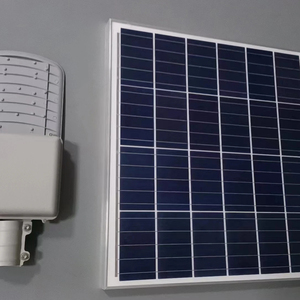
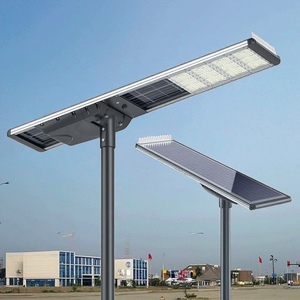
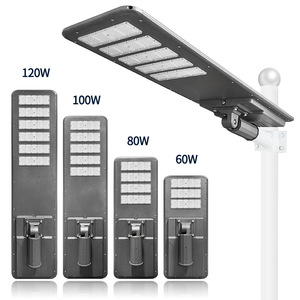
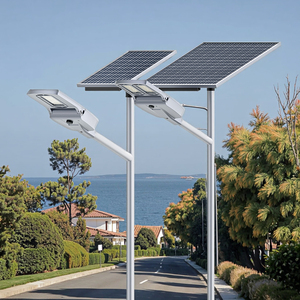
When selecting a manufacturer for CE certified low maintenance solar streetlights, engineering precision and compliance with European Union directives are non-negotiable standards. Municipal procurement departments, utility operators, and commercial developers are increasingly moving away from entry-level solar products toward industrial-grade luminaires capable of sustaining 10 to 15 years of uninterrupted operation.
True CE certification mandates adherence to key harmonized standards, including the Low Voltage Directive (LVD 2014/35/EU), Electromagnetic Compatibility Directive (EMC 2014/30/EU), and EN 60598-2-3 (particular requirements for road and street lighting luminaires). Certified manufacturing processes guarantee that the internal electronics, Maximum Power Point Tracking (MPPT) charge controllers, and Lithium Iron Phosphate (LiFePO4) battery packs emit zero electromagnetic interference and remain thermally stable under extreme environmental stresses.
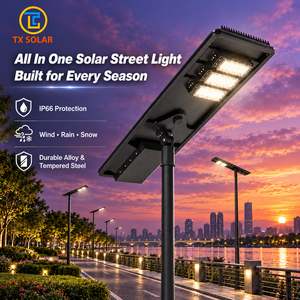
Constructed with die-cast structural aluminum alloys (ADC12) and 304 stainless steel hardware. Rated to withstand extreme wind velocities exceeding 165 mph (Cat 5 storm conditions) without mechanical deflection.
Utilizes N-Type monocrystalline bifacial photovoltaic panels that capture direct sunlight on the front face and albedo ambient light reflected from the ground on the rear, increasing total energy harvest by up to 25%.
Integrated LoRaWAN, Zigbee, or cellular smart nodes enable central management software (CMS) monitoring. Engineers can track battery state of charge (SoC), operational temperatures, and remote dimming profiles in real time.
Modern solar streetlighting infrastructure has diverged into two distinct architecture choices depending on solar irradiance profiles, geographical latitude, and pole height requirements:
| Architecture Feature | All-In-One (Integrated) | All-In-Two / Split-System | Self-Cleaning Automatic Units |
|---|---|---|---|
| Primary Application | Residential streets, pathways, parking lots, HOAs | Highway arterials, high-wattage municipal roads | High-dust, desert regions, industrial zones |
| Maintenance Interval | 5 - 7 Years (Battery check) | 7 - 10 Years (Component level) | 8 - 12 Years (Autonomous cleaning) |
| Solar Module Adjustability | Fixed Horizontal / Angle Tilt Bracket | 360° Rotatable Dual-Axis Mounting | Fixed or Adjustable Angle Mount |
| Ingress Protection | IP65 to IP66 Rating | IP66 to IP68 Waterproof Enclosures | IP66 Sealed Drive Mechanism |
| Battery Chemistry | Grade-A LiFePO4 (6,000 Cycles @ 80% DoD) | Modular Deep-Cycle LiFePO4 Bank | Thermally Stabilized LiFePO4 Pack |
The global transition to sustainable infrastructure has fundamentally changed how municipal asset managers, land developers, and utility providers evaluate outdoor illumination. In the past, streetlighting procurement focused almost exclusively on initial capital expenditure (CapEx). Today, decision-makers are evaluating the Total Cost of Ownership (TCO) and Levelized Cost of Lighting (LCOL).
HOAs, cities, and utilities are shifting from purchasing hardware outright to entering structured service agreements. Under $0 upfront cost financing structures, the manufacturer or service operator handles complete system installation, continuous remote monitoring, and preventive maintenance for a predictable monthly fee. This model eliminates budgetary bottlenecks while ensuring 99.9% uptime compliance.
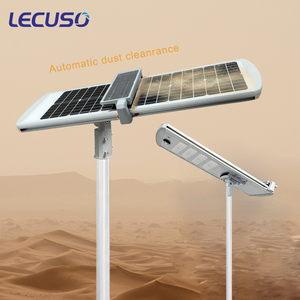
Soiling—the accumulation of dust, sand, bird droppings, and industrial particulate matter—can reduce photovoltaic panel output by up to 40% within six months in arid or high-pollution climates. Future procurement mandates increasingly require automated brush and wiper mechanisms that execute micro-cleaning cycles daily without human intervention.
Light pollution poses serious ecological threats to migratory birds, nocturnal mammals, and marine life—particularly sea turtle nesting habitats along coastal roads. Global lighting specifications now mandate precise optical cutoff patterns. Modern CE certified solar streetlights integrate amber LED options (wavelengths between 590nm and 610nm) and fully shielded fixtures to comply with IDA (International Dark-Sky Association) guidelines, preventing upward light spill while maintaining Uniformity ratios above 0.4 on road surfaces.
Achieving true low-maintenance operational performance over a 10-year lifespan requires rigorous engineering at the component level. Inferior solar lights fail prematurely due to thermal degradation of lithium cells, water ingress in low-grade drivers, or yellowing optical lenses. Premier manufacturers overcome these failure modes through continuous technological innovations:
Advanced Maximum Power Point Tracking (MPPT) algorithms track peak energy output at >99.5% efficiency. Dynamic power management dynamically dims light levels during extended cloud coverage (up to 7-10 rainy days of continuous autonomy).
Lithium Iron Phosphate (LiFePO4) chemistry offers superior thermal stability compared to standard NMC cells. Built-in BMS protection prevents overcharging, deep discharging, short circuits, and thermal runaway across temperatures from -20°C to +65°C.
High-transmittance optical-grade polymethyl methacrylate (PMMA) lenses deliver Batwing (Type II / Type III) light distributions, maximizing pole-to-pole spacing (up to 40 meters) while eliminating glare and hot spots.
As a specialized manufacturer focused on CE certified low maintenance solar streetlights, our operations integrate full-stack R&D, precision metal fabrication, high-speed SMT LED placement, and automated environmental testing. By removing middle-tier distributors, we deliver direct factory-to-project procurement advantages for land developers, HOAs, utility operators, and municipal agencies globally.
Traditional grid-tied streetlights require costly underground conduit trenching, copper wiring runs, transformer connections, and utility approvals. Our off-grid solar luminaires install directly onto standard steel or aluminum poles within 15 minutes per unit, eliminating up to 70% of total installation labor costs.
To assist municipal budgets and commercial land developers, we offer modular procurement models ranging from traditional EXW/FOB manufacturing supply to complete zero-upfront-cost service agreements including installation, monitoring, and lifetime maintenance support.
Addressing core technical, regulatory, and operational considerations for engineering consultants and buyer groups.
Our luminaires undergo comprehensive testing in accredited laboratory facilities. LVD compliance is validated according to EN 60598-2-3 (street lighting safety). EMC compliance is verified under EN 55015 and EN 61547 for electromagnetic immunity and suppression. Furthermore, IP66 water ingress and IK10 mechanical impact protection are independently verified by TÜV/SGS testing reports.
The automated self-cleaning system employs a high-torque, brushless DC motor driving a weather-resistant fluororubber wiper blade or double-spiral bristle brush across the PV panel face twice daily (once at sunrise and once at dusk). This process prevents dust compaction and soiling losses without requiring manual labor or water connections.
Lithium Iron Phosphate (LiFePO4) offers 4,000 to 6,000 deep discharge cycles at 80% Depth of Discharge (DoD), compared to only 500-800 cycles for lead-acid and 1,500 cycles for ternary lithium (NMC). LiFePO4 is also non-combustible and thermally stable up to 65°C, making it exceptionally safe for elevated pole mounting in tropical climates.
Our standard industrial systems are engineered with a minimum 5-to-7 day power reserve autonomy. By utilizing smart MPPT dimming algorithms and microwave motion sensing (which dims output to 30% when no pedestrian or vehicular motion is detected), system runtime is dynamically extended during inclement weather.
Bifacial monocrystalline panels feature transparent rear glass that captures indirect sun rays reflected from surrounding concrete, asphalt, or light-colored ground surfaces. This dual-sided absorption yields 15% to 25% higher total daily watt-hour output compared to monofacial panels of identical dimensions.
Yes. We supply multiple optical lenses engineered specifically for narrow walkways (Type I), two-lane collector roads (Type II), wide arterial highways (Type III), and open parking square areas (Type V), complying strictly with IESNA RP-8 street lighting illumination standards.
Our streetlight housings feature high-pressure die-cast aluminum coated with electrophoretic conversion film and architectural-grade outdoor polyester powder paint. They undergo 1,000+ hours of continuous salt spray testing in accordance with ASTM B117 standards to prevent oxidation in coastal environments.
We back our industrial solar streetlights with a comprehensive 5-year replacement warranty on the complete luminaire assembly, including the battery, solar module, LED driver, and light engine. Solar panel power output is guaranteed under linear warranty for 25 years at >80% capacity.
Connect directly with our engineering sales team to request DIALux photometric simulations, customized BOM quotes, CE compliance verification documents, or factory-direct OEM/ODM pricing.