
Explore our export-grade, storm-resilient solar streetlights optimized for off-grid rural roads, residential townships, and commercial logistics hubs.
A Comprehensive Technical Briefing for Municipal Engineers, Infrastructure Developers, and International B2B Buyers
Rural electrification and infrastructure modernizations across Europe, Latin America, Southeast Asia, and Africa demand lighting solutions that transcend standard urban models. In remote arterial roads, agricultural corridors, and decentralized village settlements, traditional grid-connected lighting introduces prohibitive capital expenditures (CapEx)—ranging from grid extending, transformer installations, and deep trenching to ongoing utility tariff burdens. As a specialized CE Certified Rural Solar Streetlights Supplier & Exporter, our manufacturing paradigm focuses on overcoming these geographical, climate, and logistical barriers through advanced photovoltaic, thermal, and optical engineering.
The "CE" mark is not merely a trading label; for municipal infrastructure projects, it guarantees strict compliance with European Union directives covering electromagnetic safety, mechanical integrity, and hazardous substance restriction. Our manufacturing facilities operate under ISO 9001:2015 quality management systems, ensuring that every solar streetlight leaving our export facility complies with key regulatory frameworks:
Ensures low-voltage insulation safety, electrical fault containment, and dielectric strength preventing shorts in high-humidity rural environments.
Prevents electromagnetic interference with nearby rural telecommunication towers, agricultural sensors, and smart grid radios.
Validates radio frequency compliance for integrated IoT smart controllers, PIR motion sensors, and 4G/NB-IoT telemetry modules.
Rural areas frequently present challenging solar insolation dynamics—ranging from seasonal high-latitude shade to dusty agricultural plains. To maximize photon conversion, our solar streetlights utilize Grade-A monocrystalline silicon photovoltaic cells featuring cell efficiencies exceeding 22.5%. Select series incorporate Bifacial Solar Panels capable of harvesting reflected albedo radiation from the ground surface, boosting total power yield by up to 25% compared to monofacial panels.
Energy management is governed by fully encapsulated, IP68-rated Maximum Power Point Tracking (MPPT) charge controllers. Operating with a tracking accuracy of 99.5%, our MPPT algorithms dynamically calculate the optimal voltage-current curves thousands of times per second. This ensures rapid battery charging even under heavy overcast or rainy conditions, guaranteeing continuous multi-night autonomy.
The battery system serves as the heart of any off-grid luminaire. Legacy installations using lead-acid or gel batteries frequently suffered total breakdown within 18–24 months due to thermal degradation and shallow discharge depth limitations. Our CE certified systems exclusively feature automotive-grade Lithium Iron Phosphate (LiFePO4) energy storage packs.
LiFePO4 chemistry provides inherent thermal and chemical stability, completely eliminating risks of thermal runaway even under elevated desert temperatures reaching 65°C. With a deep depth of discharge (DoD) of 80–90%, these cells deliver over 4,000 charge-discharge cycles at 25°C—translating to a maintenance-free service lifespan exceeding 10–12 years. Integrated Battery Management Systems (BMS) safeguard against over-charging, over-discharging, short circuits, and thermal spikes.
| Engineering Parameter | Standard Market Off-Grid Light | Our CE Certified Rural System | Rural Deployment Impact |
|---|---|---|---|
| PV Module Technology | Poly-crystalline (16-18% efficiency) | Monocrystalline / Bifacial PERC (>22.5%) | 30%+ higher energy density in small footprint |
| Battery Cell Chemistry | Recycled Li-ion / Ternary NCM | Grade-A EV-Grade LiFePO4 Cells | 10+ years operational lifespan without battery swap |
| Charge Controller | Basic PWM (70-75% efficiency) | Smart MPPT Algorithm (99.5% tracking) | Full recharge in 4-6 sun hours; rapid autumn recovery |
| Optical Distribution | Standard 120° Symmetric Lens | Type II / III Asymmetric Batwing Photometrics | Wider pole spacing (35-45m), zero dark spots on roads |
| Enclosure Protection | IP65 Plastic / Sheet Aluminum | IP66/IP67 Die-Cast ADC12 Aluminum + IK10 | Resists sandstorms, coastal corrosion & heavy gales |
| Environmental Certifications | Basic Unverified Tests | CE (LVD, EMC, RED), RoHS, ISO9001 | Seamless import clearance & government tender eligibility |
End-to-End OEM/ODM Manufacturing, Severe Weather Engineering, and Flexible Procurement Models
Navigating large-scale rural infrastructure tenders requires more than standard off-the-shelf product cataloguing; it requires an authoritative manufacturing partner capable of customizing hardware according to geographical solar irradiance maps, local wind load standards, and municipal photometric specifications.
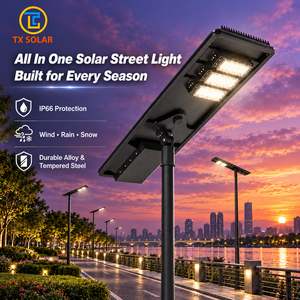
Constructed with ADC12 high-density die-cast aluminum alloys and 304 stainless steel hardware. Engineered to withstand extreme mechanical stress, wind velocities up to 160 mph (Category 5 hurricane rated), and IK10 kinetic impact levels.
Utilizing high-transmittance optical PMMA lenses with specialized asymmetric Type II/III distributions. Delivers uniform lux on road surfaces while eliminating uplight glare—preserving nighttime biodiversity and satisfying strict Dark-Sky regulations.
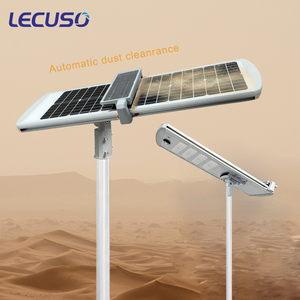
For desert regions and dusty agricultural zones, dust accumulation can degrade PV yield by 30-40%. Our patented auto-cleaning solar streetlights utilize customizable daily robotic wiper passes to maintain maximum solar intake automatically.
Furthermore, our supply chain flexibility enables seamless integration for commercial developers, HOAs, utility concessionaires, and B2B exporters. From complete turn-key SKD/CKD shipping kits to custom branding, pole-mounting hardware, and localized photometric DIALux simulations, we provide global partners with a distinct competitive advantage in winning government tenders and commercial bids.
Key Technological Shifts Reshaping Global B2B Infrastructure Sourcing Through 2030
As international energy policies pivot toward total net-zero targets and decentralized grid resilience, rural streetlight procurement is undergoing a paradigm shift. Buyers, municipal planners, and project EPC contractors must align their specifications with several emerging technological vectors:
Modern rural street lighting is shifting rapidly away from standalone passive operation toward intelligent connected infrastructure. Integrated smart lighting control systems (SLCS) utilizing 4G Cat-M1, NB-IoT, or LoRaWAN allow municipal engineers to remotely monitor energy levels, track battery state-of-health (SoH), adjust dimming schedules based on traffic density, and receive automated fault alerts. This eliminates manual physical road patrols across expansive rural territories, cutting operational expenditure (OpEx) by up to 65%.
Energy conservation in off-grid systems directly dictates system longevity and battery sizing requirements. Next-generation procurement frameworks mandate dynamic dimming profiles. Utilizing microwave or Passive Infrared (PIR) sensing, fixtures operate at 30% ambient lumen output during low-activity midnight hours, instantaneously ramping up to 100% full illumination upon detecting approaching vehicles or pedestrians. This preserves battery state-of-charge while ensuring full public safety when required.
Emerging procurement trends highlight innovative financing frameworks. Municipalities and rural community associations are increasingly opting for service-based agreements or turnkey supply arrangements that minimize upfront capital expenditures. By bundling high-reliability hardware with long-term performance guarantees, project developers can deploy hundreds of solar streetlights instantly while financing costs through guaranteed utility energy savings.
Expert Answers to Technical, Regulatory, and Logistics Inquiries Regarding Rural Solar Streetlight Exports
CE certification confirms that the luminaire adheres to strict European health, safety, and environmental protection standards (including LVD and EMC directives). For importers and government contractors, CE marking guarantees electrical safety, low electromagnetic emissions, structural compliance, and legal authorization for distribution within the European Economic Area (EEA) and other international markets that recognize EU standards.
Our Grade-A LiFePO4 battery systems are engineered with internal thermal management and smart BMS protection. They operate reliably within a wide temperature envelope of -20°C to +65°C. For extreme sub-zero arctic environments, we offer custom battery enclosures featuring automated heating films powered by the PV panel during morning charge cycles to preserve electro-chemical efficiency.
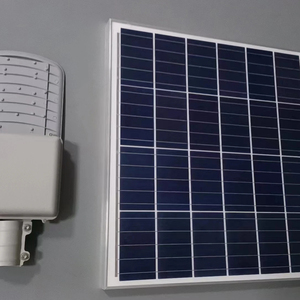
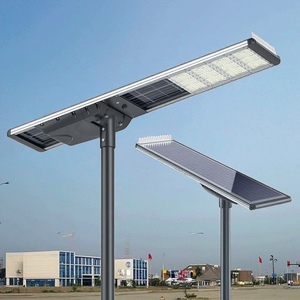
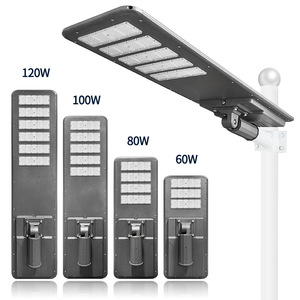
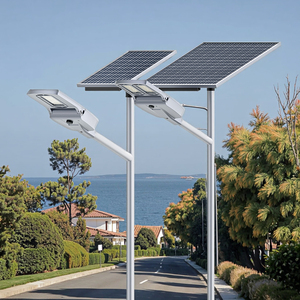
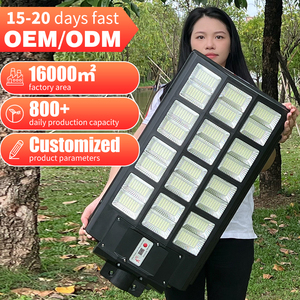
All-in-One (Integrated) streetlights combine the solar panel, LED engine, LiFePO4 battery, and MPPT controller into a single compact housing. They offer rapid 10-minute installation and minimal wind resistance, making them ideal for residential roads and pathways. All-in-Two / Split Type systems feature a separate, larger solar panel that can be oriented independently toward maximum solar radiation. Split systems are suited for high-wattage (100W–200W) municipal highways or regions with low solar insolation requiring massive power collection.
Our standard systems are engineered for 5 to 7 consecutive days of complete backup autonomy under dense cloud cover or continuous monsoon rains. This is achieved through conservative sizing ratios (battery capacity vs. LED power draw), high-efficiency MPPT tracking, and smart dimming control curves that automatically optimize lumen output based on remaining battery state-of-charge.
Yes. As a leading manufacturer and exporter, we provide comprehensive OEM/ODM services including customized housing colors, laser-etched brand logos, custom optical beam angles, dynamic dimming profiles, and specialized packaging. Additionally, our optical engineering team generates IES photometric files and DIALux lighting simulation studies to verify lux level compliance for your tender submissions.
Contact our engineering team today to receive detailed technical datasheets, full CE test reports, IES optical files, and competitive factory-direct wholesale pricing.