Factory-direct CE certified solar luminaires built for high-speed expressways, municipal arteries, and heavy logistics corridors.
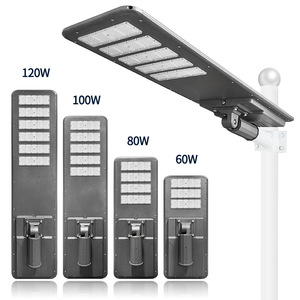
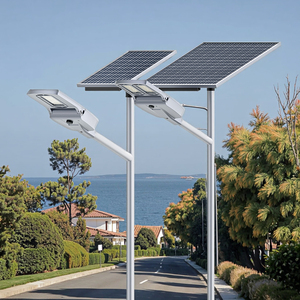
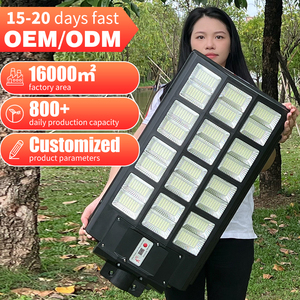
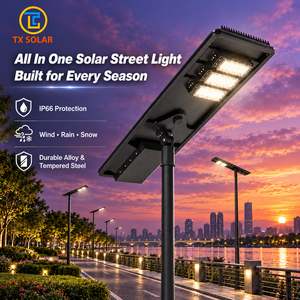
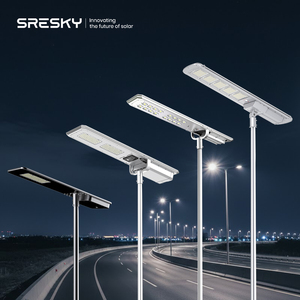
Modern highway infrastructure engineering demands zero-compromise illumination standards to guarantee nighttime driving safety, reduce vehicular fatigue, and eliminate blackouts. Traditional alternating current (AC) grid-powered highway luminaires are increasingly scrutinized due to massive capital expenditure (CAPEX) in utility trenching, high operational cost (OPEX), vulnerability to grid instability, and substantial carbon footprints.
As a lead CE Certified Solar Expressway Lighting Manufacturer, our engineering matrix integrates advanced photovoltaic harvesting, high-density energy storage, and precision optics to deliver 100% off-grid autonomy that fully satisfies international highway lighting codes, including EN 13201-2 Class M1, M2, and M3 requirements.
High-speed thoroughfares (80–120 km/h) require strict adherence to Overall Luminance Uniformity ($U_0 \ge 0.40$), Longitudinal Uniformity ($U_l \ge 0.70$), and Threshold Increment ($TI < 10\%$). Meeting these parameters with solar power requires customized optical beam shaping and consistent power output regardless of seasonal irradiation drop-offs.
N-Type TOPCon bifacial modules harness direct solar irradiance alongside ground-reflected albedo light, yielding up to 30% additional energy gain in dusty or snow-covered highway environments.
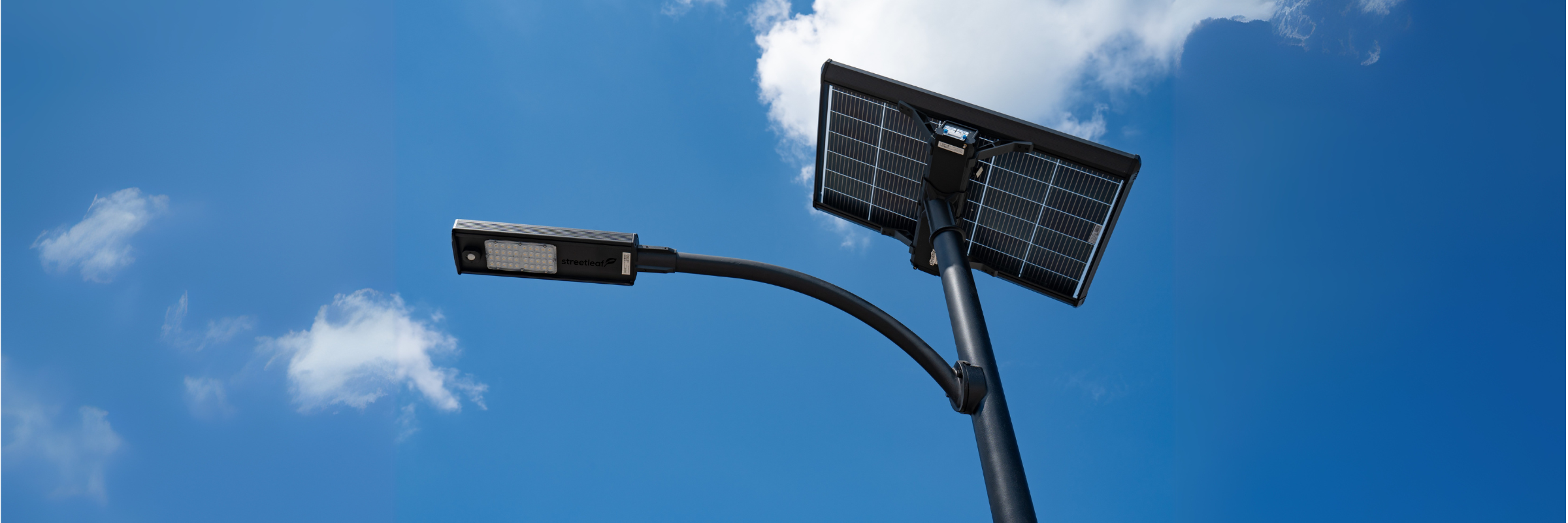
Constructed with high-tensile structural Q235/Q355 hot-dip galvanized steel and die-cast ADC12 aluminum housings, our luminaires are FEA-tested to withstand wind gusts up to 65 m/s (145 mph).
Precision polymethyl methacrylate (PMMA) asymmetric Type II-M and Type III-M lenses cast rectangular light footprints, maximizing pole spacing up to 50 meters while completely eliminating glare.
Our state-of-the-art production facility operates under strict ISO 9001, ISO 14001, and ISO 45001 management systems. Every CE-marked expressway streetlight undergoes rigorous multi-stage quality assurance tests prior to dispatch:
A direct engineering evaluation of grid-connected fixtures, standard commercial solar lights, and our Industrial CE-Certified Solar Expressway Systems.
| Technical Feature | Traditional Grid LED (AC) | Low-Grade Commercial Solar | Industrial CE Solar Expressway System |
|---|---|---|---|
| Trenching & Cabling CAPEX | Extreme ($40,000 - $100,000 / km) | Zero ($0) | Zero ($0) — 100% Off-Grid |
| Luminous Efficacy | 130 - 150 lm/W | 100 - 140 lm/W | 190 - 210 lm/W Ultra-Efficient |
| Battery Chemistry & Cycle Life | N/A (Grid Dependent) | Ternary NMC / Lead-Acid (1,000 cycles) | EV-Grade LiFePO4 (6,000+ Cycles @ 80% DoD) |
| Optical Uniformity ($U_0$) | 0.40 - 0.45 | 0.20 - 0.30 (Creates Dark Spots) | ≥ 0.45 (Full EN 13201 Class M1 Compliance) |
| Autonomy Under Heavy Cloud/Rain | Zero (Blackout during grid failure) | 1 - 2 Days | 5 - 7 Days Continuous Intelligence Reserve |
| Smart Telemetry & Remote Control | Optional PLC/Zigbee | None (Basic PIR only) | IoT Cloud Mesh (NB-IoT/LoRaWAN/Solar BMS) |
| Regulatory Certification | CE / UL | Basic CE / Uncertified Components | Full CE (LVD/EMC/RoHS), EN 60598-2-3, EN 62471 |
As municipal authorities, civil engineering firms, and global infrastructure developers transition toward net-zero mobility corridors, the procurement criteria for highway lighting have shifted dramatically. Simple initial price points are no longer the primary decision driver; engineers now evaluate total life-cycle performance, carbon payback metrics, and system intelligence.
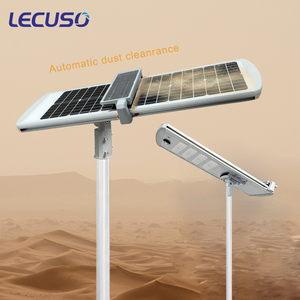
In arid desert corridors and industrial highway zones, particulate dust accumulation can degrade photovoltaic charging by up to 35% within 60 days. The industry standard is migrating rapidly toward built-in brushless automatic cleaning wiper systems that cycle twice daily to maintain peak energy yield without manual labor overhead.
Modern B2B tenders mandate centralized management software (CMS). Integrators require real-time visibility into individual battery state-of-charge (SoC), solar panel health, and automated fault alerts over NB-IoT networks, coupled with radar-based dynamic dimming during low-traffic midnight hours.
To streamline maintenance along high-speed corridors where lane closures are costly, modern systems feature modular plug-and-play drawer components. Drivers, battery packs, and MPPT controllers can be swapped out within minutes without unmounting the luminaire body or pole.
International infrastructure grants increasingly favor projects demonstrating verified carbon reductions. Replacing a 10 km stretch of AC grid lights with CE-certified solar units mitigates over 1,200 metric tons of CO2 across a 10-year operational lifecycle.
Expressway lighting must balance vehicular safety with ecological preservation. High-intensity spill light disrupts surrounding nocturnal ecosystems, residential communities, and wildlife corridors.
Our customized OEM optical engines incorporate zero-upward-light optics (Dark-Sky Compliant), focusing 100% of generated lumens strictly onto the asphalt surface ($0\%\text{ ULOR}$). Furthermore, amber-spectrum lighting options (590nm wavelength) are available for coastal highway installations to protect nesting sea turtles and migratory birds.

Explore empirical evidence, engineering papers, and utility project analyses from our technical archive.
Detailed technical answers addressing common engineering, compliance, and international procurement inquiries.
CE certification for industrial solar streetlights requires full compliance with several key European Directives and Harmonized Standards:
System autonomy is engineered into the system architecture using a 3-tier energy management approach:
LiFePO4 is the premier energy storage chemistry for commercial outdoor infrastructure due to three primary operational advantages:
For Class M1 expressways (requiring average luminance $L_{av} \ge 2.0 \text{ cd/m}^2$ and overall uniformity $U_0 \ge 0.40$), standard engineering layouts utilize 10m to 12m mounting heights with a pole spacing of 40m to 45m (a distance-to-height ratio of 3.7:1 to 4:1) when employing our 120W to 150W high-efficacy luminaires ($210\text{ lm/W}$) with Type III-M batwing optical lenses. Our engineering team provides custom DIALux simulations for all project inquiries.
In high-dust, desert, or high-pollution highway zones, airborne particulate accumulation creates a "soiling effect" on solar glass, causing an annual energy generation loss between 20% and 35%. Automated self-cleaning luminaires feature built-in dual robotic wipers that brush the panel surface clean twice daily. This eliminates the need for expensive highway maintenance vehicle dispatch, preserves full solar collection capacity, and speeds up project payback by 2.5 years.
As a direct factory manufacturer, we support comprehensive OEM/ODM engineering tailoring, including:
Our complete luminaire assemblies, solar bracket structures, and mounting hardware undergo Finite Element Analysis (FEA) and physical wind tunnel testing. They are certified to resist Category 5 hurricane wind speeds up to 65 meters per second (234 km/h or 145 mph), conforming to AASHTO highway lighting structural standards.
We provide a comprehensive 5-Year Full Replacement Warranty covering the LED engine, solar panel, LiFePO4 battery pack, and MPPT controller. Standard production lead time for bulk containerized municipal orders (100–1,000 units) is 15 to 25 business days, with full CE, RoHS, UN38.3, and MSDS documentation supplied for seamless customs clearance.
By eliminating middle-tier trading intermediaries, civil engineering contractors and municipal purchasing departments gain direct access to original manufacturer pricing, certified engineering support, and full quality traceability from raw silicon to final installed luminaire.
Partner with a trusted, CE-certified manufacturer for your upcoming expressway, municipal highway, or major road lighting tender. Our engineering experts are ready to assist with technical specifications, sample testing, and bulk factory pricing.