Technical Whitepaper & Buyer's Guide
Engineering High-Lumen Solar Streetlight Systems: A Comprehensive Analysis for Municipal & B2B Buyers
As global urban planning transitions rapidly toward zero-carbon infrastructure, high-lumen off-grid solar streetlights have evolved from auxiliary rural lamps into mission-critical municipal assets. In modern infrastructure procurement, selecting an elite tier-1 manufacturer in China requires evaluating optical conversion efficiency, thermal management architectures, electrochemical storage durability, and aerodynamic structural engineering.
Historical solar lighting installations frequently suffered from premature battery failure, severe thermal throttling, and poor photometric distribution (resulting in uneven dark spots on primary roadways). Today, advanced manufacturing standards—utilizing N-type Monocrystalline TOPCon photovoltaics, Grade-A Lithium Iron Phosphate (LiFePO4) energy storage, Maximum Power Point Tracking (MPPT) charge controllers, and customized micro-lens optical arrays—have solved these historical reliability issues. This paper examines the technological fundamentals, purchasing matrix, and emerging industry trends shaping modern commercial solar illumination.
220 lm/W Photometric Efficacy
By coupling high-binning Lumileds or Bridgelux 5050 LED chips with optical-grade PMMA lenses, overall luminaire output exceeds 220 lumens per watt, maximizing total light coverage while minimizing power draw.
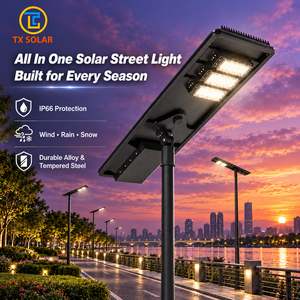
Cat 5 Wind Load Engineering
Precision die-cast ADC12 aluminum structural housings engineered via Finite Element Analysis (FEA) withstand extreme typhoon conditions up to 60 m/s (134 mph), fully certified under Cat 5 hurricane stress limits.
Smart MPPT & LiFePO4 Energy Core
Integrated smart Battery Management Systems (BMS) manage deep-cycle LiFePO4 cells delivering over 6,000 cycles at 80% Depth of Discharge (DoD), ensuring 10+ years of maintenance-free operational life.
Technical Architecture Breakdown: Photovoltaic, Battery, and Optical Synergy
A high-lumen solar streetlight operates as an independent microgrid. To deliver reliable light output across changing seasonal conditions, all system components must operate in perfect technical balance:
1. Photovoltaic Conversion & Bifacial Gain
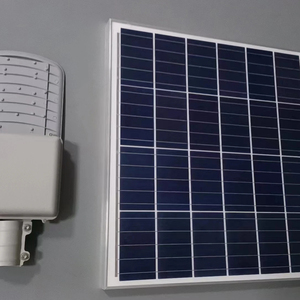
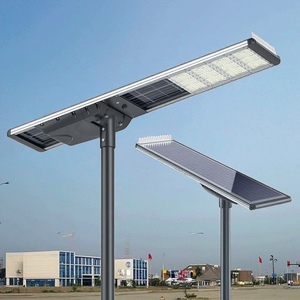
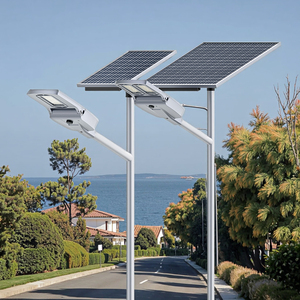
Traditional solar streetlights relied on polycrystalline solar panels yielding a modest 16–18% conversion efficiency. Modern high-lumen fixtures from premier Chinese manufacturers utilize N-Type TOPCon or Monocrystalline PERC solar panels yielding conversion rates exceeding 23.5%. Furthermore, advanced All-in-Two and Split-Type deployments utilize Bifacial Solar Panels. These modules capture direct sunlight from the front while absorbing albedo light reflected off concrete or asphalt roads from the rear, providing an additional 15% to 25% energy harvest during cloudy or low-sun-angle periods.
2. Electrochemical Energy Storage: LiFePO4 vs. Legacy Technologies
The choice of battery chemistry dictates system lifespan and total cost of ownership (TCO). Legacy GEL/Lead-Acid batteries failed after 500 to 800 cycles and suffered severely under high ambient temperatures (exceeding 45°C). Premier solar streetlights now standardly integrate Lithium Iron Phosphate (LiFePO4) batteries due to their exceptional thermal stability, non-combustible chemistry, and resistance to capacity fade.
| Technical Parameter |
Traditional Gel / Lead-Acid |
Standard Ternary Li-ion (NMC) |
Industrial LiFePO4 (Our Standard) |
| Cycle Lifespan (80% DoD) |
500 - 800 Cycles |
1,200 - 1,500 Cycles |
4,000 - 6,000+ Cycles |
| Thermal Tolerance Range |
-10°C to 40°C |
-20°C to 55°C |
-20°C to 70°C (Optional Thermal Heating to -40°C) |
| Safety & Thermal Runaway |
Moderate Risk (Gas Leakage) |
Higher Risk of Thermal Runaway |
Extremely Safe / Non-Combustible |
| Energy Density & Footprint |
Heavy / Bulky |
High Density |
Optimal Commercial Balance |
| Expected Service Life |
2 - 3 Years |
3 - 5 Years |
10 - 12+ Years |
3. Photometric Distribution & Lens Physics
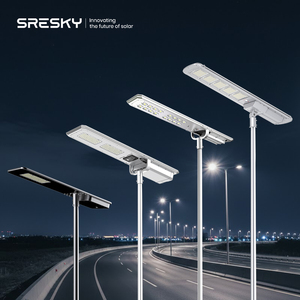
Raw lumen counts can be deceptive if light is inefficiently scattered into the sky or concentrated directly beneath the pole. Municipal grade solar streetlights employ precision IESNA Type II and Type III optics using optical-grade PMMA or high-transmittance polycarbonate lenses. This asymmetrical "batwing" distribution casts uniform light laterally along carriage ways, maximizing pole spacing (up to 40–50 meters apart) while eliminating glare and securing Dark-Sky Compliance (0% Upward Light Ratio).
Information Gain Insight: Why Efficacy (lm/W) Trumps Gross LED Wattage
In traditional B2B procurement tenders, buyers frequently request "100W Solar Streetlights". However, LED power consumption (Wattage) does not equal light output (Lumens). A low-grade 100W luminaire with 100 lm/W efficiency produces only 10,000 lumens while consuming excessive battery capacity. Conversely, an engineered 50W fixture operating at 200 lm/W delivers identical 10,000-lumen illumination while cutting battery and solar panel sizing requirements by 50%. Always specify target lux level on road surface and system luminous efficacy (lm/W) rather than raw luminaire wattage.
Market Intelligence
Future Procurement & Technology Trends in Solar Streetlighting
The global solar street lighting market is undergoing rapid evolution driven by smart city digitalization, climate resilience initiatives, and zero-carbon mandates. B2B purchasers and municipal engineers must plan procurement around four key technological macro-trends:
1. IoT Smart City & Telematics Integration
Standalone streetlights are rapidly giving way to networked illumination arrays. Modern fixtures integrate wireless communication modules (LoRaWAN, NB-IoT, Zigbee) linked to central control management software (CMS). Municipal operators can remotely monitor battery state-of-charge (SoC), adjust brightness schedules based on traffic volume, receive real-time fault alerts, and reduce operational maintenance (OPEX) by up to 60%.
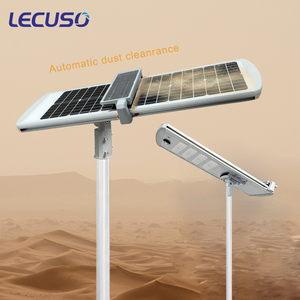
2. Self-Cleaning Robotic Wiper Technology
Dust, particulate soot, and bird droppings can degrade photovoltaic power output by 25% to 40% within weeks of deployment in arid regions (such as the Middle East, North Africa, and Australia). The integration of automated, solar-powered dual-blade wipers—which clean panels daily—ensures continuous peak charging performance without manual maintenance overhead.
3. Dynamic Adaptive Dimming & Microwave Radar Fusion
Advanced MPPT controllers now utilize machine-learning energy algorithms paired with 24GHz microwave radar sensors. Instead of static timer-based dimming, streetlights dynamically adjust light levels: maintaining a 30% ambient profile when roads are clear, instantly boosting to 100% full lumen output upon detecting oncoming vehicles or pedestrians, thus dramatically conserving battery reserve.
Furthermore, financial procurement models are shifting. Organizations are moving away from traditional CAPEX purchasing toward zero-upfront-cost service models, turnkey leasing, and energy-performance contracting (EPC), enabling cities and commercial developers to install hurricane-rated solar infrastructure immediately without capital grid extension costs.
Factory Expertise & Quality Governance
Why Partner with China's Premier High-Lumen Solar Streetlight Manufacturer
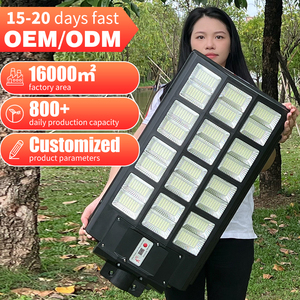
As a leading solar streetlighting enterprise in China, our manufacturing facilities combine automated robotic SMT assembly, rigorous environmental simulation testing, and comprehensive OEM/ODM customization capabilities. We empower global land developers, municipal authorities, and utility partners with field-proven hardware engineered to survive extreme operational environments.
Certified Testing Laboratories
Every product series undergoes comprehensive IES LM-79 and LM-80 photometric validation, IP66 ingress protection testing, IK10 mechanical impact evaluation, and 1,000-hour salt-spray anti-corrosion chamber testing.
Turnkey Dialux Optical Simulations
We provide complimentary Dialux photometric calculations for complex municipal infrastructure tenders, ensuring exact pole height, tilt angle, spacing, and lux distribution compliance before ordering.
End-to-End OEM/ODM Customization
From custom housing powder coating colors to modified battery reserve days, specialized amber turtle-friendly spectrums (590nm), and specialized mounting brackets, we tailor configurations to your exact spec.