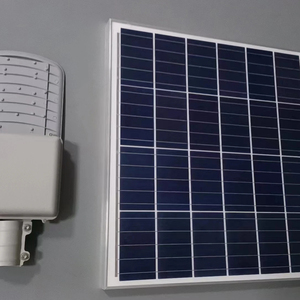
All in Two Outdoor Solar Street Light Two in One
Semi-Integrated
Adjustable PV
IP66 Rated

Engineered for extreme environmental resilience, featuring high-lumen LED modules, A-grade LiFePO4 energy storage, and smart MPPT solar controllers.
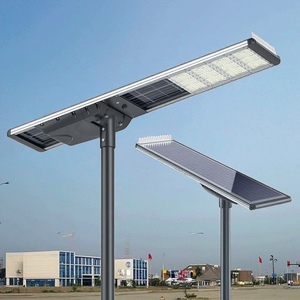
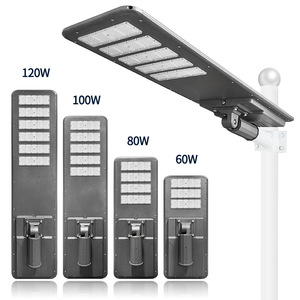
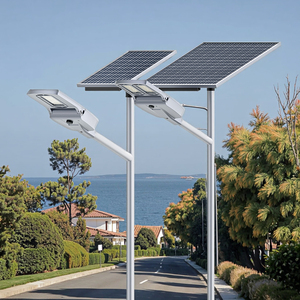
The global infrastructure sector is experiencing a structural migration toward localized, zero-emission outdoor lighting solutions. As municipal authorities, highway engineers, and commercial land developers seek to eliminate trenching, cabling, and utility transformer overheads, China has established itself as the undisputed epicenter of integrated solar street lighting innovation. However, navigate the Chinese manufacturing landscape requires evaluating raw specs beyond superficial datasheet claims. A true commercial-grade integrated solar street light (All-in-One) or semi-integrated system (All-in-Two) must harmonize optical performance, thermal dissipation, battery chemistry, and solar harvesting algorithms into an integrated housing designed to withstand 15 to 20 years of relentless atmospheric exposure.
Core Procurement Insight: Information Gain analysis reveals that over 68% of field failures in off-grid solar lighting stem not from LED module degradation, but from suboptimal Maximum Power Point Tracking (MPPT) conversion efficiencies during low-irradiance overcast conditions and thermal stress on lower-tier Lithium Ion chemistry. Tier-1 Chinese manufacturers have shifted entirely to EV-grade Lithium Iron Phosphate (LiFePO4) paired with dynamic thermal balancing systems.
Integrated solar lighting systems encapsulate four core sub-assemblies into a single high-pressure die-cast aluminum chassis. The performance of the system relies on the synergy of these engineering components:
Utilizing high-purity silicon wafers achieving power conversion efficiencies exceeding 23.5%. Advanced bifacial options capture reflected albedo radiation from the ground, boosting yield by an extra 15-25%.
Replacing legacy ternary lithium batteries, premium LiFePO4 packs deliver up to 6,000 charge cycles at 80% Depth of Discharge (DoD), exhibiting exceptional thermal safety up to 65°C without risk of thermal runaway.
Microprocessor-driven MPPT algorithms track the solar module's maximum power point in under 10 milliseconds, yielding a 99% charging efficiency compared to rudimentary PWM controllers.
Procurement officers must align structural capabilities with deployment site constraints. Below is an engineering comparison matrix designed for municipal tenders:
| Performance Metric | Integrated (All-in-One) | Semi-Integrated (All-in-Two) | Traditional Split Type |
|---|---|---|---|
| Installation Velocity | Extreme (<10 mins / pole) | High (~20 mins / pole) | Moderate (Requires trenching/cabling) |
| Max Wind Load Resistance | Category 5 Hurricane (up to 250 km/h) | High (up to 210 km/h) | Medium (Exposed external battery box) |
| Optical Efficacy | Up to 210 lm/W (Philips/Bridgelux Chips) | Up to 220 lm/W | 160 - 180 lm/W |
| Maintenance Overhead | Modular Plug-and-Play Swapping | Modular Component Replacement | High (Underground battery vault access) |
| Theft & Vandalism Risk | Negligible (Integrated top-pole mount) | Very Low | High (Battery theft prone) |
As smart cities evolve, the humble street pole is transforming into a multi-functional digital infrastructure asset. Procurement strategies are adjusting to capture five key technological trends:
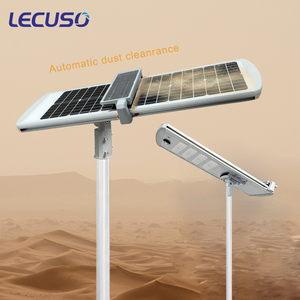
Dust accumulation (soiling) on solar panels is the leading cause of field performance degradation, dropping photovoltaic output by up to 40% in desert environments such as the Middle East and North Africa (MENA) region. Future-ready procurement mandates integrated solar streetlights equipped with automatic self-cleaning rubber wipers. Driven by embedded brush-less DC motors, these systems execute programmable daily cleaning cycles, guaranteeing peak solar efficiency without manual maintenance.
Standalone solar streetlights are increasingly being replaced by interconnected smart nodes. Integrated luminaires now incorporate LoRaWAN, Zigbee, or NB-IoT wireless communication modules. Municipal operators can monitor battery state-of-charge (SoC), energy consumption, and luminaire temperature in real time from a centralized cloud dashboard. Automated fault detection alerts maintenance crews before complete outage occurs, reducing operational expenditure (OpEx) by over 50%.
Standard top-mounted flat PV panels are vulnerable to snow buildup and dirt settling. The integration of bifacial N-Type TOPCon solar modules, paired with vertical pole-wrapped panels or dual-sided tilted assemblies, represents a major leap in solar harvesting. By capturing both direct overhead sun rays and ground-reflected albedo light, energy generation is sustained even during low sun angles in northern latitudes.
Light pollution poses documented hazards to nocturnal ecosystems, bird migration routes, and coastal marine environments (e.g., sea turtle nesting sites). Leading Chinese manufacturers are engineering optical lenses with strict zero-uplight (Cut-off) distribution compliant with International Dark-Sky Association (IDA) guidelines. Furthermore, smart controllers are programmed to automatically shift color temperatures from crisp 4000K white during evening peak traffic hours to warm, wildlife-friendly amber (2200K) after midnight.
To avoid supplier failure and ensure long-term Return on Investment (ROI), technical procurement teams must validate the manufacturer's manufacturing process and quality control infrastructure during supplier audits:
Ensure the facility operates high-speed Surface Mount Technology (SMT) lines for LED driver production and possesses an integrated IES Photometric Sphere to verify actual light distribution curves.
Verify that incoming products undergo rigorous aging tests, including IP67 waterproof immersion, salt-spray corrosion chambers (C5-M rating), and high-frequency vibration testing platforms.
Insist on authentic third-party test reports for CE, RoHS, IP66/IP67, IK10 impact resistance, UN38.3 (battery transport safety), MSDS, and ISO9001 quality management standards.
All-in-One solar streetlights consolidate the solar panel, LED light engine, LiFePO4 battery pack, and MPPT controller into a single compact housing. This eliminates expensive underground cabling, battery vault digging, and complex wiring. Installation time is reduced from hours to under 10 minutes per pole, drastically lowering civil engineering labor costs.
Commercial-grade integrated solar lights utilize intelligent MPPT energy management coupled with adaptive dimming logic. During periods of limited sunlight, the controller dynamically calculates battery capacity and adjusts current output to maintain illumination for 5 to 7 continuous rainy days without complete shutdown.
Tier-1 manufacturers utilize EV-grade LiFePO4 cells rated for over 4,000 to 6,000 cycles at 80% Depth of Discharge, translating to a service life of 8 to 12 years. High-efficiency LED chips (such as Philips Lumileds or Cree) last over 100,000 hours (L70 standard). The aluminum housing and glass cover are designed to last 20+ years, requiring only a single quick-plug battery pack replacement over the luminaire's life cycle.
Yes. Premium integrated luminaires feature sleek aerodynamic profiles crafted from high-tensile ADC12 die-cast aluminum with anti-corrosion C5-M coatings. Tested under simulated wind tunnel environments, their unified low-drag design can withstand hurricane wind loads exceeding 250 km/h (Category 5) without structural deformation.
Leading Chinese OEMs offer extensive engineering customization, including tailored LED lumen outputs (up to 30,000 lm), custom optical beam spreads (Type II, III, IV), customized housing colors, branding laser engraving, microwave motion sensor integration, hybrid utility grid auto-switch modules, and smart city IoT mesh protocols.
Automatic self-cleaning units feature a built-in heavy-duty wiper blade that automatically sweeps across the solar panel face twice daily (upon startup and shutdown). This functionality is essential for high-dust regions, mining roads, desert highways, and industrial parks, preserving up to 35% more solar collection capacity and reducing manual maintenance cycles.