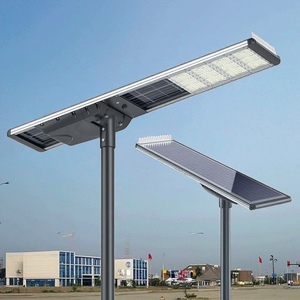
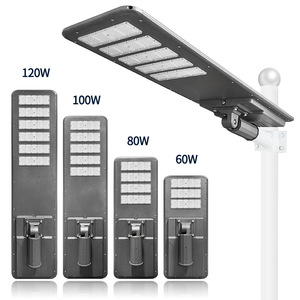
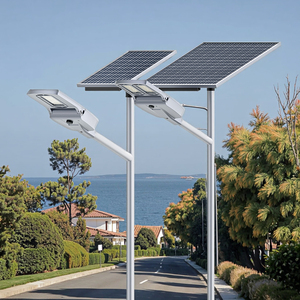
Heavy-duty, wind-resistant, storm-proof solar street lights designed for severe salt-spray marine environments, container yards, and coastal highways.
Constructing lighting infrastructure in maritime zones demands engineering far beyond conventional municipal standards. Our factory deploys specialized materials built for extreme coastal durability.
Seaports expose lighting poles and fixtures to high atmospheric salinity and humidity. Our products utilize electrostatically sprayed fluorocarbon coatings and 316 marine-grade stainless steel hardware, certified under ISO 12944 C5-M extreme marine corrosion standards.
Coastal sea terminals are frequently subjected to violent typhoon conditions and severe wind shear. Our structural brackets, reinforced internal ribbing, and aerodynamic luminaire designs withstand extreme wind loading forces exceeding 250 km/h (Cat 5 rating).
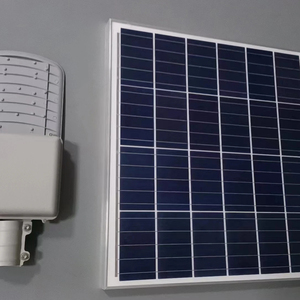
Harvesting maximum solar energy in misty marine environments requires advanced bifacial solar modules that capture direct sunlight as well as albedo reflection from seawater and dock concrete, managed by real-time maximum power point tracking (MPPT).
Prolonged rainy seasons and marine overcast will not drop port illuminance. Engineered with high-grade Lithium Iron Phosphate (LiFePO4) battery packs and intelligent BMS thermal balancing, guaranteeing over 5 continuous days of night-long operation.
Manage vast port perimeters effortlessly. Integrated LoRaWAN and 4G Cellular IoT modules allow port operators to monitor battery health, adjust brightness profiles remotely, and automate maintenance alerts across thousands of nodes from a single dashboard.
To assist port operators, logistic hubs, and local utilities in rapid decarbonization, our factory partners offer turnkey supply agreements, OEM custom branding, and structured financing options to reduce initial capital expenditure constraints.
Modern seaport terminals, naval docks, and coastal logistics facilities represent some of the most challenging operating environments on Earth for electrical and illumination infrastructure. Conventional grid-powered lighting installations inside maritime zones face severe operational handicaps: underground cable corrosion due to saltwater intrusion, exorbitant civil trenching costs through reinforced concrete aprons, and vulnerability to grid failures during catastrophic coastal storms.
As China’s leading seaport solar lighting manufacturer and exporter, our engineering division has designed and deployed solar-powered luminaires across major global shipping hubs. By decoupling exterior illumination from the electric grid, port authorities achieve absolute operational independence, zero energy utility overhead, and robust resilience against severe weather events.
Standard municipal outdoor lighting fixtures deteriorate rapidly when installed within 5 kilometers of a coastline. Atmospheric salt fog contains concentrated sodium chloride (NaCl) and magnesium ions, which act as aggressive electrolytes, accelerating galvanic corrosion, pitted oxidation of aluminum housings, and degradation of optical lenses.
To deliver an operational lifespan exceeding 10–15 years in seaport environments, our production facilities employ rigorous chemical surface treatment protocols:
Seaports typically feature vast expanses of light-colored concrete paving, open asphalt, or reflective water surfaces. Traditional single-sided monocrystalline solar panels lose a substantial fraction of available ambient energy. Our export-grade seaport solar street lights integrate N-Type TOPCon Bifacial Photovoltaic Panels paired with dual glass encapsulation.
Bifacial solar technology absorbs direct irradiance from the sky while simultaneously capturing rear-side albedo reflected off port aprons and container stacks. This yields up to a 28% increase in total daily energy harvesting, enabling higher lumen output without expanding the physical footprint of the solar module. This design also reduces the wind-load profile of the luminaire during severe gales.
| Specification Parameter | Standard Outdoor Solar Light | China Seaport Industrial Solar Luminaire | Maritime Engineering Advantage |
|---|---|---|---|
| Corrosion Protection Rating | C3 (Urban / Mild Industrial) | ISO 12944 C5-M / CX Marine Heavy Industrial | 10+ Year Shielding Against Salt Fog & Acid mist |
| Wind Resistance Capability | 120 km/h (Category 1 Hurricane) | ≥ 250 km/h (Category 5 Hurricane Rated) | Structural Survival in Typhoons & Offshore Gales |
| Ingress Protection Rating | IP65 Dust/Water Resistant | IP68 Hermetically Sealed Optical Engine | Complete Submersion & High-Pressure Washdown Safe |
| Battery Chemistry & Life | Standard Li-ion (500-1000 Cycles) | EV-Grade LiFePO4 (4000+ Cycles @ 80% DoD) | 12+ Year Battery Service Life in High-Temp Tropics |
| Photovoltaic Architecture | Single-Sided PERC Monocrystalline | N-Type TOPCon Bifacial Dual-Glass Panel | +28% Additional Rear-Side Energy Generation |
| Smart Telemetry Control | Standalone Microwave Sensor | LoRaWAN / NB-IoT / Zigbee Integrated Mesh | Centralized Real-Time Fleet Diagnostics & Telemetry |
Seaports are frequently located in tropical or sub-tropical latitudes characterized by intense solar radiation and high ambient temperatures. High thermal exposure is the leading cause of premature battery degradation in solar streetlights. Our engineering team addresses this by utilizing Lithium Iron Phosphate (LiFePO4) cells encased in insulated die-cast aluminum battery chambers with heat-sink finning.
Unlike standard ternary lithium-ion chemistries, LiFePO4 offers superior thermal and chemical stability, resisting thermal runaway up to 60°C. Coupled with intelligent Active BMS (Battery Management System), our seaport lighting systems monitor voltage cell balance, prevent over-charging during peak sunlight hours, and automatically throttle discharge profiles during consecutive overcast days.
As global maritime logistics align with international net-zero mandates, seaport lighting procurement is shifting toward intelligent, adaptive, and self-sustaining off-grid energy ecosystems.
Container cranes, bulk material loading docks, and heavy diesel yard traffic generate significant airborne dust, soot, and particulate matter that accumulate on solar panels, causing up to 40% efficiency loss over time. The future of seaport procurement relies heavily on integrated robotic self-cleaning solar streetlights. Featuring dual-rubber wipers and scheduled automated sweeping cycles, these units ensure peak solar absorption without manual labor maintenance.
Modern maritime port operations require variable light levels depending on active yard movement. Next-generation seaport solar streetlights incorporate Doppler radar and AI vision sensors that detect automated guided vehicles (AGVs), forklifts, and personnel. Luminaires automatically boost brightness to 100% upon sensing motion, returning to an energy-conserving 20% baseline during inactive periods, drastically extending battery longevity.
Downtime in a busiest container port disrupts multi-million dollar supply chains. Procurement specifications are rapidly favoring modular "plug-and-play" architectures. Modern all-in-two and split solar streetlights feature toolless quick-latch access, waterproof M16 quick-connect wiring harnesses, and slide-out battery trays, permitting field technicians to service units in under 5 minutes without dismounting structural poles.
Coastal infrastructure development faces strict environmental regulations regarding light spill into marine sanctuaries and sea turtle nesting grounds. Procurement standards increasingly mandate full-cutoff optical distributions (0% upward light ratio) and wildlife-friendly narrow-spectrum amber LED wavelengths (590nm), minimizing ecological disruption while maintaining occupational safety levels for dock workers.
Comprehensive engineering responses addressing international buyers, port engineers, project contractors, and municipal procurement directors.
Direct factory supply, engineered C5-M marine anti-corrosion solutions, and customized OEM support for port authorities, marine contractors, and global distributors.
Contact Us