
High-lumen, weather-tested solar luminaires and bollards engineered by premier Chinese manufacturing facilities for municipal roads, commercial complexes, and estate pathways.
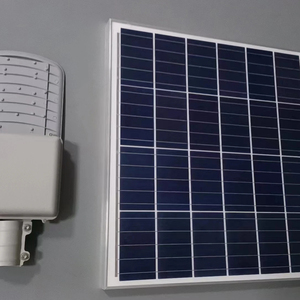
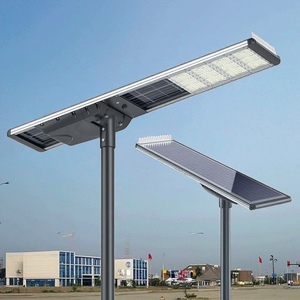
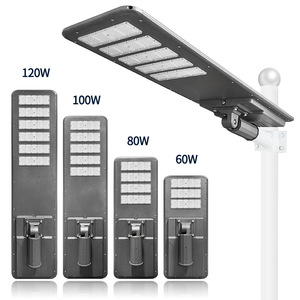
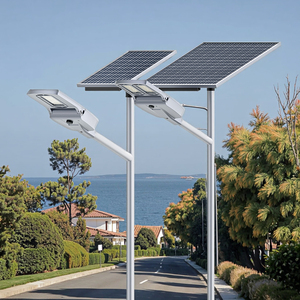
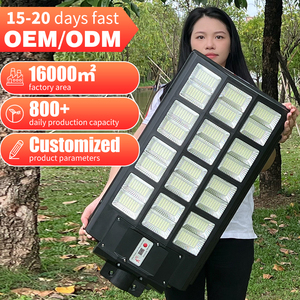
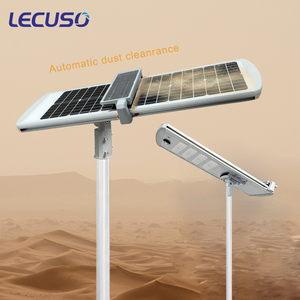
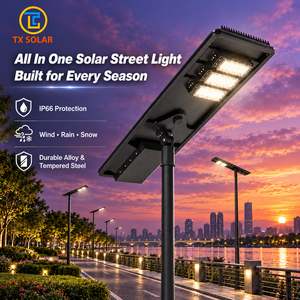
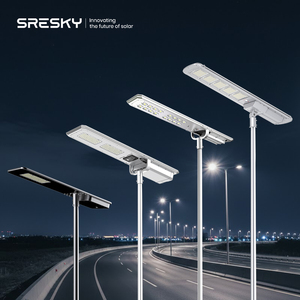
Deploying solar bollards and municipal lighting systems requires overcoming severe climatic stresses, battery thermal degradation, and optical glare. Here is how advanced manufacturing addresses these issues.
Engineered with high-tensile 6063 marine-grade extruded aluminum and structural steel fasteners, surviving extreme wind speeds exceeding 165 mph (Cat 5 Hurricane rated).
Dual-sided photovoltaic absorption coupled with intelligent dynamic power management ensures over 5 consecutive days of uninterrupted illumination during storm overcast.
Precision-engineered cut-off lenses prevent skyglow while turtle-friendly 2200K amber LED configurations protect delicate coastal ecosystems without compromising foot-candle requirements.
The global transition toward sustainable micro-grid urban design has repositioned solar bollard lights and commercial solar street luminaires from simple decorative landscape elements to essential zero-carbon municipal infrastructure. Global EPC contractors, landscape architects, and municipal procurement directors evaluating China best solar bollard lights factories & factory partners require a rigorous technical framework that transcends cosmetic marketing. Sourcing high-performance outdoor lighting systems demands an understanding of semiconductor photometrics, battery electrochemistry under thermal stress, mechanical stress-testing, and factory-level Quality Assurance (QA).
Chinese manufacturing hubs—specifically within Guangdong (Shenzhen, Zhongshan, Dongguan) and Jiangsu provinces—produce over 80% of the world's solar outdoor illumination systems. However, industrial capabilities vary dramatically between low-tier assembly workshops and tier-1 original equipment manufacturers (OEMs). This technical white paper examines the engineering parameters, component selection criteria, manufacturing methodologies, and future technological vectors that define top-tier Chinese solar bollard light factories.
Architectural bollards installed along coastal walkways, public parks, and corporate campuses must endure continuous exposure to ultraviolet radiation, humidity, salt spray, and physical impacts. Premier Chinese factories utilize advanced metallurgical alloys and automated surface treatment pipelines:
The primary constraint of solar bollard lights is their limited physical surface area available for photovoltaic harvesting. Overcoming this physical limitation requires high-efficiency cell chemistry and intelligent power electronics.
Leading Chinese factories have phased out obsolete polycrystalline panels in favor of N-Type TOPCon (Tunnel Oxide Passivated Contact) or Monocrystalline PERC solar cells, achieving cell conversion efficiencies of 21.5% to 23.5%. Furthermore, vertical cylindrical solar bollards incorporate 360-degree flexible or wrapped monocrystalline panels, or bifacial glass-glass modules that capture direct sunlight alongside ground-reflected albedo radiation. This design increases total daily energy yield by up to 25% compared to flat horizontal panels.
Energy management relies on the internal charge controller firmware. Low-end suppliers rely on Pulse Width Modulation (PWM) controllers that discard 20% to 30% of harvested power. In contrast, advanced factories integrate custom-designed Maximum Power Point Tracking (MPPT) micro-controllers operating at >98.5% tracking efficiency. These MPPT algorithms dynamically adjust charging current based on real-time irradiance, ambient temperature, and battery state-of-charge (SoC), enabling rapid replenishment even during heavily overcast winter conditions.
The battery system represents the single point of failure in poorly engineered solar lights. High-temperature environments in desert regions can bake internal housing temperatures above 60°C, while sub-zero Arctic winters freeze liquid electrolytes.
Tier-1 Chinese manufacturers exclusively implement grade-A Lithium Iron Phosphate (LiFePO4 / LFP) cell chemistry. Unlike ternary Lithium Nickel Manganese Cobalt (NMC) batteries, LiFePO4 offers extreme thermal runaway thresholds (+60°C operational limit without explosion risk), a deep depth of discharge (80% DoD), and a nominal lifespan exceeding 3,000 to 5,000 charge-discharge cycles (yielding a 10-to-12-year field service life).
Advanced factories equip their battery packs with hardware-level Battery Management Systems (BMS) that provide individual cell monitoring, active balancing, over-voltage cut-off, thermal throttling, and low-temperature charge prevention (preventing lithium plating below 0°C). For sub-zero climates, high-end OEM factories embed internal self-heating thermal jackets powered by early-morning solar gain.
Modern outdoor lighting specification mandates precise control over beam angles, light spillage, and correlated color temperature (CCT). Improper optical design leads to unwanted glare, light trespass into adjacent residential properties, and disruption to nocturnal wildlife.
Leading factories employ computer-modeled Type I, II, III, and IV asymmetric optical lenses molded from optical-grade PMMA (acrylic) or silicone. In solar bollards, downward-directed 360-degree refractive optics ensure high visual uniformity across pathways while completely eliminating upward light emission, satisfying global Dark-Sky Compliance criteria.
Furthermore, coastal installations located near sea turtle nesting sites require specialized spectral outputs. OEM suppliers fulfill these environmental mandates by manufacturing monochromatic amber LED engines (590nm wavelength) or ultra-warm 2200K CCT systems that prevent hatchling disorientation while maintaining adequate illuminance for pedestrian safety.
As smart city infrastructure expands, solar bollard lights and commercial luminaires are transitioning from standalone fixtures to connected edge nodes within urban Internet-of-Things (IoT) ecosystems. Global buyers should evaluate Chinese factory investments across four primary future technology vectors:
When selecting an OEM partner or negotiating procurement contracts with a China best solar bollard lights factory, international buyers must conduct thorough due diligence beyond factory-provided digital brochures. Below is an institutional evaluation matrix:
| Evaluation Vector | Tier-1 OEM Factory Benchmark | Sub-Standard Supplier Red Flag |
|---|---|---|
| Quality Certifications | ISO9001, ISO14001, BSCI, CE, RoHS, CB, IEC62133 (Battery), IP67 Test Reports | Unverified self-declarations; lack of third-party lab test certificates (e.g., SGS, TÜV) |
| Photometric Testing | In-house Integrating Spheres and Distributed Goniophotometers (IES files provided) | No photometric IES/LDT data; lumens calculated via theoretical LED chip max rating |
| Battery Traceability | Brand new Grade-A LiFePO4 cells from tier-1 makers (EVE, CATL, BYD) with serial tracking | Reclaimed/re-wrapped B-grade lithium cells or second-hand 18650 packs without BMS |
| Environmental Testing | In-house Environmental Chambers (-40°C to +70°C), Salt-Spray Cabinets, Vibration Tables | Visual inspection only; no thermal cycling or long-term water immersion testing |
Addressing key engineering, procurement, customized manufacturing, and warranty questions for commercial solar bollard lights.
Commercial solar bollards utilize heavy-duty structural alloys (6063 aluminum or stainless steel), grade-A LiFePO4 batteries with 3000+ cycle life, high-efficiency monocrystalline solar panels, programmable MPPT microcontrollers, and precision optical lenses designed to meet commercial foot-candle requirements. Consumer lights use cheap ABS plastic, low-capacity lead-acid or recycled Li-ion batteries, simple resistor circuits, and degrade within 6 to 12 months.
For high-latitude installations (such as Northern Europe, Canada, or the UK), top Chinese OEM factories engineer vertical or 360-degree cylindrical solar modules that prevent snow accumulation, pair them with oversized LiFePO4 battery reserves (5–7 days autonomy), and utilize custom MPPT algorithms optimized to harvest energy from low-angle diffuse winter light.
Yes. Leading factories provide comprehensive OEM/ODM services, including custom CAD profile extrusion, CNC machining, specific CCT matching (2200K to 6000K), optical beam pattern selection, laser-etched branding, smart controller firmware tuning, and customized mounting flange hole dimensions to fit existing concrete footings.
Tier-1 factories offer a comprehensive 3-year to 5-year full replacement warranty covering the entire system (PV panel, LED engine, MPPT controller, and battery pack). The solar panel performance warranty typically extends to 10–12 years at 80% power output performance.
Solar bollard installations eliminate trenching, electrical conduit laying, transformer upgrading, and mains wire routing costs, which typically range from $50 to $150 per linear foot. Combined with $0 ongoing utility electricity bills and minimal maintenance, solar bollards achieve full Capital Expenditure (CAPEX) payback within 12 to 24 months of installation.
Factories apply a multi-layer surface treatment consisting of chemical conversion coating followed by marine-grade fluorocarbon (PVDF) powder coating tested for over 2,000 hours under ASTM B117 salt spray standards. Hardware fasteners are manufactured exclusively from 316 stainless steel to prevent galvanic corrosion.
Standard sample production and testing require 7 to 10 working days. Mass production lead times for standard commercial orders (100 to 1,000 units) typically range between 20 and 25 calendar days, accounting for automated SMT assembly, battery aging cycles, dynamic thermal testing, and 100% burn-in quality checks.
Yes. Premier manufacturers engineer full cut-off optical distribution heads that direct 100% of generated lumens downward onto target pathways (0% Upward Light Ratio - ULR), meeting International Dark-Sky Association (IDA) guidelines for residential, park, and resort applications.
Partner directly with China's top-tier solar lighting manufacturing facilities. Request complete technical datasheets, photometrics, IES files, and direct factory pricing for your upcoming project.