
Engineered for high resilience, Cat 5 hurricane resistance, smart control, and zero-grid dependence across industrial, municipal, and commercial installations.
The global outdoor lighting market is undergoing a seismic structural shift. Traditional grid-tied high-pressure sodium (HPS) and legacy utility-powered LED streetlights are increasingly being phased out by civil engineering authorities, municipal councils, and industrial master developers. In their place, **standalone solar lighting systems** have emerged as the definitive benchmark for sustainable, storm-resilient, zero-carbon lighting infrastructure.
As China’s leading standalone solar lighting systems exporter, our engineering operations integrate high-efficiency N-type TOPCon bifacial photovoltaic panels, industrial Grade-A LiFePO4 (Lithium Iron Phosphate) battery chemistry, smart Maximum Power Point Tracking (MPPT) power conditioning modules, and Dark-Sky compliant LED optical arrays. Operating 100% off-grid, these autonomous systems completely eliminate the enormous capital expenditure associated with electrical cable trenching, step-down transformers, grid interconnection permits, and recurring utility bills.
Information Gain Insight: Sourcing standalone solar streetlights directly from tier-1 Chinese manufacturers reduces overall project Levelized Cost of Lighting (LCOL) by up to 68% over a 10-year lifecycle compared to conventional utility-connected lighting networks, while eliminating vulnerable grid failure points during extreme climate events.
Selecting the optimal technical architecture is the first critical step in municipal and enterprise procurement. Standalone solar lighting systems are categorized into three primary structural configurations, each addressing specific solar insolation profiles, mechanical load constraints, and thermal operating environments:
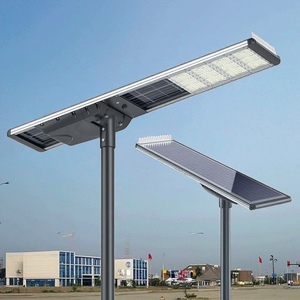
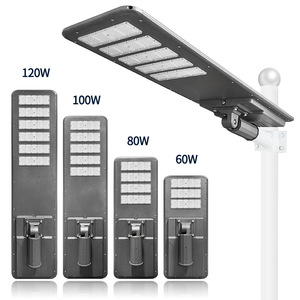
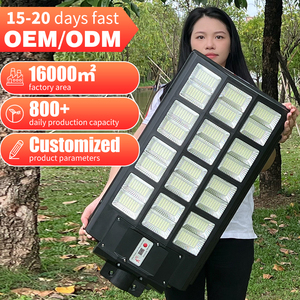
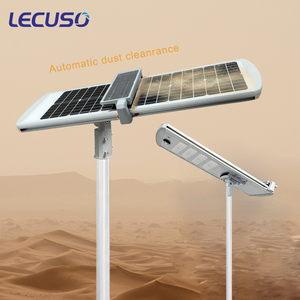
All-in-One systems enclose the photovoltaic panel, LiFePO4 battery pack, smart controller, and high-lumen LED engine into a single aerodynamic die-cast aluminum housing. Designed for rapid deployment, AIO systems require zero internal field wiring. They are ideal for rural road electrification, residential HOAs, perimeter security, and parking facilities. Advanced AIO designs incorporate automated motorized wiper mechanisms to prevent dust build-up and maintain peak photovoltaic conversion efficiency in arid, desert regions.
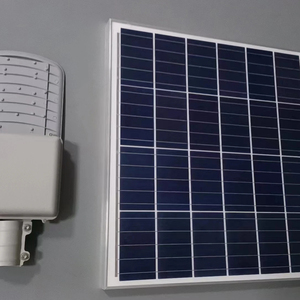
All-in-Two systems separate the solar PV panel from the luminaire housing while housing the battery unit and telemetry controller inside the LED fixture or pole mount. This separation allows engineers to orient the PV panel independently toward the solar meridian, maximizing daily watt-hour harvesting across high-latitude regions without compromising the optical tilt angle of the luminaire.
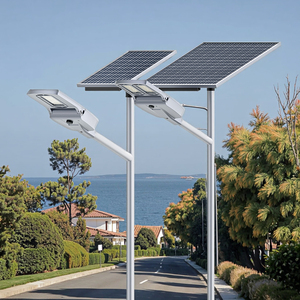
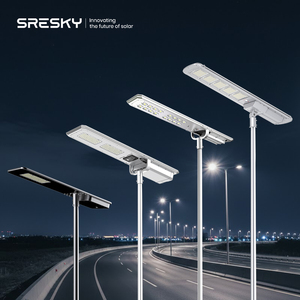
For high-mast highway interchanges, multi-lane arterial expressways, and municipal engineering projects requiring lumen outputs exceeding 20,000 lumens, split-type systems represent the ultimate high-power solution. The solar array, heavy-capacity underground or pole-mounted battery bank, and industrial luminaire operate as separate modules, enabling custom system sizing engineered to survive up to 7 to 10 continuous rainy days under zero-sunlight overcast conditions.
As an established OEM/ODM exporter with decades of combined engineering expertise, our production methodology follows rigorous Quality Management Frameworks (ISO 9001, ISO 14001, ISO 45001) to deliver verified, storm-resilient lighting infrastructure to developers across North America, Europe, the Middle East, and Southeast Asia.
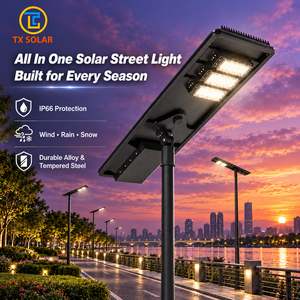
Structurally calculated using FEA (Finite Element Analysis) to withstand extreme wind loads up to 250 km/h (Cat 5 hurricanes), certified under EN 40-3 structural standards for high-velocity coastal zones.
Utilizes dual-sided N-Type TOPCon solar cells capable of capturing direct sunlight on the front face and ground-reflected albedo light on the rear face, generating up to 25% additional power yield.
Integrated cellular (4G/LTE-M) or LoRaWAN communication nodes allow remote monitoring of battery state of charge (SoC), real-time energy harvesting data, fault diagnostics, and dynamic dimming profiles.
Equipped with thermal-stable Lithium Iron Phosphate battery packs boasting >6,000 deep discharge cycles at 80% DoD, complete with intelligent active BMS protection against overcharging and freeze conditions.
Precision-engineered optical lenses prevent upward light spill (0% Uplight / U0 rating), offering optional wildlife-friendly amber monochromatic spectra (590nm) for sensitive coastal marine turtle habitats.
Patented robotic dual-brush wiping systems automatically execute programmable cleaning sweeps daily, eliminating dust, sand, and bird droppings to preserve maximum optical transmission.
| Parameter / Feature | Integrated All-in-One (AIO) | All-in-Two (Semi-Split) | Heavy-Duty Split System |
|---|---|---|---|
| Target Applications | Residential roads, pathways, parks, perimeter lighting | Secondary arterials, commercial plazas, industrial parks | Multi-lane highways, logistics hubs, municipal expressways |
| Lumen Output Range | 3,000 lm – 12,000 lm | 6,000 lm – 18,000 lm | 12,000 lm – 36,000+ lm |
| Solar Panel Type | Integrated Monocrystalline / Bifacial | External Adjustable Mono / Bifacial | External High-Wattage Array (up to 600W+) |
| Battery Autonomy Reserve | 3 to 5 Rainy Days | 5 to 7 Rainy Days | 7 to 12 Rainy Days |
| Installation Velocity | Ultra-Fast (< 15 mins per pole) | Fast (~ 25 mins per pole) | Standard (~ 45 mins per pole) |
| Mechanical Wind Resistance | Aerodynamic (Up to 250 km/h) | High (Up to 210 km/h) | Engineered per Pole Spec (Up to 250 km/h) |
Procurement trends in the solar lighting sector are undergoing rapid evolution, influenced by global ESG imperatives, supply chain diversification, carbon offset accounting, and smart city infrastructure integration. Overseas buyers, municipal tenders, and B2B distributors should structure their sourcing strategies around three pivotal macroeconomic trends:
Global developers are moving away from traditional luminaire procurement toward **Lighting-as-a-Service (LaaS)** financial frameworks. Under these models, direct upfront equipment costs ($0 CAPEX options) are replaced by structured monthly maintenance and performance service agreements. Chinese exporters with strong balance sheets and structured export-credit backing (such as Sinosure coverage) provide global clients with flexible financing terms, turn-key warranty management, and continuous remote diagnostics.
Static wattage illumination is being replaced by dynamic light management. Standalone solar streetlights are now integrated with microwave doppler sensors and AI-driven adaptive dimming profiles. Luminaires operate at a baseline ambient brightness (e.g., 30%) and instantly ramp to 100% full illumination upon detecting pedestrian or vehicular movement. This intelligent power allocation extends battery longevity, reduces light pollution, and optimizes system efficiency during low-solar winter months.
Standalone solar lighting poles are transforming into decentralized digital infrastructure nodes. Modern export specifications increasingly call for smart solar poles equipped with auxiliary power take-off ports to drive CCTV security cameras, environmental air quality sensors, weather telematics, and public Wi-Fi hotspots without requiring any connection to the municipal grid network.