China Top Commercial Solar Floodlights Suppliers & Exporters

Industrial Whitepaper: Architectural-Grade Engineering, Bifacial Solar Technology, and B2B Sourcing Analysis

High-Lumen Industrial & Commercial Solar Floodlights

Engineered for harsh environments, off-grid infrastructure projects, municipal roadways, and enterprise security perimeters. Featuring Grade-A LiFePO4 cells, smart MPPT charge controllers, and Cat 5 hurricane resistance.
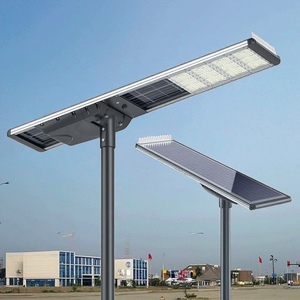
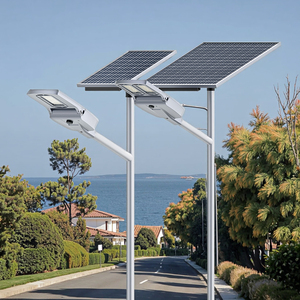
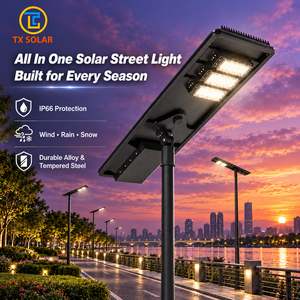
All in Two Outdoor Solar Street Light Two in One

All in Two Outdoor Solar Street Light Two in One

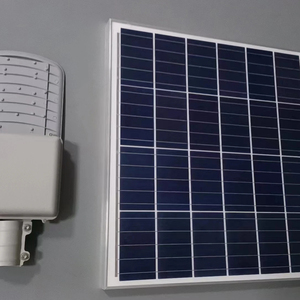
Split-Type Architecture Adjustable Solar PV IP66 Waterproof
Industrial Solar Street Light 30W 60W 80W 100W 200W Outdoor Solar Lighting

Industrial Solar Street Light 30W-200W Heavy Duty Outdoor LED

30W - 200W Output High Structural Pole MPPT Control
High Power Integrated Solar Street Light Super Bright Outdoor LED Lamp

High Power Integrated Solar Street Light for Municipal Projects

Super Bright LED Monocrystalline PV Municipal Grade
IP66 Waterproof Smart Control Solar Street Lights Split Type

IP66 Waterproof Smart Control Split Type Solar Lighting System

Smart Remote IoT Dual Angle Mounting LiFePO4 Storage
Integrated Solar Street Light Solar Outdoor Courtyard Light

Integrated All-In-One High Power Solar Courtyard & Flood Lamp

Compact All-In-One Radar Motion Sensor Zero Cabling
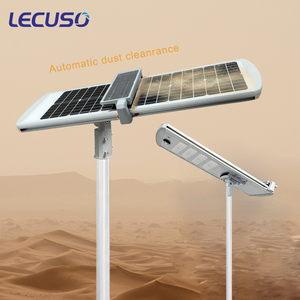
Automatic Auto Clean Self Cleaning Solar Street Light

Automated Robotic Self-Cleaning Solar Light (30W-150W)

Auto Dust Wiper Desert Environment Max PV Efficacy
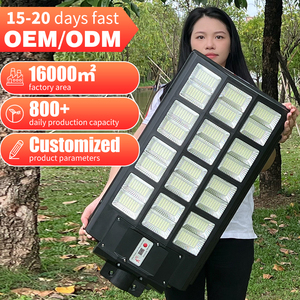
Waterproof All-in-One Solar LED Street Light Custom OEM

Custom OEM Waterproof All-In-One Solar Lighting for Parking Lots

OEM/ODM Custom Type III Optic Lens IK10 Impact Rating
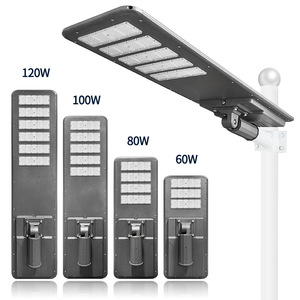
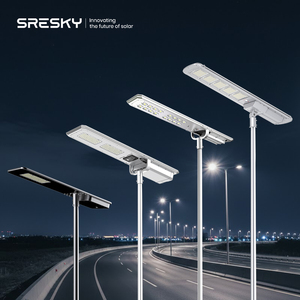
SRESKY Solar Streetlight Lampadaire Solaire 80W 100W 120W 150W Integrated

Heavy-Duty Integrated Commercial Solar Floodlight 80W-150W

High Lumen Flux Cat 5 Hurricane Rated 5+ Days Autonomy
1,269+
Global Projects Deployed
Cat 5
Hurricane Resistance
210 lm/W
LED Engine Efficacy
5+ Days
Battery Autonomy
$0
Grid OPEX & Trenching

Executive Overview: The Evolution of Commercial Solar Floodlighting

As global municipal networks, industrial logistics parks, and commercial real estate developers accelerate transitions toward Net-Zero carbon targets, off-grid solar illumination has evolved from an auxiliary lighting option into a mission-critical infrastructure asset. Sourcing high-output commercial solar floodlights from premier Chinese suppliers represents a strategic leverage point for enterprise buyers seeking to balance stringent photometric performance with total cost of ownership (TCO) optimization.

Key Industry Metric: Transitioning from conventional grid-tied High-Pressure Sodium (HPS) floodlights to high-efficacy (200+ lm/W) off-grid solar LED systems reduces project infrastructure deployment timelines by up to 75% by eliminating subsurface trenching, conduit laying, and transformer interconnection delays.

Modern commercial floodlighting demands continuous lumen reliability, high color rendering (CRI > 80), and specific photometric distributions—ranging from narrow NEMA 3x3 spotlighting for perimeter security to broad NEMA 7x7 flood distributions for vast logistics yards and sports complexes. Chinese manufacturing hubs, centered in Guangdong and Zhejiang provinces, have consolidated advanced semiconductor LED packaging, high-efficiency monocrystalline PV fabrication, and automotive-grade Lithium Iron Phosphate (LiFePO4) battery management into streamlined OEM/ODM export pipelines.

Why Engineering Standards Drive Sourcing Decisions

Bifacial Photovoltaic Harvesting

Incorporating dual-glass N-Type TOPCon bifacial solar panels, our luminaires yield up to 25% additional energy harvest from ground albedo reflection, maintaining battery trickle charge even under dense cloud cover or oblique solar angles.

Cat 5 Hurricane Wind Load Rating

Structural frames constructed from high-tensile ADC12 die-cast aluminum with hot-dip galvanized steel mountings are engineered and wind-tunnel tested to withstand gust velocities up to 160 mph (Cat 5 rating).

Robotic Auto Self-Cleaning

Integrated motorized cleaning wipers execute daily programmable sweeps over the solar module, preventing dust, sand accumulation, and bird droppings from causing PV hot-spot degradation and power loss.

EV-Grade LiFePO4 Chemistry

Powered exclusively by new, non-recycled Grade-A Lithium Iron Phosphate cells providing >6,000 deep discharge cycles at 80% DOD, operating reliably in temperature extremes from -20°C to +70°C.

Smart MPPT Telemetry & IoT

Equipped with high-speed Maximum Power Point Tracking (>98.5% efficiency) integrated with LoRaWAN, Zigbee, or cellular NB-IoT modules for real-time cloud diagnostic monitoring and adaptive dimming schedule controls.

Dark-Sky & Ecological Optics

Full cut-off optical lens configurations compliant with IDA Dark-Sky guidelines prevent light trespass, skyglow, and glare. Available with 590nm narrow-spectrum amber LEDs for coastal sea turtle protection zones.

Engineering Benchmark: Commercial Solar Floodlight Architecture

When evaluating tier-1 Chinese manufacturers against OEM contract specifications, technical procurement managers must benchmark system parameters across mechanical, optical, and thermal vectors.

System Parameter Standard Commercial Grade Enterprise Municipal Grade (Our Standard) Impact on Project ROI & TCO
Solar Cell Efficacy 17.5% - 19.5% Polycrystalline 23.5% - 24.8% N-Type TOPCon Monocrystalline Reduces required panel surface area by 30%, lowering wind resistance load.
Battery Chemistry Ternary Li-ion / Recycled LiFePO4 Brand New Grade-A LiFePO4 (EV Class) Extends operational battery lifespan from 3 years to 10+ years (6,000+ cycles).
Charge Controller PWM (70-75% Efficiency) Smart MPPT (>98.5% Efficiency) with Auto-Dimming Captures 30% more energy daily, enabling 5-7 days rainy day autonomy reserve.
Luminous Efficacy 120 - 140 lm/W 190 - 210 lm/W (Bridgelux / Lumileds 5050) Delivers higherlux levels with reduced power drain on storage reserve.
Ingress & Impact IP65 / IK08 Cast Aluminum IP67 / IK10 ADC12 Die-Cast with Anti-Corrosion Coating Prevents water ingress, salt-spray oxidation, and vandalism damage in industrial zones.

Future Trends in Commercial Solar Lighting Sourcing

1. AI-Driven Adaptive Dimming & Smart Mesh Lighting Networks

Future commercial solar floodlighting goes far beyond fixed motion sensing. Next-generation systems integrate AI-driven predictive algorithms that process local weather forecasting data, historical pedestrian/vehicle traffic density, and ambient illumination levels. By dynamically adjusting lumen output between 10% standby and 100% full-power burst, these smart mesh networks achieve perpetual 365-night illumination guarantee without over-sizing physical solar panel real estate.

2. Shift Toward $0 Upfront "Lighting-as-a-Service" (LaaS) Procurement

Global procurement teams are moving away from traditional Capital Expenditure (CAPEX) models toward Operational Expenditure (OPEX) financing. Leading Chinese exporters are now collaborating with international asset management firms to offer zero-upfront service agreements. Under this structure, enterprise buyers pay fixed monthly service fees covering equipment supply, remote IoT diagnostic monitoring, and turnkey component maintenance—offloading technical risk to the manufacturer.

Comprehensive Procurement & Technical FAQ

Addressing key engineering, structural, financial, and logistical queries standard in enterprise B2B RFP processes.

How do commercial solar floodlights maintain illumination during 5+ consecutive days of overcast or rainy weather?
Commercial-grade systems maintain continuous illumination through three integrated engineering safeguards: 1) Oversized Grade-A LiFePO4 battery capacity rated for 5-7 days of operational autonomy reserve at 80% DOD; 2) Intelligent MPPT controllers running adaptive dimming profiles (e.g., maintaining 20% ambient output when no motion is detected, ramping to 100% upon microwave radar trigger); and 3) High-efficiency N-Type bifacial solar panels capable of harvesting diffuse radiation even under cloud cover.
What optical NEMA distributions are recommended for commercial logistics yards vs perimeter security?
For broad open-area logistics parks, sports facilities, and large parking lots, NEMA 6x6 or 7x7 wide-flood asymmetric lenses are specified to maximize pole-spacing and eliminate dark shadows. For narrow perimeter security fencing, building facades, and long access roads, NEMA 3x3 or Type III optical lenses are utilized to project directional lumens along the boundary line while preventing back-light light pollution.
Why is LiFePO4 chemistry preferred over traditional NMC or Lead-Acid in solar floodlights?
Lithium Iron Phosphate (LiFePO4) offers superior thermal stability, eliminating thermal runaway risks up to 70°C ambient temperatures typical inside sealed outdoor luminaire housings. Furthermore, LiFePO4 delivers 6,000+ deep discharge cycles (compared to ~1,000 cycles for NMC and ~500 for Lead-Acid), matching the 10+ year operational lifespan of high-grade LED chips and PV panels, drastically lowering lifecycle replacement costs.
What structural engineering certifications are required for coastal hurricane-zone installations?
Solar floodlights for hurricane-prone coastal regions must undergo wind tunnel testing validating structural integrity under dynamic wind shear forces up to Category 5 speeds (160 mph / 250 km/h). Structural components must utilize ADC12 die-cast aluminum or 304/316 stainless hardware with marine-grade C5-M anti-corrosion powder coating, accompanied by finite element analysis (FEA) pole stress calculations.
What is the real-world lumen degradation curve over a 50,000-hour operational lifespan?
Enterprise-grade luminaires utilizing premium LED chips (such as Lumileds 5050 or Bridgelux) mounted on high-conductivity aluminum metal-core PCBs comply with LM-80 / TM-21 lumen maintenance standards. Expected lumen depreciation guarantees output will not drop below 90% of initial lumen output at 25,000 hours (L90) and maintain >80% initial output at 50,000 hours (L80 B10), ensuring decades of adequate lux levels.
How does automated robotic self-cleaning improve system ROI in high-dust regions?
Dust, sand, and particulate accumulation on horizontal PV surfaces in desert or industrial mining zones can reduce solar charging efficiency by up to 40% within weeks. Automated self-cleaning systems execute programmable daily mechanical wiper cycles without consuming external water, maintaining peak solar charging performance and eliminating costly manual aerial platform maintenance routines.
Are turtle-friendly and Dark-Sky compliant optical setups available for coastal resorts?
Yes. Custom OEM manufacturing allows integration of full cut-off fixture shields to ensure 0% upward light output (IDA Dark-Sky compliance). For coastal marine turtle protection habitats, luminaires can be fitted with true monochromatic amber LEDs emitting narrow-spectrum wavelengths (590nm), which do not disorient nesting sea turtles or hatchlings.
How does remote IoT management lower Operation & Maintenance (O&M) overhead?
Integrated IoT connectivity (LoRaWAN/NB-IoT) transmits real-time telemetry regarding battery state of charge (SOC), solar panel voltage, LED driver temperatures, and component failure alerts to a centralized cloud dashboard. O&M teams can pinpoint precise failure modes remotely prior to dispatching technicians, replacing reactive physical field audits with proactive, data-driven maintenance.
What key factory capabilities should procurement officers audit when sourcing from China?
Procurement audits should verify: 1) ISO9001 quality system compliance with incoming component IQC and automated aging test lines; 2) In-house testing facilities including integrating spheres, goniophotometers, IPX6/IPX7 waterproof testing chambers, and vibration test beds; 3) Full supply chain traceability for battery cell grade certificates; and 4) International product certifications including CE, RoHS, CB, IEC 62109, and UN38.3 lithium transport safety documentation.
What is the standard warranty and component replacement protocol for bulk export orders?
Tier-1 exporters provide a standard 5-year comprehensive commercial warranty covering the entire system (PV panel, LED engine, MPPT controller, battery). In high-volume B2B contract orders, manufacturers typically supply a 1%-2% spare parts kit (plug-and-play driver modular packs, sensor nodes) alongside shipment to enable immediate onsite replacement without project downtime.

Accelerate Your Next Commercial Solar Lighting Project

Partner with China's leading commercial solar floodlight engineering manufacturer. Request photometric DIALux layouts, custom OEM factory quotes, or full product specifications today.

Send an Inquiry