
The global outdoor lighting sector is undergoing a structural transition toward autonomous, off-grid dusk-to-dawn solar streetlights. Municipalities, civil contractors, commercial real estate developers, and utility providers are rapidly phasing out traditional grid-connected high-pressure sodium (HPS) and standard AC LED luminaires. Driving this shift are escalating grid electricity costs, severe storm disruptions, and stringent corporate ESG carbon offset mandates.
China stands at the absolute center of this technological revolution, manufacturing over 85% of the world’s commercial-grade solar lighting components. However, for B2B importers, EPC engineers, and procurement directors, navigating China's vast supplier landscape requires a rigorous understanding of component-level specifications, optical distribution geometry, and energy balance calculations. Selecting an enterprise-grade OEM partner is no longer just about initial purchase price; it is about lifetime Total Cost of Ownership (TCO), continuous rainy-day autonomy, structural wind-load safety, and extended cell longevity.
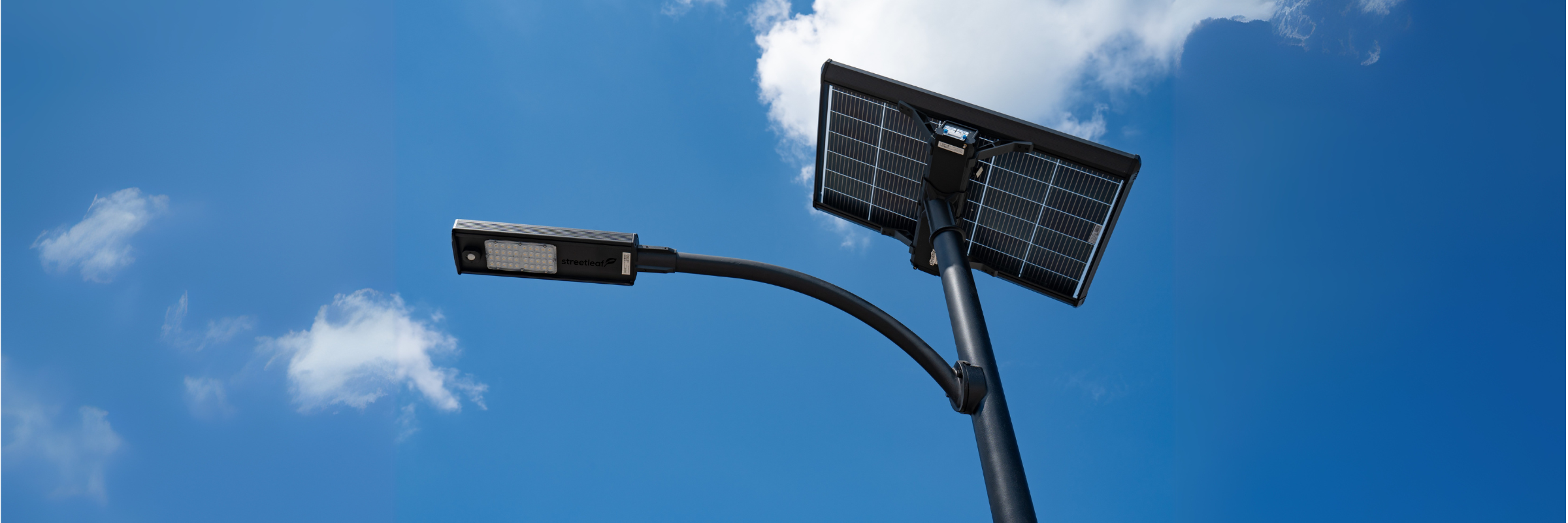
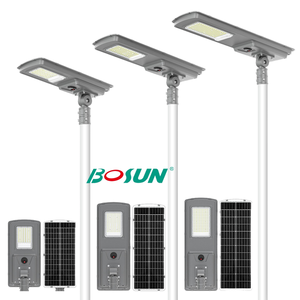
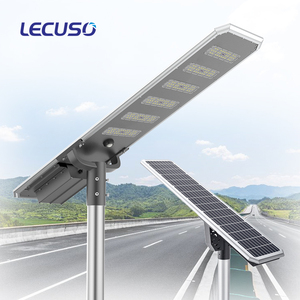
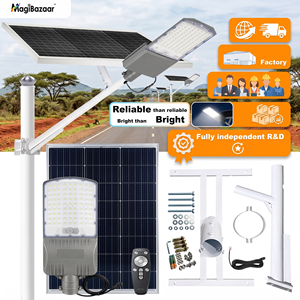
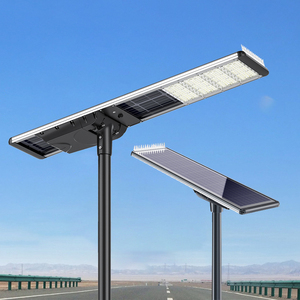
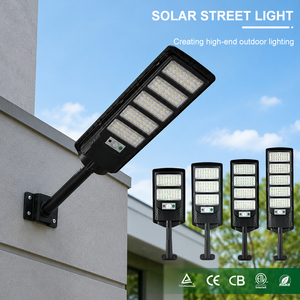
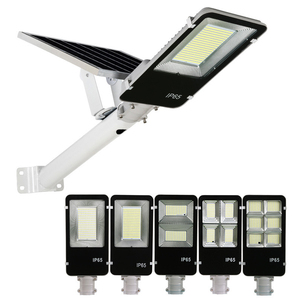
When engineering municipal roadways, residential HOAs, and industrial parks, zero grid dependency is the ultimate operational goal. Premier Chinese solar lighting manufacturers have integrated state-of-the-art automated self-cleaning mechanisms, high-efficiency N-Type TOPCon bifacial solar panels, and Grade-A Lithium Iron Phosphate (LiFePO4) storage directly into streamlined "All-in-One" (Integrated) and "All-in-Two" (Split) luminaire architectures.
By eliminating cable trenching, conduit laying, step-down transformers, and utility interconnections, project managers routinely slash initial capital expenditure (CAPEX) by 35% to 60%. Furthermore, projects utilizing innovative financial structures—such as $0 upfront service agreements—can completely convert CAPEX into manageable, predictable operational expenditures (OPEX) while securing 100% off-grid resilience.

Constructed with high-tensile die-cast aluminum alloys and internal structural ribs, our commercial luminaires are rated to withstand extreme coastal typhoons and Category 5 hurricane wind speeds exceeding 185 mph (60 m/s).
Leveraging double-sided glass bifacial solar modules allows the system to absorb direct sunlight on the top face while harvesting reflected albedo light from ground surfaces, boosting solar charging efficiency by up to +25%.
Utilizing premium automotive-grade Lithium Iron Phosphate cells, our energy storage packs deliver over 4,000 deep discharge cycles at 80% DOD, remaining operational across extreme temperatures from -20°C up to +70°C.
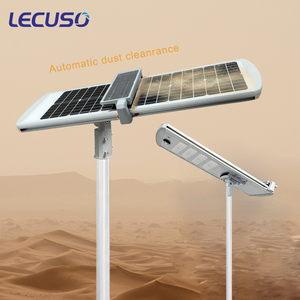
Dust, pollen, and bird droppings can degrade solar charging output by 35% annually. Integrated automated brush units clean the glass panel twice daily, ensuring maximum photovoltaic performance without manual labor.
Precision-engineered Type II and Type III optical batwing lenses feature strict zero-uplight cutoffs to eliminate light pollution. Specialized 590nm amber LED modules protect coastal sea turtle nesting sites.
Equipped with NB-IoT, LoRaWAN, or Zigbee communication modules, facility managers can remotely monitor battery state-of-charge (SOC), dim brightness schedules, receive fault alerts, and push OTA firmware updates in real time.
| Engineering Parameter | High-Efficacy Dusk-to-Dawn Solar System | Standard AC LED Streetlight Grid | Legacy HPS (High Pressure Sodium) |
|---|---|---|---|
| Power Source | 100% Off-Grid Photovoltaic + Battery | Municipal AC Grid Power | Municipal AC Grid Power |
| Luminous Efficacy | 180 – 210 Lumens / Watt | 120 – 140 Lumens / Watt | 60 – 90 Lumens / Watt |
| Installation Cost (CAPEX) | Zero Trenching / Low Labor ($0 Plan Available) | High (Trenching, Wiring, Conduit, Transformers) | Very High (Complex Infrastructure Needs) |
| Electricity Utility Cost | $0.00 / kWh (Free Solar Power) | High Ongoing Monthly Utility Fees | Extremely High Electricity Consumption |
| Grid Failure Resilience | 100% Functional (5-7 Days Autonomy) | Blackout Vulnerable (Zero Backup) | Blackout Vulnerable (Zero Backup) |
| Maintenance & Lifecycle | Robotic Auto-Clean / 10+ Yr System Life | Medium Maintenance (Wire/Driver Aging) | High Maintenance (Frequent Bulb Burnouts) |
| Carbon Output & ESG Impact | Zero Operational Carbon Footprint | Indirect Fossil Fuel Emissions | High Carbon Intensity |

The total daily energy yield ($E_{pv}$) generated by a dusk-to-dawn solar streetlight is governed by module surface area ($A$), peak solar irradiance ($G$), cell efficiency ($\eta_{cell}$), and environmental derating factors ($\eta_{temp}, \eta_{dirt}$):
By upgrading from standard Monocrystalline PERC cells (20.5% efficiency) to N-Type TOPCon cells (24.5%+ efficiency), energy generation per square meter increases by over 19%. Furthermore, when deployed on concrete, light asphalt, or light-colored roadway shoulders, the bottom surface of bifacial modules captures indirect scattered light, delivering up to an extra 25% energy gain during overcast peak hours.
In outdoor solar applications, battery thermal stability and cycle life determine the operational life of the streetlight. Conventional Nickel Manganese Cobalt (NMC) cells suffer thermal runaway risks above 55°C and degrade rapidly after 1,200 cycles. In contrast, Grade-A Lithium Iron Phosphate (LiFePO4) chemistry features a robust olivine crystal structure that avoids oxygen release even under high temperatures, maintaining structural integrity up to 70°C.
Our intelligent Battery Management System (BMS) continuously monitors cell balance, over-charge protection, over-discharge cutoff limits, and short-circuit prevention. By capping Depth of Discharge (DOD) at 80%, system cycle life extends beyond 4,000 full cycles, translating to over 10 to 12 years of trouble-free daily operation.
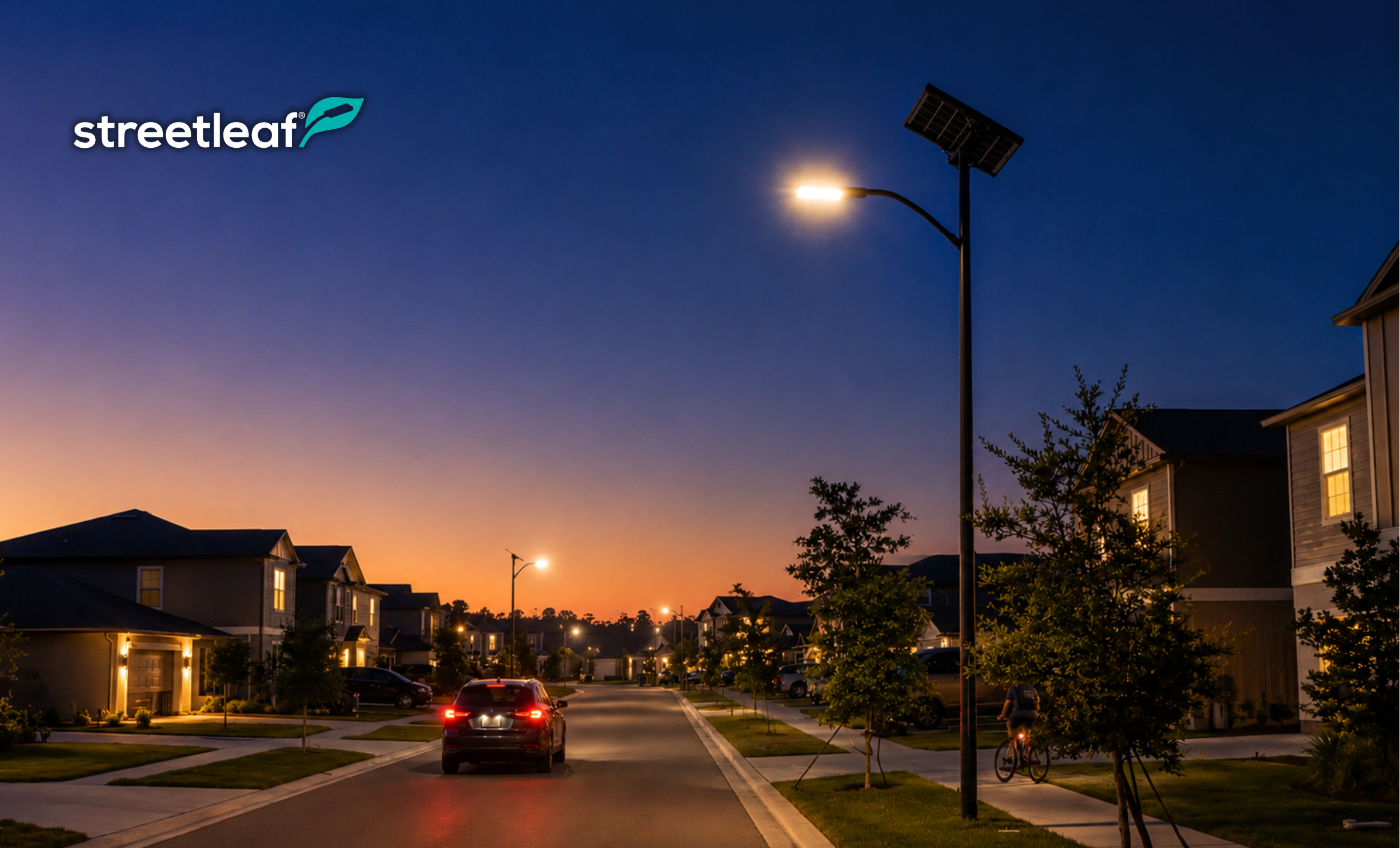
Dusk-to-dawn solar streetlights are evolving from standalone luminaires into central Smart City node points. Future procurement specifications increasingly demand integrated 5G micro-cells, environmental air-quality sensors, public Wi-Fi hotspots, electric vehicle (EV) low-speed charging, and automated license-plate recognition (ALPR) cameras—all powered entirely by high-capacity solar-battery systems.
Next-generation charge controllers are incorporating machine learning algorithms that analyze 7-day local meteorological forecasts via satellite connections. The system proactively adjusts battery charging profiles and dynamic microwave sensor dimming curves to guarantee zero downtime during severe, multi-week monsoon conditions.
To meet international environmental mandates, manufacturers are adopting tool-less, modular architectures. Solar panels, luminaire head units, battery pods, and MPPT control boxes can be swapped in under 3 minutes without dismounting the light pole, minimizing maintenance costs and facilitating end-of-life battery recycling.
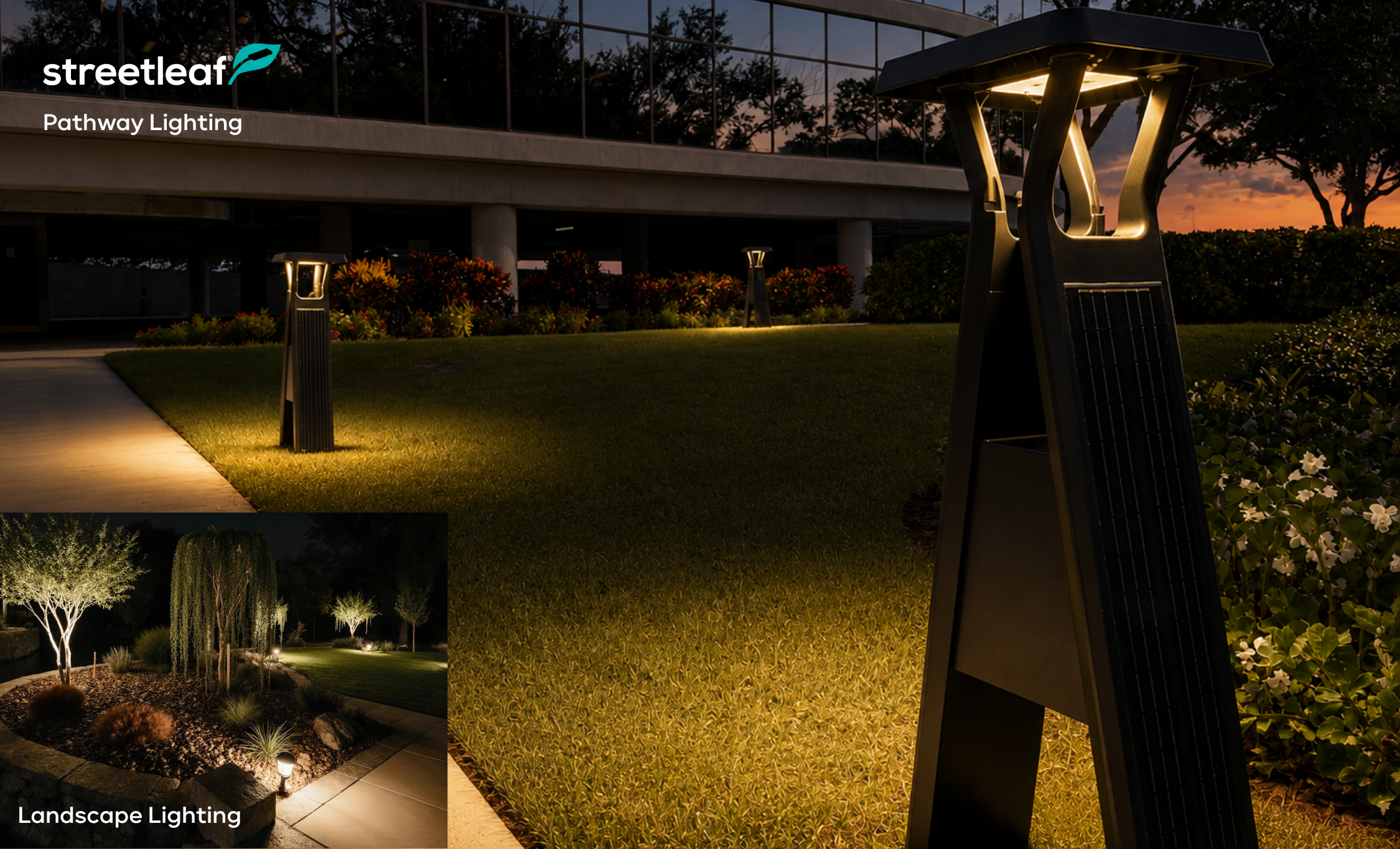
Understand how optical distribution requirements change between aesthetic landscape accentuation and safety-critical municipal pathway illumination.
Inquire Now
A comprehensive economic review on grid-decoupling strategies, budget optimization, and long-term infrastructure resilience for growing urban centers.
Inquire Now
Mitigating grid maintenance burdens, copper wire theft, and power surge vulnerabilities through localized off-grid solar streetlight networks.
Inquire NowOur commercial solar streetlights are engineered with a minimum 5 to 7-day battery reserve ratio (autonomy factor). This reliability is achieved through three key innovations: First, oversizing the solar panel capacity relative to luminaire wattage. Second, utilizing high-efficiency MPPT controllers that harvest solar energy even under low ambient light conditions. Third, implementing adaptive motion-dimming profiles (e.g., operating at 30% baseline power during inactivity and increasing to 100% upon microwave radar motion detection).
Our Grade-A LiFePO4 battery cells deliver over 4,000 complete charge/discharge cycles down to 80% Depth of Discharge (DOD), which corresponds to a 10 to 12-year operational lifespan. For extreme hot climates, the battery housing features die-cast aluminum heat sinks with isolation air channels to dissipate internal heat. For sub-zero ambient conditions (-20°C to -30°C), optional BMS units with internal thermal heating pads dynamically warm battery cells prior to initiating charging, preventing lithium plating.
Accumulated dust, atmospheric soot, pollen, and bird droppings form a opaque film over solar glass panels, which can reduce charging efficiency by 20% to 35% within 6 months. In desert regions or high-traffic industrial zones, this degradation occurs even faster. Integrated self-cleaning models utilize a dual-direction robotic wiper blade that automatically wipes the PV module surface twice daily. This maintains optical transparency at near-100% efficiency, eliminates manual bucket-truck maintenance costs, and extends battery health.
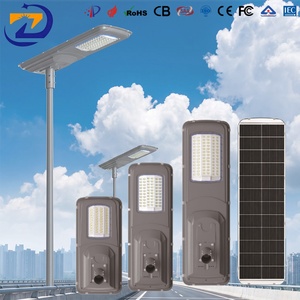
All export-grade solar streetlights undergo rigorous factory testing and hold full international compliance documentation. Essential certifications include CE, RoHS, IP67 ingress protection, IK10 mechanical impact protection, ISO9001 quality system management, and IEC 62133 battery safety compliance. Wind tunnel test reports validating Category 5 hurricane resistance (up to 60 m/s) and IES photometrics for Dialux lighting simulation design are available upon request for project submittals.
Yes. As a leading manufacturer and direct exporter, we offer full OEM/ODM customization. You can specify color temperatures ranging from warm 2700K (Dark-Sky compliant) to 6000K daylight white, specialized 590nm turtle-friendly amber spectra, custom powder-coat architectural finishes (RAL color matching), tailored mounting tenon diameters, and integrated IoT communication gateways pre-configured to your preferred cloud management software.
Request factory-direct pricing, photometrics, Dialux lighting calculations, or custom OEM engineering support for your upcoming municipal or commercial projects.
Inquire Now