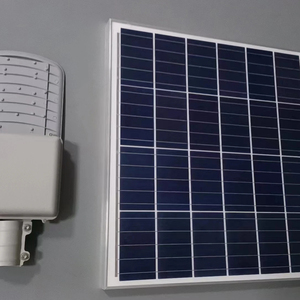
Explore our tier-1 OEM/ODM manufactured street lighting solutions designed for municipal roads, highways, industrial parks, and severe coastal microclimates.
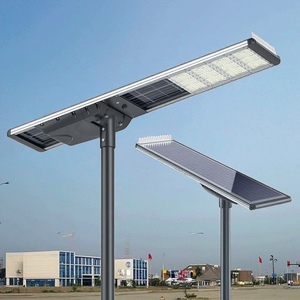
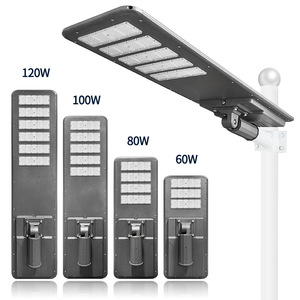
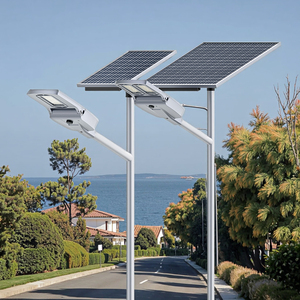
As global municipal infrastructure accelerates toward zero-carbon mandates and decentralized resilience, conventional single-source solar streetlights face severe operational bottlenecks. Monocrystalline photovoltaic systems depend entirely on solar irradiance, leaving public thoroughfares vulnerable during prolonged monsoon seasons, heavy snowfall, or winter weather anomalies where solar yield drops by over 80%. As China's premier manufacturer and B2B global supplier of utility-scale hybrid wind-solar streetlights, we engineer dual-harvesting systems that eliminate single-point power dependencies.
By coupling low-wind-speed Vertical Axis Wind Turbines (VAWT) or optimized Horizontal Axis Wind Turbines (HAWT) with N-Type TOPCon bifacial photovoltaic arrays, our hybrid luminaires achieve a complementary 24/7 energy harvesting curve. Nighttime wind currents—frequently strongest when solar generation is zero—continuously recharge Grade-A Lithium Iron Phosphate (LiFePO4) storage banks. This synergistic energy yield guarantees 365-day continuous illumination without costly utility grid interconnections, subterranean conduit trenching, or transformer installations.
The fundamental breakdown of single-source solar street lighting occurs during seasonal climate transitions. Microclimatic data reveals that atmospheric low-pressure systems bringing cloud cover and precipitation are consistently accompanied by elevated kinetic wind energy. A standalone 100W solar streetlight during a 5-day storm cycle typically experiences battery depletion by night three, leading to critical blackout risks on public highways and municipal sectors.
In contrast, a hybrid wind-solar architecture utilizes dual MPPT (Maximum Power Point Tracking) algorithms to dynamically balance energy inputs. When solar irradiance falls below 150 W/m², the hybrid charge controller ramps up kinetic energy extraction from the wind turbine generator even at startup speeds as low as 1.5 m/s. This yields an uninterrupted equilibrium power curve across all four seasons.
Engineered to set international engineering benchmarks for off-grid municipal lighting performance.
Patented dual-channel Maximum Power Point Tracking (MPPT) controllers with >99.5% tracking efficiency. Independently optimizes variable AC voltage from wind generators and DC voltage from PV arrays simultaneously.
Custom-engineered maglev and precision-bearing turbine blades featuring ultra-low starting torque. Generates usable energy at wind speeds starting at just 1.5 m/s, capturing gentle night breezes.
Constructed with Q235/Q345 hot-dip galvanized steel poles and aircraft-grade aluminum alloy turbine blades, certified to withstand extreme typhoons up to 60 m/s (216 km/h).
Integrated EV-grade Lithium Iron Phosphate battery packs equipped with multi-stage Intelligent Battery Management Systems (BMS) for thermal throttling, overcharge, and deep discharge defense.
Cellular NB-IoT / LoRaWAN remote management nodes enable real-time power monitoring, remote dimming profiles, automated fault diagnostics, and adaptive microwave motion detection.
Precision LED optical lensing delivering Type II, III, and IV light distributions. Optional 2200K-3000K warm amber wavelengths designed to eliminate light trespass and protect nocturnal wildlife.
Quantitative comparison between traditional grid-tied lighting, standard PV solar streetlights, and our Advanced Wind-Solar Hybrid Infrastructure.
| Performance Metric | Traditional Grid LED | Standard Solar Streetlight | China Hybrid Wind-Solar (Our System) |
|---|---|---|---|
| Primary Energy Source | 100% Utility Grid Cable | Photovoltaic (Solar Only) | Dual Synergistic Solar + Kinetic Wind |
| Trenching & Cabling Capex | Extreme ($45 - $90 / meter) | Zero Trenching | Zero Trenching ($0 Infrastructure Cable Cost) |
| Continuous Autonomy (Storm Days) | 0 Days (Blackout Vulnerable) | 2 to 3 Rainy Days Max | Unlimited (Continuous 365-Day Harvesting) |
| Luminous Efficacy | 130 - 150 lm/W | 160 - 180 lm/W | Up to 240 lm/W (Philips / Bridgelux Chips) |
| Battery Cycle Life | N/A | 1,500 - 2,000 Cycles (Standard LiFePO4) | 4,000+ Cycles @ 80% DOD (Grade-A LiFePO4) |
| Operational Wind Rating | 40 m/s (Standard Pole) | 45 m/s (High Drag Panel) | 60 m/s (Cat 5 Typhoon Certified Aerodynamics) |
| Smart Telemetry & Control | Optional Manual Timer | Basic PIR Sensor | Full IoT NB-IoT/LoRaWAN Central Management |
| 10-Year Operational ROI | Negative (Rising Electricity Tariffs) | Moderate (Panel Replacement Needed) | Highest (Zero Utility Bills + 10-Yr Reliability) |
As a leader among China top hybrid wind solar streetlights manufacturers and suppliers, our state-of-the-art manufacturing campus spans over 45,000 square meters, housing automated SMT LED assembly lines, CNC wind blade dynamic balancing stations, and robotic hot-dip galvanizing plants. We serve international EPC contractors, municipal procurement departments, commercial estate developers, and utility operators across North America, Europe, the Middle East, and Southeast Asia.
A frequent challenge in lower-tier wind-solar hybrid lighting is structural resonance and mechanical fatigue caused by turbine rotation. Our engineering team utilizes finite element analysis (FEA) to design internal dampening mounts and dual-bearing assemblies within the turbine hub. By utilizing high-density carbon-fiber-reinforced nylon and die-cast aluminum alloys, our blades achieve zero dynamic imbalance, reducing mechanical acoustic noise to under 28 dB at full rotational velocity.
Coastal highways, ports, and island installations subject lighting hardware to extreme saline humidity and oxidation. All steel structural poles undergo a multi-tier protective coating process: internal and external hot-dip galvanization to a minimum thickness of 85 µm, followed by a fluorocarbon electrostatic powder coating. Luminaires and junction boxes carry IP67 waterproof validation and pass rigorous 1,000-hour ASTM B117 salt spray testing.
Capital expenditure hurdles often delay municipal decarbonization goals. Leveraging our global commercial framework—similar to modern energy-as-a-service (EaaS) models—we support regional distributors and public entities with flexible procurement terms. Projects can utilize $0-upfront municipal leasing frameworks, enabling cities to offset hardware costs through guaranteed energy efficiency savings and zero maintenance overhead.
The global outdoor lighting landscape is undergoing a monumental transition driven by climate adaptation, microgrid independence, and smart city sensor integration. As procurement buyers evaluate long-term lighting investments, several critical macro-trends define the future of hybrid wind-solar infrastructure:
Detailed technical answers to assist municipal engineers, procurement directors, and B2B buyers during system specification.
Our hybrid systems are engineered with dynamic battery autonomy buffers. Grade-A Lithium Iron Phosphate (LiFePO4) energy storage banks are sized to supply 5 to 7 days of continuous illumination during complete dark, calm weather. Furthermore, because wind and solar are complementary resources, absolute atmospheric calm occurs in less than 0.5% of annual weather cycles.
VAWT systems (such as Savonius or Gorlov designs) capture wind blowing from any direction (360 degrees) without requiring a tail-yaw mechanism. They feature a significantly lower start-up torque, operate silently (<28 dB), withstand violent turbulent gusts generated by passing vehicles, and present a sleek aesthetic ideal for urban environments.
Our intelligent dual MPPT controllers feature automated multi-stage protection. During extreme winds exceeding rated speeds (e.g., >20 m/s), the controller engages electronic electromagnetic braking (PWM dummy load) to slow rotor speed, preventing overcharging and protecting mechanical components while continuing to feed safe trickle power to the battery.
Yes. As an established OEM/ODM manufacturer in China, we provide full structural and electrical customization. Parameters such as pole height (4m to 14m), LED wattage (20W to 300W), optical beam spreads (Type I to IV), battery reserve capacity, wind turbine output (100W to 600W), and color temperature (2200K to 6500K) are engineered tailored to your DIALux lighting calculations.
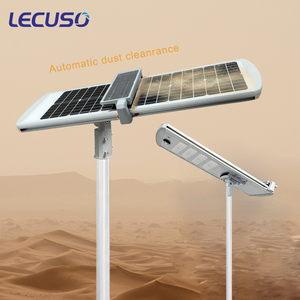
System maintenance is minimal. The brushless maglev generator turbines utilize permanently sealed Japanese NSK bearings rated for 10 years of maintenance-free operation. Photovoltaic modules can be specified with our automatic self-cleaning wiper mechanisms (Product Option 6) to sweep away dust and bird droppings, ensuring peak solar yield in desert or industrial environments.
Our manufacturing facility and products hold complete international certifications including ISO9001 (Quality Management), ISO14001 (Environmental), CE, RoHS, IP67 waterproof certification, IK10 impact protection, IEC 61400-2 (Small Wind Turbine Safety Standard), and ASTM B117 salt spray compliance for marine installations.
For standard evaluation samples, production lead time is 7 to 10 days. Full container load (FCL) municipal tender orders (100 to 2,000+ units) typically ship within 20 to 30 business days. We support flexible MOQs for project engineers and regional distributors seeking validation samples prior to bulk deployment.
Streamline your municipal tenders, commercial developments, and utility projects with storm-resilient, off-grid hybrid lighting technology. Request custom engineering quotes, DIALux simulations, and factory-direct pricing today.
Send an Inquiry