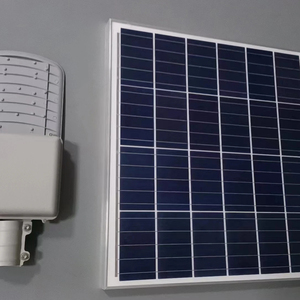
All in Two Outdoor Solar Street Light Two in One
Design: Modular Split-Integrated
Solar Cell: Monocrystalline 22%
Autonomy: 5-7 Rainy Days
Get Catalog

Explore high-efficacy, storm-resilient off-grid outdoor lighting platforms engineered for municipal engineering, rural roads, commercial parking, and utility-scale deployments.
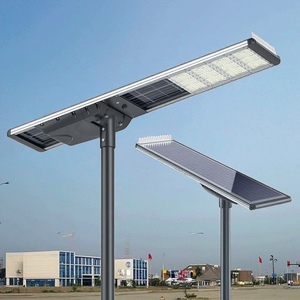
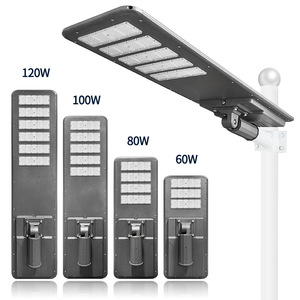
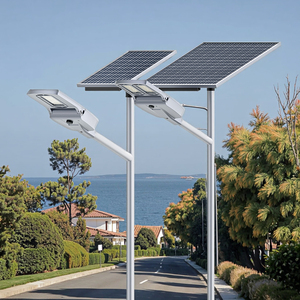
Analyzing the shifts in photowatt efficiency, solid-state battery thermal management, and factory-direct quality control.
Modern municipal and HOA procurement is shifting away from heavy CapEx grid construction. Partnering with top Chinese original design manufacturers (ODMs) enables flexible financing, zero trenching costs, and rapid installation timelines without grid interconnection delays.
Engineered to withstand harsh coastal environments, super typhoons, and Category 5 hurricane wind loads. Structural die-cast ADC12 aluminum housings with anti-corrosion marine-grade anodizing ensure structural integrity in severe climates.
Integrating N-Type TOPCon bifacial solar panels allows harvesting direct sunlight from the front while absorbing ambient ground albedo reflection from the reverse side, increasing solar yields by up to 25% during overcast conditions.
The global market for commercial outdoor solar security lighting has undergone a fundamental paradigm shift. Historically viewed as secondary illumination for remote rural pathways, modern solar streetlights now outperform traditional utility-grid LED fixtures across critical municipal parameters: operational reliability, total cost of ownership (TCO), emergency resilience, and environmental impact.
As global municipal entities, commercial land developers, housing associations (HOAs), and utility providers face escalating grid electricity tariffs, aging grid infrastructure, and intense weather events driven by climate volatility, grid-tied lighting has become a financial liability. Contracting directly with verified Chinese tier-1 solar street light exporters grants buyers direct access to cutting-edge photowatt optics and thermal management innovation.
Photovoltaic efficiency dictates battery replenishment rates, directly influencing total lighting autonomy during prolonged periods of sub-optimal irradiance. Traditional solar street lights utilized polycrystalline panels with conversion efficiencies capped at 16–17%. Today's enterprise-grade suppliers employ N-Type TOPCon (Tunnel Oxide Passivated Contact) bifacial panels delivering cell efficiencies in excess of 23.5%.
The operational bottleneck of historic solar security lighting was premature battery failure caused by thermal degradation, depth-of-discharge (DoD) stress, and memory effect in lead-acid or gel cell chemistry. China's top exporters have standardized Grade-A Lithium Iron Phosphate (LiFePO4) battery packs, completely changing field longevity expectations.
LiFePO4 chemistries provide over 4,000 deep discharge cycles at 80% DoD, translating to an operational lifespan exceeding 10 to 12 years. Integrated multi-stage BMS modules provide critical failsafes:
Luminous efficacy (measured in lumens per Watt, lm/W) has increased from 110 lm/W to over 210 lm/W through the integration of High-Brightness Lumileds and Creo LED chips coupled with secondary optical glass lenses. High light output no longer requires massive power consumption.
Equally critical is precise optical distribution. High-tier suppliers utilize custom Batwing refractive lenses (Type II and Type III distribution patterns) designed specifically for wide roadway and perimeter coverage. Rather than creating high-glare hot-spots directly beneath the pole, these optics cast uniform, rectangular illumination profiles, allowing pole spacing to be widened from 20 meters to over 35 meters—dramatically lowering infrastructure material costs.
Furthermore, leading exporters now design Dark-Sky compliant fixtures with 0% upward light output (ULOR = 0), preventing light pollution in suburban neighborhoods and protecting nocturnal wildlife habitats. Specialized 590nm Amber LED configurations are available for coastal areas to maintain turtle-friendly beach environments.
Modern commercial solar security lighting acts as an intelligent edge node. Equipped with IoT communications modules (LoRaWAN, Zigbee, or Cellular NB-IoT), facilities managers can monitor system health, battery voltage, solar panel charging current, and LED driver temperature from a centralized cloud dashboard.
Integrated microwave radar motion sensors—which operate far more accurately than legacy Passive Infrared (PIR) sensors in extreme ambient heat—detect human or vehicle approach up to 15 meters away. Automated power profile curves dim light output to 30% during low-traffic hours (e.g., 1:00 AM to 5:00 AM), instantly ramping up to 100% full lumen output upon motion detection. This adaptive dynamic dimming quadruples operational battery reserve days.
How international EPC contractors, municipal procurement officers, and B2B buyers evaluate long-term supplier reliability.
| Evaluation Parameter | Tier-1 Chinese Manufacturers (e.g., CCOBLED / Streetleaf Standard) | Generic / Low-Cost Exporters |
|---|---|---|
| PV Technology | N-Type TOPCon Bifacial Monocrystalline (22.5%+ Efficiency) | Standard Monocrystalline or Polycrystalline (<18% Efficiency) |
| Battery Chemistry | New Grade-A LiFePO4 with Smart Dual-Protection BMS | Recycled Li-ion / Lead-Acid Packs with Minimal Protection |
| Housing & Corrosion | ADC12 Die-Cast Aluminum with Marine-Grade Anodizing (AkzoNobel Coating) | Thin Stamped Sheet Metal / Recycled Plastic Housings |
| Wind Load Resilience | Category 5 Hurricane Rated (V-Wind up to 65 m/s) | Unrated / Standard 25 m/s Wind Load Threshold |
| Luminous Efficacy | 190 – 210 Lumens per Watt (Custom Optics) | 100 – 120 Lumens per Watt (Generic Diffuser) |
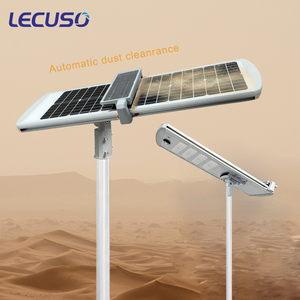
| Maintenance & Wipers | Automated Dust/Sand Cleaning Robotic Mechanism Available | Manual Cleaning Required (Degrades Efficiency Fast) |
| Quality Assurance | IP66 Waterproof, IK10 Impact, CE, RoHS, CB, Salt Spray Tested | Basic IP65 Self-Declaration (No Independent Test Reports) |
Answers to essential technical and commercial questions raised by international procurement managers.
All-in-One (Integrated) units combine the solar panel, LiFePO4 battery, LED engine, and controller into a single compact fixture. They offer rapid 10-minute installation, minimal wind resistance, and zero exterior wiring, making them ideal for residential streets, courtyards, and perimeter security. Split-Type systems decouple the solar panel, allowing it to be oriented at the optimal tilt angle independently of the light fixture head—necessary for ultra-high-wattage municipal highways (100W–200W) or heavily shaded northern latitudes.
In arid zones like the Middle East or North Africa, sand and airborne particulate accumulation on solar panels can reduce photovoltaic efficiency by 30% to 50% within weeks. Auto-cleaning solar streetlights integrate an automated, brush-less robotic wiper powered by an independent micro-motor. Programmed to sweep across the panel face twice daily (at dawn and dusk), these systems maintain peak solar absorption without requiring costly manual maintenance trucks.
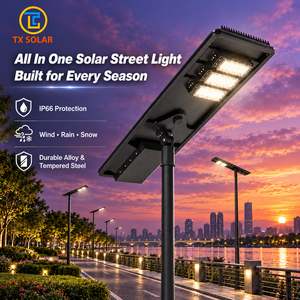
Structural resilience depends on fluid mechanical engineering and metallurgy. Top Chinese suppliers utilize ADC12 high-density die-cast aluminum enclosures secured with 304/316 stainless steel fasteners. The mechanical bracket geometry is FEA-tested to withstand gust velocities up to 65 m/s (145 mph), satisfying Category 5 storm criteria. Furthermore, the IP66 dynamic silicone rubber seals prevent high-pressure water ingress during severe downpours.
Professional buyers should demand standard ISO9001 factory audits, ISO14001 environmental compliance certification, third-party IP66/IK10 ingress and impact test reports from accredited labs (SGS/TÜV), salt spray corrosion test reports (ASTM B117 500-hour rating), and IEC 62722 LED performance documentation. Tier-1 manufacturers will also provide IES photometric files for Dialux lighting design simulation.
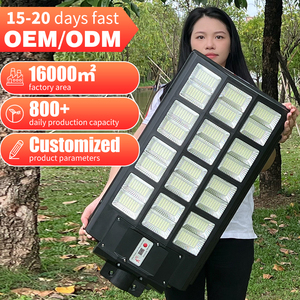
Yes. Premier exporters support full OEM/ODM customization including custom housing RAL powder-coat colors, specific Correlated Color Temperatures (CCT from 2700K warm amber to 6500K cool daylight), custom optics beam spreads (Type II, III, IV, or V), microwave vs. PIR sensing parameters, and custom laser-engraved corporate branding on luminaire housings.
Enterprise-grade outdoor solar security lighting systems come with a comprehensive 3 to 5-year full system replacement warranty. Photovoltaic panels carry a performance warranty of 25 years (retaining >80% power output), LiFePO4 batteries feature a 10-year design life (4,000+ cycles), and LED light sources are rated for 100,000 operational hours (L70 standard).
Access comprehensive engineering data, IES photometric files, factory-direct OEM pricing, and complete specification catalogs for your next tender or project.