China Top Solar Flood Lighting Systems Suppliers & Exporter

Engineering-Grade Photovoltaic Floodlight Systems & Commercial Utility-Scale Off-Grid Luminaires Built for Harsh Environments

Featured Export Catalog

High-Performance Solar Flood & Street Lighting Systems

Tier-1 OEM/ODM Manufactured Architectural & Commercial Solar Luminaires Integrated with MPPT Controls and LiFePO4 Energy Storage.
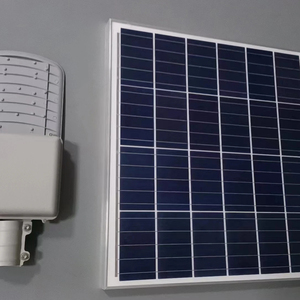
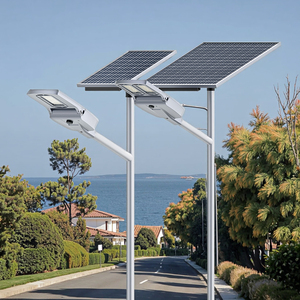
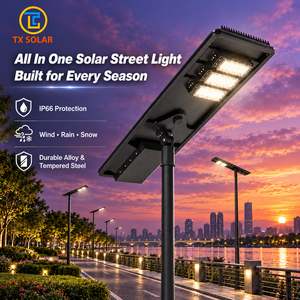
All in Two Outdoor Solar Street Light Two in One

All in Two Outdoor Solar Street Light Two in One System

Industrial Solar Street Light 30W-200W

Industrial Solar Street Light 30W 60W 80W 100W 200W

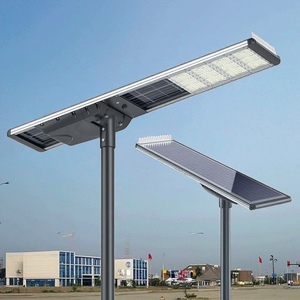
High Power Integrated Solar Street Light

High Power Integrated Solar Street Light for Municipal Projects

IP66 Waterproof Smart Control Solar Lights

IP66 Waterproof Smart Control Split Type Solar Lights 30W-200W

Integrated Solar Courtyard & Rural Lighting

Integrated Solar Outdoor Courtyard High-Power Lighting

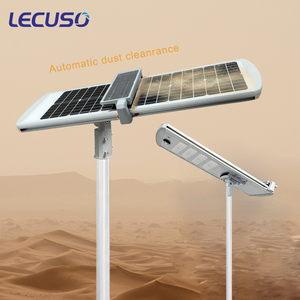
Self Cleaning Solar Street Light

Automatic Self-Cleaning Solar Street Light 30W-150W

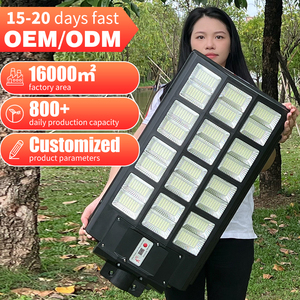
Custom OEM All-in-One Solar LED Light

Custom OEM All-in-One Solar LED Street & Flood Lamp

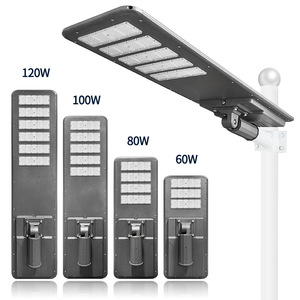
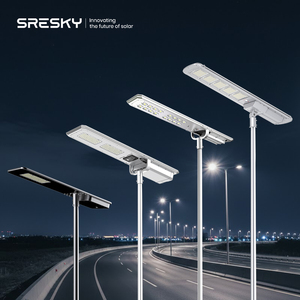
SRESKY Integrated Solar Lampadaire Solaire

SRESKY Commercial Integrated Solar Lamp 80W 100W 120W 150W

150,000+
Global Systems Installed
Cat 5
Hurricane Resistant
220 lm/W
Ultra Luminous Efficacy
10+ Years
Design Service Life
Technical Whitepaper

State of the Art in B2B Solar Flood Lighting Engineering & Global Procurement

As municipal engineers, commercial land developers, and utility project managers transition toward sustainable infrastructure, the demand for high-reliability off-grid illumination has accelerated. China’s manufacturing ecosystem stands at the epicentre of this transformation, producing over 85% of the world’s photovoltaic lighting equipment. However, evaluating and sourcing industrial-grade solar flood lighting systems requires a nuanced technical understanding of optical efficiency, thermal management, battery chemistry, and automated charge control dynamics.

Key Engineering Insight: Modern commercial solar floodlights are no longer just basic LED fixtures attached to small PV panels. They are complex micro-energy management networks engineered to survive extreme thermal fluctuations, Category 5 wind loads, and continuous multi-day rain autonomous cycles.

1. Subsystem Breakdown of Enterprise-Grade Solar Floodlights

A resilient solar flood lighting system comprises four critical engineering modules, each directly impacting the system's total cost of ownership (TCO) and levelized cost of light (LCOL):

  • Photovoltaic Conversion Module: Utilizing N-type TOPCon or Monocrystalline PERC silicon cells achieving conversion efficiencies exceeding 23.5%. Advanced modules incorporate bifacial technology, capturing reflected ambient light from ground surfaces to increase power generation by 15% to 30%.
  • Energy Storage Matrix: Transitioning away from legacy Gel/Lead-Acid and ternary NCM formulations, premier Chinese manufacturers exclusively utilize LiFePO4 (Lithium Iron Phosphate) cells. These provide over 6,000 deep discharge cycles at 80% Depth of Discharge (DOD), operating safely across temperature ranges from -20°C to +70°C without risk of thermal runaway.
  • Intelligent MPPT Power Management: Maximum Power Point Tracking (MPPT) charge controllers utilize real-time algorithm tracking to optimize energy harvesting. Compared to legacy PWM (Pulse Width Modulation) controllers, MPPT boosts charging efficiency by 20%–35%, especially during low-irradiance overcast conditions.
  • Solid-State LED Optical Engine: High-efficacy LED chips (e.g., Lumileds 5050 or Bridgelux) combined with custom optical-grade PC lenses delivering batwing light distribution (Type II, III, IV optics). This minimizes glare while achieving uniformity ratios (Emin/Emax) exceeding 0.4.

Bifacial Solar Technology

Dual-glass bifacial panels harvest sunlight from both front and rear surfaces, dramatically improving power yield in sandy, snow-covered, or urban paved environments.

Smart MPPT Controller

Microchip-driven tracking adjusts charging parameters milliseconds at a time, protecting battery health while extracting maximum voltage from PV arrays.

Storm-Proof Structural Housing

Die-cast ADC12 aluminum enclosures rated to IP66/IP67 waterproof and IK10 impact resistance, tested to withstand 165 mph hurricane-force winds.

2. Technical Specifications Matrix: Standard Commercial vs. Utility Grade

When issuing RFPs or reviewing supplier technical submissions, engineering teams should evaluate products against standardized performance thresholds:

Specification Parameter Standard Commercial Grade Industrial Utility-Grade (Export Target)
Luminous Efficacy 130 – 160 lm/W 190 – 220 lm/W
Battery Chemistry Recycled / Second-life LiFePO4 Tier-1 New Grade-A LiFePO4 (EV Class)
Autonomy Days (Rain Reserve) 2 – 3 Days 5 – 7+ Days Continuous Autonomy
Ingress & Impact Protection IP65 / IK08 IP66 or IP67 / IK10 Rated
Optical Lens Material Standard Acrylic (PMMA) Anti-UV Optical PC / Tempered Glass Lens
Warranty & Lifespan 2 – 3 Years 5 – 10 Years Structural & Functional Guarantee
Industry Trends 2025–2030

Future Procurement & Technological Roadmap for Solar Flood Lighting

The global off-grid solar lighting sector is undergoing rapid evolution driven by IoT connectivity, aggressive ESG sustainability mandates, and next-generation semiconductor advancements. Procurement officers must anticipate these structural shifts to ensure long-term ROI and asset future-proofing.

A. Integration of Smart IoT Telemetry & Central Management Software (CMS)

Modern solar floodlight installations are moving rapidly away from standalone operation toward networked IoT smart lighting grids. Utilizing wireless communications protocols such as LoRaWAN, Zigbee, and Cellular NB-IoT, facilities administrators can monitor system metrics—including battery state-of-charge (SoC), individual LED driver temperatures, and solar charge currents—directly from a centralized web dashboard. Automated fault detection alerts maintenance personnel before fixture failure occurs, cutting operational maintenance costs by up to 60%.

B. Adaptive AI Motion Sensing & Dynamic Dimming Profiles

To extend battery autonomy during prolonged periods of inclement weather, leading Chinese manufacturers are embedding microwave radar motion sensors and artificial intelligence dimming algorithms into floodlight control boards. Unlike legacy PIR (Passive Infrared) sensors which suffer performance degradation in ambient heat above 35°C, microwave radar senses motion through physical obstructions and across 360-degree radii. Integrated microcontrollers automatically adjust power output based on real-time pedestrian or vehicular presence, saving up to 70% of stored energy during low-traffic overnight hours.

C. Environmental Sustainability & Dark-Sky Compliance

Light pollution mitigation has become a primary compliance requirement for municipal lighting RFPs across North America and Europe. Future-ready solar floodlights incorporate zero-uplight optical designs that direct 100% of emitted lumens below the horizontal plane (BUG Rating U=0). Furthermore, wildlife-sensitive coastal regions demand amber spectrum LEDs (590nm wavelength) to prevent disorienting sea turtles and nocturnal avian species, blending ecological preservation with robust perimeter security.

Why Partner With Us

Enterprise Manufacturing Leadership & Turnkey Export Capability

As one of China's premier solar flood lighting system exporters, our organization bridges the gap between high-volume manufacturing cost efficiency and rigorous Western engineering standards. Our state-of-the-art production facilities span over 45,000 square meters, equipped with fully automated SMT mounting lines, integrated integrating spheres, and environmental stress testing chambers.

End-to-End OEM/ODM Customization

From custom optical beam angles and housing powder coat colors to tailored IoT protocol integration, our R&D team fulfills bespoke municipal and commercial project requirements.

Rigorous Quality Assurance Testing

Every system undergoes 100% aging tests, high-pressure water jet ingress testing (IP66/IP67), thermal shock cycling (-40°C to +80°C), and vibration simulation before export dispatch.

Zero-Upfront Turnkey Financing Options

We partner with commercial real estate developers, HOAs, and municipalities to provide structured Equipment-as-a-Service (EaaS) contracts with predictable monthly OPEX budgeting.

Whether illuminating heavy industrial logistical hubs, remote rural roadways, sports arenas, or high-security military perimeters, our engineering team provides full DIALux lighting simulations and photometric layout designs prior to manufacturing contract execution.

Procurement Guide

Frequently Asked Questions (FAQ) for B2B Buyers & Engineers

Q1: What is the primary operational advantage of "All-in-Two" vs. "All-in-One" integrated solar floodlights?
All-in-One (Integrated) systems consolidate the PV panel, battery, controller, and LED module into a single compact housing, offering rapid installation and low wind resistance. However, All-in-Two (Split Type) systems allow the solar panel to be tilted independently toward true south (or north) at optimal tilt angles while aiming the luminaire floodlight precisely where light is needed. This maximizes solar energy collection in high-latitude regions or obstructed industrial locations.
Q2: How do your solar flood lighting systems handle continuous days of rain or heavy snow cover?
Our utility-grade solar floodlights are oversized with high-capacity LiFePO4 battery banks and high-efficiency bifacial solar modules. Integrated smart MPPT firmware automatically senses reduced solar voltage during stormy conditions and engages dynamic power-scaling profiles. This ensures uninterrupted nighttime illumination for 5 to 7+ consecutive overcast days without complete battery depletion.
Q3: Why is Grade-A LiFePO4 chemistry preferred over standard Ternary Lithium (NCM) batteries for outdoor floodlights?
LiFePO4 (Lithium Iron Phosphate) offers superior thermal stability and structural safety, eliminating the risk of fire or explosion under high ambient operating temperatures (up to +70°C). Furthermore, LiFePO4 delivers over 4,000 to 6,000 full charge-discharge cycles compared to 800–1,200 cycles for standard NCM cells, dramatically extending product operational lifespan up to 10–12 years.
Q4: What certifications and test reports are provided for international engineering project compliance?
All exported solar flood lighting systems are fully compliant with global standards, carrying CE, RoHS, ISO9001, ISO14001, CB, IEC62722, IEC62133 (Battery Safety), IP66/IP67 ingress test certificates, and IK10 impact reports. Photometric IES files are provided for every optical lens configuration to support DIALux architectural renderings.
Q5: Can these solar floodlights withstand coastal salt-mist corrosion and hurricane winds?
Yes. Luminaire housings are constructed from high-pressure die-cast ADC12 aluminum treated with an anti-corrosion electro-phoretic coating and outdoor fluorocarbon powder paint (passing 1,000-hour Salt Spray Testing). Structural mounting brackets are engineered with high-tensile steel designed to resist Category 5 hurricane winds up to 165 mph (74 m/s).
Q6: What is the typical production lead time for wholesale OEM orders and custom project orders?
Standard export catalog models are typically dispatched within 10 to 15 business days. For customized OEM/ODM project orders (requiring custom lumen outputs, special optic lenses, or branded packaging), production lead times range between 20 and 30 days depending on order volume.
Q7: How are warranty claims handled for international project deployments?
We back our commercial systems with a comprehensive 5 to 10-year factory warranty. In the rare event of a component failure, our modular design allows quick field replacements of individual driver cards, controllers, or LED modules. Replacement parts are dispatched via expedited international air freight at zero cost to the client.