China Top Solar Powered Area Lighting Factories & Exporters
An Executive Engineering & B2B Procurement Whitepaper on High-Efficacy Photovoltaic Area Lighting, LiFePO4 Storage Architecture, and Supply Chain Verification
Direct-from-Factory Portfolio
Featured Commercial Solar Area & Street Lighting Systems
Engineered for municipal highways, commercial parking structures, rural arterial roads, and eco-sensitive residential developments. Tested for storm resilience and continuous autonomy.
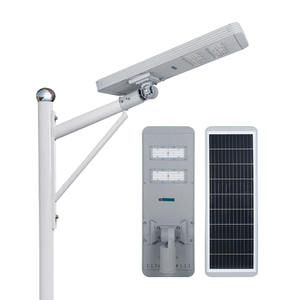
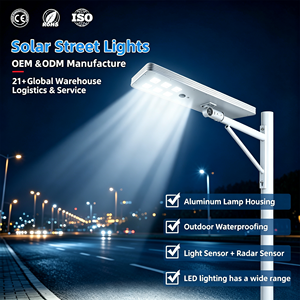
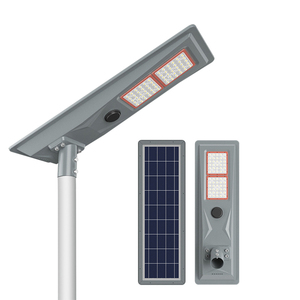
Die Cast Aluminum All in One Solar Street Light IP65 Waterproof LiFePO4 Outdoor LED Road Lamp for Highway Municipal Project
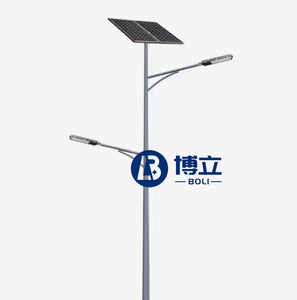
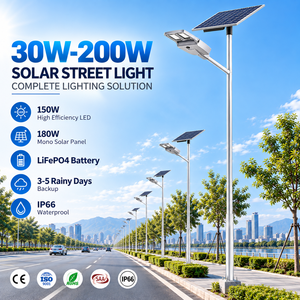
All In Two Lamp Led Solar Powered Street Light IP66 80W 100W 150W Lighting Solar Street Light With Battery Backup
All-In-Two DesignIP66 Heavy Duty80W-150W Power5-7 Days Autonomy
215 lm/W
Max Module Efficacy
6,000+
LiFePO4 Cycle Life
Cat 5
Hurricane Rating (160mph)
100%
Off-Grid Grid Independence
Executive Sourcing Overview
Navigating China's Solar Area Lighting Supply Chain: Quality Metrics & Manufacturing Excellence
The global transition toward off-grid municipal infrastructure has positioned solar-powered area lighting as a cornerstone of sustainable urban design. As public utilities, commercial land developers, and engineering, procurement, and construction (EPC) contractors seek to eliminate costly trenching, cabling, and utility transformer connections, China’s manufacturing ecosystem produces over 85% of the world’s photovoltaic area lighting solutions.
However, searching for premier manufacturing partners requires a rigorous technical evaluation beyond nominal wattage ratings. Modern solar area luminaires operate under harsh environmental stressors—ranging from extreme thermal cycling (-20°C to +65°C) to coastal salt-mist corrosion and Category 5 wind loads. Enterprise buyers must evaluate tier-1 Chinese exporters based on systemic electrical integration: panel conversion efficiency, lithium iron phosphate (LiFePO4) chemistry purity, Maximum Power Point Tracking (MPPT) algorithm responsiveness, and photometric optical distribution.
Tier-1 Commercial Solar Lighting Benchmarking Matrix
Extends operational lifespan from 2 years to 10+ years
Charge Controller Architecture
Pulse Width Modulation (PWM, 65% efficiency)
Ultra-Fast MPPT with Dynamic Tracking (98.5% efficiency)
Maximizes solar charge efficiency during short winter days
Luminaire Enclosure Material
Extruded Plastic / Thin Sheet Metal
ADC12 Heavy Die-Cast Aluminum with AkzoNobel Powder Coating
Prevents structural failure under 160 MPH wind loads (Cat 5)
Optical Photometry
Standard Flat Glass Diffusion
Custom Batwing Type II-M / Type III-M Polycarbonate Lenses
Eliminates dark zones; increases pole spacing by up to 40%
Manufacturing Excellence
Why Direct Sourcing from Top Chinese OEM Exporters Yields Competitive Advantage
Top-tier manufacturing facilities in clusters such as Guangdong and Jiangsu have shifted from simple assembly to complete vertical manufacturing, offering substantial engineering value.
Vertical Supply Chain Integration
Leading Chinese exporters house full-process production under one roof: ADC12 aluminum high-pressure die-casting, automated SMT LED chip placement, robotic surface pretreatment, and custom lithium battery pack spot-welding. This controls quality while lowering BOM costs by 25–35%.
Severe Environmental Rigor
Tier-1 exporters subject luminaire assemblies to rigorous physical testing: IP68 submersion tests, IK10 mechanical impact testing, salt-spray corrosion chambers (ASTM B117 standard), and wind-tunnel testing rated for Category 5 hurricanes (up to 160 mph / 70 m/s).
Photometric Customization & IES Files
Distinction in international tenders requires complete optical engineering support. Top suppliers deliver Dialux simulation software support alongside IES photometric files, allowing contractors to hit strict Lux and uniformity specifications for municipal roads.
Future Sourcing Outlook
Global Procurement & Technological Trends in Solar Area Lighting
As municipal energy grids face increasing stress from extreme weather events and high energy costs, public sector buyers and private developers are altering their procurement models.
1. Transition to Vertical Cylinder & Flexible PV Module Integration
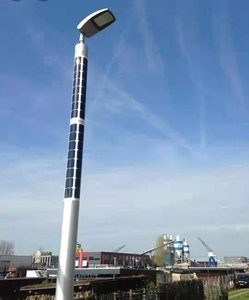
Traditional flat solar panels face vulnerability to high wind loads, snow accumulation, and dust buildup (soiling). The procurement industry is seeing rapid growth in vertical flexible solar lamp posts and wrap-around PV poles. By mounting flexible monocrystalline modules 360 degrees around the light pole shaft, wind resistance drops while power generation operates continuously without dead corners regardless of solar elevation.
Zero snow buildup or dust accumulation accumulation
Low wind drag profile rated for coastal typhoon zones
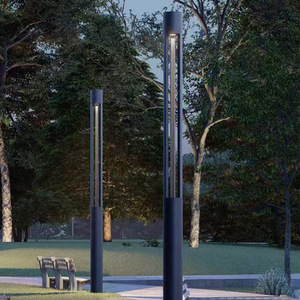
Preserves architectural aesthetics in urban parks and villas
2. Adoption of IoT Smart Mesh Control & Remote Telematics
Standalone solar streetlights are shifting toward connected smart lighting nodes. Modern municipal contracts require luminaires fitted with NEMA / Zhaga sockets integrated with LoRaWAN, Zigbee, or NB-IoT gateways. City managers can monitor battery state-of-charge (SoC), operational status, and automated fault reporting in real time from a centralized cloud platform.
Automated dynamic dimming profiles based on traffic density
Predictive battery maintenance notifications prior to failure
Remote firmware updates (OTA) and scheduling control
Light pollution concerns have accelerated adopting Dark-Sky compliant fixtures (IDA guidelines). Procurement managers now specify full-cutoff optical distributions with zero upward light output (U0 rating). Furthermore, coastal regions near marine habitats require turtle-friendly narrow-spectrum amber lighting (590nm wavelength) to avoid disrupting nocturnal wildlife while preserving night sky clarity.
Zero skyglow (0% ULR) protecting observatory zones
Filtered amber CCT (2200K - 2700K) reducing blue light hazards
Integrated microwave radar motion sensors to minimize run-time
4. Growth of "Lighting-as-a-Service" (LaaS) & Zero-Upfront Capital Models
To bypass high initial capital expenditure (CapEx), land developers, utilities, and HOAs are utilizing service-agreement structures pioneered by innovative lighting providers. Suppliers provide, install, monitor, and guarantee performance of solar streetlights under a operational fee model—making off-grid solar transitions immediately cash-flow positive.
$0 upfront capital expenditures for public infrastructure
Turnkey SLA coverage including routine maintenance and battery swaps
Shields municipal budgets from utility rate spikes
R&D Innovations
Engineering Breakthroughs Reshaping Solar Area Lighting
Key innovations engineered by top R&D teams are raising benchmark performance across all-in-one and split solar luminaires.
Bifacial Monocrystalline PV Cells
By harvesting direct sunlight on the top surface while capturing albedo ground reflection on the rear side, bifacial panels boost total power generation by up to 25–30% in snow, concrete, and sandy environments.
Adaptive MPPT 2.0 Charge Controllers
Next-generation charge controllers feature dynamic tracking algorithms capable of adjusting charging currents within milliseconds. Even under heavy partial shade, MPPT conversion efficiency remains above 99.2%.
Smart Doppler Radar Sensing
Replacing legacy Infrared (PIR) detectors, Doppler microwave radar sensors detect movement through foliage and glass up to 15 meters away, providing smooth dimming transitions without false triggers.
Procurement Knowledge Base
Frequently Asked Questions (FAQ) for Solar Area Lighting Buyers
Addressing critical technical, operational, and supply-chain questions when importing solar luminaires from Chinese factories.
How do I verify the true production capacity and quality standards of a Chinese solar lighting manufacturer?
Request verified third-party factory audit reports (ISO9001, ISO14001, BSCI) alongside product certifications (CE, RoHS, IP66, IK10, TUV SUD, or Intertek ETL). Additionally, insist on reviewing actual raw material bill-of-materials (BOM) specifying cell brands (e.g., LONGi, JA Solar) and battery cell origins (Grade-A BYD or EVE LiFePO4 cells). Requesting an IES LM-79 and LM-80 test report ensures LED lumen degradation data is verified.
What is the functional difference between "All-in-One" and "All-in-Two / Split" solar lighting systems?
All-in-One (Integrated) systems consolidate the PV panel, LiFePO4 battery, LED array, and MPPT controller inside a single die-cast aluminum fixture. They are compact, fast to install, and ideal for medium mounting heights (3m–8m). All-in-Two / Split systems separate the solar panel (and sometimes the battery enclosure) from the LED luminaire head. Split systems allow for significantly larger solar panel surface areas and battery capacities—making them suitable for high-wattage highway lighting (10m–14m poles) or heavy snow zones requiring high tilt angles.
How do high-quality Chinese manufacturers guarantee 5 to 7 days of continuous lighting autonomy during rainy seasons?
Autonomy reserve relies on oversized LiFePO4 battery capacity matched with intelligent dynamic dimming. During extended cloudy or rainy days (low lux charging), the MPPT smart controller automatically senses reduced battery state-of-charge (SoC) and throttles LED power output (e.g., running at 100% when motion is detected, dropping to 20-30% ambient standby mode). This guarantees basic illumination throughout 5–7 continuous rainy days without complete shutdown.
Why is Lithium Iron Phosphate (LiFePO4) mandatory compared to traditional Lead-Acid or Ternary NCM batteries?
LiFePO4 chemistry provides significant advantages in thermal safety, non-toxicity, and lifecycle durability. LiFePO4 delivers 3,500 to 6,000 deep discharge cycles (at 80% Depth of Discharge), translating to 10+ years of operational life. In contrast, ternary NCM batteries pose thermal runaway risks at elevated ambient temperatures (+50°C), while traditional Gel/Lead-Acid batteries fail within 400-600 cycles (1.5 years) and degrade rapidly under heat.
What optical distribution patterns are required for municipal highway projects versus residential parking lots?
Municipal roadways typically mandate Type II-M or Type III-M batwing optical lenses. These stretch light output longitudinally along the roadway while controlling glare, allowing wider pole spacing (up to 30–40 meters). Parking lots and open commercial plazas require Type V symmetrical distribution or Forward Throw (Type IV) optics to cover square footprint areas evenly without leaving dark corners.
How do marine and coastal deployments affect hardware anti-corrosion specifications?
Coastal environments demand IP66 ingress protection and heavy-duty surface treatment. Specifiers must mandate marine-grade ADC12 aluminum housing subjected to chromate conversion washing, followed by architectural-grade electrostatic polyester powder coating (AkzoNobel or PPG). Hardware fasteners must be upgraded to 316-grade stainless steel to prevent galvanic corrosion from high salinity atmospheric conditions.
What are the crucial logistics and customs considerations when importing solar lights with lithium batteries?
Because solar streetlights contain high-capacity lithium batteries, ocean freight requires strict adherence to Dangerous Goods (DG) Class 9 regulations. Top Chinese exporters provide comprehensive documentation: UN38.3 test reports, MSDS (Material Safety Data Sheets), and Air/Sea Safe Transport Certificates. Requesting UN-rated cardboard packaging with foam protection prevents damage and avoids customs hold-ups at destination ports.
Can Chinese factories supply custom Dialux optical layouts for engineering project tenders?
Yes, premier Chinese solar lighting manufacturers employ dedicated optical and photometric engineering teams. By providing road width, pole height, arm angle, and required Lux levels (e.g., EN13201 or IESNA RP-8 standards), the factory can generate a full Dialux report detailing isolux curves, average Lux, uniformity ratios (U0/UI), and corresponding IES files within 24–48 hours.
Partner with China's Premier Solar Area Lighting Manufacturers
Whether you are preparing a municipal tender bid, developing a commercial business park, or replacing legacy grid streetlights with zero upfront capital expenditure, our engineering team provides turnkey support, IES photometric modeling, and direct-from-factory pricing.