
Engineered for commercial developers, municipal engineering projects, utilities, and highway contractors requiring storm-resilient off-grid illumination.
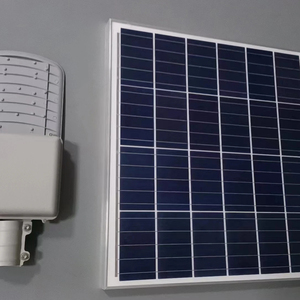
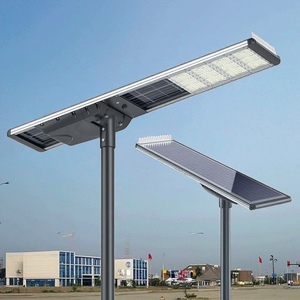
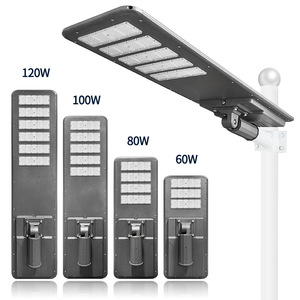
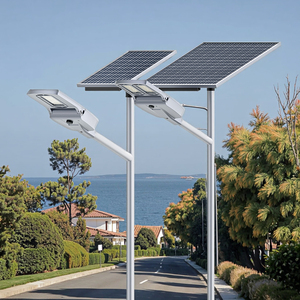
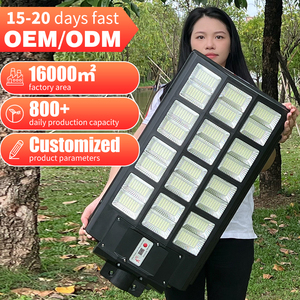
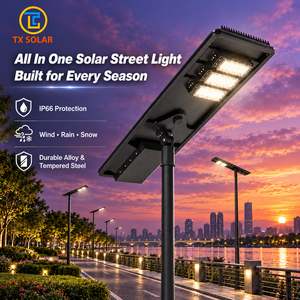
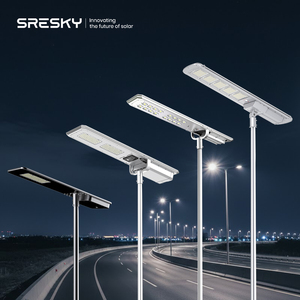
The global infrastructure sector is undergoing an accelerated paradigm shift toward autonomous, resilient off-grid municipal lighting. As international land developers, state municipalities, utility co-ops, and EPC contractors transition away from carbon-heavy grid-tied legacy systems, China wholesale All-in-One solar streetlight suppliers and exporters have become the primary anchor for reliable photovoltaic infrastructure. Modern All-in-One (AIO) solar streetlights seamlessly unify mono-crystalline solar panels, high-density Lithium Iron Phosphate (LiFePO4) energy storage cells, Intelligent Maximum Power Point Tracking (MPPT) charge controllers, high-lumen Philips/Bridgelux LED chips, and optical-grade micro-lens arrays into a single, aerodynamically balanced die-cast aluminum housing.
This technical whitepaper provides B2B procurement officers, lighting engineers, and project developers with an objective framework for evaluating Chinese solar street light manufacturers. By analyzing photovoltaic cell efficiency, battery thermal runaway parameters, optical light distribution patterns, wind-load structural dynamics, and total cost of ownership (TCO), this guide equips decision-makers with the information required to procure tier-1 solar streetlights that deliver zero-maintenance operational longevity across extreme climatic zones.
Key Procurement Insight: Sourcing success depends not merely on initial luminaire pricing, but on component integration math—specifically matching MPPT dynamic efficiency (>98.5%) with LiFePO4 battery discharge depth (80% DOD @ 3000+ cycles) and Cat-5 hurricane wind rating (aerodynamic drag coefficient < 0.15).
Selecting the appropriate physical architecture is critical for long-term project performance. Chinese manufacturers export three main engineering variations:
| Lighting Architecture | Core Structural Design | Optimal Project Application | Wind Load Resistance | Maintenance Complexity |
|---|---|---|---|---|
| All-in-One (Integrated) | Solar panel, LiFePO4 battery, MPPT, and LED luminaire enclosed in a single die-cast body. | Municipal roads, residential HOAs, parking lots, perimeter security, pathways. | Cat 5 Hurricane Rated (Sleek low-drag coefficient profile). | Ultra-low (Modular drop-in replacement, plug-and-play). |
| All-in-Two (Semi-Integrated) | Solar panel is independently mounted on top; battery, controller, and LED fixture are integrated into lamp arm. | High-latitude regions requiring tilted solar panel orientation to maximize winter sunlight angle. | High (Up to Category 4 storm resistance). | Low (Separate solar panel wiring harness inspection required). |
| Split Type System | Solar panel, lead-acid or ground-buried battery, and LED lamp connected via underground cabling. | Heavy industrial expressways requiring 300W+ continuous ultra-high wattage output. | Moderate (Large surface panel exposed to sail drag forces). | High (Requires trenching, underground battery pit inspection). |
Combining rigorous material science, automated factory quality control, and flexible financing models to solve global lighting challenges.
Engineered with high-tensile ADC12 die-cast aluminum alloys and aerodynamic structural ribbing. Certified to endure wind speeds up to 65 m/s (145 mph) without structural failure or mounting bracket flexure.
Powered by automotive-grade LiFePO4 batteries paired with adaptive AI-dimming algorithms. Our systems maintain uninterrupted illumination even during 5 consecutive overcast or rainy winter days.
100% off-grid capability eliminates expensive cable trenching, transformer upgrades, utility metering permits, and monthly electricity bills. Accelerated installation saves up to 70% in capital expenditure.
State-of-the-art dual-sided mono-PERC/TOPCon solar panels capture direct solar radiation while absorbing ground-reflected ambient light (albedo effect), increasing energy yield by up to 25%.
Integrated microwave radar sensors dynamically adjust light intensity upon motion detection. Optional 4G/Cat-1/Zigbee IoT gateways permit centralized wireless remote monitoring and cloud diagnostics.
Full cutoff optical housings prevent light trespass and upward skyglow. Specialty 2200K turtle-friendly amber LEDs safeguard coastal wildlife habitats without compromising safety lux levels.
As the international solar lighting industry matures, B2B buyers must align their supply chain criteria with emerging technical breakthroughs. B2B procurement is no longer driven by basic wattage comparisons; modern RFP (Request for Proposal) criteria focus heavily on systemic efficiency, component longevity, intelligent power management, and operational automation.
Legacy solar streetlights utilized P-type PERC cells with module conversion efficiencies capped around 19%-20.5%. Leading Chinese exporters are now transitioning to N-type TOPCon (Tunnel Oxide Passivated Contact) cells, achieving module efficiencies exceeding 22.5%-24%. Higher efficiency enables smaller solar panel footprints on All-in-One fixture bodies, lowering wind-sail resistance while accelerating battery charge times during short winter daylight windows.
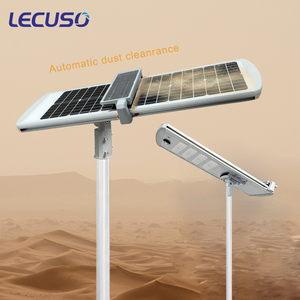
Dust accumulation, sandstorms, and bird droppings (soiling effect) can degrade photovoltaic energy yields by 30% to 50% within weeks in arid regions such as the Middle East, North Africa, and Australia. The fastest-growing product category among B2B exporters is the Automatic Self-Cleaning Solar Street Light. Utilizing high-torque brushless motors and anti-static weather-resistant wipers, these systems perform automated daily cleaning cycles, guaranteeing peak solar absorption without manual labor expense.
Municipalities are increasingly requesting that solar lighting poles serve as multi-functional smart city hubs. Modern All-in-One streetlights are designed with standardized Zhaga Book 18 or NEMA 7-pin sockets, permitting plug-and-play installation of IoT controllers, air quality sensors, traffic monitoring cameras, and emergency call buttons powered directly by the light's internal LiFePO4 battery pack.
Capital constraints frequently delay municipal grid modernizations. To overcome cash-flow hurdles, innovative manufacturers and exporters are offering structured equipment lease models, energy performance service contracts (EPSCs), and $0 upfront cost service agreement programs. Under these models, municipalities and HOAs fund infrastructure upgrades via predictable monthly maintenance fees offset by immediate electricity savings.
Answers to technical, regulatory, and supply chain queries when importing solar streetlights from China.
For global compliance, tier-1 suppliers must provide ISO 9001 quality management verification along with CE, RoHS, IP66, IK10, and IEC 62722 test reports. For US shipments, UL compliance (UL 1598 / UL 8750) and FCC certifications are essential. Lithium battery packs must possess UN38.3 transport safety validation and MSDS reports for ocean/air freight clearance.
Lithium Iron Phosphate (LiFePO4) is the gold standard for industrial outdoor solar storage. It delivers 3,000 to 5,000 deep discharge cycles (vs 500-800 cycles for lead-acid), operates safely across extreme thermal range (-20°C to +70°C), eliminates thermal runaway/fire risks inherent to NCM chemistry, and contains no cobalt or toxic heavy metals.
Standard factory Minimum Order Quantities (MOQ) start at 10 to 50 units for standard models, while custom OEM projects (custom CCT, branding, C3/C4 anti-corrosion paint coatings, or optical lens distribution) typically require a 100-unit threshold. Standard manufacturing lead time ranges between 15 to 25 business days following sample approval.
Tier-1 engineering utilizes dual-chamber thermal isolation architecture. The LED aluminum core PCB and MPPT controller are housed in a dedicated heatsink chamber separated by an air gap insulation barrier from the solar panel backing. High thermal conductivity dielectric materials prevent solar heat transfer, maintaining junction temperatures below 65°C to preserve LED L70 longevity (>100,000 hours).
Modern streetlights utilize specialized PMMA optical batwing lenses. Roadways and narrow streets require Type II-M or Type III-M light distributions to project wide rectangular light patterns along the asphalt without wasting spill light. Open parking lots and commercial plazas utilize Type V symmetrical distributions for uniform square/circular coverage area.
Self-cleaning streetlights integrate an automated mechanical sweeping arm equipped with durable silicone rubber wipers and anti-static bristle brushes. Controlled by the internal MPPT micro-controller, the cleaning wiper automatically sweeps back and forth across the tempered glass surface twice daily (usually at dawn and dusk), preventing dust encrustation without consuming excess battery power.
Request comprehensive product spec sheets, Photometric IES test files, Dialux lighting calculations, and direct factory B2B wholesale pricing for your upcoming project.
Get Catalog