
High-efficiency LiFePO4 energy storage cabinets, pre-wired hybrid power systems, and heavy-duty photovoltaic carport structures manufactured under ISO9001 quality controls.
Combining OEM flexibility, rigorous tier-1 supply chain verification, and factory pre-wired integration to de-risk commercial outdoor solar projects worldwide.
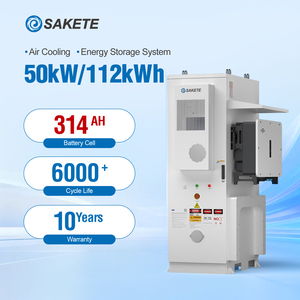
We exclusively utilize Tier-1 Lithium Iron Phosphate (LiFePO4) prismatic cells from CATL, EVE, and REPT. Every batch undergoes strict capacity matching and internal resistance screening, guaranteeing over 6,000 deep charge-discharge cycles.
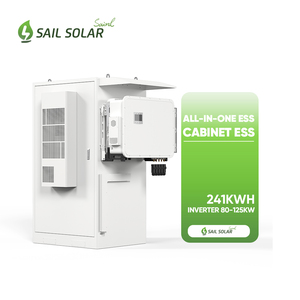
All commercial outdoor ESS cabinets arrive 100% factory-assembled, tested, and pre-wired with Power Conversion Systems (PCS), BMS, HVAC, and fire protection. This reduces field commissioning timelines by up to 70%.
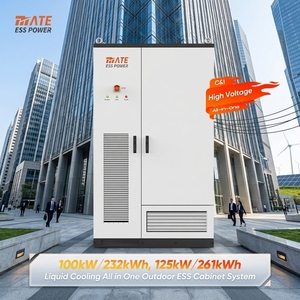
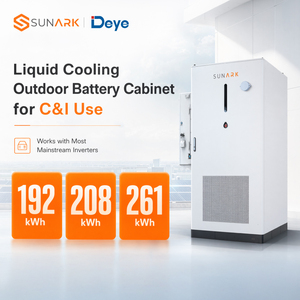
Our advanced liquid cooling BESS cabinets maintain cell temperature differentials under 2°C across 261kWh module arrays. This eliminates localized hot spots, prevents thermal degradation, and extends system lifespan by 20% compared to traditional air cooling.
Our commercial energy storage systems and solar carports fully comply with international grid interconnection and safety mandates, holding official IEC 62619, UL 1973, UL 9540, UL 9540A, UN38.3, and CE safety test reports.
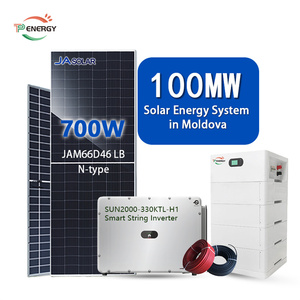
Engineered for seamless compatibility with world-class hybrid inverter architectures including Deye, Growatt, Megarevo, and Kehua PCS units, supporting dual On-Grid / Off-Grid seamless micro-second transfer.
Outfitted with aerosol fire suppression devices at both the PACK level and cabinet level, coupled with combustible gas detection, smoke sensors, and emergency automated power cutoff to guarantee asset protection.
As global energy markets shift toward decentralized power generation, commercial and industrial (C&I) enterprises face increasing pressure to stabilize energy expenditure, secure uninterruptible power supplies, and reduce Scope 1 and Scope 2 carbon emissions. Procuring wholesale outdoor solar power systems and commercial battery energy storage systems (BESS) directly from top-tier Chinese original equipment manufacturers (OEMs) offers immense capex efficiencies. However, ensuring long-term levelized cost of storage (LCOS) and grid compliance demands rigorous technical evaluation.
Key Procurement Takeaway: Selecting an outdoor commercial solar system requires evaluating liquid vs. air thermal dissipation, PACK-level fire suppression compliance (NFPA 855/UL 9540A), total round-trip efficiency (RTE > 88%), and pre-wired balance-of-system (BOS) integration.
Commercial energy storage systems operates under demanding duty cycles, often undergoing 1 to 2 complete discharge cycles daily for peak shaving and Time-of-Use (TOU) tariff arbitrage. Thermal management is the single most critical factor dictating cell degradation and safety.
| Performance Dimension | Smart Forced Air Cooling Systems | Precision Liquid Cooling Systems |
|---|---|---|
| Cell Temperature Delta (ΔT) | ≤ 5°C across battery module | ≤ 2°C uniform thermal distribution |
| System Footprint Efficiency | Standard footprint (Air ducts required) | 35% smaller physical footprint |
| Auxiliary Energy Consumption | Higher due to continuous high-CFM fans | 30-40% lower auxiliary power consumption |
| Battery Cycle Life Expectancy | 5,000 - 6,000 cycles (to 80% EOL) | 7,000 - 8,000+ cycles (to 80% EOL) |
| Ideal Application | 50kW - 100kW low-C-rate storage setups | 100kW - 500kW+ heavy commercial & arbitrage |
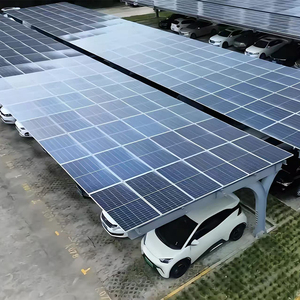
For commercial facilities with limited roof load capacities, outdoor parking lot canopy arrays represent the premier dual-purpose photovoltaic installation strategy. Factory-manufactured anodized carbon steel (Q235B) and structural aluminum alloy (AL6005-T5) carport mounting structures convert underutilized asphalt into revenue-generating solar microgrids while offering vehicle protection.
Engineered carport structures supplied by China wholesale leaders incorporate integrated structural gutters, structural waterproof channels, wind-deflecting aerodynamic trim, and hot-dip galvanized coating (zinc thickness > 80μm) rated to withstand C5-marine corrosive environments and wind loads exceeding 60 m/s (Category 5 hurricane forces).
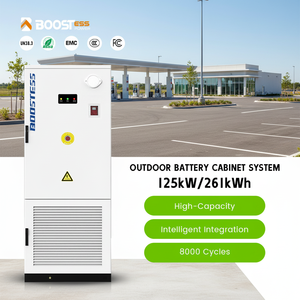
Commercial electric utility bills typically comprise two primary line items: energy consumption charges ($/kWh) and peak demand charges ($/kW). By pairing a 125kW/261kWh liquid-cooled outdoor BESS with a commercial solar array, business facility managers can automatically dispatch stored solar power when facility power draw spikes, flattening peak load profiles and capturing dramatic demand charge savings.
From off-grid agricultural microgrids to municipal solar canopy arrays and utility backup infrastructure.

Decentralized off-grid and hybrid outdoor power systems delivering 24/7 power resilience to residential developments and remote communities without grid upgrades.

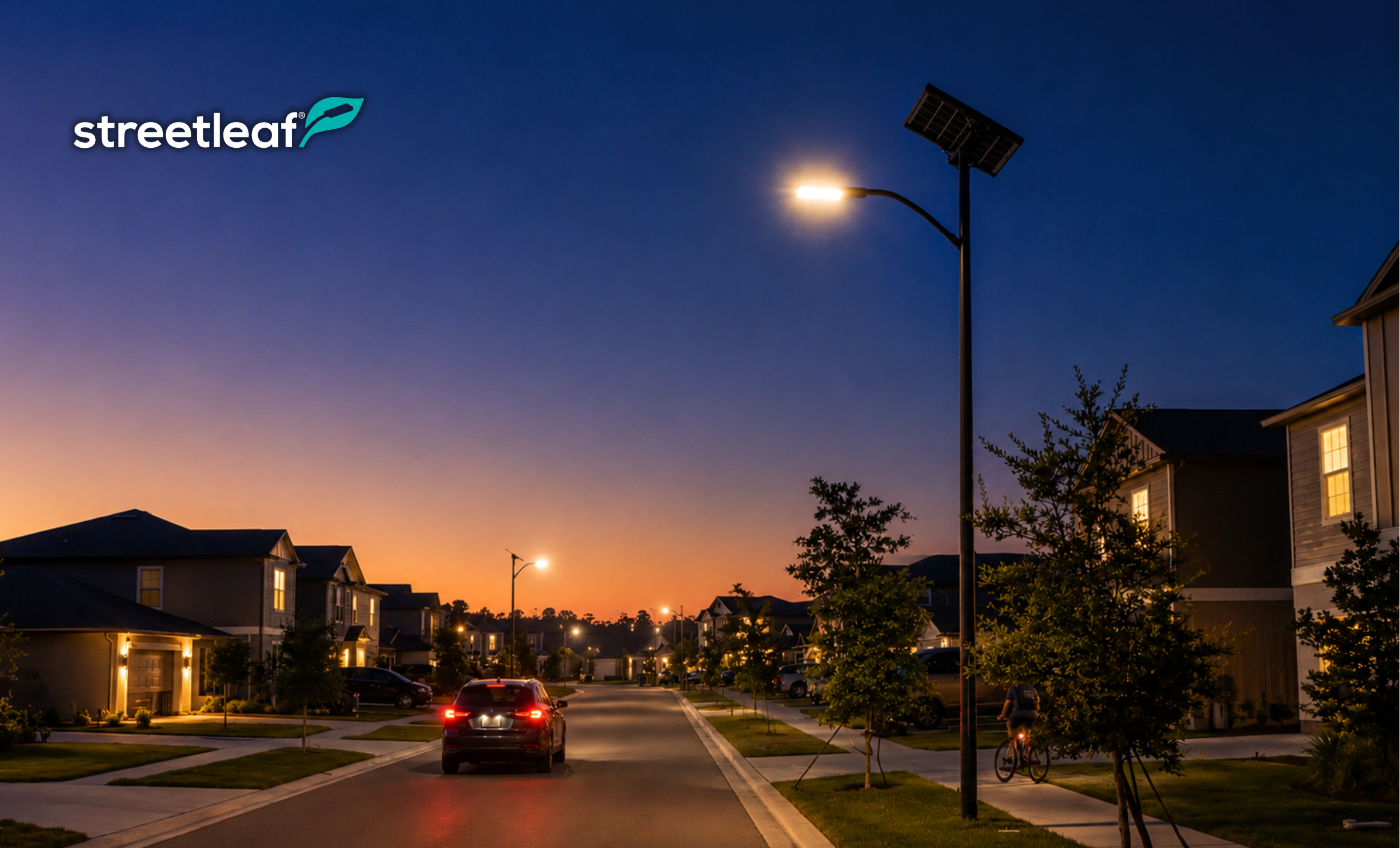
Dark-Sky compliant, low-impact commercial solar power hubs engineered for environmental compliance across industrial zones and sensitive habitats.
Containerized 100kW - 1MW battery storage systems providing fast-frequency response, voltage regulation, and emergency black-start capabilities for power utilities.
Anticipating market shifts to streamline long-term utility investments and procurement strategies.
The commercial solar market is rapidly transitioning from traditional 1000V DC system topologies to 1500V DC architectures. Higher DC operating voltages reduce cable copper cross-sections, lower balance-of-system (BOS) wiring losses by up to 2.5%, and allow higher power density inside outdoor BESS cabinets.
Next-generation C&I solar systems feature cloud-connected AI EMS algorithms. These systems continuously analyze local weather forecasts, real-time spot electricity market pricing, and historical facility load profiles to autonomously execute profit-maximizing power dispatch decisions.
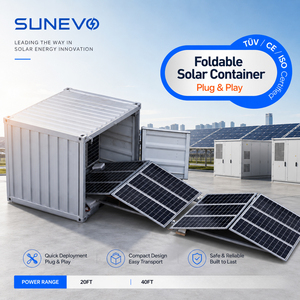
For temporary commercial applications, mining camps, and agricultural sites, foldable mobile solar containers equipped with pre-wired lithium battery cabinets represent the fastest-growing sector, enabling full power grid turn-up within 4 hours of arrival.
Combining high-albedo ground surfaces with glass-glass bifacial solar modules yields a 15% to 25% rear-side energy gain. When integrated with smart hybrid inverters (e.g., Deye 80kW-125kW series), commercial properties unlock true 100% off-grid autonomy.
Detailed technical answers addressing common inquiries from EPC contractors, distributors, and global procurement officers.
Pre-wired outdoor hybrid cabinets (such as our 50kW/112kWh and 125kW/261kWh systems) integrate the Power Conversion System (PCS), MPPT solar charge controllers, battery management systems (BMS), HVAC thermal regulation, and fire suppression into a single factory-certified enclosure. This eliminates component incompatibility risks, drastically reduces expensive field engineering labor costs, and speeds up local utility interconnection permission procedures.
Liquid cooling utilizes closed-loop ethylene glycol thermal fluid circulated directly through cold plates sandwiched between LiFePO4 cells. In extreme ambient environments like the Middle East or South America (over 45°C), liquid cooling lowers cell temperature by 8°C to 12°C more effectively than forced air cooling, keeping internal temperatures within the optimal 25°C ± 2°C window and preventing thermal throttling or premature cell aging.
Yes. Our integrated hybrid inverter solutions (featuring Deye, Growatt, and Megarevo topologies) support off-grid islanding mode with an automatic transfer switch (ATS) reaction time of under 10 milliseconds. Critical commercial equipment, data centers, and agricultural refrigeration systems experience zero power interruption during unexpected grid failures.
We offer comprehensive OEM/ODM structural customization, including single-slope, double-slope, and N-type/Y-type parking canopy spans. Structural materials can be specified in anodized structural aluminum AL6005-T5 or hot-dip galvanized carbon steel Q235B. We also provide integrated LED lighting channels, EV fast-charger mounting brackets, and customized powder-coating colors matching enterprise brand identities.
Our energy storage systems adhere strictly to international safety protocols. Key compliance standards include UL 1973 (Battery Pack Safety), UL 9540 (Energy Storage System Safety), UL 9540A (Thermal Runaway Fire Testing), IEC 62619 (Industrial Lithium Safety), UN38.3 (Transport Safety), and CE certification. PACK-level perfluoro-hexanone or aerosol fire suppression systems come standard.
Our Tier-1 LiFePO4 battery modules carry a standard 10-year functional warranty or a 6,000-cycle performance guarantee (at 80% Depth of Discharge, 0.5C rate at 25°C). Under normal operational parameters, the hardware retains over 70% state-of-health (SOH) after 12 to 15 years of continuous commercial operation.
Outdoor BESS cabinets are manufactured with heavy-duty IP65 lifting lugs and built inside reinforced steel enclosures adhering to ISO shipping dimensions. Smaller 100kW/232kWh cabinets fit inside standard 20ft and 40ft High Cube ocean containers with shock-absorbing wooden crates, moisture barrier vacuum packing, and tilt/impact monitoring sensors attached.
Our SOP involves 5 structured phases: (1) Technical Requirements & SLD (Single Line Diagram) Review, (2) Customized Engineering Proposal & Dynamic Simulation, (3) Sample/Prototype Sign-Off & Factory Acceptance Testing (FAT), (4) Automated Mass Production with Batch QA Reports, and (5) Global Logistics, Customs Clearing Support, and Remote/On-site Commissioning Supervision.