
High-lumen, storm-resilient off-grid solar security floodlights and integrated surveillance lamps manufactured to international municipal and industrial specifications.
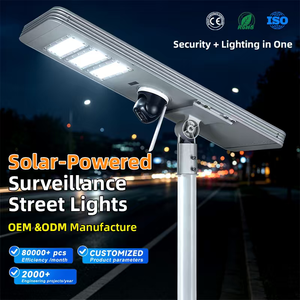
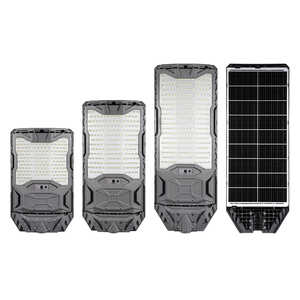
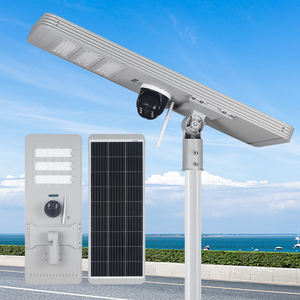
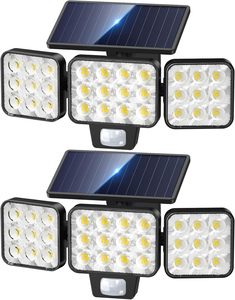
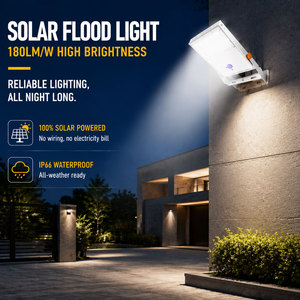
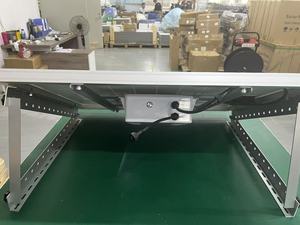
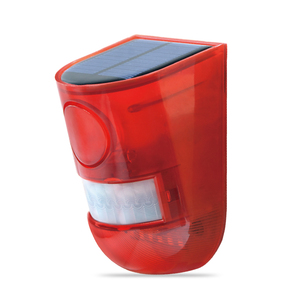
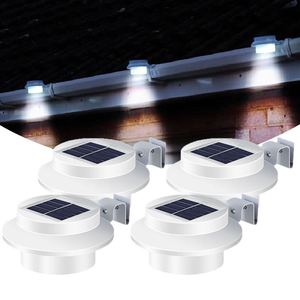
A rigorous technical analysis of off-grid solar illumination, energy balance algorithms, and hardware integration for high-security boundary protection.
Modern security lighting relies on high-efficiency monocrystalline and bifacial N-type TOPCon solar panels. Achieving module efficiencies up to 23.5%, these panels capture direct sun rays as well as rear-side ground albedo reflection along perimeter fences, boosting energy harvest by 15% to 25% even during low-angle sunlight hours.
Lithium Iron Phosphate (LiFePO4) chemistry represents the gold standard for outdoor energy storage. Operating safely between -20°C and +65°C, LiFePO4 battery packs deliver over 3,500 continuous deep-discharge cycles (80% DoD). Advanced Battery Management Systems (BMS) protect cells against thermal runaway, overcharging, and short-circuit faults.
Maximum Power Point Tracking (MPPT) microcontrollers continuously adjust electrical operating points to capture peak power output under dynamic cloud coverage. Coupled with adaptive load-shedding firmware, systems automatically scale illumination levels to guarantee continuous critical lighting through 5+ consecutive rainy or overcast days.
Comparative parameter matrix highlighting hardware differences between baseline outdoor solar lamps and industrial perimeter defense luminaires.
| Performance Parameter | Standard Commercial Grade | Industrial Perimeter Defense Grade | Municipal & Military Project Grade |
|---|---|---|---|
| Solar Cell Efficiency | 18.5% - 20.0% (PERC Mono) | 21.5% - 23.5% (N-Type Monocrystalline) | 24.5%+ (Bifacial TOPCon / HJT) |
| Battery Chemistry | Ternary NCM / Standard LiFePO4 | Grade-A Prismatic LiFePO4 | Extreme-Temp LiFePO4 (-40°C to 70°C) |
| Charge Controller Type | PWM (Pulse Width Modulation) | Digital MPPT (98.5% Efficiency) | Dual-Channel IoT MPPT with AI Logic |
| Luminous Efficacy | 130 - 150 lm/W | 170 - 190 lm/W | 210+ lm/W (Bridgelux/Lumileds 5050) |
| Ingress & Impact Protection | IP65 / IK08 | IP66 / IK09 | IP67 & IP69K / IK10 Heavy Cast ADC12 |
| Surveillance Integration | Basic PIR Sensor | PIR + Microwave Doppler Radar | 4G LTE HD Camera + AI Humanoid Detection |
| Wind Resistance Rating | 110 mph (Cat 2 Storm) | 135 mph (Cat 3-4 Storm) | 160+ mph (Cat 5 Hurricane Rated) |
Extensive supply chain integration, rigorous OEM/ODM engineering capabilities, and international quality management frameworks position Chinese factories at the forefront of the global solar market.
Tier-1 Chinese factories manage the complete manufacturing lifecycle internally—from precision die-casting of ADC12 aluminum housings and Surface Mount Technology (SMT) LED board assembly to custom SMT lens molding and automated battery pack spot welding. Vertical control reduces lead times, cuts production overhead by 30-40%, and enforces strict dimensional tolerances across high-volume production batches.
Leading wholesale manufacturing facilities maintain in-house ISO 17025 accredited laboratories equipped with integrating spheres, IES goniophotometers, salt spray corrosion test chambers (ASTM B117), programmable thermal shock chambers (-40°C to +85°C), and high-frequency vibration test rigs. Every fixture undergoes 100% burn-in testing and IP68 waterproof immersion verification before dispatch.
Global procurement contracts demand tailored photometric distributions. Manufacturers offer specialized Type II, Type III, and 120° x 60° asymmetric batwing optical lenses designed specifically for long perimeter fence stretches, border boundaries, and industrial park perimeters. Customized firmware for motion detection sensing, dark-sky compliant amber light output, and OEM brand laser-engraving are available at competitive minimum order quantities (MOQs).
Export-focused Chinese factories maintain comprehensive international certification portfolios, including CE, RoHS, DLC Premium, FCC, ISO9001, ISO14001, and IK10 test reports. Furthermore, lithium battery transportation compliance is secured through certified UN38.3, MSDS, and air/sea freight safety documentation, guaranteeing frictionless customs clearance across North American, European, Middle Eastern, and Asian ports.
Key technological shifts shaping the next decade of commercial, industrial, and municipal off-grid boundary defense systems.
The boundary between traditional security lighting and video surveillance is dissolving. Next-generation solar perimeter lights feature built-in 4G LTE/WiFi AI cameras capable of real-time facial recognition, license plate reading, and vehicle detection directly at the edge. High-efficiency video encoding (H.265) reduces bandwidth consumption while solar power eliminates expensive wire-trenching over vast perimeter distances.
Centralized wireless monitoring via LoRaWAN, Zigbee, and Cellular IoT protocols is rapidly replacing standalone lights. Facility directors and municipal operators can monitor battery State of Charge (SOC), adjust dimming schedules remotely, receive real-time fault alerts for failing components, and coordinate synchronized strobe flashing along security lines during perimeter breaches.
Regulatory pressures surrounding light pollution and wildlife conservation are driving adoption of Dark-Sky compliant optical shields and narrow-spectrum amber LEDs (590nm). These eco-friendly configurations prevent skyglow, eliminate light trespass onto neighboring properties, and protect coastal sea turtle nesting areas without compromising perimeter security integrity.
Evaluating Capital Expenditure (CAPEX) versus Operational Expenditure (OPEX) when replacing traditional grid-tied utility lighting with 100% off-grid solar security solutions.
Installing conventional wired perimeter lights around large industrial sites, military bases, or remote agricultural boundaries requires underground conduit trenching, copper wiring, transformer step-downs, and municipal utility connections. Trenching costs typically range from $45 to $120 per linear foot. Off-grid solar perimeter security lights completely eliminate electrical trenching and utility infrastructure dependencies, lowering initial project CAPEX by up to 60-70%.
Solar powered luminaires operate independently of power grids, protecting facility owners against rising utility electricity tariffs and power outage vulnerabilities. With zero ongoing utility consumption charges and minimal routine maintenance (periodic panel cleaning), commercial solar perimeter lighting projects typically achieve full financial return on investment (ROI) within 14 to 22 months of deployment.
Direct technical and commercial answers for international procurement managers, electrical wholesalers, and engineering contractors.
Grade-A Prismatic Lithium Iron Phosphate (LiFePO4) battery packs used in industrial perimeter lights deliver between 3,500 and 5,000 charge/discharge cycles at 80% Depth of Discharge (DoD). Under normal daily dusk-to-dawn operating cycles, this equates to a operational battery lifespan of 8 to 12 years before capacity degrades to 80% of original nominal rating. Built-in Smart BMS protection prevents overcharge, deep discharge, and thermal stress.
System autonomy is governed by battery capacity sizing and intelligent MPPT dynamic load management. Industrial solar perimeter lights are engineered with an Autonomy Ratio of 5 to 7 days. When ambient sunlight levels drop during prolonged cloudy conditions, the dynamic firmware automatically adjusts LED dimming curves (e.g., maintaining 20% ambient standby power and boosting to 100% full lumen output only when PIR/radar motion sensors detect perimeter activity), ensuring uninterrupted security lighting.
Yes. Integrated 4G CCTV solar lights contain built-in industrial 4G LTE cellular modules with universal SIM card slots supporting global frequency bands (FDD-LTE / TDD-LTE). Video footage can be streamed live to mobile apps or central VMS platforms over cellular data networks. Additionally, camera modules include local TF micro-SD card storage (up to 256GB) and cloud backup options to record events even during temporary network interruptions.
Heavy-duty solar perimeter fixtures manufactured with die-cast ADC12 aluminum housings and reinforced structural mounting brackets are aerodynamic and wind-tunnel tested to withstand gust velocities up to 70 m/s (approx. 156 mph). This certified Category 5 hurricane wind resilience makes them ideal for island installations, coastal sea facilities, and open high-wind prairie regions.
Standard product orders from China factories typically carry an MOQ of 20 to 50 units for standard catalog SKUs. Custom OEM projects involving specialized color temperatures, custom optic beam angles, private-label laser etching, or customized packaging usually require an MOQ of 100 to 200 units, depending on the specific mechanical and electrical engineering scope.
Coastal-grade solar lights undergo multi-stage surface treatments, including chromate conversion coating followed by electrostatic thermosetting fluorocarbon or outdoor polyester powder coating. Fasteners and mounting hardware are constructed from 316 architectural stainless steel. Fully assembled luminaires are validated under 1,000-hour continuous salt spray testing per ASTM B117 specifications without blistering or oxidation.
Passive Infrared (PIR) sensors detect heat signature differentials (human or vehicle body heat) and are immune to false triggers caused by blowing leaves or rain, but have effective ranges limited to 8-12 meters. Microwave Radar sensors emit high-frequency electromagnetic waves, detecting movement up to 15-20 meters away and operating effectively through glass or light plastic covers. High-security lights often combine dual PIR + Radar technology to deliver maximum coverage with near-zero false alarms.
Yes, select models offer zero-upward light output optics (U0 rating) and full-cutoff light shield attachments designed to eliminate spill light and skyglow. Furthermore, custom CCT offerings such as 2200K, 2700K warm white, and 590nm narrow-spectrum amber LEDs are available to satisfy Dark-Sky Association guidelines and wildlife preservation ordinances.
Professional factories provide comprehensive B2B warranty coverage ranging from 3 to 5 years for standard commercial solar lights, and up to 7 years for premium municipal-grade models. Warranties cover whole-fixture performance, including solar panel linear power output, LED lumen maintenance (L70 > 50,000 hours), MPPT electronic controllers, and LiFePO4 battery pack capacity retention.
Due to safety regulations governing standalone or embedded lithium batteries, ocean and air freight shipments require UN38.3 test reports, Material Safety Data Sheets (MSDS), and Dangerous Goods (DG) safe transport certificates. Reliable Chinese exporters provide certified UN-box packaging and complete freight documentation to ensure smooth customs clearance worldwide.
Direct wholesale pricing, custom OEM engineering, high-volume manufacturing capacity, and complete global compliance certification for your commercial or municipal security project.