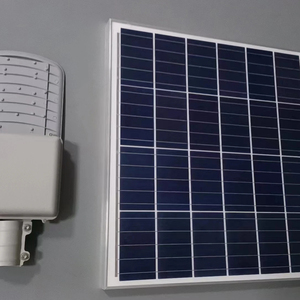
All in Two Outdoor Solar Street Light Two in One
Monocrystalline 23.5%
Split-Angle Tilt
LiFePO4 Storage
Get a Quote

Factory-direct OEM formulations featuring N-Type TOPCon and PERC monocrystalline arrays, ultra-resilient LiFePO4 energy storage, and smart MPPT IoT controllers.
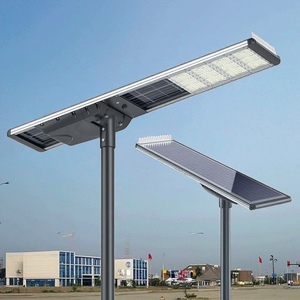
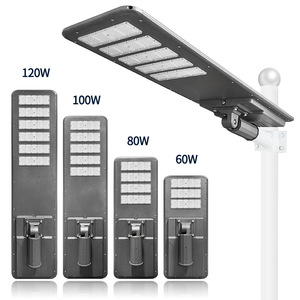
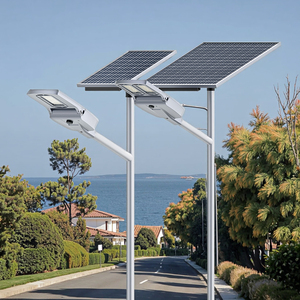
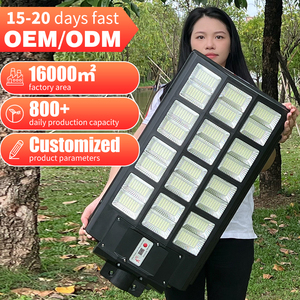
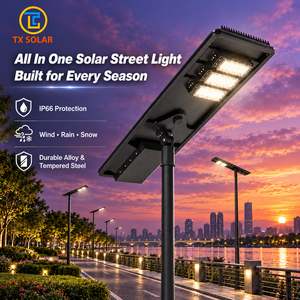
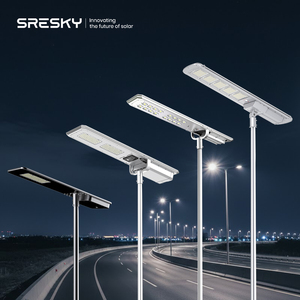
As global energy grids face growing volatility, extreme weather risks, and rising operational tariffs, municipal procurement directors, civil engineering contractors, and commercial estate developers are fundamentally rethinking public lighting infrastructure. The transition from legacy AC-grid high-pressure sodium (HPS) and standard utility-grid LED systems to completely off-grid solar-powered luminaires is no longer merely a sustainability gesture—it is an economic and resilience imperative.
Within the solar street lighting sector, the choice of photovoltaic technology represents the core determinant of long-term Return on Investment (ROI), system uptime, and total cost of ownership (TCO). Custom OEM Monocrystalline Solar Streetlights have emerged as the gold standard for commercial and municipal applications, systematically outperforming traditional polycrystalline and thin-film alternatives across all critical operational parameters.
By pairing ultra-pure N-Type TOPCon or PERC monocrystalline silicon wafers with advanced Lithium Iron Phosphate (LiFePO4) energy storage and Maximum Power Point Tracking (MPPT) power electronics, modern OEM manufacturers deliver systems capable of achieving 99.8% operational uptime even in low-irradiance northern latitudes, tropical storm belts, and harsh desert environments.
The superior performance of monocrystalline solar streetlights stems directly from the atomic structure of the photovoltaic material. Monocrystalline silicon is manufactured via the Czochralski growth process, producing a single, continuous, defect-free crystal lattice. This structural uniformity provides significant advantages over multi-crystalline (polycrystalline) structures, where crystal grain boundaries act as recombination centers for photo-generated electron-hole pairs, causing immediate efficiency loss.
Monocrystalline cells exhibit significantly higher spectral responsiveness in the low-light infrared and diffuse light spectrums. Under diffuse cloud cover or overcast conditions (<100 W/m² irradiance), monocrystalline arrays generate up to 35% higher energy yield than polycrystalline equivalents of identical surface area.
As ambient temperatures rise above 25°C, solar panel output decreases. Monocrystalline silicon features a low temperature voltage coefficient (typically -0.35%/°C compared to -0.45%/°C for polycrystalline), preserving critical charging voltage during hot summer months in tropical regions.
Industrial OEM monocrystalline modules engineered with anti-reflective glass coatings and EVA encapsulation exhibit a Light-Induced Degradation (LID) rate of <0.5% annually. This guarantees over 80% original power output after 25 to 30 years of continuous outdoor service.
| Technical Parameter | Monocrystalline N-Type (OEM Preferred) | Polycrystalline Silicon | Thin-Film (CdTe / CIGS) |
|---|---|---|---|
| Commercial Cell Efficiency | 22.5% - 24.2% | 16.0% - 18.0% | 14.0% - 16.5% |
| Surface Area Required (per 100W) | 0.42 m² (Compact Luminaire Profile) | 0.58 m² (Bulky Frame) | 0.72 m² (Heavy Structural Load) |
| Temperature Coefficient (Pmax) | -0.30% / °C | -0.42% / °C | -0.20% / °C |
| Low-Irradiance Performance | Exceptional (>90% output at 200 W/m²) | Moderate (75% output at 200 W/m²) | Good (85% output at 200 W/m²) |
| Mechanical Degradation (25 Yrs) | < 12.5% Total Loss | > 20.0% Total Loss | > 25.0% Total Loss |
| Optimal Application | Municipal, Highway, High-Wind OEM Streetlights | Low-Budget Rural Solar Lighting | Building Integrated PV (BIPV) |
Off-the-shelf solar lighting products often fail in real-world commercial installations because microclimates, wind loading requirements, municipal lighting codes, and solar insolations vary dramatically between geographic regions. Professional OEM solar streetlight manufacturing involves full engineering customization across six key sub-systems:
Custom extruded 6063-T6 aluminum alloy housings, die-cast brackets, and stainless steel hardware engineered to pass Category 5 hurricane wind load simulations (up to 65 m/s or 145 mph) with IK10 vandal-proof impact protection.
OEM optical lenses featuring Batwing Type II, Type III, and Type IV light distributions. Custom beam shaping maximizes pole spacing up to 50 meters while maintaining unified illuminance uniformity (U0 > 0.40) without glare or dark spots.
Custom LiFePO4 battery pack dimensions with built-in thermal management heaters for sub-zero climates (-20°C to +60°C) and Intelligent Battery Management Systems (BMS) offering active cell balancing and multi-tier voltage cut-offs.
| Luminaire Component | Standard Configuration Options | Advanced OEM / ODM Custom Options | Target Application |
|---|---|---|---|
| Photovoltaic Module | Monocrystalline PERC 18V (50W - 150W) | Bifacial Monocrystalline TOPCon (Glass-Glass) 36V | High-reflectance snow/sand terrain; max winter energy yield |
| LED Array & Efficacy | 160-180 lm/W Bridgelux / Epistar Chips | 200-240 lm/W Lumileds 5050 / Cree Chips | Highway standards, dark-sky compliant municipal corridors |
| CCT & Spectrum | 4000K Neutral White / 5700K Cool White | 2200K Amber / Wildlife-Friendly 590nm Turtle Safe | Coastal roads, nature reserves, ecological preservation zones |
| Charge Controller | PWM Intelligent Dimming Controller | Smart IoT MPPT with LoRaWAN / NB-IoT / Zigbee Mesh | Smart City Central Management System (CMS) Integration |
| Surface Treatment | Powder Coating (RAL 7016 Grey) | Electrophoretic Marine-Grade Anti-Corrosion Spray | Coastal ports, high-salinity marine environments, chemical plants |
As the outdoor lighting industry shifts toward 100% off-grid reliability, several key technological and financial innovations are reshaping how municipalities, HOAs, and commercial enterprise buyers procure solar streetlights:
From raw material sourcing to automated assembly lines, enterprise-grade solar streetlights require rigorous quality control protocol to guarantee decades of uninterrupted operation.
Every OEM batch undergoes 100% Electroluminescence (EL) testing to detect micro-cracks in monocrystalline cells, high-temperature/high-humidity aging chambers (85°C/85% RH), salt spray corrosion tests (1000 hours), and IP68 water submersion verification.
Eliminate expensive underground electrical trenching, conduit laying, utility interconnect permits, and recurring monthly electricity bills. Off-grid solar streetlights install quickly on isolated concrete foundations or direct-burial poles.
Our engineering team provides comprehensive DIALux photometric layout simulations, wind load structural calculations, customized CAD drawings, and complete OEM branding packages for land developers, HOAs, and utility buyers.
Expert technical responses to common questions encountered by municipal engineers, utility managers, and wholesale distributors.
Monocrystalline panels offer significantly higher photoelectric conversion efficiency (up to 24%) compared to polycrystalline (16-18%). This allows manufacturers to achieve higher total wattage output from a smaller surface area, reducing luminaire dimensions, wind drag coefficient, and mounting pole weight while optimizing performance in low-light environments.
Autonomy is achieved by oversizing the monocrystalline solar array capacity relative to the daily load and pairing it with high-density Grade-A LiFePO4 batteries. Additionally, smart MPPT controllers utilize adaptive dimming algorithms—lowering lumen output during periods of low activity or low state-of-charge (SoC) to stretch battery life over multiple overcast days.
Customization covers photovoltaic panel wattage, battery capacity, LED lumen output (up to 240 lm/W), color temperature (2200K amber to 6500K cool white), optical beam angles (Type I to IV), housing colors (powder-coated RAL finishes), IoT smart node integration (Zigbee/LoRaWAN/NEMA/ZHAGA sockets), and custom laser-etched corporate branding.
The monocrystalline solar panel is rated for 25 to 30 years (>80% power retention). High-grade LiFePO4 batteries last 6,000+ deep cycles (approx. 10 to 12 years). The LED module and housing carry a design life exceeding 100,000 hours (L70 rating), while MPPT electronics typically serve 8 to 10 years before maintenance is required.
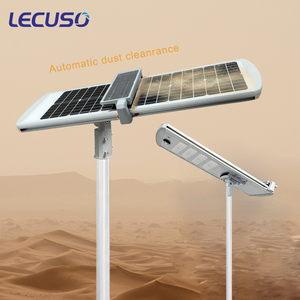
In dusty or high-soiling environments, uncleaned solar panels lose up to 40% of their energy harvesting capacity, leading to battery starvation and premature lighting failure. Automatic self-cleaning mechanisms sweep dust and debris off the monocrystalline glass daily, preserving maximum charging efficiency without costly manual maintenance crews.
For coastal or hurricane-prone installations, streetlights must be certified to AASHTO wind load standards and pass FEA stress analysis up to Category 5 hurricane wind speeds (145 mph / 65 m/s). Aluminum alloy 6063-T6 or hot-dip galvanized Q235 steel construction with marine-grade fasteners is required for compliance.
Yes, custom OEM fixtures can be engineered with 100% full cut-off optical distribution lenses that project 0% light upward into the atmosphere (U0 rating). Coupled with warm CCT options (<3000K or 590nm Amber), our solutions fully satisfy International Dark-Sky Association (IDA) guidelines to prevent light pollution.
Standard OEM prototyping and DIALux design takes 7 to 10 days. Mass production lead times generally range from 15 to 25 days depending on component customization and order volume. Minimum Order Quantities (MOQs) start as low as 10 to 50 units for custom OEM orders, with high-volume project discounts available.
Whether you need custom DIALux lighting designs, specialized hurricane-rated hardware, or factory-direct B2B OEM manufacturing for municipal projects, our engineering team is ready to deliver tailored off-grid solutions.
Get a Quote