
OEM & ODM Municipal-Grade Solar Luminaire Solutions with Integrated MPPT Tracking
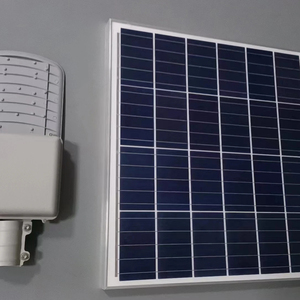
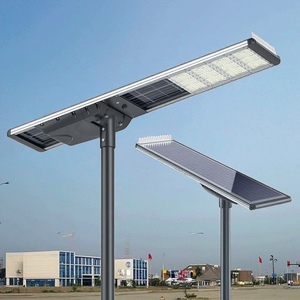
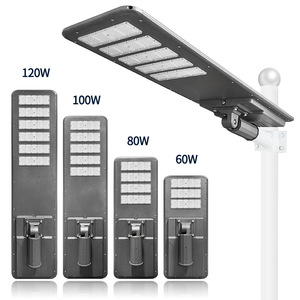
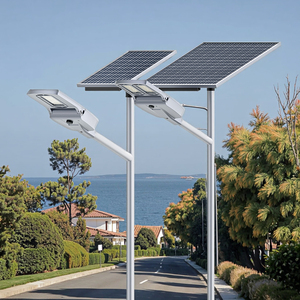
Modern off-grid municipal lighting demands absolute reliability under harsh climate variations, extreme thermal fluctuations, and extended periods of rainy weather (autonomy days). Maximum Power Point Tracking (MPPT) technology serves as the electronic core of high-performance solar luminaire systems. Unlike legacy Pulse Width Modulation (PWM) controllers, which simply connect the solar array directly to the battery bank—forcing the solar module to operate at battery voltage—an OEM MPPT controller utilizes continuous high-frequency DC-to-DC conversion algorithms.
This dynamic tracking mechanism continuously calculates the Maximum Power Point ($P_{max} = V_{mp} \times I_{mp}$) along the solar PV module's non-linear Current-Voltage (I-V) curve. By decoupling panel voltage from battery voltage, MPPT controllers allow solar arrays to harvest power at their optimal voltage rating, converting surplus voltage into additional charging current. In real-world commercial field deployments, this yields a 20% to 35% increase in energy harvest yield during overcast, low-irradiance, and winter conditions compared to traditional PWM systems.
OEM Manufacturing Technical Insight: Our proprietary 32-bit ARM Cortex-M4 microcontroller units (MCUs) run ultra-fast perturb-and-observe (P&O) along with incremental conductance algorithms, execution cycle times under 50 milliseconds, maintaining over 99.8% tracking efficiency across solar panel operating temperatures from $-40^\circ\text{C}$ to $+85^\circ\text{C}$.
Sub-50ms tracking frequency dynamically compensates for cloud cover, dust accumulation, and localized shading to maintain peak solar array power extraction.
Automotive-grade Lithium Iron Phosphate cells offering >6,000 deep discharge cycles at 80% DoD, integrated with active thermal balancing and zero risk of thermal runaway.
Heavy-duty structural aluminum housing rated at IP66 ingress protection and IK10 mechanical impact resistance, engineered for 175 mph hurricane winds.
For municipal project managers, EPC contractors, and global lighting OEMs, selecting the charge controller architecture is the single most critical engineering decision influencing lifecycle total cost of ownership (TCO). Below is an empirical performance comparison matrix based on standardized factory laboratory test protocols under ASTM and IEC standards:
| Parameter / Specification | Industrial MPPT Controller (OEM Standard) | Conventional PWM Controller | System Impact & Benefit |
|---|---|---|---|
| Energy Conversion Efficiency | 97.5% – 99.2% peak efficiency | 68% – 75% peak efficiency | Up to 35% higher daily energy harvest |
| Autonomy Performance (Rainy Days) | 5 to 7 continuous dark days reserve | 1 to 2 continuous days max reserve | Zero blackout risk during storm season |
| Panel Voltage Flexibility | Supports high $V_{oc}$ (36V-100V) series arrays | Restricted to battery match ($V_{pv} \approx V_{bat}$) | Reduces cable copper losses by >60% |
| Battery Life Extension | 4-Stage Temperature Compensated Charging | Simple constant voltage topping | Extends LiFePO4 cell life by 3+ years |
| Low Irradiance Response | Harvests energy at <100 W/m² ambient light | Fails to engage charging cycle | Extends operational lighting hours per night |
As a specialized OEM/ODM factory infrastructure partner, we provide end-to-end customization across electronic, mechanical, optical, and digital domains. Municipal lighting specifications vary dramatically based on latitude, coastal salt exposure, local hurricane threat levels, and Dark-Sky compliance mandates.
Our optical engineering lab formulates custom PMMA lenses adhering to IESNA Type I, Type II, Type III, Type IV, and Type V light distribution patterns. By tailoring light distribution specifically to carriageway width, pole pitch-to-height ratios, and glare restriction limits, our fixtures minimize light trespass into residential properties while ensuring zero waste lumens above the horizontal plane (Dark-Sky Compliant).
With high-efficacy Lumileds and Bridgelux LED chips reaching up to 215 lumens per watt, our customized optical engines deliver target foot-candle levels on asphalt using up to 40% less total battery capacity compared to standard off-the-shelf solar lamps.


Battery temperature degradation is the primary failure mode of outdoor solar lighting in high-ambient climates like the Middle East, North Africa, and Southeast Asia. Our factory customizes thermal isolation barriers, integrating phase-change material (PCM) heat sinks and dual-chamber housing designs that keep LiFePO4 battery modules operating below $45^\circ\text{C}$ even when exterior solar metal housing temperatures top $75^\circ\text{C}$.
For coastal installations, housings undergo 1,000-hour salt spray testing (ASTM B117) with fluorocarbon powder coatings to prevent electrolytic corrosion around mounting joints and fasteners.
The global off-grid municipal street lighting market is shifting rapidly from isolated, dumb fixtures to interconnected, intelligent solar nodes. OEM contract buyers should consider three macro tech trends during procurement planning:
Capitalizing on ground albedo reflection, top-mounted bifacial glass-glass solar panels generate up to 25% additional power from reflected light off concrete, sand, and snow, dramatically boosting performance in high-latitude regions.
Integration of NBIoT, LoRaWAN, and Zigbee wireless modules into the MPPT controller enables central management software (CMS) remote dimming, real-time battery telemetry, automated fault reporting, and firmware over-the-air (FOTA) updates.
Dual PIR/Microwave radar sensors combined with edge-computing dimming curves dynamically adjust luminaire brightness based on traffic volume, preserving battery autonomy while ensuring zero compromise on pedestrian safety.
Procuring directly from a certified OEM manufacturer eliminates intermediary markups, ensures 100% compliance with local project engineering standards, and secures direct technical support for custom firmware and structural tailoring:
Custom OEM solar streetlights can be specified with narrow-band amber LED light engines (590nm wavelength). This amber lighting spectrum is vital for coastal roads near sea turtle nesting sites and sensitive ecological preserves, reducing disorientation among migratory species while meeting Dark-Sky light pollution mandates.
Furthermore, off-grid solar streetlights offset 100% of operational grid electricity consumption, directly reducing corporate and municipal scope 1 and scope 2 carbon emissions footprints.

Standard OEM samples are produced within 7 to 10 working days. Full container load (20ft/40ft FCL) production batches typically require 20 to 25 days, including complete burn-in testing and customized packaging fulfillment.
Our OEM MPPT systems are designed with smart adaptive power management (APM). The controller monitors daily solar energy input and automatically scales back LED power output during prolonged overcast conditions, ensuring 5 to 7 days of continuous nocturnal lighting operation.
Yes. Luminaire housings feature adjustable spigot brackets (up to $\pm15^\circ$ tilt angle) compatible with horizontal arms or vertical pole tops ranging from 60mm to 89mm in diameter. Optical lenses can be tailored for narrow pathways, wide highways, or square plazas.
Lithium Iron Phosphate (LiFePO4) offers superior thermal stability (up to $+65^\circ\text{C}$ without thermal runaway), exceptionally long cycle life (>6,000 cycles), and a safer chemical structure, making it ideal for maintenance-free outdoor operation over a 10-year lifespan.
Yes, we provide OEM integration of NBIoT, LoRaWAN, and Zigbee controllers. These allow central monitoring of voltage, current, battery SOC, fault alerts, ambient temperature, and remote schedule dimming via a web cloud dashboard or mobile app.
Our luminaire structures undergo finite element analysis (FEA) computer simulations and wind-tunnel physical testing, achieving structural rating for Category 5 hurricanes (wind speeds up to 60m/s or 175 mph) with heavy-duty 6063-T6 aluminum brackets.
Our OEM factory provides complete test reports including IEC 62722, IEC 60529 (IP66), IEC 62262 (IK10), CE, RoHS, ISO 9001, ISO 14001, LM-79, and LM-80 photometric reports for utility and municipal tenders.
We provide a comprehensive 3-year to 5-year full factory replacement warranty covering the complete system—including the LED luminaire head, MPPT controller, LiFePO4 battery, and mono PV module.
Accelerate your project timelines with engineered reliability, custom optical designs, and competitive direct factory pricing. Request our full technical catalog or consult with an engineering specialist today.
Get Catalog