
Discover our engineered portfolio of commercial off-grid solar streetlamps, split-system infrastructure luminaires, and intelligent self-cleaning public lighting hardware.
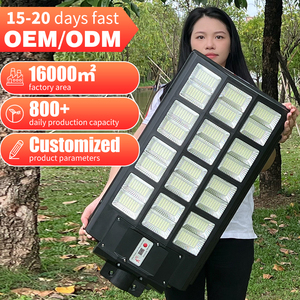
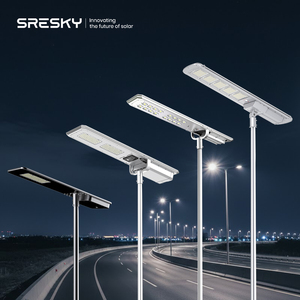
As a tier-one OEM factory and global public infrastructure supplier, our structural design, battery chemistry management, and optical precision set international standards.
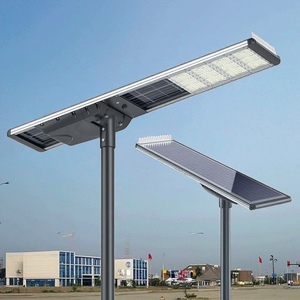
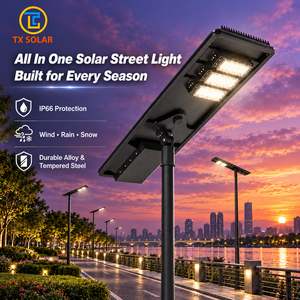
Engineered to withstand extreme environmental stress, including Category 5 hurricane wind loads up to 160 mph (70 m/s). Our extruded, marine-grade ADC12 die-cast aluminum enclosures feature corrosion-resistant anodization and stainless steel hardware designed for coastal, high-salinity infrastructure deployments.
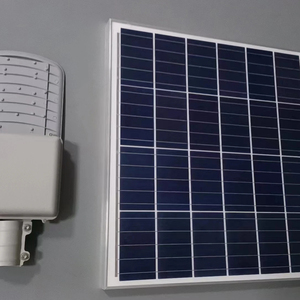
Integrating dual-sided monocrystalline silicon solar cells with dynamic Maximum Power Point Tracking (MPPT) algorithm controllers. Our system extracts up to 28% more solar yield by capturing reflected albedo light from ground surfaces, guaranteeing maximum power harvest even during heavy overcast periods.
Equipped with automotive-grade Lithium Iron Phosphate (LiFePO4) battery packs featuring active thermal dissipation management and internal Smart BMS protection. Designed to execute 4,000+ deep discharge cycles at 80% DoD, maintaining absolute operational safety between -20°C and +65°C.
Custom-engineered optical polycarbonate lens arrays utilizing Batwing Type II, III, and V light distributions. Fully compliant with international Dark-Sky standards to eliminate skyglow and light trespass while maintaining high illuminance uniformity across multi-lane civil roadways.
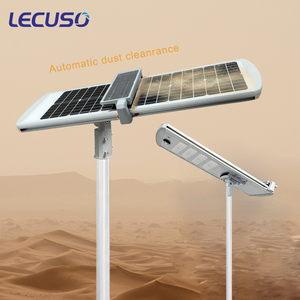
Eliminate dust accretion, bird drop degradation, and sand blockage in desert or mining environments. Our integrated brush auto-cleaning mechanism triggers daily cycles via firmware control, preventing up to 40% efficiency degradation over extended operation cycles.
Seamlessly integrate smart city IoT modules via LoRaWAN, Zigbee, or cellular NBIoT nodes. Real-time remote health monitoring, automated fault alerts, dynamic dimming schedules, and centralized power management reduce ongoing municipal operational expenses by over 60%.
Public infrastructure procurement strategies are undergoing a fundamental transformation globally. Municipal engineers, land developers, utilities, and commercial contractors are rapidly phasing out traditional grid-connected high-pressure sodium (HPS) and legacy metal halide luminaires in favor of fully autonomous, zero-grid solar LED infrastructure. Driven by volatile energy markets, grid instability caused by severe weather events, and stringent decarbonization mandates, off-grid public lighting has evolved from an environmental alternative into a core financial and operational imperative.
When selecting a custom OEM manufacturing partner for municipal lighting initiatives, technical procurement boards must evaluate vendors beyond simple per-unit costs. True reliability requires rigorous physical engineering: mechanical stress analysis against extreme wind loads, advanced photometric ray-tracing to prevent glare, thermal management systems for high-ambient desert environments, and sophisticated battery management algorithms that prevent catastrophic capacity fading.
Our OEM manufacturing facility operates as an extension of your engineering team. From private-label luminaire design, structural pole customization, and custom CCT tuning (ranging from 2200K wildlife-friendly turtle amber to 6000K daylight industrial white), we supply certified lighting components engineered to meet exact municipal bid tenders across North America, Europe, the Middle East, and Latin America.
Comprehensive technical breakdown of our public infrastructure solar lighting platforms engineered for custom municipal projects.
| Specification Parameter | All-in-One Integrated Series | All-in-Two / Split Type Series | Self-Cleaning Industrial Series |
|---|---|---|---|
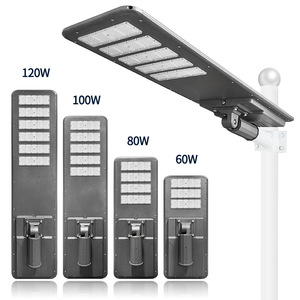
| System Wattage Range | 30W – 150W LED CCOB | 60W – 200W High Output LED | 30W – 150W Heavy Duty LED |
| Luminous Efficacy | 190 – 210 lm/W (Lumileds/Bridgelux) | 200 – 220 lm/W (High Efficacy Chips) | 185 – 205 lm/W (Protected Optics) |
| Solar PV Module | Grade-A Monocrystalline (22.5%) | Bifacial / Split Mono PV (23.8%) | Dual-Glass Mono Panel (22.0%) |
| Energy Storage System | LiFePO4 (Lithium Iron Phosphate) | Deep-Cycle LiFePO4 / External Box | Automotive Grade LiFePO4 Pack |
| Autonomy Performance | 3 to 5 Days (Continuous Overcast) | 5 to 7 Days Extended Autonomy | 4 to 6 Days Continuous Autonomy |
| Ingress & Impact Rating | IP66 Waterproof / IK10 Impact | IP67 Sealed Core / IK10 Vandal-Proof | IP66 Waterproof / Dust-Proof Wiper |
| Wind Resistance Index | Cat 5 Hurricane (Up to 165 mph) | Cat 5 Hurricane (Up to 180 mph) | High-Wind Dynamic Balancing Rated |
| Operating Temperature | -20°C to +65°C (-4°F to 149°F) | -30°C to +75°C (-22°F to 167°F) | -20°C to +70°C (-4°F to 158°F) |
| Smart Control Options | PIR / Microwave / Time Profile | NEMA / Zhaga Socket / IoT Gateway | Automatic Auto-Clean Firmware Program |
As civil planners build climate-resilient infrastructure, several key technical trends are reshaping public lighting procurement strategies for the next decade:
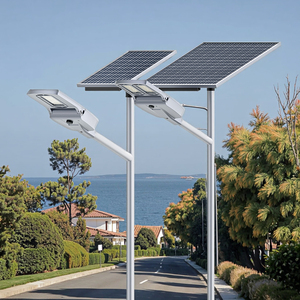
Traditional single-sided photovoltaic panels miss significant ambient light reflected from concrete roadways, snow, and surrounding structures. Modern municipal projects are increasingly specifying bifacial solar panels paired with vertical pole mounts or semi-integrated luminaires. By capturing up to 30% additional energy from ground reflections (albedo factor), lighting systems maintain full night power profiles even in high-latitude regions with limited peak sun hours.
Light pollution poses severe threats to nocturnal ecosystems and coastal wildlife nesting areas. Infrastructure projects in coastal zones now strictly mandate 560nm–590nm narrow-spectrum amber LED options to protect sea turtle hatchlings. Simultaneously, full-cutoff optical shielding ensures zero upward light ratio (ULR = 0%), meeting international Dark-Sky Association guidelines to restore natural night skies while focusing 100% of generated lumens directly on target roadways.
Capital expenditure constraints often impede municipal lighting retrofits. To overcome upfront cost barriers, leading OEM manufacturers and suppliers work in conjunction with project developers to offer innovative turn-key frameworks, including energy-service-as-a-service (SaaS) and zero-upfront-cost financing agreements. Under these models, long-term operational savings fund the deployment, guaranteed by high-reliability products that eliminate maintenance calls for 5 to 10 years.
Engineering and logistical insights to assist municipal tenders, consulting engineers, and commercial buyers.
Need custom photometric calculations (DIALux simulation), OEM private-label branding, or project tender specifications? Connect with our senior engineering team today for factory-direct quotes and sample evaluations.