
Engineered for commercial developers, municipal contracts, and park infrastructure projects requiring long autonomy, extreme weather resilience, and smart motion control.
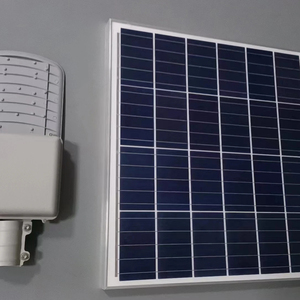
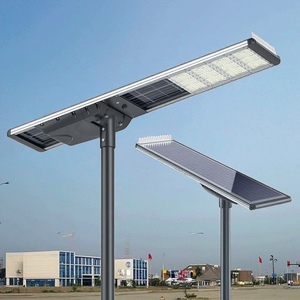
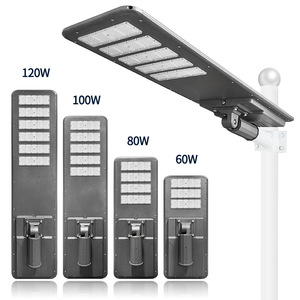
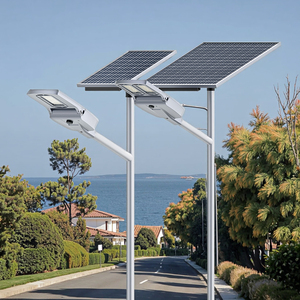
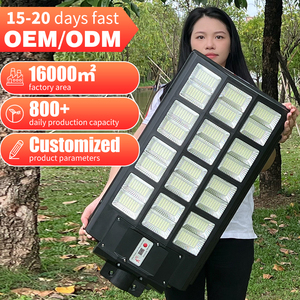
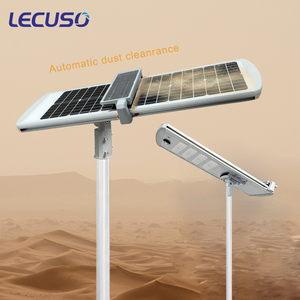
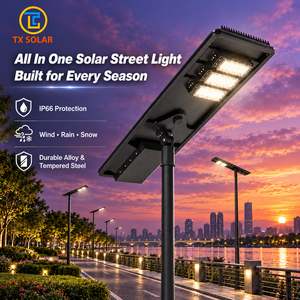
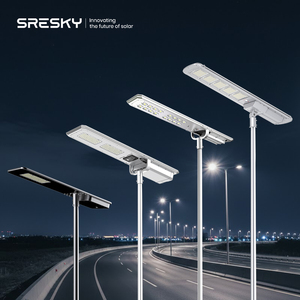
Modern urban planning and municipal park design demand outdoor illumination solutions that reconcile zero-carbon mandates with unrelenting operational resilience. As a tier-1 custom OEM solar park lighting factory and supplier, our engineering architecture shifts park illumination away from vulnerable, centralized AC electrical grids toward autonomous, high-efficiency micro-solar luminaires.
Commercial parks, botanical gardens, public greenways, and industrial campuses pose unique lighting challenges: dense canopy coverage, strict light pollution regulations, high humidity, wind shear exposure, and extended periods of ambient overcast weather. Meeting these requirements demands tailored Original Equipment Manufacturing (OEM) capabilities—customizing every parameter from optical ray-tracing distributions to lithium battery chemical formulations.
Public parks require luminaires built with structural integrity to endure coastal humidity, salt spray, and extreme thermal fluctuations. Our factory utilizes die-cast aluminum enclosures (ADC12 rating) coated with electrostatically applied polyester powder finish, providing superior UV stabilization and anti-corrosion protection in marine atmospheres.
Furthermore, our proprietary thermal isolation chambers separate the high-capacity LiFePO4 battery pack from the heat-generating LED engine and top-mounted solar panel. This structural separation maintains battery core temperatures below 45°C during peak midday charging, preventing premature capacity degradation and extending system operating life past 10 years (3,500+ deep discharge cycles at 80% DoD).
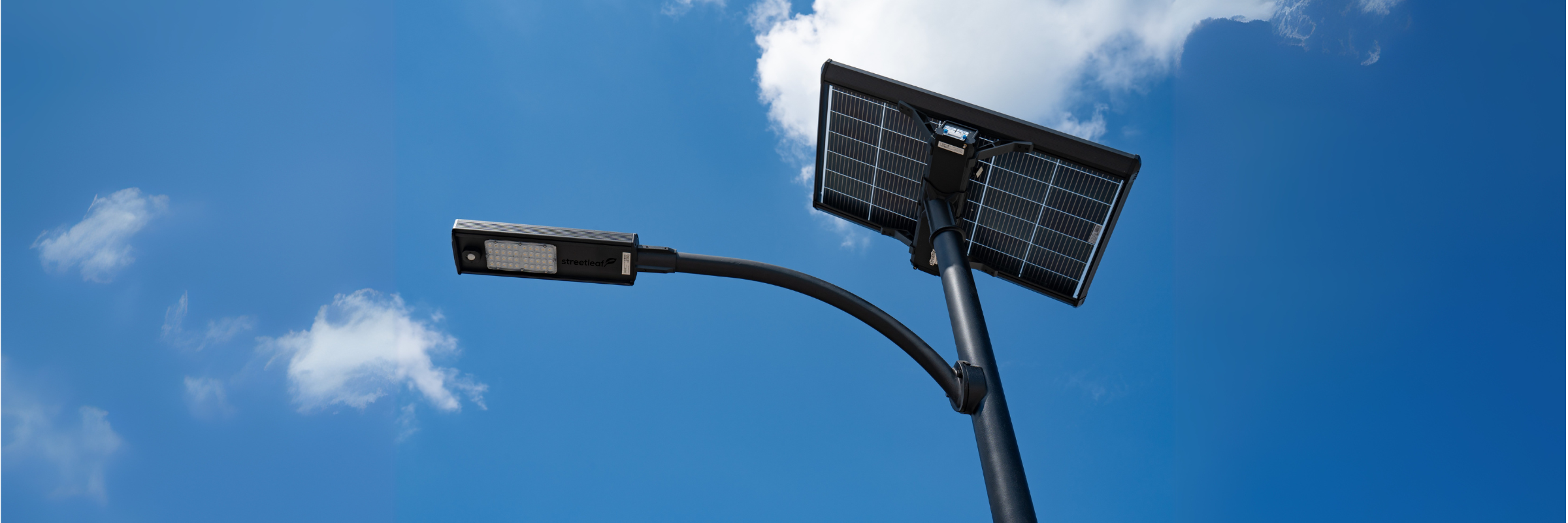
Selecting the correct system topology is crucial when submitting municipal park tenders or commercial site developer bids. Below is a engineering overview produced by our R&D team:
| System Parameter | Integrated All-in-One OEM | All-in-Two (Semi-Split) OEM | Industrial Split-Type OEM |
|---|---|---|---|
| PV Panel Capacity Range | 30W to 120W Monocrystalline | 60W to 200W Monocrystalline / Bifacial | 100W to 400W+ Adjustable Bifacial |
| Battery Placement | Integrated Luminaire Engine Chassis | Top Solar Bracket Assembly | Underground IP68 Vault or Mid-Pole Box |
| Wind Resistance Rating | Cat 5 Hurricane (Up to 160 mph) | Cat 4-5 Hurricane (Up to 145 mph) | Custom Engineered Pole Dynamic Ratings |
| Target Application | Park Path, Perimeter Walkways, HOAs | Arterial Park Drives, Parking Lots | Highway Interchanges, High-Mast Arenas |
| Maintenance & TCO | Zero Cable Wiring, Modular Quick-Swap | Plug-and-Play Waterproof Connectors | Selective Component Replacement |
| System Autonomy | 3 to 5 Rainy Days (Smart Dimming) | 5 to 7 Rainy Days (Full Output) | 7+ Days Continuous Autonomy |
Global demand for off-grid municipal and commercial park illumination is accelerating, driven by escalating grid connection costs, stringent ESG mandates, and grid vulnerability to severe weather events. Enterprise buyers, landscape architects, and government procurement offices are prioritizing four technological shifts:
Conventional monofacial solar street lights waste ground-reflected ambient light. Future procurement specifications increasingly demand N-Type TOPCon bifacial solar panels. Capturing rear-side albedo reflections from concrete pathways, grass, and snow boosts daily energy generation by up to 25%, maintaining battery charge even during heavy overcast conditions.
Modern park operations are moving away from unmanaged standalone fixtures. Next-generation municipal systems feature integrated LoRaWAN, Zigbee, or NB-IoT wireless communication modules. Facility managers monitor real-time battery state-of-charge (SoC), operational status, solar yield, and remotely adjust brightness profiles across entire city park networks.
Light pollution severely impacts nocturnal wildlife and human circadian rhythms. Tenders for public parks now frequently mandate Dark-Sky Approved full-cutoff optical distributions (zero uplight, U0 rating). Additionally, coastal installations require custom 2200K warm CCT or narrow-spectrum amber (590nm) LEDs to prevent disorientation of sea turtle hatchlings.
Accumulated dust, pollen, bird droppings, and industrial particulate soot can degrade solar panel charging efficiency by 30% to 50% within months. Factory-integrated automatic wiper blade mechanisms clear panel glass twice daily, guaranteeing peak photovoltaic yield without requiring manual maintenance crews.
Enterprise buyers are increasingly transitioning capital expenditure (CAPEX) budgets into operational expenditure (OPEX). Through specialized supplier partnerships, land developers and municipalities utilize service agreements—paying a predictable monthly fee covering hardware deployment, active IoT monitoring, and full warranty upkeep.
Safety is paramount in public park environments. High-spec OEM suppliers incorporate multi-tiered battery management systems (BMS) with over-charge, over-discharge, short-circuit, and thermal runaway prevention, ensuring reliable operation across harsh ambient ranges (-20°C to +65°C).

Historic solar park lamps suffered from inconsistent light levels, uneven distribution, and glare that disturbed pedestrians. Modern OEM engineering utilizes high-efficiency LED chips paired with customized PMMA optical lenses designed for precise beam control.
Depending on project requirements, our factory configures luminaires with Type II, Type III, or Batwing (Type V) asymmetrical optical distributions. This delivers uniform illumination across park walkways and access roads while eliminating light trespass into surrounding residential boundaries or natural habitats.
Partnering directly with an experienced manufacturing facility eliminates intermediary markups, ensures strict compliance with tender specifications, and guarantees long-term spare part availability.
Our engineering team provides complimentary DIALux rendering and photometric layout reports based on your CAD site plans, ensuring exact lux levels, uniformity ratios, and pole spacing optimization before production starts.
We offer complete OEM private labeling services, custom powder-coat color matching (RAL spectrum), laser-etched branding, and customized CCT configurations (2200K amber to 5700K daylight cool).
Every luminaire unit undergoes a rigorous 48-hour burn-in aging test, IP66 waterproof pressure testing, and integrating sphere photometric validation prior to factory export packaging.
From preliminary layout analysis to final bulk delivery, our OEM production workflow follows strict ISO9001 standards:

Direct answers to technical, commercial, and logistical questions commonly raised by municipal engineers, developers, and solar lighting distributors.
Our systems utilize intelligent MPPT (Maximum Power Point Tracking) charge controllers programmed with adaptive dimming profiles. When the controller detects sequential low-charge days, it automatically shifts energy output from 100% full power to smart PIR motion-sensing mode (e.g., 30% ambient standby power, boosting to 100% for 30 seconds upon motion detection). Paired with over-engineered Grade-A+ LiFePO4 battery reserves, our luminaires maintain continuous nighttime lighting through extended bad weather events.
We manufacture precision PMMA lenses supporting Type I (narrow pathway), Type II (standard greenway corridor), Type III (parking and road access), and Type V (circular symmetrical park plaza). All lenses are designed to meet zero-uplight (Dark-Sky Compliant) municipal requirements, eliminating light pollution into nearby residential sectors.
We exclusively use premium Lithium Iron Phosphate (LiFePO4) chemistry rated for 3,500 to 5,000 charge/discharge cycles at 80% Depth of Discharge (DoD). Our internal thermal isolation design keeps the battery operating temperature below 45°C even when external ambient temperatures reach 50°C, providing an operational lifespan of 8 to 12 years before requiring servicing.
Yes. We offer custom LED engine builds utilizing monochromatic amber LEDs with continuous light emission wavelengths centered precisely at 590nm to 595nm. This narrow-spectrum output is certified safe for nesting sea turtles and coastal wildlife reserves while providing full visibility along public boardwalks and beach access parks.
As a direct factory manufacturer, we customize: (1) Solar panel wattage & bifacial/monofacial type; (2) Battery capacity (Ah) and voltage; (3) LED brand (Nichia, Lumileds, Cree) and luminous efficacy up to 210 lm/W; (4) CCT options (2200K to 5700K); (5) Housing color (RAL spectrum matching); (6) Smart IoT protocol (LoRaWAN/Zigbee/NEMA 7-pin socket); and (7) Private brand laser engraving and customized outer master box packaging.
Our automatic self-cleaning models incorporate a brushless motor coupled with a durable, weather-resistant silicone wiper mechanism. The controller triggers a full dual-sweep cleaning cycle across the solar panel surface twice daily (at dawn and dusk). This eliminates sand, dust, pollen, and debris buildup without requiring manual washing, maintaining panel efficiency at 98%+ over the system lifespan.
Yes. We supply standardized .IES optical photometric files for all luminaire configurations, compatible with AGi32 and DIALux software. Our in-house lighting design team provides complete 3D photometric simulations, rendering false-color rendering maps and isolux contour plots to verify compliance with local lighting standards (e.g., IESNA RP-8, EN13201).
Our commercial luminaires feature low-drag aerodynamic profile housings engineered in accordance with wind tunnel simulation data. Constructed from structural ADC12 aluminum with reinforced stainless-steel (316 grade) mounting hardware and dual-bolt locking collars, our light heads withstand wind velocities up to 160 mph (70 m/s) without dynamic oscillation or structural failure.
Accelerate your commercial park development or municipal bid. Request comprehensive product catalogs, custom Dialux simulations, or factory direct sample evaluations today.