
Explore our top-tier OEM/ODM solar streetlight series engineered for high efficacy, hurricane resilience, and seamless microgrid switching across residential, commercial, and municipal infrastructure projects.
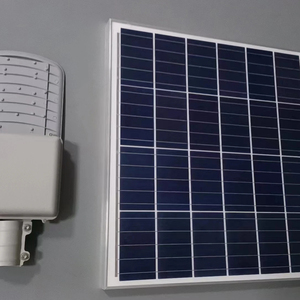
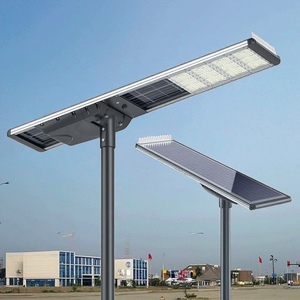
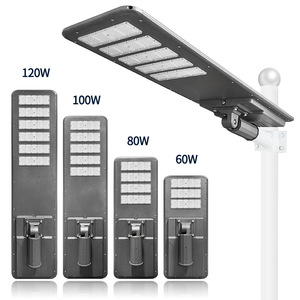
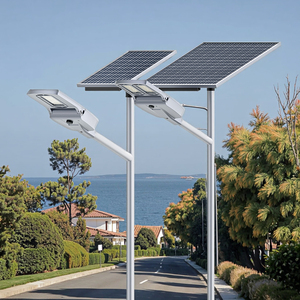
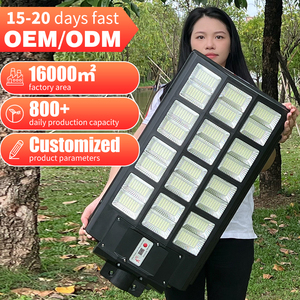
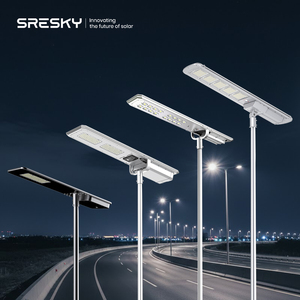
As a premier global exporter and original design manufacturer, we specialize in high-reliability, grid-interactive solar streetlighting engineered for modern municipal infrastructure and severe weather environments.
Our engineered hybrid architecture automatically shifts power input between primary off-grid solar energy and supplementary AC grid power. With a seamless microswitch transfer time under 10 milliseconds, lights guarantee 100% illumination uptime regardless of prolonged monsoons or extreme winter weather.
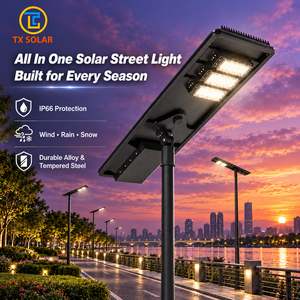
Built using structural grade ADC12 die-cast aluminum alloys and 304 stainless steel hardware, our luminaires are certified for ANSI C136.31 Category 5 hurricane wind loads up to 160 mph (257 km/h). Featuring IP67 waterproofing and IK10 impact resistance, they survive the harshest coastal and industrial zones.
We provide tailored photometric optical solutions utilizing custom Type I, Type II, Type III Batwing, and Type IV lenses. Fully compliant with International Dark-Sky Association (IDA) standards, our fixtures yield 0% upward light ratio (ULOR=0%) and offer wildlife-friendly amber LED spectrum configurations.
Global municipalities and commercial enterprise developers are fundamentally shifting how street lighting infrastructure is specified, evaluated, and deployed. Key macro trends reshaping global procurement include:
Pure off-grid solar systems traditionally suffered from over-sizing requirements to account for rare 7-day storm anomalies. Municipal buyers now prioritize grid-interactive solar streetlights that utilize smaller, optimized solar panels and battery storage while relying on grid fallback during extreme conditions. This slashes upfront CapEx by up to 35% while retaining zero operational electricity costs during standard weather cycles.
Large land developers, HOAs, and city governments are moving away from direct equipment purchasing toward Lighting-as-a-Service (LaaS) and long-term operating lease models. Forward-thinking suppliers offer $0 upfront cost financing, bundling supply, remote IoT monitoring, and preventive SLA maintenance under fixed monthly utility operational expenditures.
Procurement departments are enforcing stringent Environmental, Social, and Governance (ESG) standards. Buyers demand full bill-of-materials traceability, non-conflict mineral certification, ISO14001 carbon footprint audits, and recycled aluminum chassis sourcing to satisfy institutional ESG mandates.
| Technical Metric | Legacy Grid-Tied Lighting | Standalone Off-Grid Solar | Grid-Interactive Hybrid Solar (OEM/ODM) |
|---|---|---|---|
| Uptime Guarantee | Grid Dependent (Fails during blackouts) | Weather Dependent (Fails after 3-5 cloudy days) | 100% Continuous (Dual-Source) |
| Trenching & Cabling CapEx | High ($25 - $45 per linear foot) | Zero Trenching Required | Minimal (Existing Low-Voltage Line) |
| Battery Pack Sizing | None | Oversized (Heavy CapEx & Weight) | Optimized LiFePO4 (30% Lighter) |
| Grid Energy Usage | 100% Utility Consumption | 0% Utility Consumption | 90% - 98% Solar Reduction |
| Smart IoT Telemetry | Rare / Legacy Relay Controls | Basic PIR / Motion Standalone | LoRaWAN / NBIoT Smart Grid Hub |
The industrial solar streetlighting sector is rapidly integrating cutting-edge materials science, optical precision engineering, and cloud AI control systems. Key engineering trends driving product innovation include:
Next-generation solar streetlights are adopting N-Type TOPCon bifacial solar panels. By harvesting direct sunlight from the front face and scattered albedo reflection from ground asphalt or concrete on the rear face, total energy generation increases by up to 28%, significantly accelerating battery recharging speed in low-sunlight environments.
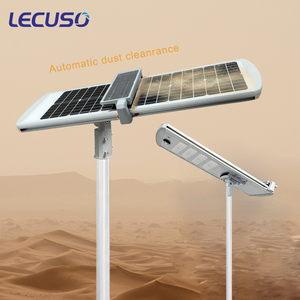
Dust accumulation, avian dropping buildup, and sand accumulation can degrade solar panel charging efficacy by 35% in desert or industrial environments. Modern OEM/ODM self-cleaning streetlights utilize programmable double-helix robotic wipers that sweep panels twice daily, ensuring maximum solar capture without manual labor overhead.
Luminaires are evolving into dynamic Smart City IoT Nodes. Utilizing LoRaWAN, NBIoT, and Zigbee mesh communication protocols, centralized management software (CMS) dynamically adjusts dimming schedules based on real-time traffic density, predictive weather models, and emergency response overrides while providing real-time component diagnostic reporting.
Detailed technical answers to common queries raised by municipal engineers, EPC contractors, project developers, and international procurement managers.
Grid-interactive solar streetlights integrate a dual-input Intelligent Power Management Unit (PMU). The fixture prioritizes clean energy harvested from its photovoltaic panel and stored in its internal LiFePO4 battery pack. If the battery capacity drops below a critical threshold (e.g., 20% DoD) due to consecutive rainy days, the PMU instantly switches input power to the AC municipal grid in under 10 milliseconds, preventing blackouts while minimizing total utility energy consumption by 90% or more.
We offer comprehensive end-to-end customization services, including LED lumen output selection (30W to 200W / up to 220 lm/W efficacy), custom housing powder coating colors (RAL specification), optical light distribution curves (IESNA Type I, II, III, IV, V), CCT tuning (2700K - 6500K / Amber), custom pole attachment diameters, custom branding/silk-screening, and IoT protocol module integration (LoRaWAN, Zigbee, NBIoT, DALI).
Our fixtures are structural-mechanically designed using finite element analysis (FEA) and built from high-tensile ADC12 die-cast aluminum alloys. Luminaires feature streamlined aerodynamic profiles to reduce drag coefficients. Coupled with heavy-duty internal steel arm brackets and 304 stainless hardware, our completed streetlight assemblies pass wind tunnel testing up to 160 mph (257 km/h), satisfying ANSI C136.31-2010 vibration and wind load standards.
We exclusively utilize brand-new Grade-A Lithium Iron Phosphate (LiFePO4) battery cells. LiFePO4 chemistry is inherently thermal-stable, avoiding thermal runaway risks associated with traditional ternary lithium batteries. Our battery packs feature smart active-balancing Battery Management Systems (BMS) with overcharge, over-discharge, short-circuit, and high-temperature protection. They deliver over 4,000 deep discharge cycles at 80% DoD, translating to a service lifetime exceeding 10–12 years.
All export fixtures are independently verified by accredited third-party laboratories. We provide full photometric test reports including IESNA LM-79 and LM-80, IP66/IP67 ingress protection certificates, IK10 mechanical impact certificates, CE, RoHS, FCC, CB, and UL8750 safety compliance documentation tailored for customs clearance and tender submission in North America, Europe, the Middle East, and Asia-Pacific.
Standard sample units for municipal technical evaluation are dispatched within 5 to 7 business days. For customized OEM/ODM production orders, our standard MOQ starts at 50 units. Bulk municipal orders (500–5,000 units) are manufactured and quality-checked within 20 to 30 calendar days at our automated SMT and assembly facilities, supported by full sea/air logistics coordination.
Partner with an industry-leading OEM/ODM solar streetlight supplier and exporter. Request complete technical specifications, photometric IES files, factory audit certifications, and comprehensive pricing catalogs today.
Get Catalog