
Engineered for extreme environmental resilience, 100% off-grid reliability, and long service lifespan. Explore our OEM/ODM base platforms ready for customized deployment.
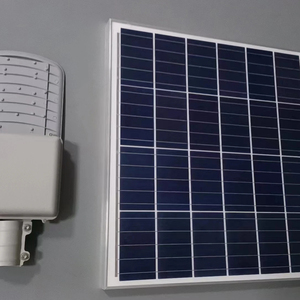
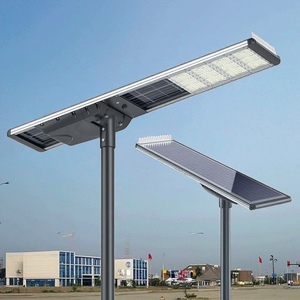
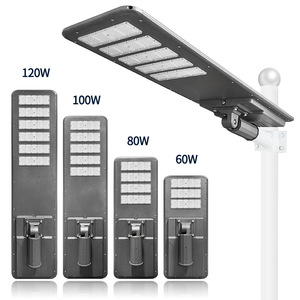
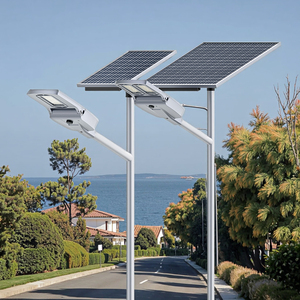
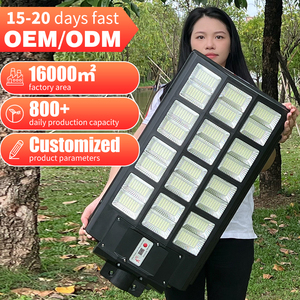
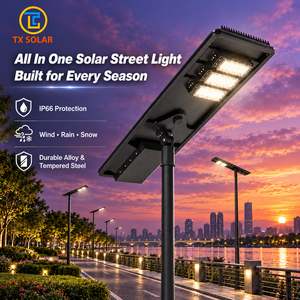
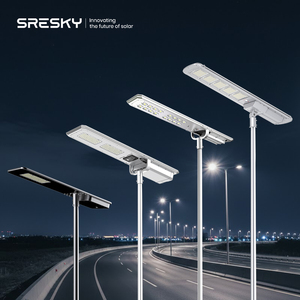
In the rapidly evolving landscape of public lighting and utility infrastructure, transition to off-grid solar illumination is no longer merely an ecological initiative—it is a critical economic and operational strategy. As an industry-leading OEM/ODM solar lighting solutions manufacturer and factory, our engineering framework bridges the gap between raw photovoltaic efficiency and ruggedized municipal deployment.
Traditional street lighting procurement often suffers from fragmented supply chains, incompatible sub-components, and premature battery degradation in extreme ambient temperatures. Our fully integrated contract manufacturing facilities solve these systemic failure points by executing end-to-end design control: from custom optical lens molding and MPPT firmware optimization to automated LiFePO4 battery pack manufacturing.
By partnering directly with our OEM/ODM factory engine, engineering procurement firms (EPCs), distributors, and municipal buyers unlock tailored photometric distributions, custom physical housing treatments, and smart city telemetry without incurring prohibitive development lead times.

Our state-of-the-art manufacturing facility provides comprehensive OEM/ODM customization capabilities across every critical sub-system.
We offer monocrystalline N-Type TOPCon and Bifacial solar modules boasting conversion efficiencies exceeding 23.5%. Panels are customized in form factor, glass coating, and wattage to meet localized peak solar radiation (STC) parameters.
Safety and cycle durability are non-negotiable. Our in-house battery assembly utilizes brand-new Grade-A Lithium Iron Phosphate (LiFePO4) cells integrated with intelligent BMS featuring thermal runaway cutoff, active balancing, and -20°C to +70°C operating envelopes.
Utilizing secondary optical PMMA lenses, we engineer Type I, Type II, Type III, and Type IV batwing light patterns. Achieve up to 210 lumens per watt, zero light trespass (BUG Compliant), and precise uniformity ratios for complex roadway geometries.
Our dynamic MPPT controllers yield a 99.5% tracking efficiency. Custom firmware options include adaptive dimming curves, microwave motion sensing, and IoT connectivity protocols (LoRaWAN, Zigbee, NB-IoT) for centralized smart city control networks.
Constructed from ADC12 pressure die-cast aluminum and finished with AkzoNobel anti-corrosion powder coating. Certified to withstand Category 5 hurricanes (wind speeds up to 165 mph) and severe saline/coastal spray (ASTM B117 tested).
As global energy grids face unprecedented strain and municipal carbon-neutrality mandates accelerate, commercial lighting buyers must navigate key technical shifts. Procurement strategies are rapidly moving away from standardized off-the-shelf luminaires toward high-resilience, modular solar assets.
Modern solar streetlights are evolving into autonomous telecom nodes. Enterprise buyers now mandate OEM manufacturers to integrate multi-sensor sockets (Zhaga / NEMA 7-pin standard), allowing solar poles to serve as environmental monitoring hubs, traffic counter sensors, and localized Wi-Fi/5G micro-relays.
Traditional flat-panel solar streetlights face aesthetic backlash and snow/dust accumulation issues. The industry trend heavily favors vertical cylindrical bifacial solar pole wrappings and dual-sided panels. Bifacial harvesting captures reflected ground albedo light, boosting overall power gain by 15% to 30%.
Light pollution legislation across North America and Europe now enforces strict International Dark-Sky Association (IDA) guidelines. OEM production lines must incorporate zero-uplight optics (U0 BUG rating) and narrow-band amber LEDs (590nm wavelength) to protect coastal wildlife, marine turtles, and nocturnal ecosystems.
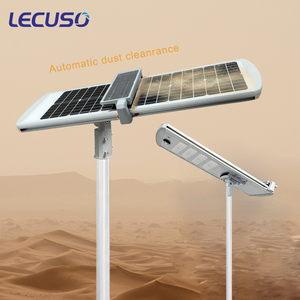
Operation and maintenance (O&M) costs represent over 60% of the long-term TCO of solar installations in arid regions. Automated robotic wiping brushes and hydrophobic self-cleaning nano-coatings are transitioning from luxury options to standard procurement specifications for highway projects.

Municipalities no longer accept fragile solar fixtures that succumb to severe weather. As demonstrated in coastal and hurricane-prone deployments across the Southeastern US and Caribbean, our engineering standards demand structural integrity against Category 5 wind shear while providing soft, wildlife-friendly illumination for master-planned communities.
Compare base solar streetlight configurations to select the optimal OEM manufacturing platform for your project requirements.
| System Architecture | All-in-One (Integrated) | All-in-Two (Semi-Split) | Full Split-Type Solar System | Self-Cleaning Solar Streetlight |
|---|---|---|---|---|
| PV Module Flexibility | Fixed to Chassis (Up to 140W) | Adjustable Tilt (Up to 300W) | Unrestricted Array (Up to 600W+) | Integrated Flexible Array (Up to 180W) |
| Battery Sizing Potential | Compact Internal BESS | Medium High Density BESS | Max Capacity Underground/Pole Box | Integrated High-C Rate BESS |
| Installation Complexity | Ultra-Fast (<10 Mins/Pole) | Moderate Fast (<20 Mins/Pole) | Complex Cabling & Mounting | Fast (<15 Mins/Pole) |
| Wind Shear Load Rating | High Sleek Profile (Cat 4-5) | High (Adjustable Tilt Brackets) | Requires Custom Pole Calculation | Aerodynamic Sleek (Cat 5) |
| Dust/Snow O&M Overhead | Manual Periodic Cleaning | Manual Periodic Cleaning | Manual Periodic Cleaning | Zero Maintenance (Auto Brush) |
| Primary Target Application | Urban Roads, HOAs, Parking Lots | Collector Roads, Industrial Parks | Highways, Extreme Latitudes | Deserts, Mining Sites, High Dust |
Quality assurance in solar lighting manufacturing cannot be audited into the product—it must be engineered into the production process. Our OEM factory operates under strict ISO 9001:2015, ISO 14001:2015, and ISO 45001 standards.
Every batch of raw LED chips (Lumileds, Cree, Bridgelux) undergoes 100% optical sorting and LM-80 lumen depreciation verification. Battery packs are built using automated ultrasonic spot-welding and subjected to 72-hour burn-in charge/discharge cycles in computerized environmental testing chambers.
Prior to packaging, finished luminaires undergo rigorous IP67 waterproof immersion tests, salt fog spray testing (ASTM B117 standard for coastal durability), and goniophotometric IES light distribution mapping.

Detailed technical answers to common queries raised by engineering leads, procurement managers, and municipal planners.
For standard base model modifications (custom color temperature, optical lens swapping, and private brand silk-screening), sample prototypes are delivered within 7 working days. Full custom enclosure development (new tooling) takes 25–30 days. Mass production lead times typically range from 15 to 22 calendar days depending on container volume.
Our cold-climate OEM configurations utilize specialized LiFePO4 battery packs equipped with integrated internal heating film (BMS controlled thermal management). Charging activates safely down to -30°C. Furthermore, bifacial PV orientation prevents snow accumulation, ensuring continuous generation.
Yes. Our senior optical engineering team provides comprehensive, complimentary DIALux photometrics simulations. Simply supply your roadway geometry, pole spacing, height, and target illuminance levels (Lux or Foot-Candles according to IESNA / EN13201 standards).
Our Grade-A LiFePO4 battery cells deliver over 4,000 deep discharge cycles at 80% DoD (Depth of Discharge), equating to a service life of 10 to 12 years. The high-efficacy LED light engine (Lumileds 5050 package) is rated for L70 > 100,000 hours, virtually eliminating routine luminaire replacement.
Our integrated die-cast housings and reinforced mounting brackets are finite element analysis (FEA) tested to withstand Category 5 wind speeds up to 165 mph (265 km/h). Structural calculations and wind tunnel test certificates are available for municipal bidding documentation.
Maximum Power Point Tracking (MPPT) dynamically scans the solar panel's voltage-current curve to optimize power harvest. Compared to basic PWM controllers, our MPPT 2.0 algorithm increases charging efficiency by 25%–35%, especially during overcast or low-irradiance winter days.
All products leaving our factory floor carry comprehensive global certifications including CE, RoHS, CB, IEC 62124, IEC 60598, IP67, IK10, and UN38.3 (battery safety transport certification). We also support custom UL/ETL listings for North American enterprise contracts.
We support growing distributors and utility projects. Standard laser-etched logo customization has an MOQ of just 20 units. Custom paint finish colors (RAL palette matching) and custom inner packaging require an MOQ of 50 to 100 units per batch.
We offer a standard 5-year non-prorated factory replacement warranty. In the rare event of a component failure, replacement modular sub-assemblies (driver, LED board, or battery pack) are dispatched immediately via fast air express at zero cost to the client.
Yes. To help international partners optimize import tariffs and support local manufacturing mandates, we provide full SKD/CKD supply chain kits along with assembly guidance, testing jigs, and quality control SOP manuals.