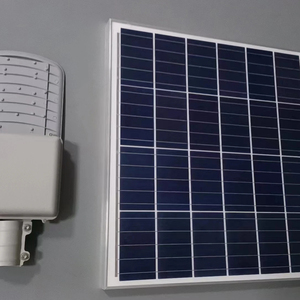
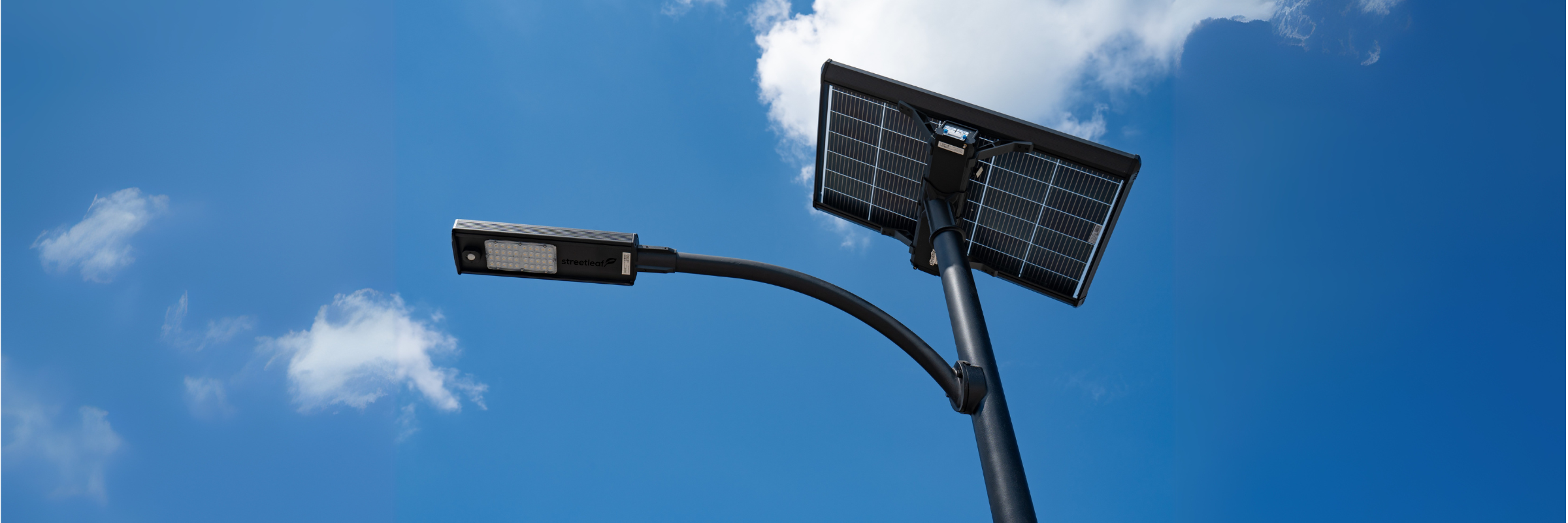
All in Two Outdoor Solar Street Light Two in One
Modular heat sink design with adjustable panel brackets for maximum solar yield across regional latitudes.

Explore our certified OEM/ODM production line. Engineered with Grade-A LiFePO4 cells, bifacial solar technology, and smart MPPT controller integration.
Modular heat sink design with adjustable panel brackets for maximum solar yield across regional latitudes.
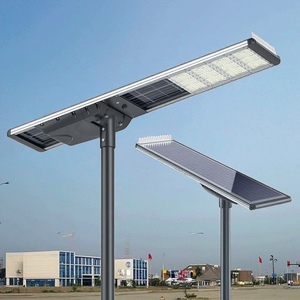
Industrial-grade steel pole integration with high-lumen Philips Lumileds LED chips (up to 210 lm/W).
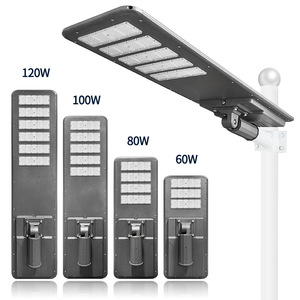
Engineered specifically for municipal arterial roads, highway ramps, and rural infrastructure development.
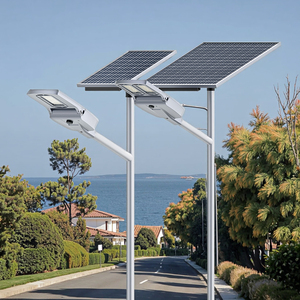
Remote telemetry monitoring, programmable dynamic dimming schedule via LoRaWAN or Zigbee telemetry.
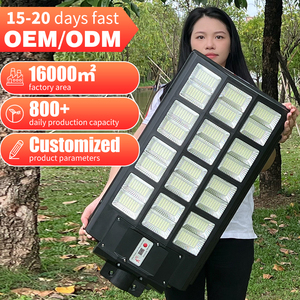
Optimized for residential housing areas, urban parks, pathways, and commercial courtyard estates.
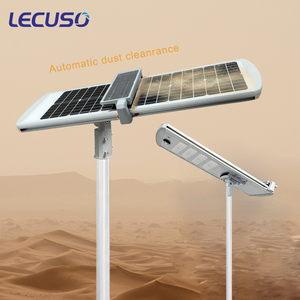
Patented automatic robotic cleaning mechanism prevents dust accumulation and maintains 98%+ panel efficiency.
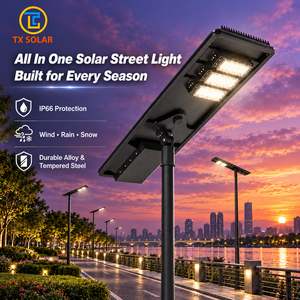
Tailored OEM housing colors, optical lens distributions (Type II/III), and customized battery sizing.
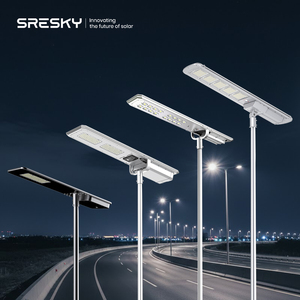
Built to withstand Category 5 wind speeds with reinforced die-cast aluminum alloy chassis.
As a tier-1 OEM/ODM partner for global contractors, municipalities, and land developers, we eliminate project friction through proven off-grid resilience and state-of-the-art manufacturing precision.
Traditional utility-connected street lighting requires massive capital expenditure: deep cable trenching, transformer upgrades, utility interconnect negotiations, and endless recurring electric bills. Our 100% off-grid solar streetlights completely bypass grid dependencies.
Whether deploying light for municipal collector roads, commercial logistics hubs, housing developments (HOAs), or remote utility substations, our turn-key manufacturing standard ensures fast compliance with local optical and structural codes.
Constructed with marine-grade ADC12 die-cast aluminum enclosures, IP66/IP67 double-sealed gaskets, and anti-UV powder coatings. Designed to operate reliably under extreme temperature swings from -20°C up to +65°C without thermal degradation.
We utilize exclusively EV-grade Lithium Iron Phosphate (LiFePO4) cell chemistry offering 6,000+ deep discharge cycles (80% DOD). Integrated micro-processor Battery Management Systems (BMS) protect against over-charge, deep-discharge, thermal runaway, and short circuits.
Maximum Power Point Tracking (MPPT) charging algorithms deliver 98.5% conversion efficiency—up to 30% higher than traditional PWM controllers. Optional IoT connectivity allows remote dimming profiles, fault alerts, and real-time power analytics.
Comprehensive baseline specifications for engineering procurement teams, municipal lighting directors, and project contractors.
| System Metric | All-in-One (AIO) Series | All-in-Two (Split-Type) Series | Municipal Heavy-Duty Series |
|---|---|---|---|
| Luminous Output Range | 3,000 lm – 12,000 lm | 6,000 lm – 24,000 lm | 12,000 lm – 36,000 lm |
| LED Chip Efficiency | 190 - 210 lm/W (Philips / Cree) | 190 - 210 lm/W (Philips / Cree) | 200 - 220 lm/W (Bridgelux / Cree) |
| PV Panel Type | Monocrystalline / Bifacial PERC | High-Efficiency Monocrystalline | Bifacial High-Efficiency Dual Glass |
| Battery Chemistry | Grade-A LiFePO4 (12.8V / 25.6V) | Grade-A LiFePO4 (12.8V / 25.6V) | Industrial LiFePO4 Pack with Thermal Management |
| Autonomy Days (Rainy/Cloudy) | 3 – 5 Days continuous backup | 5 – 7 Days continuous backup | 7+ Days custom extended autonomy |
| Ingress & Impact Protection | IP66 / IK09 | IP67 / IK10 | IP67 / IK10 Marine Grade |
| Optical Distribution Pattern | Type II / Type III Batwing | Type II / Type III / Type IV | Custom IES Standard Lens Options |
| Smart Control Protocols | PIR Motion / Microwave Sensor | PIR / Microwave / RS485 / NB-IoT | LoRaWAN / Zigbee / Smart City CMS Gateway |
| Certifications Compliance | CE, RoHS, IP66, ISO9001 | CE, RoHS, IP67, IK10, IEC 62471 | UL Listed components, Dark-Sky IDA, IEC 60598 |
As smart cities evolve and corporate decarbonization mandates accelerate, global procurement practices for outdoor lighting are experiencing fundamental shifts.
Governments across North America, Europe, and the Middle East are codifying strict ESG (Environmental, Social, and Governance) targets. Outdoor lighting procurement now demands strict adherence to Dark-Sky (IDA) light pollution policies to reduce astronomical skyglow and protect migratory fauna.
Future tenders specifically mandate zero-upward-light ratio (0% ULR), targeted optical cut-offs, warm CCT options (2200K - 3000K), and turtle-friendly amber spectrum options for coastal urban stretches.
Municipalities and private land developers are increasingly moving away from heavy upfront capital expenditure (CapEx). Innovative financial structures such as BOO (Build-Own-Operate) and BOT (Build-Operate-Transfer) allow organizations to procure solar lighting via simple monthly service agreements.
Under these models, OEM suppliers take full responsibility for dynamic hardware monitoring, battery replacement warranties, and uptime guarantees—ensuring zero capital risk for the project developer.
Modern procurement officers look beyond initial purchase price, evaluating systems on 10-to-15-year TCO. Cheap solar lights with low-tier lithium ternary batteries or inefficient PWM chargers carry massive maintenance liabilities due to early battery failures.
High-reliability components—such as self-cleaning solar panel mechanisms, high-cycle LiFePO4 batteries, and anti-corrosive powder coatings—are now primary selection criteria because they reduce maintenance truck-rolls by over 80%.
Supply chain security is a top priority for B2B buyers. Modern buyers demand modular, field-replaceable component architectures (SKD/CKD ready). Standardized quick-connect IP68 cabling, toolless luminaire opening, and universal slip-fitter brackets ensure rapid maintenance and lower shipping volumes.
Furthermore, custom OEM branding, tailored color temperatures (2700K to 5700K), and programmable lumen-dimming schedules allow urban developers to preserve regional architectural aesthetics without compromising on performance.

Discover the next-generation technological advancements shaping the modern solar illumination industry.
Next-gen commercial solar luminaires are transitioning toward tandem PV cell technologies, pushing solar module conversion efficiencies beyond 28%. Higher efficiency allows for smaller panel footprints, significantly lowering wind drag resistance and weight loads on mounting poles.
Machine-learning BMS algorithms continuously analyze historical local weather patterns, real-time solar irradiance, and seasonal dusk-to-dawn variations. The system automatically calculates optimal dynamic dimming curves to guarantee zero blackout nights—even during prolonged winter weather spells.
Urban solar street poles are transforming from isolated light sources into active smart city communication backbones. Integrated options include 4G/5G micro-cell connectivity, environmental air quality monitoring, traffic density sensors, and automated security monitoring camera nodes powered directly by the solar system.

Light pollution poses severe risks to urban ecosystems, nocturnal wildlife, and human circadian rhythms. Our specialized R&D focuses on custom optical engineering:
Partner directly with a certified manufacturer equipped for scale, precision engineering, and rigorous international quality control.
Custom optic lens engineering (Type I, II, III, IV, V) and dynamic CCT configuration tailored to specific municipal roadway illuminance requirements (IESNA standards).
Full OEM white-label packaging, laser-etched metal logos, customized serial number tracking, and branded maintenance documentation for distributors.
Die-cast housing modifications, anti-salt-spray coastal coatings (pass 1,000-hour salt fog test), and custom RAL architectural powder-coat finishes.
Free project engineering support: complete Dialux lighting layout simulations, pole spacing optimizations, and wind load safety calculations for tender submissions.
Clear, direct answers for engineering consultants, procurement agents, and project managers.
Our commercial-grade solar lighting systems are engineered with a minimum of 5 to 7 days of autonomy (reserve capacity). Using intelligent MPPT controllers and dynamic BMS dimming profiles, the system automatically detects lowered solar intake and optimizes battery utilization to guarantee continuous nighttime illumination even during severe prolonged storms.
Our heavy-duty luminaires and structural pole systems undergo finite element analysis (FEA) and physical wind tunnel testing. They are rated to withstand Category 5 hurricane force winds up to 165 mph (74 m/s). Aluminum alloys, reinforced mounting brackets, and aerodynamic chassis designs prevent mechanical failure under extreme weather conditions.
We use high-grade Lithium Iron Phosphate (LiFePO4) batteries rated for 6,000+ deep charge cycles at 80% DOD (Depth of Discharge), which translates to an operational lifespan of 10 to 12+ years under normal conditions. All battery enclosures feature modular plug-and-play IP67 quick connectors for fast, toolless field replacement without unmounting the main light fixture.
Yes. Our in-house optical engineering team provides comprehensive Dialux software simulation files (IES format) tailored to your specific roadway dimensions, pole heights, and target lux levels. We offer Type I, Type II, Type III Batwing, and Type IV asymmetric optical lenses to satisfy any municipal tender specification.
For standard product lines, our MOQ starts at 10 units. For fully customized OEM orders (custom housing molds, private logo branding, and tailored electronics), the MOQ typically ranges from 50 to 100 units depending on complexity. Standard sample lead time is 7–10 days; mass production orders are delivered within 20–28 business days.
Our auto-cleaning solar lights incorporate a built-in robotic wiper driven by a high-torque brush motor. Automatically activated twice daily by the MPPT controller, it sweeps dust, sand, bird droppings, and snow from the panel surface. This mechanism is strongly recommended for desert regions (Middle East, North Africa, Australia) where dust buildup can reduce solar output by up to 40%.
Yes. We manufacture Dark-Sky compliant fixtures featuring zero upward light emission (U0 status), warm CCT options (2200K - 3000K), and narrow-bandwidth 590nm amber LED configurations specially designed to meet coastal wildlife protection guidelines for sea turtles and birds.
Connect directly with our engineering team to request full product catalogs, IES photometry files, OEM quotation sheets, or custom Dialux layout simulations.