Top China Municipal Solar Lighting Systems Factories & Exporter

Engineered Technical Procurement Whitepaper & Industry Supply Guide

Factory Direct Catalog

Municipal-Grade Solar Lighting Infrastructure Systems

Discover tier-1 municipal solar lighting solutions engineered for public roads, highways, rural infrastructure development, and commercial complexes. Designed for high luminous efficacy and extreme weather resilience.

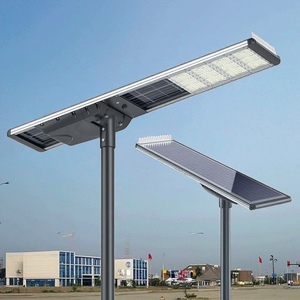
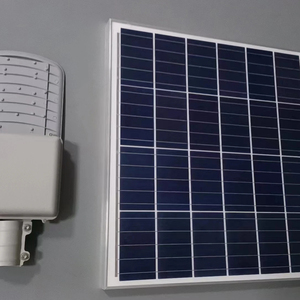
All in Two Outdoor Solar Street Light Two in One
Split-Integrated

All in Two Outdoor Solar Street Light Two in One

  • Luminous Efficacy: 190 - 210 lm/W
  • Battery Spec: Grade-A LiFePO4 Pack
  • Solar Panel: Monocrystalline PERC
  • Autonomy: 5-7 Rain Days
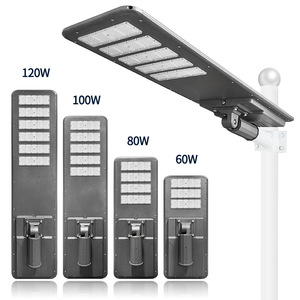
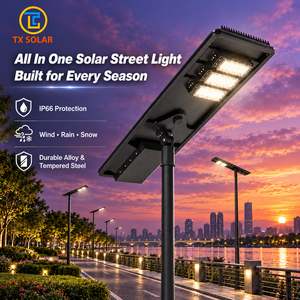
Industrial Solar Street Light 30W 60W 80W 100W 200W
Heavy-Duty Roadway

Industrial Solar Street Light 30W-200W with Solar Pole

  • Power Output: 30W to 200W Custom
  • Housing: Die-Cast ADC12 Aluminum
  • Wind Load Rating: Cat 5 Hurricane (165 mph)
  • Protection Class: IP67 / IK10
High Power Integrated Solar Street Light
Municipal Engineering

High Power Integrated Solar Street Light for Highways

  • Lumen Output: Up to 32,000 Lumens
  • Charge Controller: Smart MPPT (99.2% eff.)
  • Optics: Batwing Type II/III Lens
  • Lifespan: > 100,000 Hrs (L70)
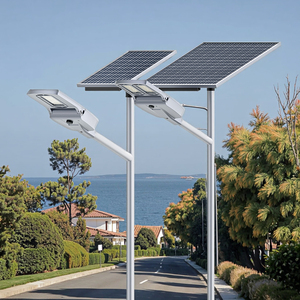
IP66 Waterproof Smart Control Solar Street Lights
IoT Smart Control

IP66 Waterproof Smart Control Split Solar Street Light

  • IoT Protocol: Zigbee / NB-IoT / LoRaWAN
  • Dimming Mode: Time / Microwave Radar
  • Operating Temp: -30°C to +70°C
  • Certification: CE, RoHS, ISO9001, IEC
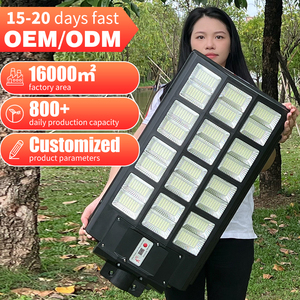
Integrated Solar Street Light Solar Outdoor Courtyard
Rural & Pathway

Integrated Super Bright Solar Luminaire for New Rural Roads

  • Installation: Plug & Play Zero Wiring
  • Panel Tech: Bifacial High Efficiency
  • CCT Options: 3000K - 6500K / Amber
  • Warranty: 5 Years Full Factory
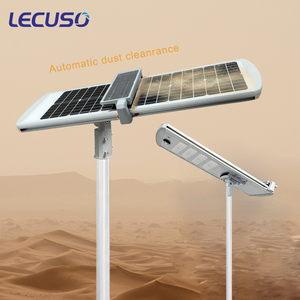
Self Cleaning Solar Street Light
Auto-Clean Robotic

Automatic Self-Cleaning Solar Street Light (30W-150W)

  • Cleaner Type: Robotic Auto Brush
  • Dust Prevention: High Efficiency Dust Proof
  • Maintenance Cost: Reduced by 85%
  • Best For: Desert & High Dust Zones
Waterproof All-in-One Solar LED Street Light OEM
Custom OEM/ODM

Custom OEM Waterproof All-in-One Solar LED Street Light

  • Housing Finish: Anti-Corrosion Powder Coating
  • Salt Spray Test: > 1,000 Hours (ISO 9227)
  • Custom Optics: Dark-Sky Compliant Cutoff
  • MOQ: Flexible Project Tiers
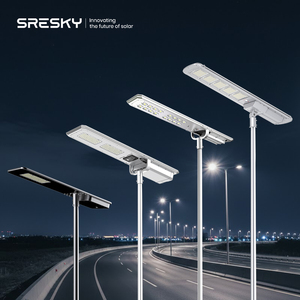
SRESKY Integrated Solar Led Street Light
Commercial Grade

Commercial Integrated Solar Streetlight 80W-150W Lampadaire

  • Battery Cycle: 6,000+ Cycles @ 80% DOD
  • Power Reserve: Dual Storage Redundancy
  • Sensor Range: 12-15 Meters 360° Radar
  • Target Market: Municipal Tenders & HOAs
210 lm/W
Peak Module Efficacy
6,000+
LiFePO4 Cycle Life
Cat 5
Hurricane Wind Resilience
100%
Off-Grid Reliability
Factory Authority & Governance

Why Top Global EPC Contractors Sourced From China Municipal Manufacturers

As the global urban landscape pivots toward zero-carbon infrastructure, top Chinese municipal solar lighting manufacturers stand at the nexus of technological innovation, advanced supply chain integration, and unmatched manufacturing scale.

Tier-1 Supply Chain Synergy

China commands over 80% of the world's photovoltaic module supply chain and lithium iron phosphate (LiFePO4) processing. Sourcing direct from China municipal lighting hubs like Jiangsu and Guangdong grants access to A-grade cell sorting, customized extrusion profiles, and cutting-edge controller innovations at optimal cost structures.

Storm-Resilient Engineering

Municipal projects demand robust survivability against extreme atmospheric events. Leading exporters build structural poles and luminaire brackets engineered to withstand Category 5 hurricanes (wind speeds up to 165 mph) certified under ISO and ANSI C136 standards, ensuring continuous operational uptime during severe weather disasters.

Patent-Protected MPPT Architectures

Our manufacturing facilities utilize high-frequency Maximum Power Point Tracking (MPPT) algorithms offering up to 99.2% tracking efficiency. Combined with dual-channel energy regulation, these smart systems automatically adjust current output during extended overcast conditions, delivering 5 to 7 days of continuous illumination reserve.

Industry Insight: Benchmark Criteria for Municipal Public Lighting Procurement

Evaluating commercial-grade vs. true municipal-grade solar lighting requires examining component specs, optical cut-offs, thermal management, and failure redundancy systems. Below is an engineering comparison matrix designed for municipal procurement managers and EPC specifiers.

Technical Metric Standard Commercial Solar Light China Top Municipal Grade Lighting System
LED Chip Efficiency 140 - 160 lm/W (Standard SMD 2835) 190 - 220 lm/W (Bridgelux / Lumileds 5050 Grade A)
Battery Chemistry & Cycles Ternary Lithium / 1,500 Cycles @ 70% DOD EV-Grade LiFePO4 / 6,000+ Cycles @ 80% DOD
Solar PV Module Tech Polycrystalline (16-18% Efficiency) Bifacial Monocrystalline TOPCon (22.5%-24.5% Eff.)
Controller Efficiency PWM Charge Controller (70-78% Eff.) Digital IoT-MPPT Controller (98.5-99.2% Eff.)
Mechanical Protection IP65 Aluminum Housing IP67 / IP68 + IK10 Anti-Vandalism & Salt Spray >1000h
Autonomy & Emergency Backup 1 - 2 Days Max Reserves 5 - 7 Days Continuous System Autonomy
Request Factory Technical Datasheets
Strategic Purchasing Blueprint

Future Procurement Trends in Global Solar Infrastructure (2025 - 2030)

As cities migrate toward smart urban planning and decarbonization mandates, the municipal solar street light procurement framework is undergoing a generational shift. Buying decisions have expanded beyond upfront unit cost to encompass holistic lifecycle cost optimization, smart grid integration, and ESG carbon compliance.

Trend 01

Bifacial Photovoltaic Integration

Modern municipal tenders increasingly mandate bifacial solar panel modules. By capturing ambient albedo radiation reflected from asphalt, concrete, and surrounding foliage, bifacial streetlights boost total energy generation by 15% to 30%, guaranteeing stable power generation even in high-latitude countries or low-sun angle winters.

Trend 02

Transition from CapEx to OpEx & EMC Models

Municipalities and utilities are migrating toward $0 Upfront Cost models, such as Energy Management Contracting (EMC) and Lighting-as-a-Service (LaaS). Chinese export factories are collaborating with overseas financing partners to offer turnkey equipment leases backed by long-term performance warranties, enabling rapid city-wide retrofits without immediate capital expenditure.

Trend 03

Smart City IoT Integration & NB-IoT Nodes

Solar light poles are transforming into smart urban digital nodes. Future tenders require pre-wired NEMA / Zhaga sockets housing Central Management System (CMS) controllers, environmental air quality sensors, traffic monitoring cameras, and public Wi-Fi hotspots powered by the pole's integrated solar storage unit.

Trend 04

Scope 3 ESG Carbon Neutrality Mandates

International public tenders now demand verified Environmental Product Declarations (EPD) and ISO 14064 Carbon Footprint certifications. Top Chinese solar luminaire factories lead the sector by incorporating recycled aluminum enclosures, zero-lead solder processes, and closed-loop solar glass recycling across manufacturing lines.

Trend 05

Robotic Self-Cleaning Technologies

Dust, soot, and bird droppings can degrade solar module output by up to 60% over 24 months. Municipalities in desert zones (Middle East, North Africa, Southwestern USA) are standardizing auto-cleaning solar lights equipped with embedded robotic wiper systems that clear panel surfaces daily without human intervention.

Trend 06

Dark-Sky Compliance & Wildlife Optics

Environmental regulations across North America and Europe mandate strict shielding against upward light spill. Future-ready solar streetlights feature precision full-cutoff optics and dynamic amber spectrum dimming (2200K - 2700K) to protect nocturnal wildlife ecosystems and eliminate urban light pollution.

R&D Roadmap

Engineering & Architectural Innovations in Solar Luminaires

Discover how advanced materials science, battery management engineering, and optical physics are redefining the operational standards of solar-powered public lighting.

Sodium-Ion & Hybrid Battery Systems

While LiFePO4 remains the industry baseline, next-generation municipal solar lights are adopting Sodium-ion (Na-Ion) batteries for sub-zero climates. Na-Ion cells maintain up to 85% capacity retention at extreme low temperatures (-40°C), resolving historic solar failures in northern winter zones.

Adaptive AI Power Management

Leveraging predictive machine learning, embedded microcontrollers analyze real-time atmospheric pressure, seasonal daylight duration, and historic solar yield. The light auto-adjusts its illumination curves dynamically to guarantee 100% continuous lighting without complete power dropouts during prolonged storms.

Modular Modularized Smart Poles

The rigid, single-piece fixture design is giving way to modular architectural pole systems. Engineers can hot-swap solar panels, LED light engines, IoT gateways, and battery pods directly in the field, reducing long-term municipal maintenance labor expenses by up to 70%.

Procurement Intelligence

Frequently Asked Questions for Municipal Solar Lighting Procurement

Direct technical answers addressing the critical regulatory, architectural, financial, and logistical queries posed by government procurement officers, engineers, and international distributors.

Q1: How do top Chinese solar lighting factories ensure compliance with international quality certifications?
Leading municipal manufacturers in China operate under strict ISO9001 (Quality Management), ISO14001 (Environmental), and ISO45001 (Occupational Health) frameworks. Complete system offerings are certified by third-party international testing bodies (TÜV Rheinland, SGS, Intertek) to conform with CE, RoHS, CB, IEC 62722, IEC 60598, UL 1598, and IESNA LM-79 / LM-80 standards. Test reports are supplied with official factory tender submissions.
Q2: What is the expected lifecyle ROI of solar street lights versus traditional grid-tied LED lighting?
While off-grid solar street lights carry a higher initial equipment expenditure, they eliminate expensive underground trenching, cable conduit installation, transformer upgrading, and utility permits—which often account for 60% to 70% of traditional road lighting budgets. When factoring zero electricity bills and automated operation, full ROI break-even is typically achieved within 1.8 to 3 years post-installation.
Q3: How do solar streetlights perform in extended low-sunlight or extreme climate regions?
Municipal-grade systems are specifically sized according to historical NASA satellite solar radiation data (Peak Sun Hours) for the target project location. Systems incorporate over-sized monocrystalline or bifacial PV panels, high-efficiency MPPT tracking controllers (99%+ efficiency), and EV-grade LiFePO4 batteries configured for 5 to 7 days of continuous operational autonomy without panel recharge.
Q4: What protection measures prevent vandalism, theft, and mechanical damage in public installations?
Municipal luminaires utilize high-strength die-cast ADC12 or 6063 aviation-grade extruded aluminum housings rated for IK10 mechanical impact resistance. Batteries and controllers can be integrated directly into the upper pole assembly or installed in tamper-resistant underground IP68 battery boxes secured with anti-theft security fasteners and internal tilt-sensor alarms.
Q5: Can China municipal lighting factories provide custom OEM/ODM optical engineering for specific road standards?
Yes. Premier exporters maintain in-house optical R&D labs equipped with goniophotometers to design customized optical lenses (Batwing Type I, Type II, Type III, Type IV, and Type V distributions) complying with specific illuminance guidelines (EN 13201, AASHTO, CIE standards). Factories provide DIALux lighting simulation reports for tender bids free of charge.
Q6: What are the typical production lead times and shipping guarantees for bulk municipal orders?
Standard sample orders require 5 to 7 business days. Bulk municipal container shipments (100 to 2,000 units) feature typical production lead times of 18 to 25 calendar days. Tier-1 factories offer FOB, CIF, DDP, and project-staggered delivery schedules with certified export packaging to protect components against ocean freight humidity and transit vibration.
Q7: What warranty and spare parts support policies are offered for government projects?
Standard municipal warranties span 5 to 10 years, covering complete systemic performance. Under warranty terms, factory defective components are replaced free of charge via expedited air shipment. Exporting factories also supply 2% to 3% spare parts buffers (controllers, LED modules, drivers) directly within project container shipments for immediate local maintenance availability.
Q8: How do smart IoT remote management systems work for global municipal lighting networks?
Smart solar street lights communicate via wireless gateways (NB-IoT, LoRaWAN, 4G/5G) connected to a localized or cloud-based software dashboard. Municipal operators can monitor real-time battery state of charge (SoC), energy harvest graphs, ambient thermal conditions, fixture fault alerts, and remotely adjust dimming schedules across thousands of light poles simultaneously.

Partner with China's Premier Municipal Solar Lighting Exporter

From custom DIALux simulations and OEM optical design to bulk manufacturing and global project logistics—our engineering team is ready to accelerate your green energy infrastructure deployment.

Contact Us