Engineered for extreme environmental resilience, optical perfection, and zero-grid dependency. Explore our high-efficiency OEM/ODM street lighting assemblies customized for municipal roadways, industrial parks, and commercial sites.
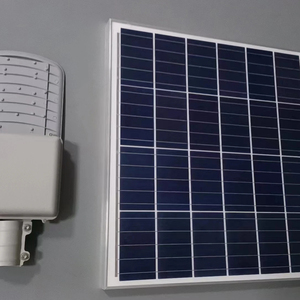
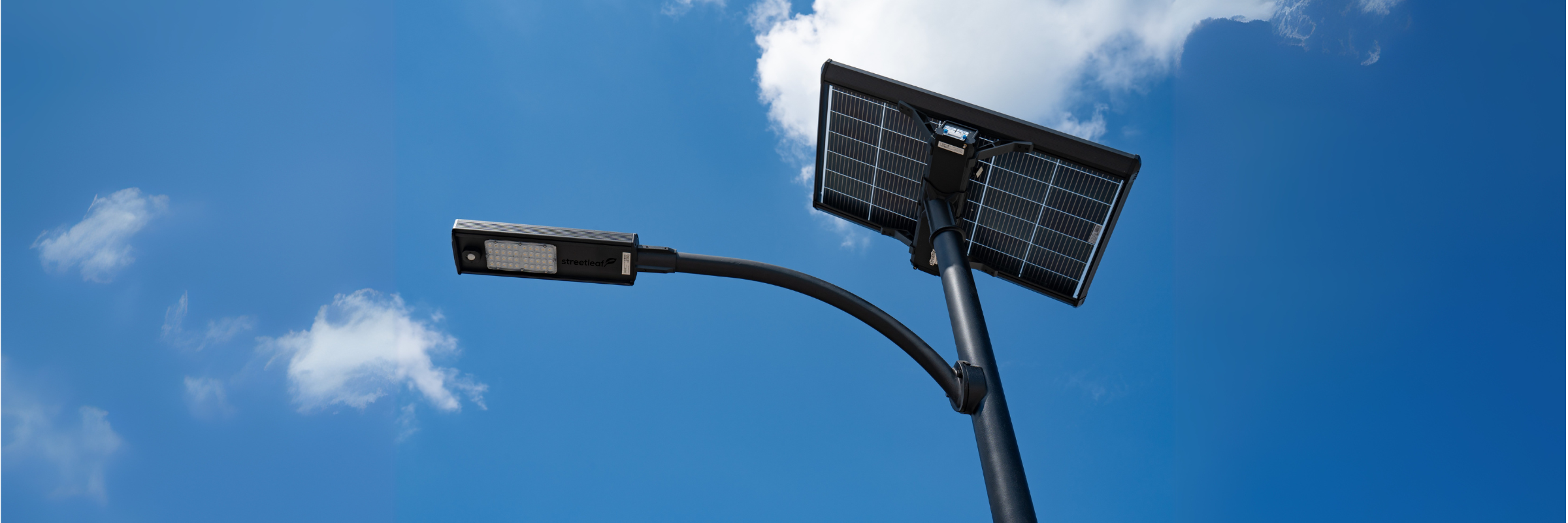
Split-integrated architectural design featuring high-efficiency monocrystalline PV panel and die-cast luminaire head for flexible tilt angles and optimized solar absorption.
Get Catalog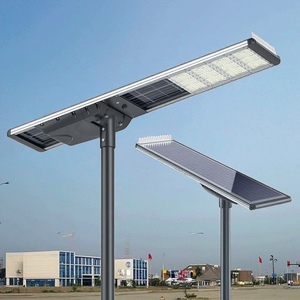
Heavy-duty industrial pole-mounted luminaire engineered for extreme weather resilience. Features high lumen efficacy up to 210 lm/W and customized battery sizing.
Get Catalog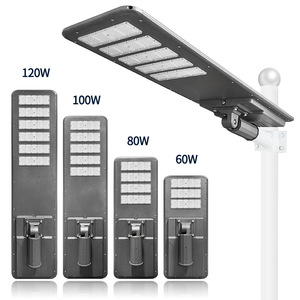
Super bright municipal engineering luminaire with Lumileds 5050 LED optics. Designed for rural highways, urban arterials, and government infrastructure projects.
Get Catalog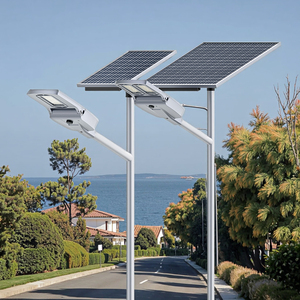
Equipped with smart IoT wireless monitoring, Grade-A LiFePO4 battery pack, and adaptive dimming curves. Ideal for harsh environments requiring deep autonomy.
Get Catalog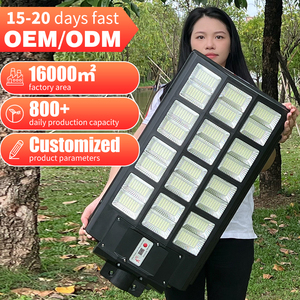
Compact All-in-One residential & community roadway solar light featuring dusk-to-dawn intelligent control, optical glass lenses, and seamless zero-wiring setup.
Get Catalog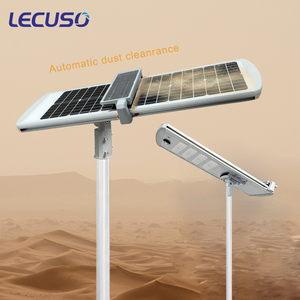
Patented motorized robotic brush system automatically sweeps solar panel dust and debris twice daily, preventing performance loss in desert and high-dust regions.
Get Catalog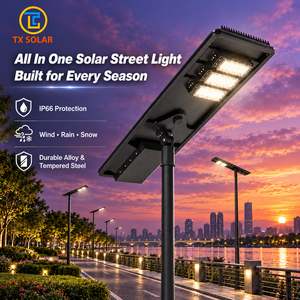
Tailor-made commercial solar lighting system designed for parking lots, collector roads, and perimeter security. Built with corrosion-resistant 6063 aluminum housing.
Get Catalog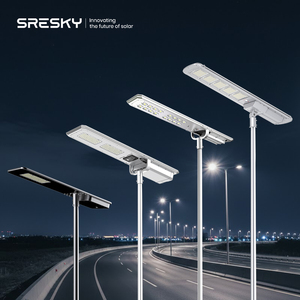
Commercial grade luminaire featuring patented ALS (Adaptive Lighting System) & TCS (Temperature Control System) for continuous multi-day operation under prolonged rain.
Get CatalogAn in-depth industrial analysis on thermal dynamics, optical photon distribution, and energy density optimization in modern standalone solar street lighting infrastructure.
Traditional utility streetlights often suffer from severe light trespass and uneven lux distribution. Custom solar luminaire engineering utilizes IESNA Type II & Type III batwing optical lenses crafted from optical-grade PMMA (poly-methyl methacrylate) with 95% light transmittance. This shifts energy distribution precisely onto roadway surfaces, eliminating waste while achieving uniformities exceeding 0.40 Uo.
Modern commercial custom solar streetlights have evolved beyond basic P-type PERC panels. Incorporating N-Type TOPCon bifacial solar panels allows energy generation from both direct solar irradiance and albedo reflection from asphalt or surrounding terrain. This enhances total daily power yield by up to 25%, maintaining battery replenishment even during low Peak Sun Hour (PSH) winter months.
Energy storage integrity dictates the total cost of ownership (TCO). High-spec OEM systems integrate EV-grade Lithium Iron Phosphate (LiFePO4) battery packs featuring internal thermal insulation and Smart BMS management. Delivering over 6,000 deep discharge cycles at 80% DOD, these batteries maintain reliable operating thresholds across extreme ambient climates (-20°C to +65°C).
In municipal project tenders, light efficacy (lumens per watt) directly dictates the requisite solar panel acreage and battery storage volume. By leveraging high-density SMD 5050 / 3030 LED chips with efficacy reaching 210 Lumens per Watt, a custom-engineered 50W solar streetlight yields 10,500 total lumens. This matches the effective ground illuminance of a legacy 150W High-Pressure Sodium (HPS) fixture while reducing power draw by 66%.
Furthermore, intelligent MPPT (Maximum Power Point Tracking) charge controllers dynamically step up or step down charging parameters with 98.5% conversion efficiency. Coupled with dual-stage PIR/Radar motion sensors, the luminaire operates on an automated adaptive profile—holding 100% brightness during peak traffic hours and throttling to 30% ambient eco-mode when inactive, guaranteeing 5 to 7 full days of continuous autonomy.
Direct factory control guarantees strict compliance with international engineering standards, offering end-to-end customization from CAD modeling to high-volume automated production.
Our manufacturing facility utilizes high-pressure die-cast aluminum alloys (ADC12 / AL6063-T6) coated with architectural-grade akzoNobel thermosetting polyester powder. This provides superior anti-corrosion protection capable of enduring 1,000+ hours of continuous salt spray exposure in coastal marine environments (ISO 9227 compliant).
Full ODM structural design: specialized mounting brackets, variable tilt angles (0° to 30°), and custom pole adapter diameters (60mm to 89mm).
100% Automated Optical Inspection combined with thermal imaging aging chambers to detect micro-cracks or heat bottlenecks before packing.
Certified to CE, RoHS, ISO9001, ISO14001, CB, IEC 60598, and UN38.3 standard transport protocols for hazardous lithium battery freight.
Laser-engraved client logos, customized user manuals, drop-ship container loading, and palletization built for international freight efficiency.
As global municipalities accelerate net-zero carbon initiatives and smart city upgrades, procurement criteria for commercial solar streetlights are experiencing a technological paradigm shift.
Future tenders increasingly mandate wireless telemetry capabilities. Standalone solar lights are morphing into distributed IoT nodes using NEMA 7-pin and Zhaga Book 18 receptacles. Operating over LoRaWAN, NB-IoT, or Cellular networks, municipal operators can remotely adjust lumen schedules, analyze battery health metrics in real time, and trigger automated work orders for faulty units.
Soiling loss—caused by dust accumulation, desert sandstorms, or bird droppings—can attenuate solar generation by over 35% in high-dust regions (e.g., Middle East, North Africa, Southwestern USA). The market is rapidly shifting toward integrated self-cleaning solar streetlights equipped with automated dual-direction rubber wipers that run scheduled cleaning cycles daily.
Environmental regulations strictly restrict light pollution and blue-spectrum glare near wildlife habitats and astronomical observatories. Modern custom manufacturing incorporates Dark-Sky Compliant cut-off optics and narrow-spectrum Amber CCT (590nm wavelength / 2200K) options to safeguard sea turtle nesting beaches and nocturnal ecosystems while meeting strict illuminance standards.
For critical infrastructure such as arterial highways, municipal centers, and remote security gates, hybrid AC/DC solar systems are becoming standard. When solar reserves drop below 10% during abnormal monsoon periods, the smart controller seamlessly toggles to auxiliary grid power for continuous zero-downtime operation.
Selecting the optimal system configuration depends on project latitude, installation height, pole spacing, and target lux levels. Review our comparative engineering matrix.
| System Architecture | Optimal Application | Wattage Spectrum | Autonomy Capacity | Wind Load Resistance | Maintenance Index |
|---|---|---|---|---|---|
| All-in-One (Integrated) | Residential roads, pathways, HOAs, park perimeters | 15W - 80W | 3 - 5 Days | High (Low Drag Profile) | Very Low (Plug & Play) |
| All-in-Two (Semi-Split) | Urban arterials, commercial parking lots, plazas | 40W - 120W | 5 - 7 Days | Very High (Adjustable PV) | Low |
| Split-Type Solar Luminaire | Highways, heavy industrial zones, high-latitude regions | 60W - 200W+ | 7 - 10 Days | Engineered Pole Rating | Moderate (Modular Servicing) |
| Self-Cleaning System | Deserts, mining sites, dusty agricultural zones | 30W - 150W | 5 - 7 Days | High (Robotic Housing) | Extremely Low |
Wp = (Total Daily Wh Consumption) / (PSH × System Efficiency Factor)
Accounts for system losses (inverter, charge controller, wire drop) and regional Peak Sun Hours (PSH).
Ah = (Daily Wh × Autonomy Days) / (Nominal Voltage × Max DOD)
Sizes LiFePO4 energy reserves based on required days of autonomy without sun exposure.
E (Lux) = (Lumens × Light Loss Factor × CU) / (Pole Spacing × Width)
Determines target ground lux level considering Coefficient of Utilization (CU) and maintenance loss.
Clear, technical answers to essential engineering, OEM manufacturing, and international procurement questions.
All-in-One (Integrated) systems consolidate the solar panel, LiFePO4 battery, LED engine, and controller into a single compact housing for simple installation. All-in-Two (Semi-Split) systems feature an independent adjustable solar panel mounted above an integrated luminaire body, enabling maximum solar tilt angle customization. Split Systems separate all core components (panel, luminaire, ground-mounted battery box), allowing massive solar arrays and battery banks required for high-wattage municipal highways or low-sun climates.
Standard LiFePO4 batteries cannot accept charge below 0°C without risking lithium plating and permanent capacity degradation. Our custom engineered solar lights utilize BMS units with built-in thermo-electric heating pads. When ambient temperatures drop, solar power is first directed to internal heating elements to raise cell temperatures to +5°C before initiating the charging cycle, ensuring continuous operation down to -30°C.
To provide an accurate DIALux optical simulation and engineering quote, our factory requires: (1) Installation location or Peak Sun Hours (PSH), (2) Required pole height and pole spacing, (3) Road width and targeted Illuminance (Lux level or IESNA classification), (4) Desired days of autonomy (e.g., 3 to 5 rainy days), and (5) Smart control requirements (PIR motion sensor, dimming profile, or NEMA/Zhaga IoT socket).
Our self-cleaning solar systems utilize a heavy-duty, UV-resistant rubber brush driven by a high-torque brushless DC motor integrated into the solar panel frame. Programmed via the MPPT controller, the brush automatically traverses the panel surface twice daily (at dawn and dusk). The mechanical components are tested for over 50,000 cleaning cycles, providing years of maintenance-free operation in high-dust regions.
All our streetlight systems are backed by comprehensive third-party lab documentation, including ISO9001, ISO14001, ISO45001, CE, RoHS, CB, IEC 60598-2-3 (street lighting safety), IEC 62109 (inverter/controller), IP66 ingress protection, IK10 impact resistance, ISO 9227 salt spray anti-corrosion reports, and UN38.3 + MSDS safety sheets for international lithium battery shipping.
Our structural engineers perform Finite Element Analysis (FEA) on all mounting hardware, tenons, and panel brackets. Luminaire housings are die-cast using ADC12 aluminum with high tensile strength. Base plates and fasteners use marine-grade 316 stainless steel. Complete pole and fixture assemblies are wind-tunnel tested to withstand gust velocities up to 60 m/s (134 mph).
While high-quality solar streetlights carry an initial hardware cost, they eliminate expensive underground trenching, copper cabling, transformer installation, and ongoing electricity tariffs. On typical commercial or municipal projects, the installation savings offset the equipment cost immediately, yielding complete capital ROI within 12 to 18 months, followed by 10+ years of zero electricity bills.
We back our industrial solar streetlights with standard 3-year to 5-year full system warranties (covering LED module, PV panel, battery, and controller), with extended 10-year warranties available for monocrystalline PV panels. In the rare event of a component issue, replacement modules are shipped via priority air freight under our direct factory guarantee support protocol.
Whether you require custom CAD bracket designs, localized DIALux photometrics, or turnkey high-volume OEM production for an upcoming tender—our engineering team is ready to deliver.