
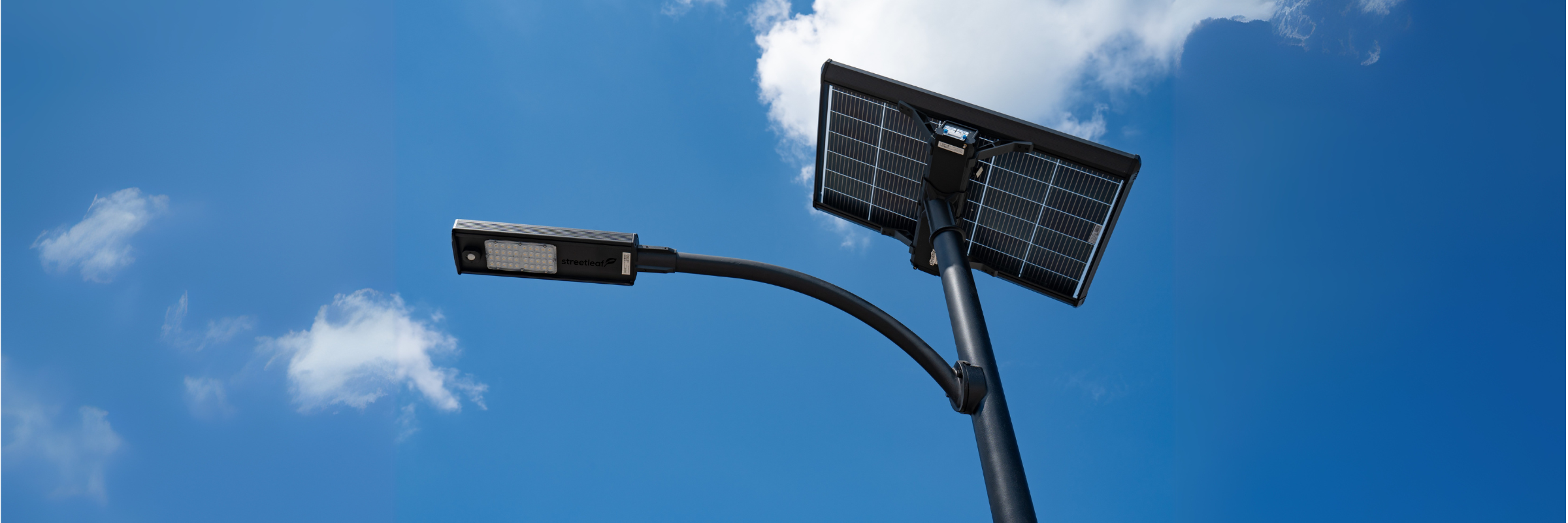
High-lumen, hurricane-resilient double arm solar lighting configurations built with N-type bifacial photovoltaics and LiFePO4 energy matrices.
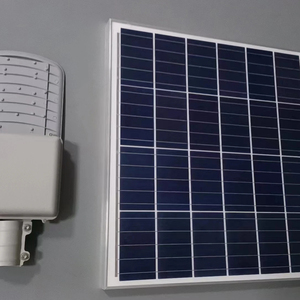
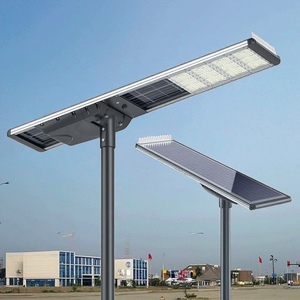
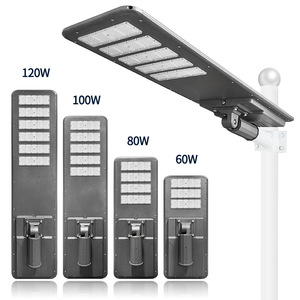
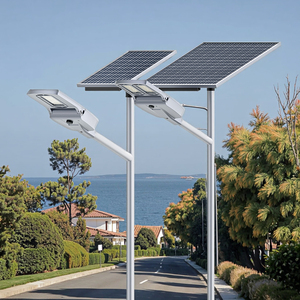
In modern civil infrastructure, Double Arm Solar Streetlights represent the pinnacle of dual-directional optical efficiency for highway medians, dual-carriageway boulevards, industrial logistics parks, and sprawling commercial real estate. Unlike single-arm structures that serve unidirectional traffic, double arm configurations mount two independent optical engines and PV capture arrays to a single structural pole. This reduces total civil works costs, pole foundation footprint, and trenching expenditures by 50% while delivering uniform illumination across bidirectional transit channels.
When specifying top-tier double arm solar streetlights from OEM factories, municipal engineers must evaluate key photometric vector metrics. Optical engines equipped with asymmetric Type II-M and Type III-M batwing lenses ensure light is directed laterally along the roadway rather than wasted off-road or spilled upward into the atmosphere. This precision engineering guarantees compliance with International Dark-Sky Association (IDA) standards while delivering high uniform lux levels ($U_0 > 0.4$) across both travel directions.
Information Gain Engineering Benchmark: Dual-arm optical structures engineered by Tier-1 manufacturers utilize dual independent Maximum Power Point Tracking (MPPT) channels. This allows individual arm dimming and localized motion sensing, balancing energy draw when traffic volumes on one side of a boulevard decrease late at night.
Distributes lumen output across multi-lane arterial roads and adjacent pedestrian walkways simultaneously from a centralized median pole.
Symmetrical weight distribution neutralizes bending moment forces on 8m-12m poles during Category 5 wind speeds (up to 165 mph / 74 m/s).
Halves concrete foundation pouring, pole procurement, and installation labor overhead compared to installing separate single-arm poles.
The field reliability of commercial double arm solar streetlights depends directly on component quality. Leading manufacturing factories have shifted away from legacy Polycrystalline panels and traditional lead-acid or AGM gel batteries toward integrated N-Type TOPCon Bifacial Photovoltaics coupled with industrial-grade Lithium Iron Phosphate (LiFePO4) battery packs.
N-Type TOPCon bifacial modules capture direct sunlight on their primary surface while simultaneously harvesting albedo radiation reflected from the pavement, snow, or sand on their rear side. This adds up to 25% additional energy yield, maintaining battery state-of-charge (SoC) even during multi-day storm cycles.
LiFePO4 battery chemistry offers unmatched thermal stability and safety, eliminating thermal runaway risks up to 65°C. With a standard depth-of-discharge (DoD) of 80%, these batteries deliver over 6,000 continuous cycles, providing a 10 to 12-year operational lifespan without battery replacements.
| Subsystem Component | Standard Factory Grade Specifications | Enterprise Tier-1 Manufacturer Standard | Infrastructure Impact |
|---|---|---|---|
| Solar PV Panel | P-Type PERC Monocrystalline (20.5% Efficiency) | N-Type TOPCon Bifacial (24.8% Efficiency) | +25% Power Harvest in overcast weather |
| Battery Storage | Ternary NCM / Standard LiFePO4 (2,000 Cycles) | Industrial Grade LiFePO4 EV Cells (6,000+ Cycles) | Eliminates mid-life maintenance calls |
| Charge Controller | Standard PWM Controller (75% Efficiency) | Smart MPPT with IoT Telemetry (98.5% Efficiency) | Real-time remote cloud diagnostics & VPP support |
| LED Efficacy | 140 lm/W - 160 lm/W (SMD 3030) | 210 lm/W - 230 lm/W (High Efficacy SMD 5050) | 50% less battery draw for identical Lux output |
| Ingress Protection | IP65 Enclosure rating | IP67 Sealed Housing with Breathable Vent | Prevents moisture condensation & salt corrosion |
Selecting a top-tier factory for double arm solar streetlight procurement requires rigorous verification of manufacturing facilities, optical laboratory equipment, and quality control systems. Low-cost vendors frequently inflate wattage ratings, use second-life battery cells, and omit mechanical stress testing.

A trusted factory must maintain certified testing equipment, including Type-C Goniophotometers for optical vector mapping, Automated SMT Assembly Lines for LED driver stability, and 1000-Hour Salt Spray Corrosion Chambers (compliant with ISO 9227 standards) to ensure coastal longevity.
The global solar street lighting sector is undergoing a rapid technological evolution driven by smart city initiatives, edge computing, advanced materials science, and innovative infrastructure financing models. Strategic procurement officers should anticipate the following four macro trends:
Double arm luminaires are becoming digital nodes. Factories now integrate LoRaWAN, NB-IoT, CCTV camera power taps, and air-quality monitoring directly into the pole assembly.
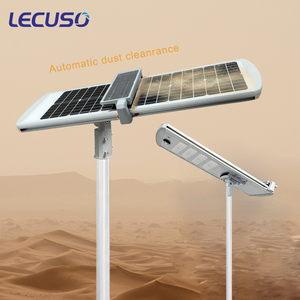
Automated motorized brushes and superhydrophobic nano-coatings clear dust, dirt, and bird droppings daily, preventing up to 30% solar power degradation in arid regions.
Embedded machine learning algorithms analyze traffic density patterns and weather forecasts to automatically balance energy distribution between both lighting arms.
Municipalities and commercial developers are transitioning away from high upfront capital expenditure (CAPEX) models. Progressive manufacturers now offer Light-as-a-Service (LaaS) and structured service agreements. Under these models, equipment, pole assembly, installation, remote monitoring, and lifelong battery replacements are bundled into a predictable operational fee—making double arm solar streetlights instantly cash-flow positive against utility grid bills.

Engineered solutions to common technical inquiries raised by procurement officers, civil engineering contractors, and utility managers during tender specifications.
The sizing equation must account for total wattage across both luminaire heads ($P_{total} = P_{arm1} + P_{arm2}$), operating duty cycles (e.g., 100% brightness for 4h + 30% dimming for 8h = 5.2 equivalent full power hours), local solar peak hours ($PSH$), and target autonomy days ($D_{aut}$).
Formula for Battery Capacity ($Wh$):
Battery Capacity (Wh) = [ (P_total × Hours) / (DoD × System Efficacy Factor) ] × D_aut
For a dual 60W luminaire system (120W total) operating 10 hours daily with 5 days of rainy autonomy and 80% LiFePO4 Depth of Discharge (DoD), the system requires approximately 1,200Wh to 1,500Wh of battery capacity and a 300W–360W solar array.
All-in-Two Double Arm: Integrates the LED optical engine, LiFePO4 battery, and MPPT controller into each arm luminaire body, while the PV panel is mounted separately at the top of the pole. This simplifies installation and reduces pole top weight.
Split-Type Double Arm: Places the battery in a underground vault or lower pole enclosure. This is ideal for extreme climates (severe freezing or ambient heat over 50°C) where thermal management requires sub-surface battery insulation.
Double arm brackets act as physical lever arms. Tier-1 manufacturers run Finite Element Analysis (FEA) software to calculate total Wind Drag Coefficients ($C_d$). By utilizing extruded 6063-T6 aluminum alloy brackets with internal steel reinforcement sleeves and high-tensile Grade 8.8 stainless steel fasteners, assemblies safely handle dynamic wind pressures over 2,400 Pascals (Category 5 hurricane compliance).
Procurement tenders must require: CE, RoHS, IP67 Waterproofing test reports, IK10 Impact resistance certificates, ISO 9001 quality system compliance, and IES LM-79 / LM-80 photometrics reports. For coastal projects, ISO 9227 Salt Spray test reports (1,000+ hours) are essential.
Highway traffic kicks up heavy particulate pollution, diesel soot, and dust. Dust accumulation on solar panels causes up to 1% efficiency loss per day. Automated self-cleaning double arm solar lights use daily programmable wiper blades to keep PV glass clean, preserving maximum charge capacity without requiring manual maintenance crews.
As a specialized leader in commercial off-grid illumination, our partner factories deliver full engineering support from initial Dialux optical simulation to site commissioning. We specialize in custom OEM bracket design, solar array sizing for challenging geographic latitudes, and IoT smart controller integration.
All double arm structures are validated against Category 5 wind loads. Our luminaires remain illuminated when power grids go down during extreme weather events.
Over-sized LiFePO4 battery banks and intelligent adaptive dimming profiles ensure uninterrupted illumination through prolonged bad weather.
We assist municipal buyers, developers, and utility providers with photometrics, customized mounting hardware, and direct factory-to-site logistics.
Accelerate your municipal or commercial lighting tender. Access complete Dialux photometrics, structural wind engineering reports, and factory-direct OEM quotation catalogs instantly.