
Engineered for municipal roadways, industrial logistics parks, highway corridors, and off-grid infrastructure projects. Fully customizable via OEM/ODM exporter frameworks.
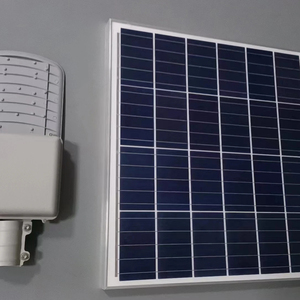
Dual-module architecture separating the PV panel engine from the LED luminaire head. Allows 360° rotational positioning and 0°–60° solar tilt optimization for maximal irradiation harvesting in non-equatorial latitudes.
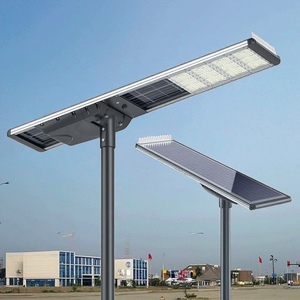
Heavy-duty industrial solar streetlight package designed for utility pole integration. Features die-cast ADC12 aluminum housing, dual silicone gaskets, and scalable lumen output options up to 32,000 lumens.
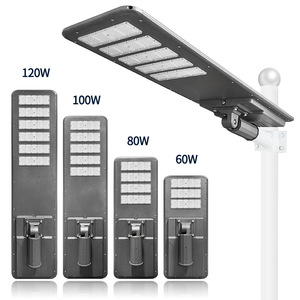
High-lumen integrated solar lighting system built for high-speed rural bypasses and urban arterial roads. Incorporates high-efficiency Monocrystalline silicon cells and automated micro-lens light distribution technology.
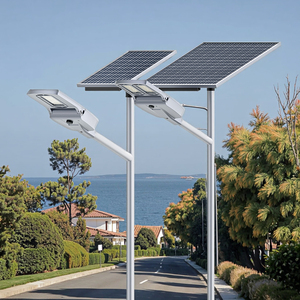
Split-configuration luminaire engineered for extreme monsoon, coastal fog, and heavy precipitation zones. Remote wireless IoT node integration enables dimming schedules, fault telemetry, and cloud reporting.
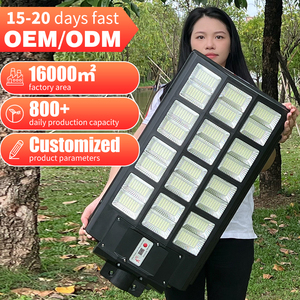
Aerodynamic unibody solar streetlight tailored for rapid mounting on residential access roads, perimeter security fencing, and rural townships. Optimized for zero-trenching setup and instant deployment.
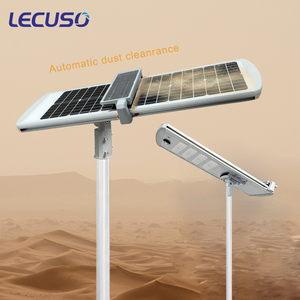
Equipped with a programmable robotic sweeping arm and hydrophobic glass coating. Removes dust, sand, bird droppings, and industrial particulate twice daily, retaining 99% PV panel conversion yield in desert environments.
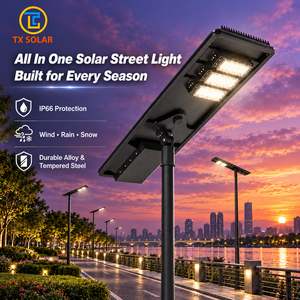
B2B commercial grade OEM luminaire optimized for contractor tender specs. Features dynamic microwave Doppler sensors, custom battery sizing options, and private label housing finishes.
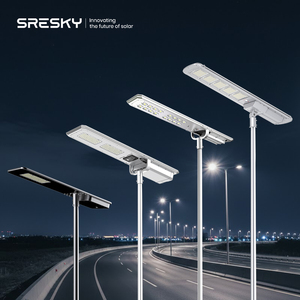
Heavy-duty commercial luminaire featuring patented Adaptive Lighting System (ALS2.4) core technology, guaranteeing 365 nights of uninterrupted illumination even through extended rainy seasons and extreme winter conditions.
Combining advanced photovoltaic thermodynamics, automotive-grade lithium iron phosphate chemistry, and severe weather physical structural mechanics.
Integrating dual-sided N-Type TOPCon solar cell modules that capture both direct overhead sunlight and ground-reflected albedo light, yielding up to 25% additional power generation over conventional monocrystalline panels.
Utilizing high-purity Grade-A Lithium Iron Phosphate (LiFePO4) cell chemistry offering 6,000+ deep charge/discharge cycles at 80% DOD. Features thermal insulation barriers and dynamic BMS overcharge/under-voltage safety cutoff.
Traditional grid-tied streetlighting projects incur massive upfront municipal civil engineering expenditures—often exceeding $4,000 to $8,000 per pole in trenching, conduit laying, transformer stepping, and grid connection permits. Our off-grid IP65 waterproof solar lighting systems bypass grid interconnection entirely. Through flexible B2B financing and turnkey OEM exporting models, civil developers and municipal HOAs can achieve complete lighting compliance with zero utility electrical bills and up to 70% lower total installed project costs.
When procuring commercial solar lighting for long-term municipal contracts, understanding ingress protection mechanics is paramount. An IP65 rating certifies that the luminaire housing is completely dust-tight (Ingress protection level 6) and protected against low-pressure water jets directed from any angle (Level 5 protection via a 6.3mm nozzle at 12.5 L/min). This is achieved using vulcanized seamless EPDM or high-temperature liquid silicone gasket seals compressed between precision die-cast aluminum frames.
For coastal environments subjected to typhoon-force driving rains, sea-spray aerosols, and high hydrostatic pressure, our IP66 extreme-grade split luminaires utilize pressurized double-channel silicone seals, IP68 rated waterproof PG cable glands, and breathable PTFE hydrophobic vents. These micro-porous membrane vents equalize internal thermal pressures without allowing moisture vapor molecules to enter, eliminating internal lens condensation and protecting delicate SMD LED micro-arrays from chemical degradation.
Key technological shifts driving global procurement specifications across municipal tenders and utility-scale off-grid installations.
The off-grid solar lighting sector is undergoing a massive shift toward N-Type TOPCon (Tunnel Oxide Passivated Contact) photovoltaic cells. Compared to legacy P-type PERC panels, TOPCon technology delivers a higher theoretical efficiency ceiling (exceeding 28.7%), a significantly lower temperature coefficient (-0.30%/°C), and negligible Light-Induced Degradation (LID). For B2B importers, specifying TOPCon integrated solar luminaires translates to 15% higher energy yield in hot desert climates where roof and pole surface temperatures frequently exceed 65°C.
Standalone solar streetlights are transitioning from isolated illumination points into smart city micro-nodes. Modern municipal tenders increasingly demand standardized Zhaga Book 18 sockets combined with DALI-2 / D4i driver protocols. This enables seamless plug-and-play installation of LoRaWAN, Cellular NB-IoT, or Zigbee wireless controllers. Facility managers can monitor real-time battery State of Charge (SoC), solar charging currents, thermal profiles, and LED failure reports remotely via cloud dashboard systems, drastically reducing O&M truck rolls.
Soiling loss—the accumulation of atmospheric dust, sand, industrial particulates, and organic residue on solar panel surfaces—is the leading cause of power degradation in off-grid solar lighting, reducing solar harvest by up to 2.5% per week in arid regions. The market is rapidly adopting integrated robotic self-cleaning solar streetlights. Featuring dual-directional rubber squeegees, brushless DC stepper motors, and super-hydrophobic nano-coatings, these systems execute automated wiping cycles twice daily, preserving 98%+ nominal charging capacity over multi-year deployments without manual intervention.
Light pollution mitigation and spectral output control are becoming mandatory procurement factors across North America, Europe, and the Middle East. Advanced solar streetlights now feature precision-engineered PMMA optical lenses offering asymmetric Type II-M and Type III-M batwing light distribution patterns. This directs light laterally along roadways while maintaining a sharp forward cutoff, eliminating light trespass into residential windows and minimizing skyglow. Furthermore, dark-sky compliant 2200K–3000K warm LED CCT options and wildlife-friendly amber wavelength emitters are gaining priority in ecologically sensitive coastal and forestry zones.
| Architecture Type | Solar Panel Type | Battery Chemistry | Target Application | Typical Autonomy | O&M Factor |
|---|---|---|---|---|---|
| All-in-One (Integrated) | Mono-PERC / TOPCon | LiFePO4 (Internal) | Urban Roads, Parking Lots, HOAs | 3 - 5 Days | Very Low (5+ Years) |
| All-in-Two (Semi-Split) | Adjustable Tilt TOPCon | LiFePO4 (Internal/External) | High-Latitude Highways, Commercial | 5 - 7 Days | Low (5+ Years) |
| Split-Type (Full Custom) | High-Wattage Bifacial Mono | LiFePO4 / Gel-Lead (External) | Heavy Industrial, Extreme Winters | 7 - 10 Days | Moderate (Battery Inspection) |
| Robotic Auto-Clean | Hydrophobic Coated PV | LiFePO4 (Internal) | Desert Bypasses, Mining Corridors | 4 - 6 Days | Ultra Low (Automated) |
A rigorous evaluation methodology for EPC contractors, importers, and municipal buyers evaluating overseas solar lighting OEMs.
Selecting a reliable OEM manufacturer for IP65 waterproof solar lighting requires looking beyond basic initial price quotes. High-performing off-grid lighting hardware relies on perfectly balanced electrical engineering formulas to prevent early battery depletion during prolonged rain events. When auditing prospective exporter factories, procurement directors should mandate compliance with the following technical verification steps:
Avoid manufacturers who overstate wattage ratings while undersizing internal battery capacity. Use the following baseline formula to audit engineering compliance:
For example, a true 60W luminaire operating at 100% power for 12 hours (720 Wh/night) requiring a 5-day autonomy backup at 3.2V nominal voltage and 80% DoD requires a minimum battery capacity of 1,406 Ah at 3.2V (or 140.6 Ah at 32V). Ensure your exporter provides authenticated IES photometric test files and battery discharge curves from accredited third-party laboratories (TÜV, SGS, or Intertek).
Direct technical answers to common questions regarding off-grid solar streetlight sourcing, installation, O&M, and customization.
Our industrial solar street lights incorporate Intelligent Power Management (ALS2.4/MPPT) algorithms coupled with oversized LiFePO4 battery reserves. Even under 0% direct sunlight exposure on heavy overcast or rainy days, the PV panels continue harvesting ambient diffuse radiation. Combined with smart motion-activated dimming profiles, the system guarantees 5 to 7 days of continuous nighttime illumination without complete battery shutdown.
The luminaire's Philips Lumileds or Cree SMD LED engines carry an LM-80 rated operational lifespan exceeding 100,000 hours (over 22 years at 12 hours/night). The internal EV-grade Lithium Iron Phosphate (LiFePO4) battery pack is rated for 6,000+ deep cycles at 80% Depth of Discharge, translating to an expected functional lifespan of 10 to 12 years. Batteries are modularly designed for effortless plug-and-play field replacement.
All-in-One (Integrated) systems combine the solar panel, LiFePO4 battery, MPPT controller, and LED engine into a single compact unibody. They offer rapid 15-minute installation, minimal wind resistance, and zero external wiring. Split-Type systems separate high-wattage solar panels and large external battery enclosures from the lamp head, making them ideal for extreme northern latitudes requiring massive solar panels tilted at steep angles, or high-lumen 200W+ highway projects.
Our robotic auto-cleaning solar streetlights utilize a programmed high-torque brushless DC motor connected to a dual rubber squeegee arm. Running twice daily (once at dawn and once at dusk), the wiper sweeps accumulated dust, sand particles, and organic debris off the hydrophobic tempered glass cover. Field testing in Middle Eastern desert corridors demonstrates a 30% to 38% increase in cumulative annual power harvest compared to uncleaned panels.
Yes. As a primary manufacturer and exporter, we offer complete ODM/OEM customization. This includes custom housing color powder-coating (RAL color matching), laser-etched brand logos, custom optical distribution lenses (Type II, III, IV), tailored dimming profiles, dedicated CCT configuration (2200K–6500K, Amber turtle-safe), and pre-wired smart city IoT sockets (NEMA 7-pin or Zhaga Book 18).
Our luminaires are constructed using high-tensile pressure die-cast ADC12 aluminum alloys, reinforced internal structural ribbing, and heavy-duty SUS304 mounting brackets. Structural finite element analysis (FEA) and aerodynamic wind tunnel tests confirm that our unibody profiles maintain mechanical structural integrity against dynamic wind pressure loads up to 165 mph (74 m/s).