
Rigidly lab-tested off-grid luminaires equipped with ultra-efficient mono-PERC/TOPCon modules, deep-cycle LiFePO4 energy storage, and smart IoT control modules.
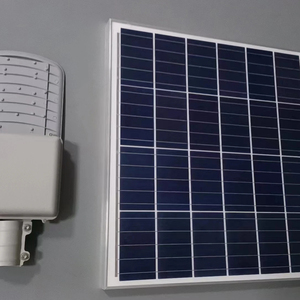
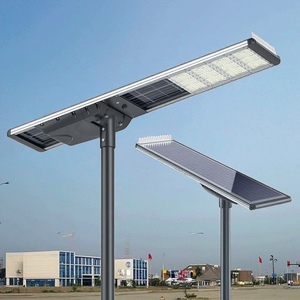
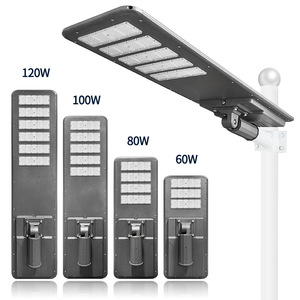
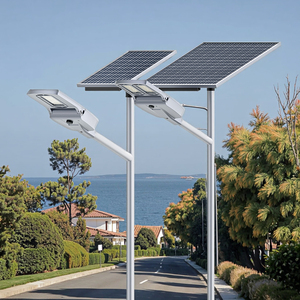
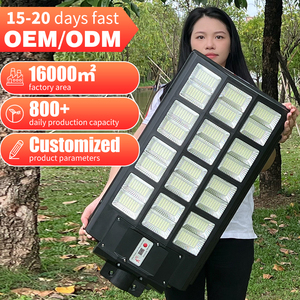
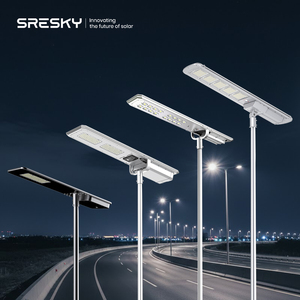
In public infrastructure and mega-commercial developments, procurement failure is rarely caused by the light-emitting diode (LED) itself. Rather, system failure stems from substandard energy balance calculations, poor thermal management, rapid battery degradation, and mechanical failure under extreme weather events. As a premier manufacturer and global exporter, our engineering ethos centers on delivering guaranteed photometrical performance and structural integrity over a 10-to-15-year service lifecycle.
Municipal infrastructure projects require strict adherence to international lighting standards such as EN 13201 and IESNA RP-8. Consumer-grade solar products frequently utilize exaggerated lumen claims calculated at peak instantaneous LED chip output rather than sustained, thermally stabilized system output (Lm/W). The matrix below outlines the critical engineering differentiators that municipal engineers and utility operators must evaluate during tender preparation.
| Evaluation Parameter | Consumer / Standard Commercial Grade | Project-Grade (Our Manufacturing Standard) |
|---|---|---|
| Photovoltaic Module Technology | Polycrystalline / Standard Mono (17%-19% Efficiency) | Bifacial N-Type TOPCon / Monocrystalline PERC (22%-23.8% Efficiency) |
| Battery Chemistry & Cycle Life | Ternary NMC / Recycled LiFePO4 (<1,500 Cycles @ 80% DOD) | 100% Brand-New EV-Grade LiFePO4 (6,000+ Cycles @ 80% DOD) |
| Charge Controller (BMS/MPPT) | Basic PWM Controller (70%-75% Efficiency) | Patented Intelligent MPPT (98.5% Tracking Efficiency + Dynamic Dimming) |
| Structural Wind Load Resistance | Unrated / Standard 30 m/s (Breeze Rated) | Category 5 Hurricane Resistance (Tested to 65 m/s / 145 mph) |
| Thermal Operating Range | -10°C to +45°C (Fails in extreme summer heat) | -40°C to +70°C (Integrated Thermal Phase-Change Insulation) |
| Lens & Optical Distribution | Generic 120° Symmetric PC Lens (High Glare/Spill) | Batwing Type II-M / Type III-M Optical PMMA Lenses (Zero Upward Light) |
| Maintenance Architecture | Non-Modular (Requires full luminaire replacement) | Tool-less Modular Drawer Design (5-Minute Component Replacement) |
The global solar street lighting market is undergoing a seismic shift driven by grid instability, escalating utility electricity tariffs, decarbonization mandates, and the integration of Smart City IoT frameworks. Buyers are shifting from a Capital Expenditure (CAPEX) single-minded approach to evaluating Total Cost of Ownership (TCO) and long-term infrastructure resilience.
Next-generation project luminaires are rapidly adopting vertical and dual-sided bifacial photovoltaic panels. By capturing direct sunlight on the front and albedo ground reflections on the reverse side, energy generation increases by 15% to 30%, dramatically shortening charging windows in winter or cloudy conditions.
Municipalities are mandating cloud-connected streetlights. Utilizing Cellular (NB-IoT/LTE-M) or LoRaWAN wireless protocols, engineers can remotely monitor battery state-of-charge (SoC), operational status, solar energy harvesting metrics, and receive automated fault alerts prior to total power loss.
Static dimming profiles are being superseded by adaptive artificial intelligence controllers. Our patented algorithms analyze historical weather patterns and local solar irradiance in real-time, automatically adjusting LED power consumption to guarantee 365-day uninterrupted illumination regardless of extended monsoon or snow conditions.
To maintain competitive advantage in global tenders, project-grade solar luminaires must solve three long-standing physical bottlenecks: dust-induced solar efficiency drop, battery heat degradation, and optical glare pollution.
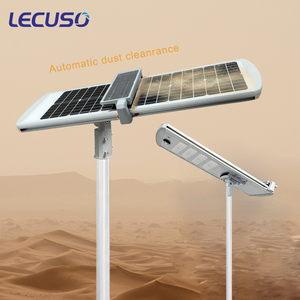
In arid, high-dust environments such as the Middle East, North Africa, and Mining Corridors, dust accumulation on solar glass can degrade photovoltaic output by up to 35% in less than four weeks. Our flagship Auto-Clean Series incorporates an automated, dual-brush sweeping mechanism driven by a brushless DC motor. Programmed to operate twice daily, it removes particulate matter without scratching the tempered glass surface, ensuring 99.5% continuous solar conversion efficiency without manual maintenance costs.
Uncontrolled light pollution adversely affects nocturnal ecosystems, avian migration, and human circadian rhythms. Project-grade manufacturing now emphasizes zero upward light ratio (ULOR = 0%). Furthermore, for coastal infrastructure located near marine turtle nesting sites or wildlife sanctuaries, our factory produces customized Amber Light (590nm narrow band) and low CCT (2700K-3000K) optical engines that meet international Dark-Sky guidelines while delivering high pavement illuminance uniformity.
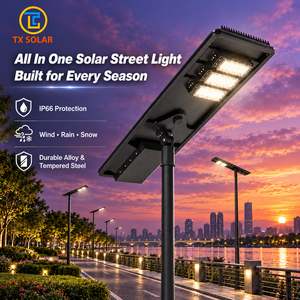
Severe weather caused by global climate changes demands robust mechanical design. Our luminaires are constructed from high-pressure die-cast ADC12 aluminum housing, treated with electrostatically sprayed fluorocarbon coating for 1,000-hour salt spray resistance (ASTM B117 standard). The aerodynamic profile minimizes wind drag coefficient, permitting safe operation during Category 5 hurricane wind loads (up to 65 m/s).
With over two decades of dedicated manufacturing experience, our enterprise acts as a strategic OEM/ODM technical partner for EPC contractors, real estate developers, municipal authorities, and international utility firms. We eliminate procurement risk by providing end-to-end quality assurance, photometrical DIALux simulation services, and flexible financial models.
Engineered, FEA-stress simulated, and wind-tunnel certified to withstand sustained extreme winds up to 65 m/s. Deployed extensively across hurricane-prone coastal regions.
We assist developers, HOAs, and municipalities through flexible energy-service agreement (ESA) hardware structures, permitting project deployment with minimal upfront capital outflow.
From customized CCT/CRI, custom bracket geometries, branding, and color finishes to specialized battery capacity sizing for extreme latitudes.
Answers to critical technical, financial, and logistical questions commonly raised by project consulting engineers and tender boards.
When preparing Request for Proposal (RFP) or Request for Quotation (RFQ) documentation for highway, industrial estate, or municipal lighting, ensure the following core specifications are explicitly required to prevent low-quality bidding:
Whether you are drafting municipal tender specifications, designing a commercial land development, or seeking reliable OEM manufacturing, our technical engineering team is ready to deliver photometric simulations, technical compliance sheets, and competitive wholesale pricing.