
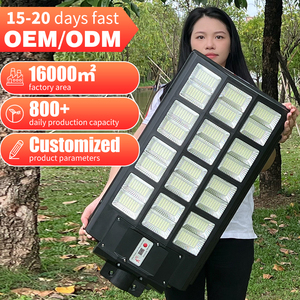
Direct-from-factory OEM/ODM solar outdoor luminaires compliant with ISO9001, CE, RoHS, IP66, and IK10 structural durability benchmarks.
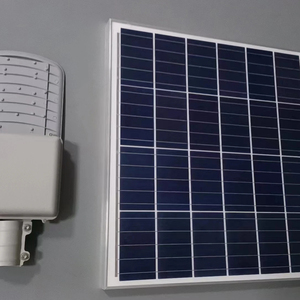
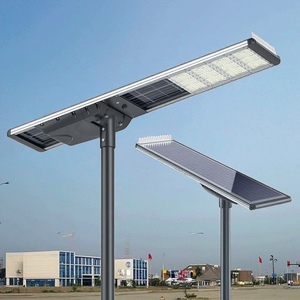
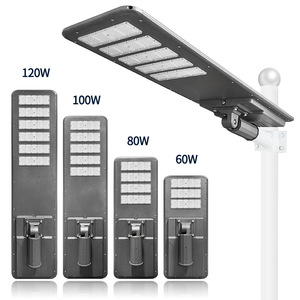
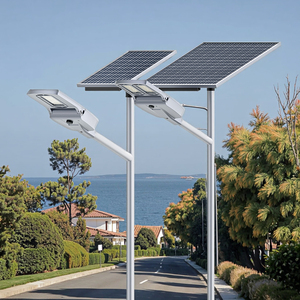
An exhaustive procurement analysis on photovoltaic conversion efficiency, thermal management, optical physics, and total cost of ownership (TCO) for international buyers.
As a global leader and top trusted solar area floodlights exporter, our engineering philosophy revolves around solving the core failure modes of off-grid municipal outdoor lighting: battery degradation under thermal stress, optical glare compliance, dust accumulation losses (soiling coefficient), and catastrophic storm resistance. Municipalities, civil contractors, commercial estate developers, and utility providers require documented reliability over a 10-to-15-year operational lifecycle.
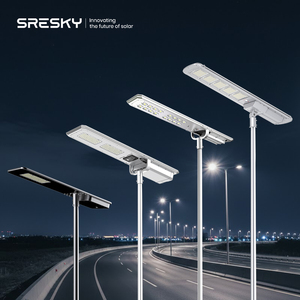
Conventional perimeter floodlights utilize symmetrical circular beam distributions (e.g., 60° or 120° Lambertian patterns), which lead to substantial light pollution, excessive glare, and uneven illuminance ratios on roadways and wide commercial plots. Premium industrial solar floodlights incorporate high-transmittance optical PC lenses engineered for Type II-M and Type III-M asymmetric distribution patterns.
By shaping the light cone laterally across parking aprons and multi-lane perimeter roads, the longitudinal uniformity factor ($U_o$) increases above 0.40, while preserving zero up-light (Dark-Sky Compliant). Utilizing high-binning Cree LED chips or Philips Lumileds 5050 engines running at reduced drive currents, our floodlights achieve an industry-leading optical efficacy of up to 210 lumens per watt at module level, drastically reducing the required photovoltaic surface area and battery footprint.
| Engineering Specification | Tier-1 OEM Export Grade (Streetleaf / CCOBLED) | Standard Commercial Grade | Low-Cost Economy Grade |
|---|---|---|---|
| Photovoltaic Efficiency | 23.5% Monocrystalline Bifacial | 19.0% Monocrystalline Mono-facial | 15.5% Polycrystalline |
| Battery Chemistry & Cycle Life | LiFePO4 (Grade-A) / 6,000+ Cycles | Standard LiFePO4 / 2,000 Cycles | Ternary Li-ion / 800 Cycles |
| Charge Controller Algorithm | Adaptive MPPT (98.5% Efficiency) | Standard MPPT (90% Efficiency) | PWM Controller (70% Efficiency) |
| Mechanical Housing Sealing | ADC12 Die-Cast Aluminum (IP66 / IK10) | Extruded Aluminum (IP65 / IK08) | ABS Plastic Body (IP54 / IK06) |
| Continuous Autonomy | 5 to 7 Rainy/Cloudy Days | 2 to 3 Days | 1 Day Max Reserve |
Sourcing robust equipment requires understanding solar cell physics under real-world ambient conditions. Modern high-power solar floodlights utilize N-Type TOPCon or PERC Bifacial Monocrystalline panels. Unlike traditional single-sided modules, bifacial glass-glass integration captures both direct sunlight on the front surface and albedo radiation reflected from surrounding concrete, asphalt, or sand on the rear side. This produces an additional energy yield gain of 15% to 30%, guaranteeing rapid battery re-charging even during short winter solar days or overcast tropical monsoon periods.
Maximum Power Point Tracking algorithms continuously sweep the I-V curve 100 times per second, ensuring peak charging current even under partial shading from foliage or structural obstructions.
Built-in Phase Change Material (PCM) thermal barriers protect Lithium Iron Phosphate chemistry, preventing thermal runaway and sustaining performance from -20°C up to +70°C ambient temperatures.
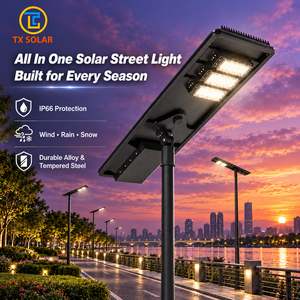
Structural dynamic aerodynamic testing confirms wind resistance up to 65 m/s (over 145 mph), featuring heavy-duty ADC12 die-cast aluminum brackets and stainless 316 anti-vibration hardware.
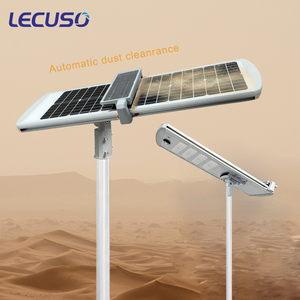
Dust, bird droppings, and industrial particulate fallout (soiling) represent the single greatest cause of long-term output loss in solar luminaires, reducing photovoltaic input power by up to 35% within 6 months of installation in arid or desert regions. Our self-cleaning solar area floodlights integrate dual-action robotic brush mechanisms programmed to execute automatic cleaning sweeps at dawn and dusk. This maintenance-free solution eliminates expensive manual lift-bucket operations across vast utility, highway, and mining sites.
What international engineering buyers, EPC contractors, and government procurement officers must evaluate over the next decade.
Standardization is rapidly moving toward universal plug-and-play sockets (Zhaga Book 18 or NEMA 7-pin ANSI C136.41). This allows solar floodlights to seamlessly integrate smart cities mesh sensors, cellular NB-IoT nodes, and traffic detection systems without rewiring the luminaire head.
Procurement frameworks in North America and the EU now enforce rigorous ESG standards. Exporters must supply fully traceable LiFePO4 battery cells with recyclable modular enclosures, guaranteeing a zero-landfill footprint through structured end-of-life battery recycling initiatives.
Rather than operating at static wattages, modern floodlights utilize 24GHz microwave radar sensors. Luminaires operate at 30% ambient eco-mode, instant-triggering to 100% full brightness upon human or vehicle motion, extending winter operational autonomy past 7 days.
Leading exporters are partnering with infrastructure financing funds to deliver "Lighting-as-a-Service" (LaaS). Cities and real estate developers replace heavy upfront capital expenditures with flat monthly operating leases that include monitoring and battery maintenance.
Direct technical answers to common queries submitted by global procurement teams and electrical engineers.
Professional solar area floodlights feature wider, high-lumen optical distributions, reinforced ADC12 die-cast housings, higher battery-to-LED power ratios, and heavy-duty structural mountings. They are engineered to illuminate vast 2D spaces—such as industrial yards, logistics hubs, sea ports, and parking plazas—rather than narrow linear street paths.
Our engineering team designs system autonomy based on historical NASA solar irradiance data (Peak Sun Hours) for your project latitude. Standard export configurations specify a minimum 5-to-7 day continuous autonomy reserve (autonomy factor = 5), assuming zero solar input during consecutive stormy days, powered by high-capacity LiFePO4 cells rated for 80% Depth of Discharge (DOD).
Integrated All-in-One floodlights combine the PV panel, battery, controller, and LED into a single compact fixture—ideal for rapid installation and lower shipping volume. Split Type / All-in-Two systems separate the solar panel from the light body, enabling custom panel tilt optimization towards the true equator and allowing for massive 300W+ solar panels to power high-wattage 20,000+ lumen floodlights continuous all-night.
As an established top trusted exporter, our solar area floodlight series carries full international testing documentation: CE, CB, RoHS, IP66 Ingress Protection, IK10 Impact Test Reports, IEC 62133 (LiFePO4 battery safety certification), UN38.3 (Lithium transport compliance), and MSDS for international ocean/air freight shipping.
In high-soiling zones (e.g., Middle East, North Africa, mining facilities), uncleaned solar panels lose 2% to 5% charging efficiency weekly. Automatic self-cleaning sweeps clean the glass panel daily, maintaining energy capture at 98%+ nominal efficiency and eliminating costly annual bucket-truck manual cleaning labor.
Yes. We provide complete OEM/ODM engineering capabilities: customized aluminum housing colors, laser-etched brand logos, custom optical beam angles (Type II, III, IV, or 60°/90° symmetrical flood), specialized CCT ranges (2700K Warm Gold to 6500K Daylight, including 590nm Amber turtle-friendly lighting), and custom IES photometric file generation for DIALux simulations.
Decades of manufacturing rigor, rigorous quality assurance, and end-to-end international project support.
Every single luminaire undergoes a strict 72-hour continuous burn-in and optical sphere photometric calibration cycle prior to export packaging, ensuring zero DOA (Dead on Arrival) shipments.
Our in-house optical engineering lab creates customized DIALux lighting calculations and false-color renders to ensure your municipal tender meets exact lux and uniformity requirements.
Full expertise in ocean container freight (FCL/LCL), DDP destination customs clearance, and dangerous goods (UN38.3 Class 9 Lithium Battery) transport compliance worldwide.
Consult with our senior solar engineering specialists today for custom OEM quotes, photometric DIALux reports, and direct factory export pricing.