
Factory-direct OEM/ODM solar streetlight systems certified for high-salinity, typhoon-prone civil aviation and municipal logistics zones in Osaka.
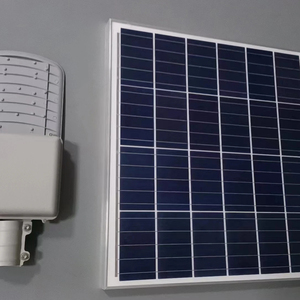
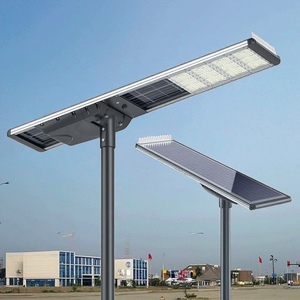
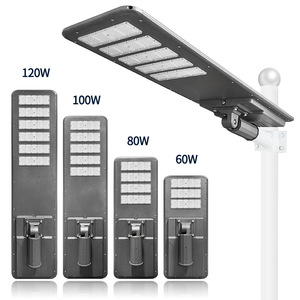
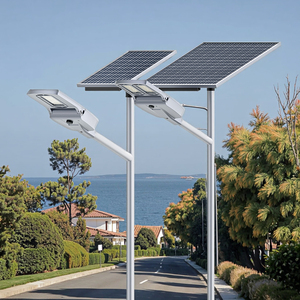

Operating critical civil aviation infrastructure in the Kansai region—specifically surrounding Kansai International Airport (KIX), Osaka International Airport (Itami ITM), Kobe Airport (UKB), and the extensive Nanko Logistics Zone—presents an aggressive combination of coastal climate stresses. As a primary global manufacturing factory and exporter, our engineering team designs photovoltaic illumination systems engineered explicitly for Osaka's rigorous microclimate and Japanese municipal standards (JIS C 8105 / JIS C 8151).
Unlike conventional mainland installations, Osaka Bay's offshore reclaimed airport islands encounter extreme environmental pressures. Artificial land settlement, high-velocity typhoons originating from the Pacific Ocean (with gust speeds frequently exceeding 50 to 60 m/s), dense marine salt mist (C5-M atmospheric rating), and severe seismic risks tied to the Nankai Trough necessitate off-grid lighting solutions that transcend standardized commercial outdoor lights.
Conventional grid-tied airfield access lighting requires deep underground copper conduit trenching. On offshore reclaimed airport land such as KIX, ongoing ground settlement causes sub-surface cable sheer, liquid ingress, and short circuits. Off-grid industrial solar lighting eliminates 100% of subterranean trenching. Each light operates as an independent microgrid anchored by high-tensile hot-dip galvanized steel poles designed to absorb ground movement without power disruption.
In proximity to airport runways, taxiway perimeters, and flight approach corridors, uncontrolled light pollution or upward spill light introduces dangerous glare for pilots and air traffic control operators. Our specialized optical lenses utilize batwing asymmetric distribution with a Strict Cutoff Rating (0% Upward Light Output Ratio - ULOR). This guarantees full compliance with Civil Aviation Bureau of Japan (JCAB) guidelines and International Civil Aviation Organization (ICAO) Annex 14 regulations for outdoor airport illumination.
| Performance Metrics | Conventional Grid Airport Lighting | Osaka Industrial Solar Lighting System | Engineering Benefit |
|---|---|---|---|
| Installation Methodology | Deep subterranean trenching & cabling | Direct Flange Foundation / Zero Trenching | 70% Reduction in civil engineering labor |
| Typhoon Wind Resistance | Standard 35-40 m/s pole rating | 60 m/s (JIS C 8105 Certified) | Resists Cat 5 severe tropical typhoons |
| Salt Spray Corrosion Protection | C3 Light Powder Coating | C5-M Fluorocarbon Marine Coating | Prevents rust in Osaka Bay maritime environments |
| Disaster Blackout Resilience | Fails during grid outages / earthquakes | 100% Off-Grid Independent Power | Uninterrupted emergency perimeter security |
| Optical Spill / Pilot Glare | High upward spill light (diffuse) | 0% ULOR (ICAO Annex 14 Compliant) | Safe for approach paths & airside operations |
Tailored photometrics and structural configurations for critical logistics and municipal hubs throughout the Kansai district.
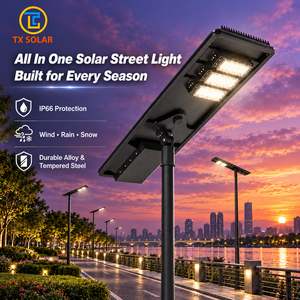
Perimeter fencing at Kansai International Airport demands uninterrupted night vision clarity. Our split-type IP66 smart solar lights provide continuous 365-night perimeter surveillance lighting, utilizing smart LoRaWAN nodes that integrate directly with airport centralized security operations rooms.
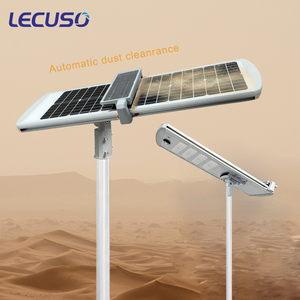
Massive freight handling facilities near Rinku Town and Osaka Port host constant heavy container truck traffic. High-power 100W-200W solar streetlights with auto-cleaning solar panels withstand high diesel soot buildup, providing high-CRI (>80) illumination for safe nighttime loading.
Passenger and rental car parking zones require uniform, glare-free illumination to eliminate shadows and prevent minor vehicle collisions. Integrated solar luminaires with microwave motion dimming maintain energy reserves while providing instant 100% brightness upon vehicle approach.
Japan’s Ministry of the Environment (MOE) and the Osaka Metropolitan Government have enacted strict sustainability frameworks aiming for a 46% reduction in greenhouse gas emissions by 2030. Aviation infrastructure operators are under regulatory pressure to decarbonize ground operations (Scope 1 and Scope 2 emissions).
Adopting our high-efficiency solar streetlights directly converts legacy utility draw into 100% clean solar generation. A standard installation of 500 units of our 100W industrial solar streetlights along Osaka's airport access expressways eliminates over 180 metric tons of CO2 emissions annually. Furthermore, during power emergencies caused by earthquakes or extreme weather, these solar lighting networks function as critical emergency beacons for evacuation routes, maintaining operational continuity without relying on diesel generators.
Complete OEM/ODM customization backed by rigorous automated quality assurance and streamlined direct export logistics to Osaka Port.
We exclusively integrate premium Lithium Iron Phosphate (LiFePO4) battery packs featuring over 4,000 deep discharge cycles (80% DoD). Equipped with smart BMS protection against overcharging, thermal runaway (-20°C to +65°C operational envelope), and low-temperature charging protection for Kansai winters.
Our solar modules utilize A-Grade N-Type monocrystalline solar cells with conversion efficiencies reaching up to 23.5%. Dual-sided bifacial panel configurations harvest additional ambient light reflected from airport concrete aprons, boosting overall energy harvest by up to 25% during overcast coastal weather.
Every luminaire batch destined for Japan undergoes stringent 1,000-hour salt spray testing according to IEC 60068-2-52, electroluminescence (EL) solar cell inspection, IP68 waterproof submersion testing, and full photometric goniophotometer profiling before export packaging.
Detailed answers to technical, regulatory, and logistics queries commonly raised by Japanese EPC contractors and municipal procurement teams.
Our airport-grade luminaires feature die-cast ADC12 aluminum housings finished with a specialized C5-M grade fluorocarbon powder coating designed for offshore marine environments. Structural engineers design the light pole assembly and flange mounting according to JIS C 8105 standards, guaranteeing survival under wind velocities exceeding 60 m/s (Category 5 hurricane equivalent).
Yes. We supply customized optic lenses featuring asymmetrical batwing light distributions with zero upward light spill (0% ULOR). This strict cutoff prevents glare for aircraft pilots landing at KIX or Itami (ITM) and prevents light distraction for air traffic controllers.
Coastal airport logistics environments accumulate high concentrations of airborne salt crystals, jet fuel exhaust residue, and fine dust. This airborne layer can degrade solar panel charging efficiency by 20% to 35% within months. Our auto-cleaning solar lights integrate a dual-brush robotic cleaner that operates twice daily, keeping the glass surface pristine without manual maintenance.
Our systems feature high-density LiFePO4 battery banks paired with intelligent MPPT controllers running adaptive power management algorithms. Even during extended winter monsoon rain spells in Osaka, the lights dynamically adjust output to maintain uninterrupted 365-night operation with up to 7 days of continuous backup autonomy.
We supply comprehensive engineering submission packages including ISO9001/ISO14001 factory documentation, CE, RoHS, IP66/IP67/IP68 waterproof certificates, IEC 60068 salt spray test reports, IESNA LM-79 and LM-80 photometric files, and wind load structural calculations.
Standard commercial order lead time at our automated manufacturing facility is 14 to 20 days. Direct sea freight container shipments from our nearest export port to Osaka Port (Nanko) take approximately 4 to 7 days, providing rapid fulfillment for project deadlines.