
Engineered for extreme wind pressure, high-latitude snow albedo efficiency, and long-life LiFePO4 energy storage across Japanese municipal and highway projects.
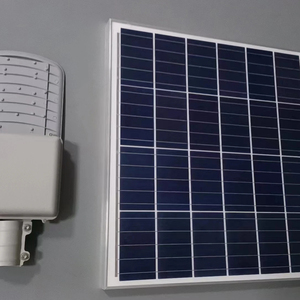
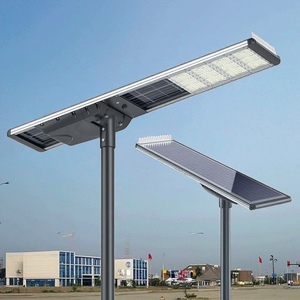
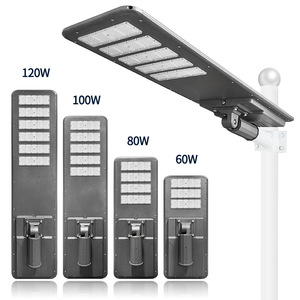
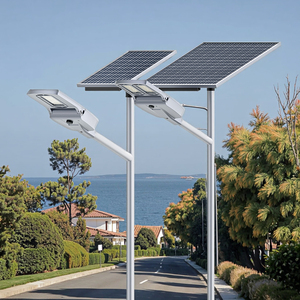
Japan’s unique geographic topology presents a multifaceted environmental landscape for outdoor commercial lighting projects. Stretching from the freezing sub-arctic zones of Hokkaido down to the sub-tropical coastal boundaries of Okinawa, solar street lighting infrastructure must overcome specific atmospheric obstacles: low solar elevation angles during winter months, heavy snow cover, salt-laden marine air, and high-frequency typhoon seasons. Traditional single-sided (monofacial) solar panels frequently struggle to maintain autonomous power generation under these extreme real-world constraints.
As a leading bifacial solar streetlights manufacturer and B2B supplier for the Japanese market, our engineering architecture centers around double-sided N-Type TOPCon and PERC photovoltaic modules. Bifacial solar modules capture light not only directly from the sun on the front surface but also harness rear-side diffuse irradiation reflected from the surrounding ground—known technically as ground albedo.
Information Gain Insight: Ground albedo in Japanese snowy regions (Hokkaido, Niigata, Tohoku) reaches up to 80%-85%. Under these conditions, bifacial solar panels generate up to 30% to 35% additional energy harvest compared to standard single-sided luminaires, effectively preventing winter blackouts and battery starvation.
The total energy yield ($E_{total}$) of our bifacial street lighting system is calculated using the front-side irradiance ($I_{front}$), rear-side irradiance ($I_{rear}$), module bifaciality factor ($\varphi_{bifacial}$), and ground reflection coefficient ($\alpha_{albedo}$):
$$E_{total} = I_{front} + (I_{front} \times \alpha_{albedo} \times \varphi_{bifacial})$$
In standard asphalt urban corridors across Tokyo, Osaka, and Nagoya, asphalt provides a baseline albedo factor of 0.15–0.20 (adding 10–12% extra power yield). However, in rural municipal roads featuring light concrete, gravel, or winter snow pack, the albedo coefficient increases dramatically, elevating real-world luminaire performance to over 220 Lumens per Watt ($lm/W$).
| Technical Parameter | Standard Monofacial Solar Lights | Our Bifacial Industrial System (Japan Spec) |
|---|---|---|
| PV Cell Architecture | Single-sided P-type PERC (19.5% Efficiency) | Dual-Glass N-Type TOPCon Bifacial (24.8% Efficiency) |
| Rear-Side Power Harvest | 0% (Opaque Backsheet) | +15% to +35% Ground Albedo Gain |
| Wind Resistance Rating | Up to 35 m/s (Standard Breeze) | Category 5 Typhoon Resistant (Up to 60 m/s / 216 km/h) |
| Corrosion Protection | Standard Powder Coating (C3 Class) | ISO 12944 C5-M Marine Grade Anodized Aluminum |
| Battery Storage Chemistry | Standard Ternary Lithium or Lead-Acid | Grade-A LiFePO4 with Internal Heat Management (PCM) |
| Operating Temperature | -10°C to +50°C | -30°C to +70°C (Sub-Zero Charging Active) |
| JIS Compliance | Basic CE / Untested for JIS | JIS C 8105-3 & JIS C 8153 Compliant Structural Standards |
Japan faces an average of 25 typhoons annually. Our structural light poles and brackets are designed under wind load calculations exceeding 60 m/s, complying directly with Japan’s Building Standards Law (建築基準法).
Integrated Maximum Power Point Tracking (MPPT) charge controllers dynamically adapt to overcast monsoon conditions (Tsuyu), boosting power harvesting speeds by 30% over traditional PWM controllers.
Crucial for island communities and coastal prefectures (Shizuoka, Kanagawa, Okinawa), our housings undergo 2,000-hour salt spray testing to prevent electrochemical oxidation.
Precision asymmetric optical lenses deliver zero up-light pollution, satisfying dark-sky regulations for Japanese eco-tourism zones and agricultural rice paddy preservation.
Equipped with low-temperature phase change material (PCM) and self-heating thermal jackets, ensuring reliable battery charging down to -30°C in Hokkaido heavy snow zones.
Equipped with optional 4G/NB-IoT smart connectivity allowing Japanese municipal engineering teams to remotely monitor battery health, light status, and fault alerts in real-time.
Following major seismic events across Japan, grid integrity can be compromised for days or weeks. Japan’s Cabinet Office has prioritized National Resilience Building (国土強靱化), encouraging local municipalities (自治体) and land developers to replace traditional grid-tied lighting with self-contained, 100% off-grid solar streetlights.
Our industrial bifacial solar lighting systems serve as essential emergency infrastructure during blackout scenarios. By maintaining lighting along evacuation routes (避難路), designated emergency parks (防災公園), and emergency hospital access roads, these fixtures guarantee public safety without placing auxiliary strain on emergency diesel generators or grid networks.
The Ministry of Economy, Trade and Industry (METI) has established stringent carbon reduction milestones under the Japanese Green Growth Strategy. Installing off-grid bifacial solar streetlights directly reduces Scope 1 and Scope 2 emissions for industrial parks, logistics centers, and commercial real estate developers across Yokohama, Kobe, and Fukuoka. Each 100W luminaire deployed eliminates approximately 250 kg of CO2 emissions annually, facilitating RE100 corporate certification compliance for Japanese enterprise buyers.
Vertical or high-angle bifacial module configurations prevent snow buildup on the front face while actively gathering intense ground reflection from snow-covered roads (albedo boost up to +35%). Self-heating LiFePO4 cells prevent cold-temperature lithium plating during severe frosts.
Reinforced structural die-cast aluminum alloys with anti-corrosion marine coatings withstand severe salt spray and high-velocity sea gales. Pole flange foundations are custom calculated to resist seismic lateral shear forces and 60 m/s wind gusts.
Large-scale distribution centers in Chiba, Osaka Bay, and Aichi utilize our smart IoT split and integrated bifacial luminaires to achieve 24/7 continuous perimeter safety without undergoing expensive underground cable trenching costs.
Equipped with dual-mode microwave radar sensors. Lights operate at eco-dimmed energy saving modes (30% brightness) until human or vehicle movement triggers full 100% illumination, providing up to 7 consecutive rain/snow days of continuous emergency operational autonomy.
Everything you need to know about importing, certifying, and deploying commercial bifacial solar streetlights in Japan.
During overcast and rainy periods, sunlight becomes diffuse. Standard single-sided panels experience a dramatic drop in power production. Our bifacial panels harvest ambient diffuse sky light from both the top and bottom glass surfaces. Combined with our high-efficiency MPPT tracking algorithm, the battery continues to recharge even under dense cloud cover, maintaining 5 to 7 days of continuous rainy-day operation reserve.
Yes. Our luminaire assemblies, optical lenses, and electronic controllers are engineered to comply with Japanese technical safety standards including JIS C 8105-3 (Outdoor Luminaires Safety Requirements), JIS C 8153, and METI electrical appliance regulations. Detailed test reports and structural wind resistance calculations are available for municipal tender submission.
Our streetlights are certified to withstand wind speeds up to 60 m/s (Category 5 typhoon conditions). We supply heavy-duty Q235/Q355 hot-dip galvanized steel poles, high-tensile anchor bolts, and aerodynamics-optimized fixture mounts tailored to Japanese typhoon wind pressure standards (Building Standards Law compliance).
In snow-heavy regions such as Hokkaido and Niigata, snow accumulation on horizontal panels can block light. Our systems feature steep tilt angles (up to 45°-60°) or vertical pole-mounted bifacial modules that naturally shed snow. Furthermore, the back side of the bifacial panel absorbs heat and ground-reflected light from the snow pack, hastening front-side snow melt.
We provide a 5-year to 10-year comprehensive warranty on complete systems. Our N-Type bifacial solar panels carry a 25-year linear power warranty (retaining >85% output). The Grade-A LiFePO4 battery cells deliver over 6,000 deep discharge cycles (up to 12–15 years of operational service life under normal conditions).
Absolutely. As a direct manufacturer, we offer full OEM/ODM customization for Japanese EPC contractors, utilities, and importers. Customization options include specific CCT color temperatures (3000K Warm White to 5000K Cool White), custom arm brackets, logo branding, specialized IoT control protocols, and custom pole heights from 4 to 12 meters.