Engineered by leading Chinese manufacturing facilities specifically optimized for Northern European maritime conditions, high latitude winter performance, and heavy municipal utility standards.
Deploying off-grid solar street and pathway lighting in the Free and Hanseatic City of Hamburg requires specialized engineering that accounts for 53.55° N latitude solar zenith angles, persistent maritime overcast, high humidity, and stringent German municipal photometric standard DIN EN 13201.
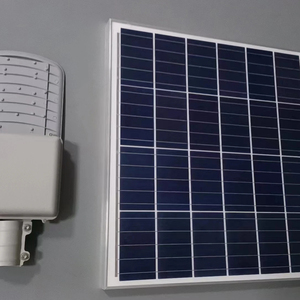
Hamburg experiences winter solar irradiance drops below 0.8 kWh/m²/day with sun elevation angles dipping under 13 degrees in December. Premier Chinese manufacturers integrate N-type TOPCon bifacial monocrystalline photovoltaic modules. Mounted at calculated tilt angles of 45° to 55°, these modules capture up to 28% additional ambient rear-side reflection from cobblestones, snow, and wet asphalt common to Hamburg's public paths.
Sub-zero temperatures across Northern Germany severely compromise standard lithium battery capacity. Our tier-1 Chinese production lines incorporate grade-A LiFePO4 cells enhanced with internal thermal management systems (heating foils managed by intelligent BMS) and sub-zero charge-discharge algorithm controllers. This guarantees continuous operation at -20°C with 6,000+ deep charge cycles at 80% Depth of Discharge (DoD).
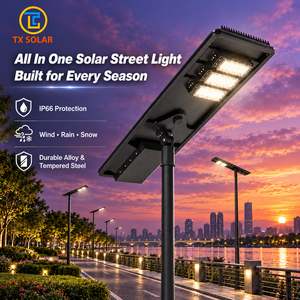
Located on the Elbe River estuary with direct maritime influences from the North Sea, Hamburg’s microclimate demands extreme atmospheric protection. Luminaires are manufactured using die-cast ADC12 aluminum housings treated with fluorocarbon electrostatic powder coating under ISO 12944 C5-M certification. All external hardware features 316 marine-grade stainless steel to prevent electrochemical pitting and rust.
Compliance with Hamburg's Lichtverschmutzung (Light Pollution Guidelines) and Dark-Sky standards requires zero upward light emission (ULR=0). Smart MPPT dynamic controllers utilize microwave radar sensing combined with astronomical time-curve dimming (e.g., 100% output during peak evening hours, stepping down to 30% background lumen output, returning to 100% upon pedestrian detection), preserving battery reserve for up to 7 consecutive dark rain-fog days.
To meet German lighting specifications for pedestrian pathways (Classes P1 through P6) and cycle tracks (Classes C0 through C5), luminaires incorporate custom optical PMMA lenses. These lenses deliver asymmetric Batwing light distribution patterns, ensuring uniform horizontal illuminance ($E_{av}$ and $E_{min}$) while eliminating severe glare ($TI < 15\%$) for cyclists and pedestrians across public plazas.
Modern Hamburg urban installations demand centralized network visibility. Chinese factories integrate Zigbee, LoRaWAN, or NB-IoT wireless communication modules directly inside the luminaire head. Facility managers can monitor solar charging currents, battery State-of-Health (SoH), and lamp operational metrics remotely via cloud web dashboards, automating maintenance cycles and eliminating manual field checks.
From waterfront promenades along the Northern Elbe to expansive logistics facilities in the Port of Hamburg, solar pathway lights solve critical electrical trenching constraints while fulfilling zero-carbon municipal mandates.
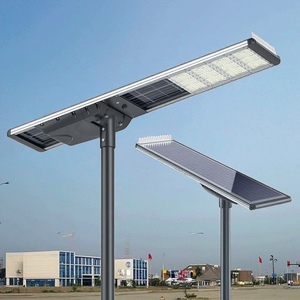
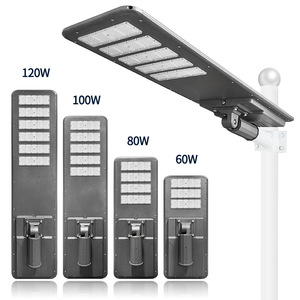
Heavy industrial logistics parks around Waltershof and Altenwerder require robust, non-grid lighting along perimeter security pathways and storage yards. High-wattage split-type and all-in-two solar luminaires eliminate million-Euro grid extension costs through paved asphalt, offering IP66 weatherproofing and IK10 impact protection against heavy machinery vibration.
Integrating solar lighting into modern, eco-conscious architectural zones like HafenCity demands sleek industrial designs with 3000K warm-white CCT options. Custom dark-sky optic fixtures blend into contemporary maritime architecture while meeting strict German heritage and environmental protection laws along urban waterfronts.
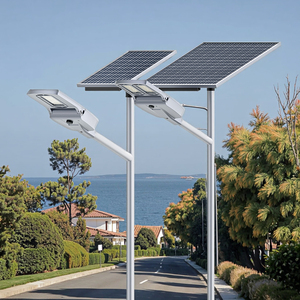
Public parks, nature reserves, and recreational cycle paths along the Alster Lake and Elbpark Entenwerder prohibit invasive ground trenching to protect tree roots and river ecology. Solar pathway lights installed on root-friendly screw-pile foundations deliver reliable nighttime illumination without disruptive civil engineering.
Private residential HOAs, commercial office parks, and housing developments in districts such as Blankenese, Bergedorf, and Wandsbek leverage integrated solar courtyard and pathway lights to replace aging 230V sodium fixtures. This eliminates recurring municipal electricity bills while providing 24/7 security illumination.
A comprehensive analysis comparing traditional AC 230V grid-tied pathway lighting against direct China top-factory solar lighting systems deployed in the Hamburg Metropolitan Region.
| Evaluation Criterion | Traditional AC 230V Grid Lighting | China Top Factory Off-Grid Solar Systems | Impact on Hamburg Municipal / B2B Projects |
|---|---|---|---|
| Trenching & Cabling Cost | High (€80 - €180 / meter in urban pavement) | €0 (Zero civil trenching required) | 85% Reduction in Initial Civil Engineering CAPEX |
| Grid Permitting & Approval | 6 to 18 Months (Stromnetz Hamburg approval) | Immediate Installation & Commissioning | Accelerates project execution timelines from months to days |
| Grid Failure Operationality | Blackout susceptible during utility outages | 100% Autonomous (5-7 Days Battery Reserve) | Ensures continuous public safety during regional grid failures |
| Electricity Cost & Carbon Footprint | Subject to rising EU grid tariffs & carbon offset costs | 100% Free Solar Energy (Zero CO₂ emissions) | Directly aligns with Hamburg's Klimaplan 2030 target |
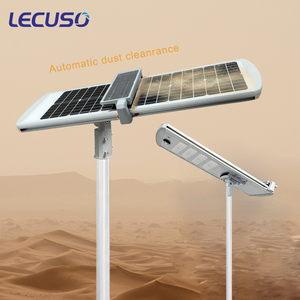
| Maintenance & Longevity | Frequent bulb change / Cable fault tracing | 100,000 hrs LED Chip / Auto-cleaning Panels | Minimal OPEX via IoT cloud maintenance alarms |
| Salt-Spray & Maritime Durability | Standard powder coating suffers rust in 3-5 years | ISO 12944 C5-M Coating & 316 Stainless Hardware | Designed for 15+ years active service along Elbe coastal zones |
Combining world-leading photovoltaic R&D with unprecedented manufacturing scale, China’s tier-1 solar factories deliver customized, fully certified luminaire solutions to European importers, contractors, and municipalities.
Tier-1 Chinese export factories operate under strict ISO 9001 quality management systems. Luminaires exported to Germany carry full CE, RoHS, TÜV Rheinland, and CB certifications. Complete Photometric IES/LDT test files are provided for Dialux lighting design simulation, guaranteeing compliance with German DIN EN 13201 light level metrics prior to shipment.
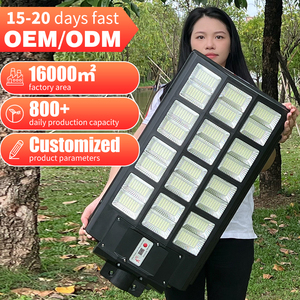
Factories support custom engineering tailored to local German tenders. Customizations include specific RAL powder coating colors to match local street furniture, custom optical beam angles (Types I, II, III, IV), dual solar panel angles, customized battery capacity sizing for extreme latitude calculations, and private labeling for European distributors.
By controlling the entire vertical supply chain—from high-efficiency monocrystalline solar cell slicing, specialized optical lens molding, aluminum die-casting, to SMT LED placement—top Chinese factories eliminate intermediary markups, offering German procurement clients unmatched factory-direct wholesale pricing.
Addressing key technical, logistical, regulatory, and warranty questions commonly posed by German municipal planners, engineering procurement contractors (EPCs), and commercial developers.
Whether you are planning a municipal pathway retrofit, a commercial port development, or a residential community project in Hamburg, our engineering team provides complete Dialux lighting simulations, customized OEM quotes, and factory-direct supply chain solutions.