
Engineered by China's leading coastal manufacturing clusters for extreme sub-zero resilience, long autonomy reserve, and seamless freight transport directly into Vladivostok, Vostochny, and Eurasian rail corridors.
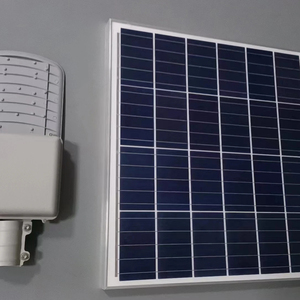
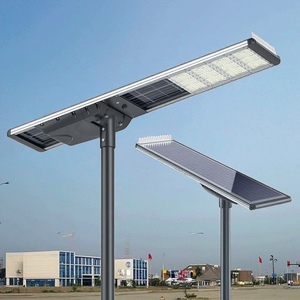
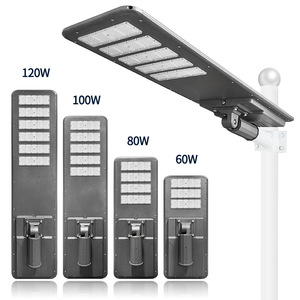
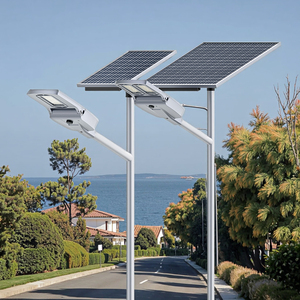
The global transition toward off-grid, zero-emissions infrastructure has elevated high-power solar LED street lighting from localized architectural fixtures into critical municipal and industrial infrastructure assets. For EPC contractors, municipal procurement teams, and commercial developers operating across the Russian Federation—spanning high-latitude urban zones such as St. Petersburg and Moscow to sub-zero industrial transport corridors in Siberia and the Far East—sourcing solar luminaire systems directly from China's primary seaport industrial clusters offers unmatched economic and technical advantages.
Manufacturing facilities clustered around Ningbo-Zhoushan, Shanghai, Shenzhen (Yantian/Shekou), and Qingdao represent the pinnacle of solar photovoltaic integration, advanced Lithium Iron Phosphate (LiFePO4) packaging, and automated aluminum alloy die-casting. The direct proximity of these mega-factories to deep-water ocean terminals creates an optimized supply chain matrix specifically structured to service Northern Eurasian import channels.
Factory-to-deck logistics from Ningbo or Shanghai eliminates interior freight delays, enabling containerized shipments to reach Russian Far East ports (Vladivostok & Vostochny) within 7 to 10 days, bypassing maritime choke points.
Traditional utility grid extensions in extreme winter soil conditions require expensive deep-trenching, insulated conduit cabling, and substation step-down transformers. Off-grid solar deployment completely eliminates capital trenching expenses.
Our seaport manufacturing facilities maintain direct regulatory export pipelines, supplying EAC (Eurasian Conformity) certified components, CE, RoHS, and strict IK10 mechanical impact protection ratings tailored for Russian municipal audits.
By leveraging direct maritime routes from China’s seaport hubs to Russia’s eastern gateway ports (Vladivostok/Vostochny) connected directly to the Trans-Siberian Railway network, project delivery lead times are reduced by up to 60% compared to traditional western European sea routes. Bulk shipments arrive fully containerized with pre-customs declarations, streamlining infrastructure expansion across remote industrial sites.
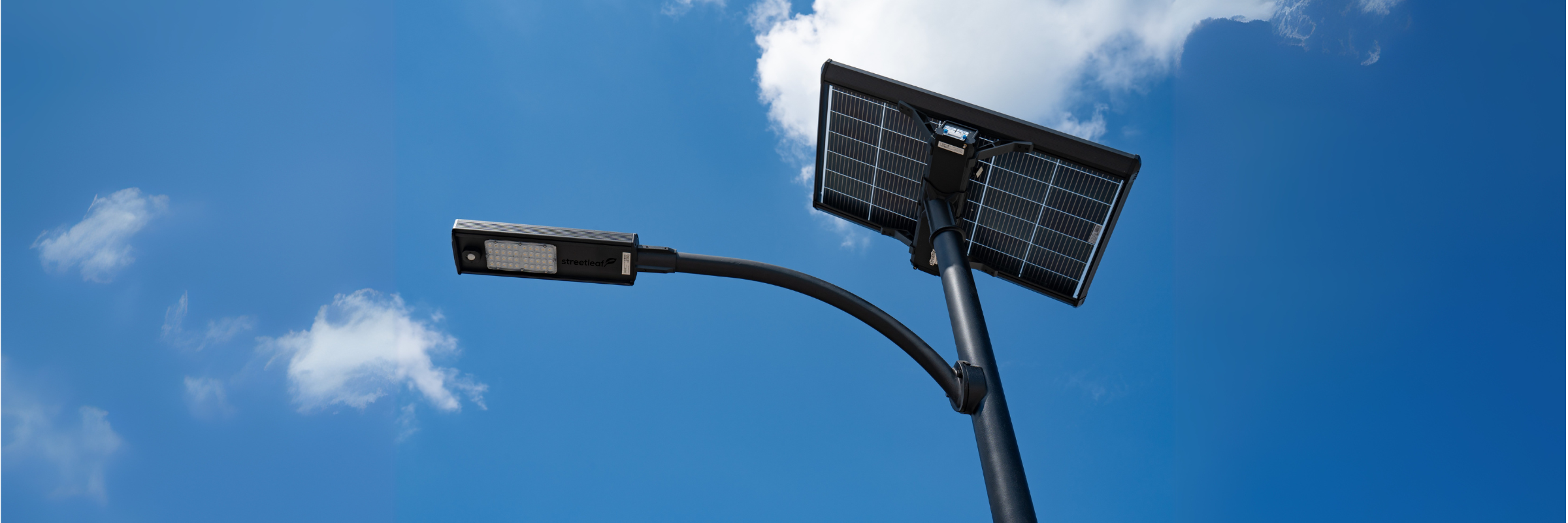
Operating solar-powered lighting systems in northern latitudes presents unique engineering challenges. Sub-zero temperatures drastically affect electrochemical performance in standard lithium ion batteries, while reduced winter solar elevation angles and atmospheric snow coverage diminish daily photovoltaic power generation. China’s elite seaport solar factories have overcome these environmental constraints through four foundational engineering innovations:
Standard lithium iron phosphate (LiFePO4) cells suffer severe charging efficiency degradation below 0°C. Our specialized cold-climate luminaires feature dual-layer aerogel insulation chambers combined with low-draw internal heating matrices managed by advanced Battery Management Systems (BMS). When ambient solar irradiance strikes the photovoltaic module at dawn, the initial energy reserves activate internal thermal pads to warm the cell matrix to optimal charging temperature (>5°C) before initiating high-current charge cycles.
At latitudes above 55°N, winter solar inclination angles remain extremely low. Our high-efficiency bifacial solar panels capture direct sunlight from the front glass while harvesting up to 30% additional ambient energy reflected from surrounding snow cover (high-albedo reflection) on the rear cell face. Adjustable tilt mounting brackets (up to 65°) prevent snow accumulation while maximizing photon capture during short polar daylight windows.
Maximum Power Point Tracking (MPPT) electronics integrated into our split and all-in-one fixtures utilize proprietary algorithms that dynamically adjust voltage thresholds based on ambient temperature sensors. This ensures maximum wattage transfer efficiency (>98.5%) even under heavily overcast or frosty atmospheric conditions common across northern regions.
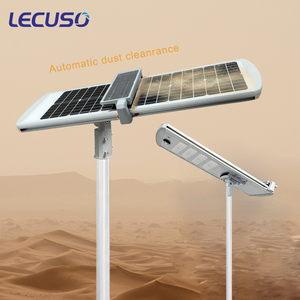
Heavy snow accumulation can obscure solar panels, causing extended system blackout. Our motorized auto-cleaning series (as highlighted in Product 6 above) employs low-friction, weather-resistant wiper blades that cycle automatically twice daily. This mechanical action clears heavy frost, windblown snow, and airborne dust without manual operator intervention.
Selecting the correct solar streetlight architecture requires a granular evaluation of components. Below is an engineering comparison highlighting the structural upgrades built into our seaport-manufactured industrial exports:
| System Specification | Standard Commercial Grade | Seaport Export Heavy-Duty (Russia/Cold Spec) |
|---|---|---|
| Operating Temp Range | -10°C to +45°C | -50°C to +60°C (Insulated TIBC Enclosure) |
| Battery Chemistry & Chemistry Grade | Standard LiFePO4 or Ternary Li-ion | A-Grade Deep-Cycle LiFePO4 + Heating BMS |
| Solar Panel Type | Single-sided Poly / Mono | Bifacial Monocrystalline PERC (23.5% Efficiency) |
| Ingress & Mechanical Rating | IP65 / IK08 | IP66 / IP68 Dual Seals + IK10 Vandal-Proof |
| Wind Load Resistance | Up to 120 km/h | Category 5 Typhoon / Blizzard Rated (Up to 220 km/h) |
| Autonomy Reserve (Days) | 2 - 3 Continuous Rainy Days | 5 - 7 Days Continuous Polar/Overcast Operation |
| Corrosion Protection | Basic Powder Coating | Coastal Marine-Grade Anodized Electro-Coating |
Engineered to deliver high-lumen, maintenance-free operation across diverse climatic zones and industrial topographies.
Long-distance logistics highways and remote freight check-points often traverse thousands of kilometers without central utility grid coverage. Off-grid split and all-in-two solar streetlights illuminate critical freight hubs, weigh stations, and high-risk curvature zones without requiring high-voltage transmission lines.
Port operations in Vladivostok, Nakhodka, and Vostochny require continuous high-lumen lighting capable of withstanding dense salt-spray corrosion and damp marine fog. Our coastal marine-coated luminaires provide anti-corrosive IP68 performance across dockyards and timber/container staging grounds.
Mining complexes in Yakutia, Norilsk, and Kemerovo operate under round-the-clock winter darkness. Solar lighting units equipped with motion-activated dimming profiles ensure maximum brightness during active equipment haulage while preserving battery reserve during low-activity shifts.
Rapid expansion of residential communities surrounding Moscow, St. Petersburg, and Ekaterinburg demands fast, trench-free streetlight deployment. Municipal housing developments leverage auto-cleaning integrated units to lower long-term maintenance overhead for local HOAs.

The Eurasian lighting market is experiencing a structural pivot away from legacy high-pressure sodium (HPS) and grid-tied AC LED fixtures. This transition is propelled by three macro-economic and technical catalysts:
Extending low-voltage utility lines over remote terrain can cost upwards of $25,000 to $45,000 per kilometer in labor, copper wiring, transformer installation, and trenching. Self-contained solar streetlights eliminate 100% of these grid-connection capital expenditures, dropping total installation cost by as much as 70% per pole location.
Regional governments are under strict directives to reduce municipal utility energy bills. Off-grid solar installations deliver immediate $0 electricity operational costs, allowing municipal authorities to reallocate public budgets toward core infrastructure projects while meeting modern sustainability targets.
In eco-sensitive regions near northern forest reserves and coastal ecosystems, light pollution regulations require strict control of light spillage. Our advanced optical lenses deliver Type II, Type III, and Type IV batwing distribution angles, directing 100% of generated light downward onto roadway surfaces without sky-glow bleed.

Technical clarity on logistics channels, custom duties, sub-zero battery survival, and order customization.
Our northern export systems use custom A-grade LiFePO4 cells wrapped in aerogel thermal insulation chambers equipped with BMS-managed heating elements. When morning sunlight hits the PV module, the BMS channels energy into internal thermal pads to heat the cells to safe charging temperatures before starting the charging cycle, preventing lithium plating damage.
We dispatch containerized shipments (20GP / 40HQ) directly from Ningbo or Shanghai ports to Vladivostok and Vostochny Commercial Ports. From there, cargo connects seamlessly to the Trans-Siberian Railway network for direct delivery to Ekaterinburg, Novosibirsk, Moscow, or St. Petersburg, taking just 14 to 21 total transit days.
All exported models carry comprehensive certification dossiers including EAC (Eurasian Conformity), CE, RoHS, IP66/IP68 ingress testing certificates, and IK10 impact reports. We provide full HS Code harmonization (typically HS 9405410000) and customs invoice documentation to ensure swift customs clearance.
We oversize our high-efficiency bifacial solar panels (23.5% cell efficiency) and pair them with high-tilt mounting brackets (55°–65° inclination). This angle prevents snow build-up while catching low-angle winter sunlight and ambient light reflected from surrounding snow cover, achieving up to 35% higher energy yield than standard horizontal panels.
Yes. As a direct OEM manufacturer in China's top seaport lighting hub, we provide complete customization: correlated color temperatures from warm 2700K (turtle/wildlife safe) to ultra-bright 6000K, custom housing powder coatings (RAL palette), laser-engraved corporate logos, and engineered pole mounting adapters.
Our heavy-duty luminaire housings carry a 10-year structural guarantee, the monocrystalline solar panels carry a 25-year linear performance warranty, and the LiFePO4 battery pack + MPPT controller system is backed by a 5-year replacement warranty, giving engineering teams long-term reliability.