
Engineered specifically for South Korean smart poles, highway corridors, urban parks, and industrial developments. Integrated with high-efficiency MPPT controllers and sub-zero thermal protection.
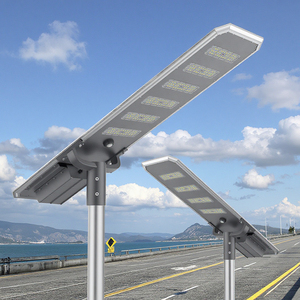
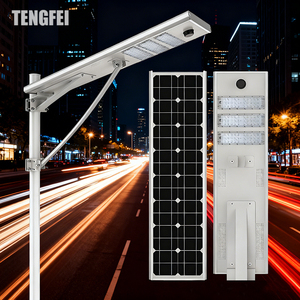
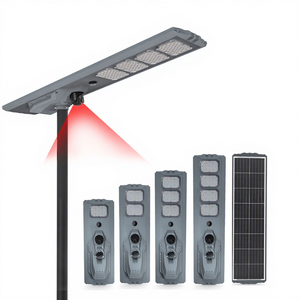
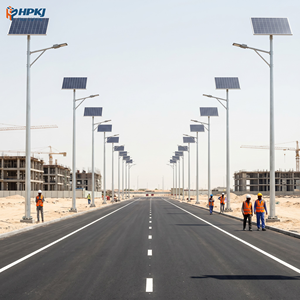
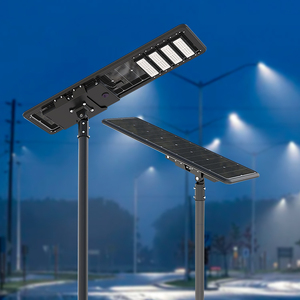
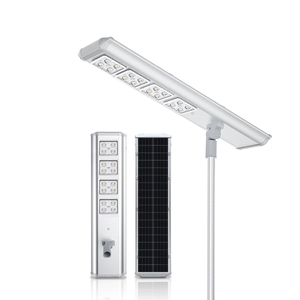
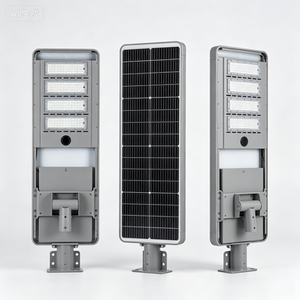
As South Korea accelerates its National Pilot Smart Cities initiatives in Sejong and Busan Eco-Delta City, municipal procurement authorities and Tier-1 EPC (Engineering, Procurement, and Construction) contractors demand lighting solutions that surpass traditional off-grid limitations. The South Korean climate presents unique challenges: freezing sub-zero winter temperatures, severe summer typhoons from the West Sea and Pacific Ocean, high relative humidity along coastal ports like Incheon and Busan, and strict light pollution prevention guidelines mandated by local urban design codes.
As a leading China OEM/ODM direct solar street lighting factory, our engineering architecture bridges high-density Chinese manufacturing efficiency with South Korea’s rigorous technical compliance framework, including KS C 7658 (LED Street Light Luminaires), KC Electrical Safety Certification, and local Dark-Sky Preservation Guidelines.
Standard imported solar luminaires often experience premature battery shutdown during harsh winters in Gangwon-do or Gyeonggi-do due to standard Lithium Ion cell freezing, alongside salt-spray aluminum oxidation in coastal logistics hubs. Our smart city solar streetlights incorporate active BMS thermal heating foils, C5-M ISO 12944 anti-corrosion coatings, and bifacial monocrystalline solar modules engineered specifically for northern East Asian geographic latitudes.
One of the primary technical hurdles for solar street lighting in South Korea is winter battery degradation. Temperatures in Seoul and northern provinces regularly dip below -15°C to -20°C during cold spells. Standard LiFePO4 (Lithium Iron Phosphate) batteries experience severe chemical sluggishness below 0°C, leading to charge rejection and permanent capacity loss.
Our factory-engineered solar streetlights utilize an intelligent BMS (Battery Management System) with Integrated Micro-Thermal Foil Heating Matrix. When solar charging current is detected at ambient temperatures below zero, the system routes a fraction of the incoming energy into an internal thermal cushion, safely warming the battery cell chamber to +5°C prior to initiating the main charging cycle. This prolongs battery operational lifespan beyond 10+ years (over 4,000 deep charge cycles) and guarantees uninterrupted zero-downtime performance for Korean municipal installations.
Density is a defining feature of Korean urban design. Narrow multi-lane roads surrounded by concrete architecture, noise-reduction barriers, and elevated highways often shade traditional top-mounted solar panels. Our Bifacial Monocrystalline Solar Streetlights leverage both direct solar irradiation on the front surface and albedo reflection from surrounding light-colored concrete pavements, snow cover, and urban building facades on the rear surface.
This dual-sided photovoltaic technology generates up to 25% to 30% additional energy daily compared to monofacial panels. Combined with Maximum Power Point Tracking (MPPT) charge controllers operating at 99.2% tracking efficiency, our solar lights maintain continuous illumination even through 7 consecutive overcast or rainy days.
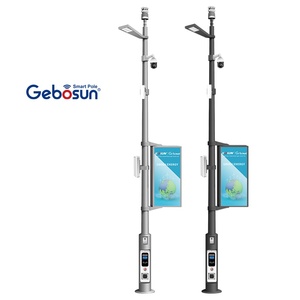
Modern South Korean smart cities are moving away from isolated streetlights toward integrated Smart Poles (S-Poles) that serve as communication backbones for traffic monitoring, environmental sensing, and public safety. Our manufacturing facility provides customized OEM integration with Korea’s leading telecommunication protocols, including NB-IoT (Narrowband IoT) and LTE-M networks (KT, SK Telecom, LG U+).
City managers can remotely control dimming profiles, schedule light outputs, observe real-time battery health, measure ambient PM2.5/PM10 air quality, and stream high-definition surveillance feeds directly to Local Government Integrated Operations Centers. All hardware interfaces utilize modular plug-and-play Zhaga / NEMA ANSI C136.41 sockets for painless future upgrades.
From coastal economic zones to mountain expressways, our smart city solar lights are engineered to perform in Korea's most demanding environments.
Tailored for coastal developments such as Busan Eco-Delta City and Incheon Free Economic Zone (IFEZ). Constructed with 6063-T6 marine-grade extruded aluminum and finished with C5-M ISO 12944 anti-corrosion fluorocarbon powder coating to withstand continuous salt fog exposure and ocean gale-force winds.
Deployed along national arteries like the Gyeongbu Expressway corridor and municipal rest stops where grid trenching is cost-prohibitive. High-wattage 300W-400W solar heads deliver batwing Type III optical distributions, eliminating driver glare while meeting Expressway Luminaire Uniformity standards.
Designed for public safety and ecological harmony in sites like Han River Parks and Namsan Ecological Zones. Featuring 2200K-3000K warm amber LED color temperatures, zero-cut-off Dark-Sky optics, and microwave motion sensing that dims lights to 20% when unattended to protect nocturnal wildlife.
How our Tier-1 Smart City Solar Lights compare to conventional municipal grid lighting and standard generic solar imports in South Korea.
| Feature Spec | Conventional Grid Streetlights | Generic Imported Solar Lights | Our Tier-1 Smart Solar Systems |
|---|---|---|---|
| Grid Connection Cost | High (Trenching & Cabling Required) | Zero Grid Needed | ✓ Zero Grid / Fast 20-Min Install |
| Winter Charging Temp | N/A (AC Powered) | Fails below 0°C (No Heater) | ✓ Active BMS Heating Matrix (-25°C) |
| Typhoon Resistance | Varies by Pole Design | Weak Bracket Structure (<35 m/s) | ✓ Cat 5 Rated (60 m/s Structural Steel) |
| IoT Network Protocols | Requires Heavy Rewiring | Basic IR Remote Control Only | ✓ NB-IoT / LTE-M / LoRaWAN Compatible |
| Corrosion Resistance | Standard Galvanization | Basic Powder Coating (<500 hrs) | ✓ C5-M ISO 12944 Certified (2000+ hrs) |
| Optical Control | High Glare / Spill Light | Fixed Symmetric Lens | ✓ Dark-Sky Type II/III Asymmetric Lens |
Addressing technical, regulatory, and supply chain questions from Korean EPC contractors, municipal officials, and solar distributors.
Our factory manufactures solar LED luminaires engineered strictly in accordance with KS C 7658 photometric, electrical safety, and thermal management parameters. We provide comprehensive IES photometric testing files, LM-79/LM-80 LED chip decay reports, and IP67/IK10 lab testing certifications required for Korean public procurement submittals through KADP or KEPCO projects.
Our systems feature an automated BMS heating matrix. When solar input is detected during ambient freezing conditions (down to -25°C), the BMS diverts initial solar energy into internal heating elements built into the dual-layer vacuum-insulated battery enclosure. Once the internal core reaches +5°C, standard charging resumes automatically, preventing lithium plating and ensuring 100% operational efficiency.
Yes. Our integrated smart CCTV solar poles support ONVIF Profile S/G/T compliance and RTSP video streaming. Video data can be transmitted securely over local Korean LTE-M or 5G networks directly into municipal Integrated Command Centers (통합관제센터), making them ideal for urban crime prevention, traffic monitoring, and emergency response management.
We offer full structural and electrical customization: custom pole heights (4m to 14m), tailored LED color temperatures (2700K to 6500K), anti-glare Dark-Sky shield attachments, custom powder coating matching K-City architectural standards, laser-cut municipality logos, and custom IoT telemetry integration with local cloud platforms.
Located near major Chinese maritime ports (Ningbo/Shanghai/Qingdao), our factory delivers containerized shipments to Incheon Port or Busan Port within 3 to 7 ocean days. Standard sample orders ship within 5 working days, while bulk project orders (500+ units) complete production within 15 to 20 calendar days.
We supply precision optical PMMA lenses featuring Type II-Medium and Type III-Medium asymmetrical distributions with absolute 0% upward light output (ULOR = 0%). Back-light shielding plates prevent light trespass into residential high-rise windows, conforming to South Korea's Light Pollution Prevention Act.
Vertically integrated production, automated quality inspection, and direct engineering support for seamless project execution.
High-speed Panasonic SMT placement lines ensure perfect LED array soldering, maximizing thermal dissipation and optical uniformity.
Every luminaire undergoes a 48-hour continuous burn-in aging test and IP68 water immersion chamber testing before packaging.
Eliminate middleman markups. Receive direct manufacturer wholesale pricing, customized BOQ engineering estimates, and 5-10 year factory warranties.