
Pre-engineered, factory-tested outdoor solar and battery energy storage solutions optimized for Melbourne industrial hubs, logistics parks, and regional agricultural sites.
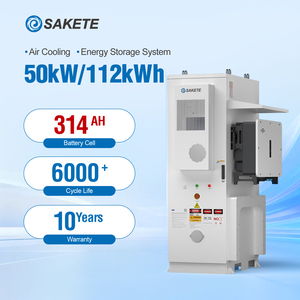
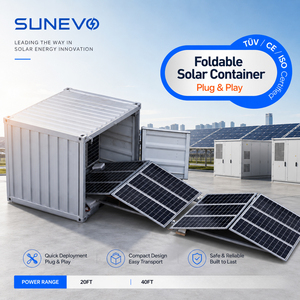
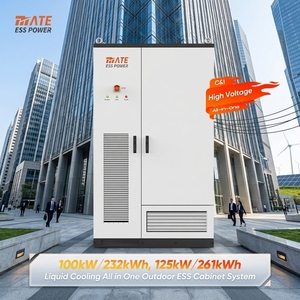
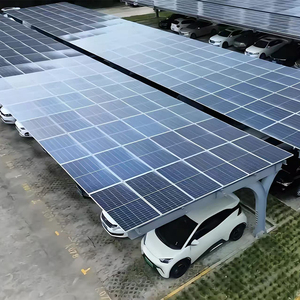
The commercial and industrial (C&I) sector across Greater Melbourne and regional Victoria is undergoing a rapid structural shift in energy economics. As grid tariffs fluctuate across distribution networks managed by CitiPower, Powercor, Jemena, AusNet Services, and United Energy, facility owners are forced to re-examine traditional grid-dependency. High network peak demand charges, combined with strict export limits imposed by Distribution Network Service Providers (DNSPs), make standard grid-tied solar insufficient for enterprise power security.
This technical whitepaper provides engineered insights into direct OEM factory supply chains, modular outdoor solar systems, and containerized Battery Energy Storage Systems (BESS) engineered specifically for Melbourne’s micro-climate, stringent AS/NZS electrical compliance standards, and commercial financial models.
Deploying commercial outdoor solar systems and battery storage cabinets in Victoria requires strict adherence to local statutory frameworks. Importing or commissioning non-compliant factory systems exposes enterprise buyers to severe liability, voided corporate insurance policies, and DNSP connection rejection.
All pre-wired outdoor solar enclosures must conform to the wiring rules of AS/NZS 3000. For energy storage integrated with commercial solar arrays, AS/NZS 5139 (Electrical installations - Safety of battery systems for use with power conversion equipment) defines precise risk categories. Outdoor systems supplied by our manufacturing lines feature IP54 to IP65 weatherproofing, dedicated arc-fault protection, and physical separation boundaries required for commercial property installations in Melbourne industrial parks.
Commercial photovoltaic carparks and ground-mounted solar containers in coastal and flat suburban zones around Port Phillip Bay must withstand severe wind shear forces. Our anodized structural steel carports and foldable container arrays are rated for Region B/C wind dynamics under AS/NZS 1170.2, ensuring structural integrity during Victoria's severe spring storm fronts.
Built-in aerosol or NOVEC 1230 fire safety systems integrated into battery racks with automated multi-stage smoke and thermal detection.
Smart meter integration compatible with Powercor, CitiPower, and AusNet grid protocols to prevent unwanted reverse power flow.
Tier-1 Automotive grade Prismatic Lithium Iron Phosphate cells offering maximum thermal stability over legacy NMC solutions.
Melbourne’s ambient temperatures can fluctuate dramatically within hours—sweeping from 15°C up to 43°C during extreme heatwave events. Battery thermal management directly impacts degradation rates, energy round-trip efficiency (RTE), and long-term asset value.
| Engineering Metrics | Smart Outdoor Liquid Cooling BESS | Standard Air Cooled Systems | Commercial Impact |
|---|---|---|---|
| Cell Thermal Uniformity | ≤ 2.5°C across all modules | 5.0°C – 8.0°C variance | Liquid cooling doubles battery lifespan consistency. |
| Parasitic HVAC Power Draw | Ultra-low (3% - 5% energy consumption) | High (10% - 15% during summer peaks) | Saves thousands annually in parasitic auxiliary losses. |
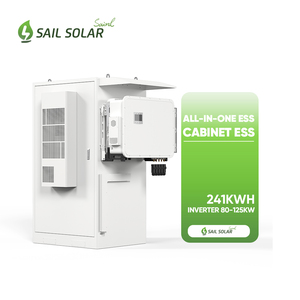
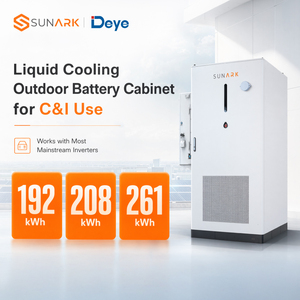
| Footprint Density (kWh/m²) | High density (up to 261kWh in single compact cabinet) | Medium density (requires clearance spacing) | Ideal for space-constrained Melbourne industrial yards. |
| Noise Profile (dB @ 1 meter) | < 65 dB (Variable speed pump) | > 78 dB (High CFM industrial fans) | Meets Victorian EPA residential boundary noise thresholds. |
| IP Enclosure Rating | IP65 Sealed Hydro-loop Isolation | IP54 Filtered Intake (Dust risk) | Prevents coastal salt spray and fine pollen ingress. |
Our direct-from-factory outdoor solar arrays and energy cabinets are deployed across three main commercial profiles in Victoria:
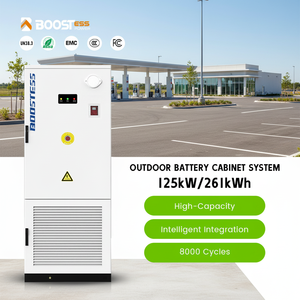
Cold storage sites consume high baseload power 24/7. Combining 500kW rooftop PV with a 125kW/261kWh liquid-cooled BESS allows operators to capture mid-day solar energy and dispatch it during 4:00 PM - 9:00 PM peak network tariff windows. Pre-wired AC fire protection systems ensure continuous emergency standby power for refrigeration compressors during grid blackouts.
Car parking lots present unused spatial capacity. Installing anodized carbon steel photovoltaic canopy systems transforms perimeter parking into multi-megawatt generation zones. Integrated with containerized hybrid systems, these carports power high-output commercial EV chargers for logistics vans and employee transport without requiring multi-million-dollar substation grid upgrades.
Off-grid and weak-grid agricultural operations—such as wineries, packaging plants, and pump stations—experience frequent voltage sags. Foldable containerized 100kW solar units with integrated lithium storage provide rapid deployable power, bypassing lengthy utility connection lead times.
Partnering directly with our manufacturing facilities gives Melbourne contractors, EPCs, and project developers a decisive edge in technical precision, lead-time control, and pricing structure.
Every commercial cabinet is pre-assembled, wired, and load-tested in-factory before shipping to Victoria. This reduces on-site electrical labor costs by up to 65%.
We strictly utilize CATL, EVE, or BYD grade-A LiFePO4 cells with full batch serial trace reports, flash test curves, and international UL9540A certification.
Custom busbar designs, integration with Deye or Megarevo platforms, local SCADA protocol matching (Modbus/SunSpec), and localized exterior paint finishes.
Streamlined logistics handling direct to the Port of Melbourne with full customs clearance support, quarantine compliance, and transport directly to site.
In Victoria, connections over 30kW (and especially 100kW+) require formal network grid studies and approval from the local distribution network operator (CitiPower, Powercor, Jemena, AusNet, or United Energy). Systems must include compliant export control devices, anti-islanding protection (AS/NZS 4777.2), and centralized grid protection relays. Our systems are equipped with programmable power conversion equipment designed to comply with DNSP static and dynamic export limit constraints.
Melbourne winter temperatures often dip to 3°C - 7°C overnight. Cold ambient conditions slow down lithium ion mobility, increasing internal resistance. Our smart liquid cooling cabinets feature bi-directional thermal control—they circulate heated glycol/water fluid to maintain battery cells at optimum operational temperatures (20°C to 25°C), ensuring maximum charge acceptance and preventing lithium plating during early morning solar generation cycles.
Yes. Our commercial outdoor solar carport structures are engineered using structural-grade anodized aluminum (6005-T5) or hot-dip galvanized steel, fully certified against AS/NZS 1170.2 structural wind load regulations. Concrete footings and structural calculations can be customized for Melbourne soil conditions, ranging from expansive clays in the western suburbs to sandy soils along the coastal fringe.
All commercial systems ship with comprehensive factory warranties: 10 years or 6,000 cycles for LiFePO4 battery modules (at 80% DOD), 5 to 10 years for hybrid inverters (e.g., Deye platforms), and 25 years linear output performance for solar modules. Local engineering assistance, spare parts inventory, and remote cloud monitoring diagnostics support Victorian installation partners.
Absolutely. Our outdoor energy storage cabinets support both AC-coupled and DC-coupled architectures. For existing commercial sites with retrofitted rooftop arrays, an AC-coupled liquid-cooled BESS connects directly to the facility’s main switchboard (MSB), capturing excess daytime generation without disturbing certified rooftop inverter configurations.
Because our 100kW/200kW containerized solar systems and outdoor cabinets arrive pre-wired, pre-configured, and factory-tested (FAT completed prior to shipment), physical on-site mounting and AC grid interfacing typically takes less than 3 to 5 days, drastically reducing overall EPC project delivery timelines.
Speak directly with our commercial technical team to review single line diagrams (SLDs), technical datasheets, containerized layout schematics, and factory pricing for your upcoming Melbourne project.
Inquire Now