
Engineered specifically to endure Ho Chi Minh City's tropical monsoon climate, extreme relative humidity (up to 90%), and high ambient temperatures. Featuring Grade-A LiFePO4 energy storage, high-lumen LED modules, and smart MPPT charging controllers.
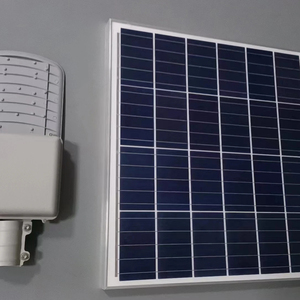
Flexible high-angle panel adjustment optimized for Ho Chi Minh City’s solar elevation. Separated battery module prevents thermal stress under direct tropical sunlight.
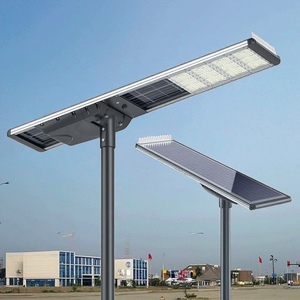
Heavy-duty commercial fixture tailored for industrial parks in Tan Thuan and Thu Duc. High-efficacy luminaire output reaching up to 210 lm/W for heavy vehicle access roads.
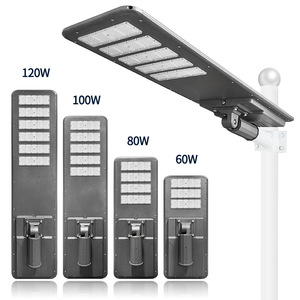
Super bright luminaire designed for rural arterial upgrades and municipal widening projects in outer HCMC districts like Binh Chanh and Cu Chi.
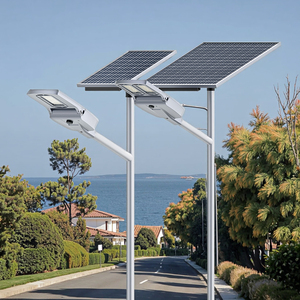
Features remote IoT monitoring and adaptive dimming schedules. Built with heavy anodized anti-corrosion coating for coastal and riverside exposure along the Saigon River.
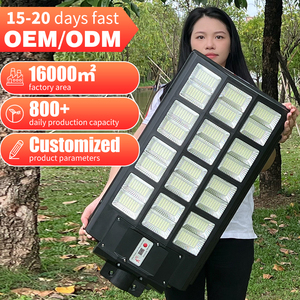
Compact high-luminaire system engineered for suburban housing communities, residential HOAs, and green space pathways across Southern Vietnam.
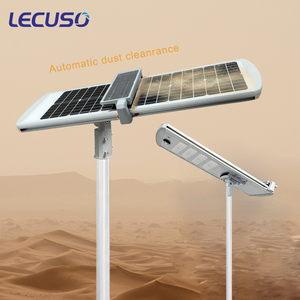
Equipped with robotic wiper blades to clear heavy dust, urban soot, and organic debris common in dense tropical traffic zones, keeping PV absorption above 98%.
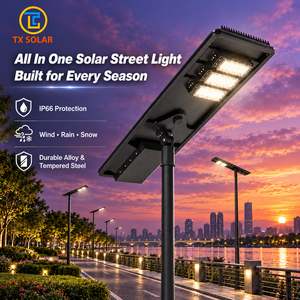
Tailored OEM manufacturing for Vietnamese contractors. Custom optical distributions (Type II, III, IV) tailored to specific lane width and pole spacing standards.
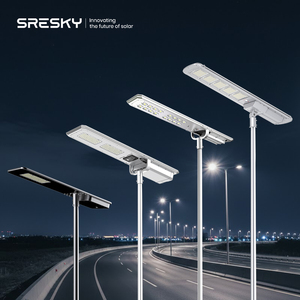
Flagship heavy-duty luminaire featuring double-sided bifacial energy generation. Engineered for storm resilience with Category 5 typhoon rating (wind resistance up to 60m/s).
Technical Insights into Designing Resilient Off-Grid Infrastructure for Southern Vietnam's Rapid Urban Expansion
Ho Chi Minh City (HCMC), standing as Vietnam's primary economic engine, is currently undergoing an unprecedented urban infrastructure expansion. From the ambitious masterplan of Thu Duc Smart City to the rapid modernization of logistics corridors connecting Tan Binh Industrial Park, Tan Thuan Export Processing Zone, and the deep-water ports of Cat Lai, street lighting plays a critical role in public safety, economic productivity, and decarbonization. However, Southern Vietnam’s distinct tropical monsoon climate (Köppen classification Aw) presents rigorous environmental challenges that standard off-the-shelf lighting systems fail to survive.
A successful solar streetlight installation in HCMC must overcome three core environmental stressors: high continuous ambient humidity averaging 78-85%, seasonal monsoon deluges that cause localized urban street flooding, and elevated thermal conditions where surface panel temperatures frequently cross 65°C during peak noon hours. As a specialized high-efficiency solar lighting supplier serving the Ho Chi Minh City market, our engineering framework integrates specialized thermal management, marine-grade anti-corrosion barrier coatings, and intelligent power management algorithms designed to deliver 100% lighting continuity 365 nights a year.
Heat is the silent enemy of both photovoltaic solar modules and lithium-based energy storage cells. In HCMC, ambient daytime temperatures routinely reach 35°C to 38°C. Inside an unventilated sealed solar luminaire, internal temperatures can surge past 75°C, accelerating lithium plating in standard NMC (Nickel Manganese Cobalt) batteries and degrading LED luminous flux efficiency by up to 25% due to junction thermal buildup.
To eliminate thermal degradation, our engineering standard specifies LiFePO4 (Lithium Iron Phosphate) battery chemistry paired with an isolated air-channel thermal chassis. LiFePO4 chemistry remains structurally stable at operating temperatures up to 70°C without risk of thermal runaway. Furthermore, our split-type ("All in Two") designs separate the battery enclosure from the solar PV backplate, preventing heat transfer from the sun-drenched monocrystalline silicon panels directly to the energy cell bank. This thermal isolation extends operational battery life from the industry average of 3 years to over 10 years (6,000+ depth-of-discharge cycles at 80%).
Customized solar lighting deployment strategies tailored to specific HCMC urban, industrial, and coastal topologies.
Heavy container traffic, 24/7 warehouse operations, and wide multi-lane roadways require high illumination compliance (TCVN 259:2001). Our 100W to 200W industrial solar streetlights deliver precision Type III light distribution with zero grid reliance, protecting facilities against localized power grid shedding during peak dry season electricity demand.
Can Gio’s coastal environment presents severe salt spray corrosion and high air salinity. Our specialized C5-M marine-grade powder coating, anodized aluminum structural hardware, and IP67 sealed silicon gaskets ensure long-term structural integrity without rust degradation, preserving critical lighting along scenic coastal avenues and eco-tourism routes.
Property developers in District 9, District 2, and Binh Chanh face high utility trenching costs ($40 - $70 per linear meter) to run grid cables under asphalt. Installing off-grid integrated solar streetlights completely eliminates trenching, wire copper theft risks, and monthly operational utility expenses while accelerating project completion timelines by up to 60 days.
Urban parks along the Saigon River require aesthetic, non-glare, Dark-Sky compliant outdoor luminaires. Our warm CCT (3000K-4000K) motion-activated smart courtyard lights provide gentle nighttime security for pedestrians while reducing urban light pollution and minimizing disturbance to local aquatic micro-ecosystems.
Strategic alignment with Vietnam’s National Energy Masterplan (PDP8) and HCMC Net-Zero 2050 Commitments.
The push toward high-efficiency off-grid solar street lighting in Ho Chi Minh City is powered by three major macro-economic and regulatory catalysts:
Evaluate the right technical configuration for your municipal or industrial application.
| Feature Architecture | All-In-One (Integrated) | All-In-Two (Semi-Split) | Self-Cleaning Automatic |
|---|---|---|---|
| Best Application Scenario | Suburban roads, residential HOAs, parking lots | Highway arterials, industrial wide avenues | High-dust industrial zones, main transit highways |
| Monocrystalline PV Power Range | 30W - 120W | 80W - 350W+ | 60W - 180W |
| Thermal Isolation Protection | Standard Heat Sink (Good) | Maximum Dual-Chassis Isolation (Superior) | Standard Heat Sink + Protected Battery Enclosure |
| Typhoon Wind Resistance | Up to 45 m/s (Category 3-4) | Up to 60 m/s (Category 5) | Up to 50 m/s (Category 4) |
| Maintenance Requirement | Clean PV panel every 12-18 months | Clean PV panel every 18-24 months | Zero manual panel wiping (Automated Robotic Brush) |
| Estimated Lifespan (LiFePO4) | 8 - 10 Years | 10 - 12+ Years | 10+ Years |
Proven B2B Supplier Pedigree Delivering End-to-End Reliability across International Markets.
All structural components, mounting brackets, and pole arm connectors undergo finite element stress analysis (FEA) to withstand extreme wind velocities up to 60 m/s (Category 5 typhoons), ensuring safety during severe Southern Vietnamese storms.
We offer structured commercial agreements—including $0 Upfront capital financing, Service Level Agreements (SLA), and Build-Own-Operate-Transfer (BOOT) options—allowing developers and municipalities to upgrade infrastructure with predictable monthly operational expenses.
Every batch of luminaires undergoes 100% aging tests, high-humidity IPX7 water immersion validation, optical goniophotometric profiling, and LiFePO4 battery thermal cycle testing compliant with ISO9001 and IEC 62722 standards prior to export dispatch.
Technical and Commercial Clarifications for Solar Outdoor Lighting Projects in Vietnam