
Engineered for low-temperature operating environments, high particulate smog resilience in the Po Valley, and strict Italian CAM environmental compliance.
As the economic powerhouse of Northern Italy, the Metropolitan City of Milan (Città Metropolitana di Milano) is currently undergoing one of Western Europe’s most ambitious urban decarbonization transformations. Under the framework of the European Green Deal, Italy’s Piano Nazionale di Ripresa e Resilienza (PNRR), and Milan's localized Piano Aria e Clima (Air and Climate Plan), municipal authorities and private infrastructure developers face unprecedented pressure to achieve carbon neutrality across public lighting networks by 2030.
Historically, Milan's public lighting grid—managed via legacy underground cable ducts dating back decades—has suffered from high maintenance overhead, vulnerable grid connectivity along suburban ring roads (A51, A52, A50), and spiraling electricity utility charges. Transitioning to advanced, independent solar street lighting offers an immediate solution that circumvents complex municipal road trenching, eliminates grid consumption tariffs, and delivers 100% resilient illumination during local grid outages.
As an established global manufacturer and direct exporter of industrial-tier solar streetlights, our engineering division supplies civil contractors, municipal buyers (Comune di Milano partners), and commercial logistics developers across Lombardy with fully certified, EN 13201-compliant outdoor solar lighting systems tailored to Northern Italy's unique geographic and photometric requirements.
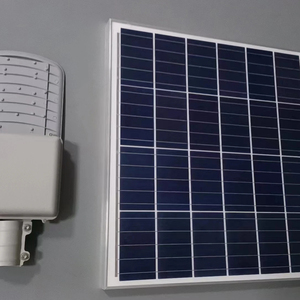
Milan sits at 45.4648° N latitude in the Po Valley, characterized by low solar elevation angles during winter months (December solar inclination ~21°). Our luminaires utilize custom-engineered mounting brackets adjustable from 15° to 60° alongside ultra-high efficiency monocrystalline silicon cells (conversion efficiency >23.5%), ensuring maximum irradiance capture even during short winter days.
Particulate Matter (PM10 and PM2.5) atmospheric concentration in the Po Valley often creates dense fog and light scatter. Our luminaires incorporate custom optical lenses delivering asymmetric light distribution (Type II / Type III) with specialized 3000K–4000K warm CCT options, reducing Rayleigh scattering and ensuring optimal road surface visibility under heavy fog.
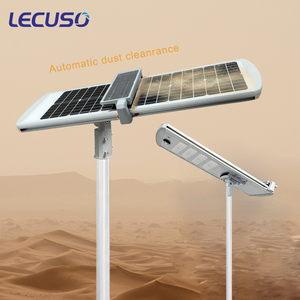
Industrial soot and fine urban dust accumulation can reduce solar panel efficiency by up to 28% over six months. Our patented motorized self-cleaning mechanism operates twice daily without human intervention, removing particulate layers and maintaining peak power generation throughout Milan’s dry winter spells.
Deploying specialized solar lighting solutions designed specifically for Milan’s varied zoning requirements.
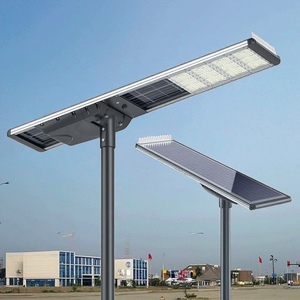
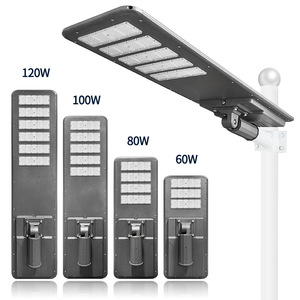
Heavy commercial transit zones, such as the logistics corridors surrounding Malpensa Airport Cargo City and the outer Milan ring roads (A50/A51), demand high lumen output and zero downtime. Our High Power Integrated 150W-200W Solar Luminaires deliver continuous illuminance levels exceeding 30 Lux, fulfilling European EN 13201 Class M2 standards without costly highway electrical grid extensions.
In eco-sensitive urban green spaces like Parco Sempione, CityLife Park, and the Navigli canal pedestrian trails, underground cable installation disrupts mature root systems and historical paving. Our Dark-Sky Compliant All-in-One Solar Lights feature 0% Upward Light Ratio (ULR), protecting local nocturnal biodiversity while complying with Lombardy Regional Law n. 31/2015 on light pollution.
Commercial business parks require smart, flexible illumination that scales with facility usage. Utilizing integrated microwave motion sensors, our solar street lamps automatically dim to 30% ambient output during off-peak hours, instantly boosting to 100% upon vehicle or pedestrian detection. This extends LiFePO4 battery reserve capacity up to 7 consecutive rain days.
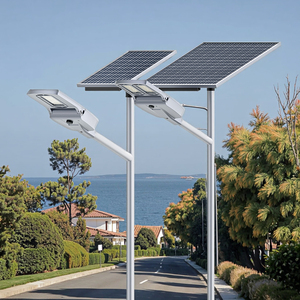
Modern public lighting in Milan is no longer isolated; it forms the backbone of municipal smart networks. Our IP66 Smart Control Split Solar Lights support optional Zigbee / LoRaWAN modules, enabling municipal lighting engineers to monitor battery state of charge (SoC), remotely dim fixtures, and receive proactive maintenance alerts from a central dashboard.
A 10-Year Lifecycle Cost Comparison for 1 Kilometer of Municipal Infrastructure Roadway (35 Poles)
| Evaluation Parameter | Traditional Grid-Tethered LED System | Our Off-Grid Solar Streetlight System | Infrastructure Benefit / Cost Gain |
|---|---|---|---|
| Trenching & Cabling CAPEX | €45,000 - €65,000 per km (Asphalt cutting/repaving) | €0 (Zero underground trenching required) | 100% Trenching Savings |
| Transformer & Grid Connection Fee | €12,000 (A2A grid utility tie-in fees) | €0 (Completely autonomous off-grid) | €12,000 Upfront Capital Saved |
| Annual Energy Consumption Cost | ~€8,400 / year (Based on Italian commercial tariffs) | €0 / year (Powered by solar energy) | 100% Operational Energy Savings |
| Carbon Footprint (10 Years) | ~38.5 Metric Tons CO2 emitted | 0 Metric Tons CO2 | Aligned with Milan Piano Aria e Clima |
| Installation Time Frame | 3 to 6 Weeks (Permits, road closures, excavation) | 2 to 3 Days (Flange mounting to concrete base) | 85% Faster Deployment Speed |
| Grid Failure Risk | High (Vulnerable to urban blackout & storm events) | Zero Risk (Integrated 5-day battery reserve) | Continuous Safety Assurance |
We utilize newly manufactured Automotive-Grade Lithium Iron Phosphate (LiFePO4) battery cells featuring 3,000+ deep charge cycles at 80% DoD. Integrated Smart Battery Management Systems (BMS) protect against thermal runaway, overcharging, and extreme low-temperature discharge (-15°C to +65°C).
Our proprietary Maximum Power Point Tracking (MPPT) solar charge controllers achieve a 98.5% tracking efficiency. By continuously optimizing voltage and current ratios in real-time, our luminaires harvest up to 30% more energy during overcast conditions compared to conventional PWM controllers.
We provide comprehensive engineering support for tender submissions across Northern Italy. Send us your road dimensions, pole height requirements, and target Lux standards; our photometric engineers will generate DIALux simulation reports complete with IES file documentation for municipal approval.
Addressing regulatory compliance, logistics, installation, and performance inquiries for Lombardy projects.
Our public infrastructure lighting systems are designed to meet Italian CAM requirements strictly. We utilize recyclable die-cast aluminum alloy housings (ADC12), modular components for easy disassembling and repairability, high system luminous efficacy (>190 lm/W), and mercury-free, RoHS-compliant LiFePO4 energy storage units. Complete environmental declaration datasheets are provided for all public tenders.
Yes. Northern Italy experiences low sunlight hours in December and January combined with persistent Po Valley fog. Our systems incorporate oversized monocrystalline solar PV panels paired with smart adaptive power management algorithms. If battery capacity drops below 30%, the system automatically adjusts LED drive current based on real-time ambient feedback, guaranteeing 5 to 7 days of uninterrupted operation even under complete overcast conditions.
Absolutely. Lombardy enforces strict anti-light pollution regulations requiring zero upward light emissions (0% ULR / Upward Light Ratio). All of our full-cutoff optics and flat-glass lens profiles prevent skyglow and direct light spill above the horizontal plane, guaranteeing full compliance with regional environmental statutes.
We routinely export directly to major Italian ports including Genoa and Spezia, as well as bonded dry customs depots in Milan (Segrate / Rho). We provide full CE, RoHS, IP66, IK10, and ISO 9001 test reports alongside EUR.1 certificate of origin support, handling DDP (Delivered Duty Paid), FOB, or CIF terms according to your contract logistics needs.
Our heavy-duty aluminum structural bodies have an engineered service life of over 20 years. Monocrystalline PV panels are warranted for 25 years (80% power retention output), while our A-grade LiFePO4 battery packs are rated for 8 to 10 years of reliable daily operation. We back our commercial solar luminaires with a standard 5-Year comprehensive replacement warranty.
Whether you are preparing a municipal public tender submission, developing a private logistics park, or retrofitting suburban transit corridors across Lombardy, our engineering team is ready to deliver photometric calculations, technical compliance files, and factory-direct pricing.
Send an Inquiry